



We protect your health through science

Investigación
Micología
Líneas de investigación
Content with Investigacion .
The Laboratory of Medical Entomology (LME) develops an intense reference and research activity, focused on the field of disease vectors of interest in Public Health. The LME has an insectary where biological cycles of insect vectors are currently maintained, allowing the performance, among others, of vector competence and xenodiagnostic studies. The LME supports the national health system by offering techniques available in the portfolio of services for the taxonomic identification of arthropods of health interest. In addition, it performs entomological surveillance of outbreaks, supporting Surveillance Plans. In particular, the LME plays a leading role in the Entomological Surveillance Plan for Leishmaniasis in the Community of Madrid. On the other hand, the LME offers scientific advice to the CCAES (Centro de Coordinación de Alertas y Emergencias Sanitarias, Ministerio de Sanidad, Consumo y Bienestar Social), and participates in the elaboration of reports and rapid risk assessments.

The main research lines of the Laboratory of Medical Entomology are:
1. Maintenance of insect vector colonies: phlebotomine sand flies (Phlebotomus perniciosus, Phlebotomus papatasi and Phlebotomus argentipes, vectors of Leishmania infantum, Leishmania major and Leishmania donovani, respectively), Culex and Aedes mosquitoes (vectors of various arboviruses) and Rhodnius prolixus (vector of Trypanosoma cruzi).
2. Biology of disease vectors of public health interest: biology, vector competence, experimental infections. The CNM has a BSL3 safety laboratory to carry out vector competence studies with culicidae and phlebotomine sand flies.
3. Entomological sampling, infectivity of potential reservoirs of leishmaniasis.
4. Insecticides and repellents: evaluation of their efficacy.
5. Characterization of saliva proteins of hematophagous Diptera: genomics, proteomics, biochemistry and gene editing. Study of salivary proteins as markers of bite exposure, virulence factors and/or vaccines.
6. Xenodiagnosis of leishmaniasis.
7. Molecular biology and taxonomy of phlebotomine sand flies. Molecular detection of Leishmania infantum in phlebotomine sand flies and characterization of Leishmania spp. Molecular identification of blood ingested by vectors.
Publicaciones destacadas
Programa de Legionelosis. En Echevarría Mayo JE y Oteo Iglesias J (Editores) Programas de Vigilancia Microbiológica Centro Nacional de Microbiología.
Fernando González-Camacho y Almudena Cascajero. Programa de Legionelosis. En Echevarría Mayo JE y Oteo Iglesias J (Editores) Programas de Vigilancia Microbiológica Centro Nacional de Microbiología. Volumen 2:77-89. 2021-2022 Majadahonda (Madrid); Instituto de Salud Carlos III, Centro Nacional de Microbiología: 2023.
Chikungunya virus infections among travellers returning to Spain, 2008 to 2014
3. Maria Dolores Fernandez Garcia; Mathieu Bangert; Fernando de Ory; Arantxa Potente; Lourdes Hernandez; Fatima Lasala; Laura Herrero; Francisca Molero; Anabel Negredo; Ana Vázquez; Teodora Minguito; Pilar Balfagón; Jesus de la Fuente; Sabino Puente; Eva Ramírez de Arellano; Mar Lago; Miguel Martinez; Joaquim Gascón; Francesca Norman; Rogelio Lopez Velez; Elena Sulleiro; Diana Pou; Nuria Serre; Ricardo Fernández Roblas; Antonio Tenorio; Leticia Franco; Maria Paz Sanchez Seco. Chikungunya virus infections among travellers returning to Spain, 2008 to 2014. Euro surveillance : bulletin Europeen sur les maladies transmissibles = European communicable disease bulletin. 21 - 36, (Sweden): 08/09/2016. ISSN 1560-7917
PUBMED DOILegionella feeleii: Ubiquitous Pathogen in the Environment and Causative Agent of Pneumonia
Vaccaro L, Gomes TS, Izquierdo F, Magnet A, Llorens Berzosa S, Ollero D, Salso S, Alhambra A, Gómez C, López Cano M, Pelaz C, Bellido Samaniego B, Del Aguila C, Fenoy S, Hurtado-Marcos C. Front Microbiol. 2021;12:707187.
DOIImmunogenicity of a third dose with mRNA-vaccines in the ChAdOx1-S/BNT162b2 vaccination regimen against SARS-CoV-2 variants.
García-Pérez J, Borobia AM, Pérez-Olmeda M, Portolés A, Castaño L, Campins-Artí M, Bertrán MJ, Bermejo M, Arribas JR, López A, Ascaso-Del-Rio A, Arana-Arri E, Fuentes Camps I, Vilella A, Cascajero A, García-Morales MT, Castillo de la Osa M, Pérez Ingidua C, Lora D, Jiménez-Santana P, Pino-Rosa S, Gómez de la Cámara A, De La Torre-Tarazona E, Calonge E, Cruces R, Belda-Iniesta C, Alcamí J, Frías J, Carcas AJ, Díez-Fuertes F. iScience. 2024; 27(9):110728
PUBMED DOILonger intervals between SARS-CoV-2 infection and mRNA-1273 doses improve the neutralization of different variants of concern
García-Pérez J, Bermejo M, Ramírez-García A, De La Torre-Tarazona HE, Cascajero A, Castillo de la Osa M, Jiménez P, Aparicio Gómez M, Calonge E, Sancho-López A, Payares-Herrera C, Layunta Acero R, Vicente-Izquierdo L, Avendaño-Solá C, Alcamí J, Pérez-Olmeda M, Díez-Fuertes F. J Med Virol. 2023; 95(3):e28679
PUBMED DOIImmune response and reactogenicity after immunization with two-doses of an experimental COVID-19 vaccine (CVnCOV) followed by a third-fourth shot with a standard mRNA vaccine (BNT162b2): RescueVacs multicenter cohort study
Ascaso-Del-Rio A, García-Pérez J, Pérez-Olmeda M, Arana-Arri E, Vergara I, Pérez-Ingidua C, Bermejo M, Castillo de la Osa M, Imaz-Ayo N, Riaño Fernández I, Astasio González O, Díez-Fuertes F, Meijide S, Arrizabalaga J, Hernández Gutiérrez L, de la Torre-Tarazona HE, Mariano Lázaro A, Vargas-Castrillón E, Alcamí J, Portolés A; RescueVac study Group. EClinicalMedicine. 2022; 51:101542
PUBMED DOIImmunogenic dynamics and SARS-CoV-2 variant neutralisation of the heterologous ChAdOx1-S/BNT162b2 vaccination: Secondary analysis of the randomised CombiVacS study
García-Pérez J, González-Pérez M, Castillo de la Osa M, Borobia AM, Castaño L, Bertrán MJ, Campins M, Portolés A, Lora D, Bermejo M, Conde P, Hernández-Gutierrez L, Carcas A, Arana-Arri E, Tortajada M, Fuentes I, Ascaso A, García-Morales MT, Erick de la Torre-Tarazona H, Arribas JR, Imaz-Ayo N, Mellado-Pau E, Agustí A, Pérez-Ingidua C, Gómez de la Cámara A, Ochando J, Belda-Iniesta C, Frías J, Alcamí J, Pérez-Olmeda M; CombiVacS study Group. EClinicalMedicine. 2022; 50:101529
PUBMED DOITranscriptomic Evidence of the Immune Response Activation in Individuals With Limb Girdle Muscular Dystrophy Dominant 2 (LGMDD2) Contributes to Resistance to HIV-1 Infection
Diez-Fuertes F, López-Huertas MR, García-Pérez J, Calonge E, Bermejo M, Mateos E, Martí P, Muelas N, Vílchez JJ, Coiras M, Alcamí J, Rodríguez-Mora S. Front Cell Dev Biol. 2022; 10:839813
PUBMED DOIImmunogenicity and reactogenicity of BNT162b2 booster in ChAdOx1-S-primed participants (CombiVacS): a multicentre, open-label, randomised, controlled, phase 2 trial
Borobia AM, Carcas AJ, Pérez-Olmeda M, Castaño L, Bertran MJ, García-Pérez J, Campins M, Portolés A, González-Pérez M, García Morales MT, Arana-Arri E, Aldea M, Díez-Fuertes F, Fuentes I, Ascaso A, Lora D, Imaz-Ayo N, Barón-Mira LE, Agustí A, Pérez-Ingidua C, Gómez de la Cámara A, Arribas JR, Ochando J, Alcamí J, Belda-Iniesta C, Frías J; CombiVacS Study Group. Lancet. 2021; 398(10295):121-130
PUBMED DOIFirst Insight into the Genome Sequences of Two Linezolid-Resistant Nocardia farcinica Strains Isolated from Patients with Cystic Fibrosis
2: Valdezate S, Monzón S, Garrido N, Zaballos A, Medina-Pascual MJ, Azcona-Gutiérrez JM, Vilar B, Cuesta I. First Insight into the Genome Sequences of Two Linezolid-Resistant Nocardia farcinica Strains Isolated from Patients with Cystic Fibrosis. Genome Announc. 2017 Nov 16;5(46).
PUBMED DOIApoptosis, Toll-like, RIG-I-like and NOD-like Receptors Are Pathways Jointly Induced by Diverse Respiratory Bacterial and Viral Pathogens.
3: Martínez I, Oliveros JC, Cuesta I, de la Barrera J, Ausina V, Casals C, de Lorenzo A, García E, García-Fojeda B, Garmendia J, González-Nicolau M, Lacoma A, Menéndez M, Moranta D, Nieto A, Ortín J, Pérez-González A, Prat C, Ramos-Sevillano E, Regueiro V, Rodriguez-Frandsen A, Solís D, Yuste J, Bengoechea JA, Melero JA. Apoptosis, Toll-like, RIG-I-like and NOD-like Receptors Are Pathways Jointly Induced by Diverse Respiratory Bacterial and Viral Pathogens. Front Microbiol. 2017 Mar 1;8:276
PUBMED DOIMolecular identification, antifungal resistance and virulence of Cryptococcus neoformans and Cryptococcus deneoformans isolated in Seville, Spain
Gago S, Serrano C, Alastruey-Izquierdo A, Cuesta I, Martín-Mazuelos E, Aller AI, Gómez-López A, Mellado E. Molecular identification, antifungal resistance and virulence of Cryptococcus neoformans and Cryptococcus deneoformans isolated in Seville, Spain. Mycoses. 2017 Jan;60(1):40-50
PUBMED DOIHigh-Quality Draft Genome Sequence of Babesia divergens, the Etiological Agent of Cattle and Human Babesiosis
7: Cuesta I, González LM, Estrada K, Grande R, Zaballos A, Lobo CA, Barrera J, Sanchez-Flores A, Montero E. High-Quality Draft Genome Sequence of Babesia divergens, the Etiological Agent of Cattle and Human Babesiosis. Genome Announc. 2014 Nov 13;2(6).
PUBMED DOISerum galactomannan-based early detection of invasive aspergillosis in hematology patients receiving effective antimold prophylaxis
8: Duarte RF, Sánchez-Ortega I, Cuesta I, Arnan M, Patiño B, Fernández de Sevilla A, Gudiol C, Ayats J, Cuenca-Estrella M. Serum galactomannan-based early detection of invasive aspergillosis in hematology patients receiving effective antimold prophylaxis. Clin Infect Dis. 2014 Dec 15;59(12):1696-702.
PUBMED DOIAnalysis of the protein domain and domain architecture content in fungi and its application in the search of new antifungal targets.
9: Barrera A, Alastruey-Izquierdo A, Martín MJ, Cuesta I, Vizcaíno JA. Analysis of the protein domain and domain architecture content in fungi and its application in the search of new antifungal targets. PLoS Comput Biol. 2014 Jul 17;10(7):e1003733.
PUBMED DOIContent with Investigacion .
-

Maribel Jiménez Alonso
Tenured Scientist
ORCID code: 0000-0002-5615-3087
Doctor in Pharmacy from the Complutense University of Madrid (1994) and Extraordinary Doctorate Award. She started her research activity at ISCIII in 1990 in the field of leishmaniasis. Currently, she is the head of the LEM where she develops her scientific work in the field of entomological surveillance of phlebotomine sandflies in the CM and other studies in the field of molecular biology, mainly applied to the model of Leishmania infantum and its vector Phlebotomus perniciosus. Member of the team of experts of the ISCIII that participates in the elaboration of Rapid Risk Assessments and in the working groups in charge of the elaboration of National Plans of Prevention, Surveillance and Control of Vector-borne Diseases of the CCAES, Ministry of Health. She is currently “Operational Focal Point” for vector-borne diseases at national level for the One Health-Vectornet network (EFSA and ECDC) and coordinator of the VectorNet-Spain network since July 2024. In addition, she is a member of the expert committee of the Network of Surveillance and Control of Vectors with public health interest in the Community of Madrid. In addition, she is part of a research group from CIBER (CIBERINFEC; CB21/13/00110).
-
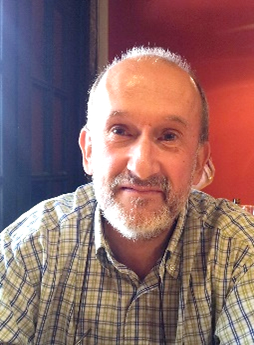
Ricardo Molina Moreno
Doctor Ad Honorem
ORCID code: 0000-0001-6662-173X
Doctor in Biological Sciences from the Complutense University of Madrid (1994). In 1979 he began his professional career at the Instituto de Salud Carlos III (ISCIII), where he became a researcher in 1985. He was in charge of the Medical Entomology Laboratory from that year until his retirement in 2023. He is currently a doctor linked “Ad Honorem”. He has extensive experience in medical entomology, advising the Ministry of Health (CCAES) and Health Departments of Autonomous Communities, on surveillance and control of arthropods transmitting vector-borne diseases. In recent years he has been involved in surveillance programs in Spain for leishmaniasis vectors, especially in the Fuenlabrada outbreak, and for viruses causing Crimean-Congo hemorrhagic fever and dengue. Also in the surveillance of invasive exotic mosquitoes, especially Aedes albopictus, in ports and airports. In his last stage he has been part of the research group within the CIBER (CIBERINFEC; CB21/13/00110).
-

Eva Pérez Martínez
Clinical and Biomedical Laboratory Technician
ORCID code: 0000-0002-6553-9969
Graduated in 2019 from the Advanced Vocational Training Program in Clinical and Biomedical Laboratory Sciences. I began my professional career in 2020 at Eurofins Megalab laboratories. In 2024, I started working as a freelance professional on an international project focused on the bioecology of phlebotomine sand flies in urban environments across the Mediterranean Basin, conducting fieldwork in Spain, Italy, Greece, and southern France within the framework of citizen science. Since 2025, I have been part of the Medical Entomology Laboratory at the Instituto de Salud Carlos III (ISCIII), where I work as a laboratory technician on the project “Biochemical and functional characterization of salivary proteins from Phlebotomus perniciosus and their role in Leishmania infantum infection (PERNIPROT)”, led by Dr. Inés Martín Martín.
-

Inés Martín Martín
Tenured Scientist
ORCID code: 0000-0002-0956-7324
Within Medical Entomology, my work focuses on the study of phlebotomine sand flies and culicidae as vectors of leishmaniasis and arbovirosis, respectively. In 2014 I obtained my PhD degree “cum laude” with European mention from the Complutense University of Madrid. My PhD Thesis (developed at the Instituto de Salud Carlos III), focused on the study of phlebotomine sandfly saliva. Subsequently, during my postdoctoral period, I worked on insect gene editing, molecular, biochemical and functional characterization of insect saliva proteins and their role in the infection and transmission of pathogens. Most of my scientific career has been developed at the Laboratory of Malaria and Vector Research, National Institutes of Health (NIH), USA. Since 2021 I am a Senior Scientist at the Laboratory of Medical Entomology (ISCIII).
-

Marcos López de Felipe Escudero
Predoctoral contract FPU
ORCID code: 0000-0002-2919-836X
Graduated in Biology from the Autonomous University of Madrid and Master in Tropical Parasitic Diseases from the University of Valencia. He started his professional career in 2019 in surveillance and management of hematophagous diptera of veterinary-medical interest, as well as other urban pests. In 2024 he began his work at the Instituto de Salud Carlos III (ISCIII) within the framework of the project “Evaluation of the anti-leishmanicidal effect of the bacterium Tc1 and its derivatives in the intravectorial cycle of the parasite” directed by Dr. Inés Martín Martín where he continues after the award of a FPU fellowship. He has extensive experience in medical entomology, especially in surveillance and vector control and taxonomic identification. Her career so far has focused mainly on the study of phlebotomine sand flies, simulids and culicidae, with special attention to citizen science.



List of staff