



We protect your health through science

Investigación
Mycobacteria
Líneas de investigación
Content with Investigacion .
Inmunología Microbiana e Inmunogenética
1. Análisis de la respuesta innata de mamíferos en la infección por Leishmania.
2. Caracterización inmunoproteómica en :
a. Streptococcus suis
b. Lactococcus garviae
c. Mycobacterium spp
3. Desarrollo de inmunoensayos analíticos basados en anticuerpos monoclonales (AcM) para detectar y cuantificar antígenos de origen animal, vegetal y microbiano.
4. Desarrollo y caracterización de AcM frente a los componentes del sistema del Complemento. Aplicación diagnóstica.
5. Desarrollo de reactivos de referencia y diseño de inmunoensayos para la evaluación cualitativa y cuantitativa de toxinas clostridiales.
6. Oferta tecnológica de producción de AcM y policlonales frente a substancias de interés industrial y biomédico.
El grupo está interesado en el estudio de la respuesta inmune desde una perspectiva multidisciplinar que incluye aproximaciones bioquímicas, biotecnológicas, genómicas, inmunoinformáticas y proteómicas, que junto con el uso adicional de modelos in vivo se encaminan al diseño de estrategias terapéuticas frente a diversas enfermedades crónicas, infecciosas y raras que poseen un claro componente inmunológico en su etiología.
Las principales líneas de investigación que está desarrollando el grupo en la actualidad son:
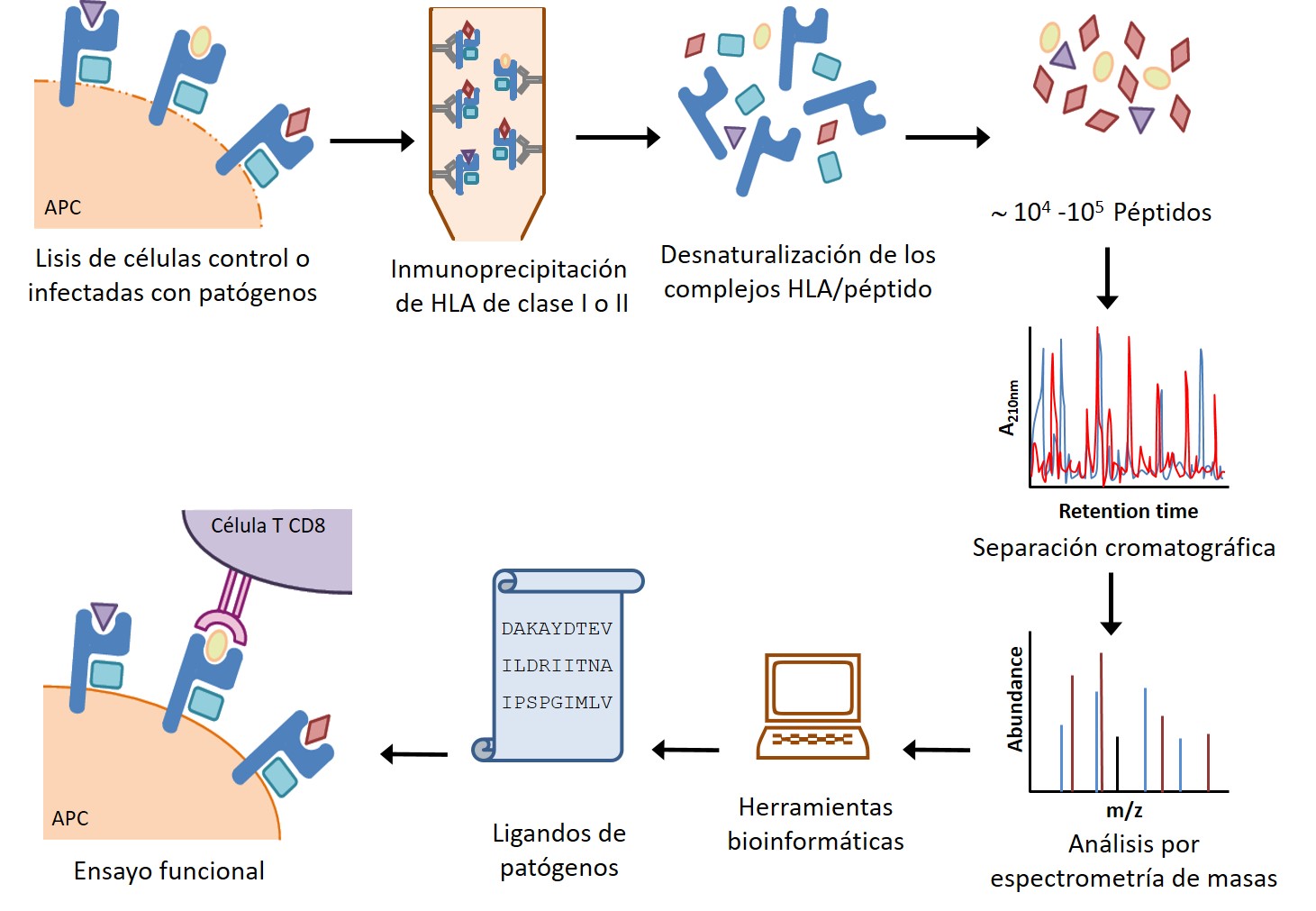
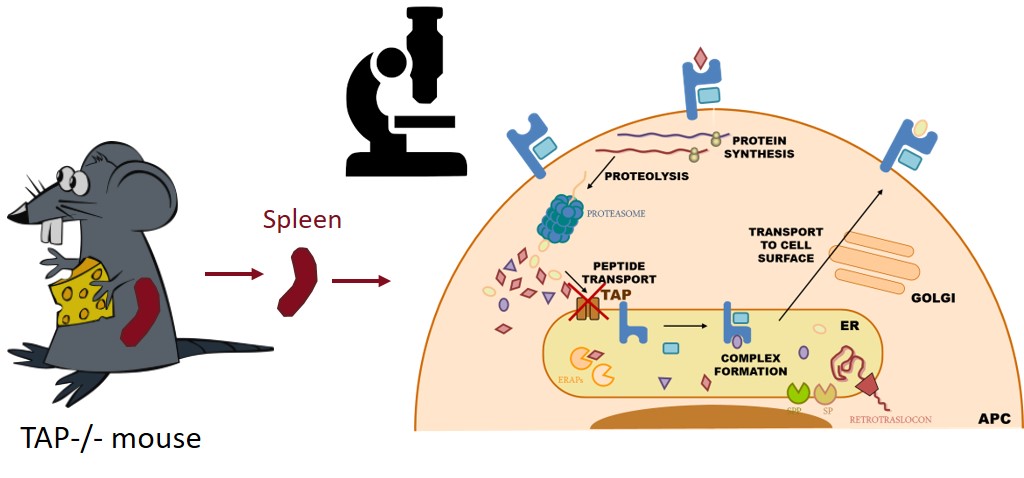
- * Análisis de las respuestas inmunes celulares frente a patógenos virales y bacterianos, mediante técnicas inmunoproteómicas, modelos in vivo con animales transgénicos y muestras humanas.
- * Caracterización de CD69: regulación génica, función reguladora inmune en homeostasis e infección y su uso como diana terapéutica, edición génica por CRISPR en modelos animales y celulares, etc.

* Desarrollo de herramientas inmunoinformáticas que permitan analizar la respuesta inmune celular frente a diversos virus de interés sanitario y determinar la eficacia de sus vacunas a nivel de población mundial.

* Estudio de las respuestas inmunes celulares frente a enfermedades raras (artritis reactiva y síndrome del linfocito desnudo) y crónicas (espondiloartropatías).
* Inclusión de componentes del sistema inmune en la fabricación de tejidos humanos, especialmente piel, para uso clínico, farmacéutico y cosmético.
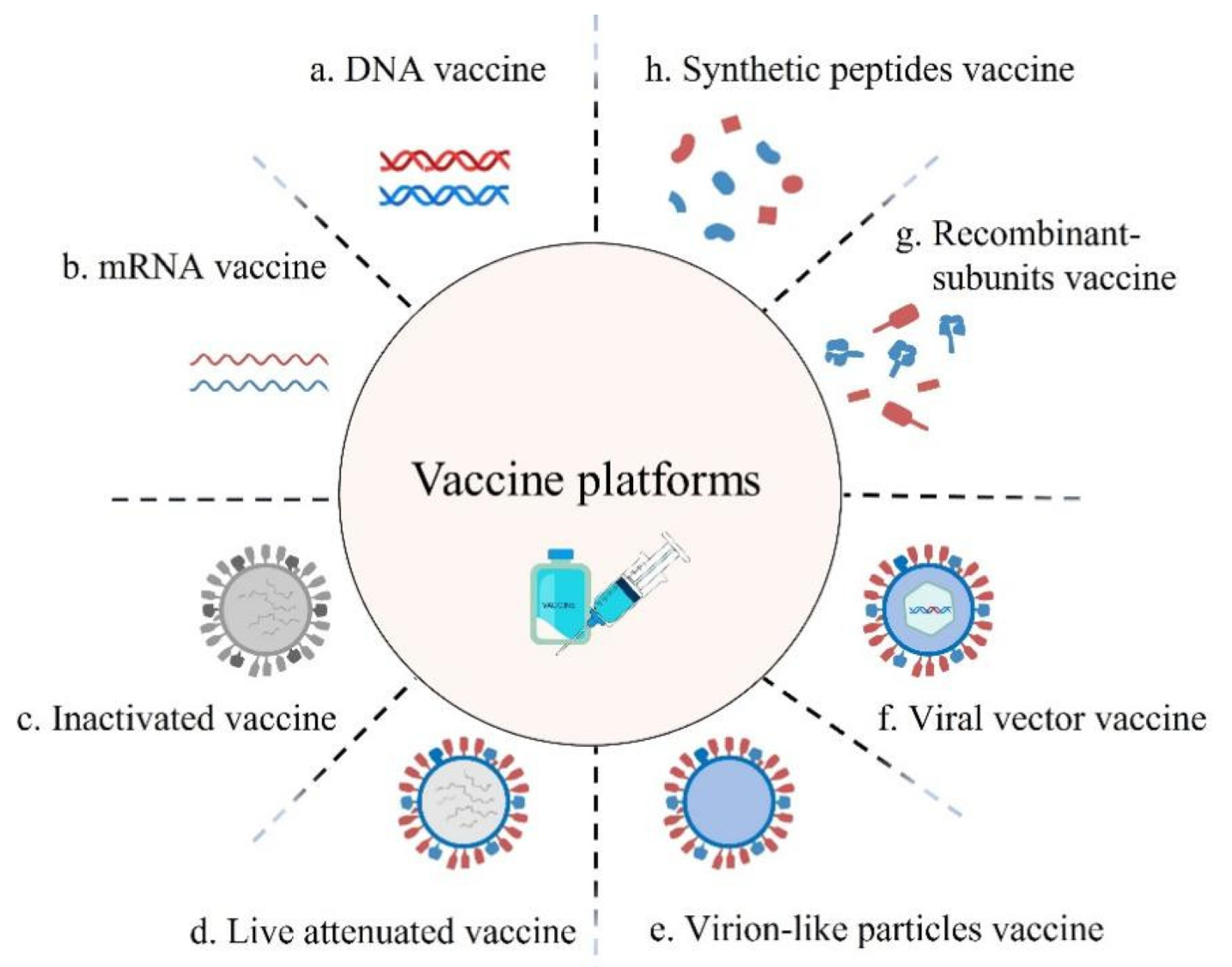
- * Generación de virus recombinantes como vectores vacunales.
Publicaciones destacadas
Influenza vaccine effectiveness in Spain 2013/14: subtype-specific early estimates using the cycEVA study
Jiménez-Jorge S, Pozo F, de Mateo S, Delgado-Sanz C, Casas I, García-Cenoz M, Castilla J, Sancho R, Etxebarriarteun-Aranzabal L, Quinones C, Martínez E, Vega T, Garcia A, Giménez J, Vanrell JM, Castrillejo D, Larrauri A, on behalf of the Spanish Influenza Sentinel Surveillance System (SISS). Influenza vaccine effectiveness in Spain 2013/14: subtype-specific early estimates using the cycEVA study. Euro Surveill. 2014 Mar 6;19(9). Indice Impacto: 5,722. Revista en Q1.
PUBMED DOIY155H amino acid substitution in influenza A(H1N1)pdm09 viruses does not confer a phenotype of reduced susceptibility to neuraminidase inhibitors
Perez-Sautu U, Pozo F, Cuesta I, Monzon S, Calderon A, Gonzalez M, Molinero M, Lopez-Miragaya I, Rey S, Cañizares A, Rodriguez G, Gonzalez-Velasco C, Lackenby A, Casas I. Y155H amino acid substitution in influenza A(H1N1)pdm09 viruses does not confer a phenotype of reduced susceptibility to neuraminidase inhibitors. Euro Surveill. 2014 Jul 10;19(27):14-20. Indice Impacto: 5,722. Revista en Q1
PUBMED DOICharacterization In Vitro and In Vivo of a Pandemic H1N1 Influenza Virus from a Fatal Case.
Rodriguez A, Falcon A, Cuevas MT, Pozo F, Guerra S, García-Barreno B, Martinez-Orellana P, Pérez-Breña P, Montoya M, Melero JA, Pizarro M, Ortin J, Casas I, Nieto A. Characterization In Vitro and In Vivo of a Pandemic H1N1 Influenza Virus from a Fatal Case. PLoS One. 2013;8(1):e53515. doi: 10.1371/journal.pone.0053515. Epub 2013 Jan 10. Indice Impacto: 3,534. Revista en Q1
PUBMED DOIMycobacterium tuberculosis genotypes and predominant clones among the multidrug-resistant isolates in Spain 1998-2006
3. Samper S, Gavin P, Millan-Lou MI, Iglesias M.J. Jimenez MS. Spanish Working Group on MDR-TB, Covin D, Rastogi N. Mycobacterium tuberculosis genotypes and predominant clones among the multidrug-resistant isolates in Spain 1998-2006. Infec Genet Evol. 2017. Aug 5;55:117.
PUBMED DOIAntitubercular drugs for an old target: GSK693 as a promising inhA direct inhibitor.
5. Martinez-Hoyos M, Perez-Herran E, Gulten G, Encinas L, Alvarez-Gomez D, Alvarez E, Ferrer Bazaga S, Garcia-Perez A, Ortega F, Angulo-Bartures I, Rullas-Trincado J, Blanco Ruano D, Torres P, Castañeda P, Huss S, Fernandez R, Gonzalez del Valle S, Ballel L, Barros D, Modha S, Dhar N, Signorino-Gelo F, McKinney JD, Garcia-Bustos JF, Lavandera JL, Sacchettini JC, Jimenez MS, Martin-Casabona N, Castro-PIchel J, Mendoza-Losana A. Antitubercular drugs for an old target: GSK693 as a promising inhA direct inhibitor. EBioMedicine. 2016; 8:291-301
PUBMED DOIInformación adicional
• Taxonomic study. Objective: Association of already described species to new clinical processes. Description of new bacterial species.
• Sensitivity studies against new antituberculous drugs: Objective: To evaluate the antimicrobial activity of new compounds for human use in clinical strains of Mycobacterium tuberculosis and in other species of non-tuberculous mycobacteria, for subsequent application in the treatment of these infections.
• Molecular epidemiology of tuberculosis. Objectives: Molecular characterization of the members of the M. tuberculosis complex. Transmission studies with special surveillance of MDR/XDR tuberculosis.
• Development of new methods of identification and detection of resistance in mycobacteria. Objectives: Optimization and development of molecular techniques for the diagnosis and detection of resistance.