



We protect your health through science
Investigation
Legionella
Research Lines
Content with Investigacion .
Virus humanos de la familia herpesviridae
• Infecciones neurológicas y/o sistémicas producidas por virus herpes simple, virus de la varicela zóster y enterovirus.
• Infecciones sistémicas producidas por virus Epstein-Barr, citomegalovirus, virus herpes 6, 7 y 8.
• Epidemiología molecular del virus de la varicela zóster: Estudio de clados y genotipos.
• Estudio molecular de casos de varicela y herpes zóster en pacientes vacunados.
• Investigación de mutaciones que confieren resistencia a antivirales en citomegalovirus.
• Infección congénita por citomegalovirus: Estudio de marcadores virológicos e inmunológicos.
• Aplicación de la tecnología de NGS para el estudio etiológico de la infección neurológica.
1. EPIDEMIOLOGÍA MOLECULAR DEL VIRUS DE LA VARICELA ZÓSTER: ESTUDIO DE CLADOS Y GENOTIPOS
Las políticas de vacunación deben basarse en la vigilancia epidemiológica, incluida la caracterización molecular de los virus circulantes que producen no solo la varicela, sino también el herpes zóster o la enfermedad neurológica, a fin de evaluar el impacto de los programas de vacunación en la incidencia y el patrón de circulación viral. Además, dado que los eventos de recombinación no son infrecuentes en VZV, su investigación resulta imprescindible para evaluar la aparición de nuevas cepas recombinantes entre la cepa de la vacuna y las de tipo salvaje o, entre las de tipo salvaje que pudieran dar lugar a cepas más virulentas que cambiaran el patrón de distribución de la enfermedad.
El objetivo principal de esta línea de investigación es la caracterización genética completa a través de secuenciación de Sanger y NGS de las cepas de VZV circulante en nuestro país con especial énfasis en la población pediátrica y aquella en la que se ha detectado fallo vacunal.
Proyectos asociados (en curso):
Estudio del fallo vacunal en enfermedades víricas inmunoprevenibles. AESI2019 Investigación en Salud. PI19CIII/00041 /MPY 513/19
Publicación asociada:
González; A. Molina-Ortega; P. Pérez-Romero; J.E. Echevarría; L. He; David Tarragó Asensio. Varicella-zoster virus clades circulating in Spain over two decades. Journal of Clinical Virology. 110, pp. 17 - 21. 2019. DOI: 10.1016/j.jcv.2018.11.008
2. DIAGNÓSTICO, REFERENCIA Y NUEVOS PROCEDIMIENTOS BASADOS EN LA METAGENÓMICA VIRAL PARA EL ESTUDIO ETIOLÓGICO DE LA INFECCIÓN NEUROLÓGICA
Los virus son la causa más frecuente de meningitis y encefalitis de origen infeccioso. Para identificar el agente etiológico de las infecciones del sistema nervioso central, los laboratorios utilizan ensayos basados en la PCR a partir de muestras de líquido cefalorraquídeo. El diagnóstico molecular ha mejorado sustancialmente con la introducción en nuestro laboratorio de la PCR a tiempo real multiplex, lo cual permite detectar muchos más patógenos con una alta sensibilidad y especificidad, al mismo tiempo que cuantificar la carga viral en la muestra del paciente. A pesar de estos avances, la etiología sigue siendo desconocida en aproximadamente un 40-60% de los casos con sospecha de meningitis/encefalitis viral, pudiendo llegar a ser de hasta el 81% según los diversos estudios. En España, un proyecto de 2012 destinado a determinar los virus causantes de infecciones del sistema nervioso central mediante pruebas convencionales, concluyó que un número significativo de casos (43% de meningitis, 60% de meningoencefalitis y 72% de encefalitis) permanecieron sin diagnóstico etiológico. Los datos actuales del Centro Nacional de Microbiología muestran que aproximadamente el 80% de los casos con sospecha clínica de infección viral del sistema nervioso central permanecen sin diagnosticar. Esto puede deberse principalmente a la amplia variedad de virus que pueden causar enfermedad neurológica, por falta de sensibilidad de los métodos diagnósticos o a una etiología por virus de especies conocidas que no se asociaban a enfermedad neurológica o bien a nuevas especies desconocidas. En esta línea de investigación se trata de identificar por secuenciación masiva el agente etiológico de infecciones del sistema nervioso central de sospecha vírica a las que no se ha llegado a un diagnóstico etiológico por métodos convencionales.
Proyectos asociados (en curso):
AESI2020 PI20CIII/00005. Diagnóstico virológico por secuenciación masiva de casos de meningitis y encefalitis sin filiación etiológica.
3. RESISTENCIA A ANTIVIRICOS EN CMV DE PACIENTES INMUNOCOMPROMETIDOS
Una de las principales preocupaciones actuales tras la realización de un trasplante es la infección por CMV resistente a los fármacos antivirales, altamente correlacionada con un aumento de morbilidad y mortandad. Para realizar una adecuada selección del tratamiento, es importante investigar todos los posibles mecanismos de resistencia que puedan darse. Actualmente, al identificarse las mutaciones de resistencia más habituales en la infección por CMV, los estudios genotípicos de secuenciación son el método de elección y suponen la base para la selección de un tratamiento alternativo. El análisis del genoma viral en busca de mutaciones de resistencia debe ir dirigido a zonas concretas del genoma viral, concretamente a mutaciones que afectan a los genes UL54 (codones 300-1000) y UL97 (codones 400-670). En general, más del 90% de las mutaciones más comunes descritas se localizan en el gen UL97, concretamente entre los codones 460-520, involucrados en la unión de ATP y del 590 al 607, implicados en el reconocimiento del sustrato.
Cuando las mutaciones afectan solamente al gen UL97, los virus presentan resistencia al ganciclovir, pero siguen siendo sensibles a otros antivirales, como foscarnet o cidofovir. Sin embargo, si estas aparecen simultáneamente en el gen UL54, el nivel de resistencia al ganciclovir aumenta y aparecen resistencias cruzadas con otros antivirales.
Recientemente, el Letermovir ha surgido como alternativa terapéutica ya que es activo frente a cepas resistentes al ganciclovir, foscarnet y cidofovir. Las mutaciones de resistencia asociadas al LET han sido mapeadas principalmente en el gen UL56, concretamente a la región codificante para los aminoácidos 229-369.
Esta línea de investigación tiene como objetivo determinar, estudiar y evaluar las mutaciones en UL97, UL54 y UL56 que pudieran asociarse a resistencia a los antivirales descritos.
4. INFECCIÓN CONGÉNITA POR CITOMEGALOVIRUS: ESTUDIO DE MARCADORES VIROLÓGICOS E INMUNOLÓGICOS
Tanto el haplotipo HLA-I A/C como el polimorfismo en gpUl40 de la cepa de CMV infectante puede afectar a la capacidad de los diferentes pacientes en su respuesta a CMV mediada por las células NK y los linfocitos CD8 citotóxicos y restringida por HLA-E. HLA-E presenta en la superficie de las células péptidos antigénicos propios provenientes del procesamiento de HLA-C y A. Polimorfismos en un nonámero de la secuencia líder de la gpUL40 del CMV generan distintos péptidos de unión a HLA-E de la misma forma que lo hacen los péptidos provenientes del HLA A y C. Por tanto, esta íntima asociación entre los antígenos del virus y los propios pudiera ser utilizada como biomarcador para poder predecir la morbilidad y mortalidad en los pacientes con infección congénita por CMV. El objetivo principal de esta línea de investigación es la completa caracterización del gen ul40 para estudiar polimorfismos que puedan relacionarse con la clínica en la infección congénita por CMV, así como en el pronóstico y evolución de sus secuelas.
Proyecto asociado:
MPY1372/12. Investigación genético molecular en virus de la familia herpesviridae.
Virus entéricos
1. Vigilancia microbiológica y epidemiológica a nivel nacional de las infecciones causadas por enterovirus y parechovirus y de los casos de parálisis flácida aguda en menores de 15 años. Caracterización, asociación clínica y epidemiología molecular.
2. Investigación de los enterovirus y parechovirus que causan infecciones neurológicas y sistémicas severas en población pediátrica. Estudio de los factores virológicos implicados en la patogenicidad.
3. Estudio virológico de muestras ambientales (aguas residuales y tratadas para consumo) de la CAM.
4. Estudio virológico (diagnóstico y caracterización) de las infecciones gastrointestinales causadas por virus (norovirus, rotavirus y otros). Epidemiología molecular y caracterización de brotes.
Investigación y vigilancia de los poliovirus y la poliomielitis
El Laboratorio de Enterovirus (actualmente de Virus Entéricos) del CNM fue designado Laboratorio Nacional de Poliovirus en 1998 y desde entonces es certificado anualmente por la OMS, como parte del Plan Global de Erradicación de la Poliomielitis. Es responsable, junto a 3 laboratorios primarios en 3 CCAA, de la vigilancia de la poliomielitis a nivel nacional, estudiando e investigando (clínica, epidemiológica y virológicamente) todos los casos compatibles, incluidos los de parálisis flácida aguda en menores de 15 años (enfermedad de notificación obligatoria) para descartar la presencia y circulación de poliovirus en España.
Además, desde 1999 (y gracias a un convenio con el CYII) posee toda la infraestructura y metodología necesaria para realizar vigilancia medioambiental en aguas, tanto para medir la calidad de las aguas potables de ETAP, como para monitorizar la excreción de virus por parte de la población con el estudio de la presencia de poliovirus y otros enterovirus en aguas residuales de EDAR. Esto ha permitido que, a partir de marzo de este año, se estén realizando, además, ensayos de presencia de SARS-CoV-2 en las muestras procedentes de diferentes EDAR situadas en la CAM.
Investigación y referencia en infecciones por enterovirus y parechovirus
El Laboratorio también es Laboratorio de Referencia para las infecciones por Enterovirus y Parechovirus realizando: 1) el diagnostico virológico en muestras clínicas; 2) la caracterización de todos los enterovirus y parechovirus detectados (Programa de Vigilancia Microbiológica del CNM); 3) el desarrollo, mantenimiento y transferencia de métodos de diagnóstico y tipado, tanto moleculares como de cultivo viral; y 4) la investigación para profundizar en el conocimiento de aquellos virus implicados en casos de excepcional importancia clínica o epidemiológica. La larga experiencia del grupo en la propagación de cultivos virales de enterovirus y en técnicas celulares y moleculares de caracterización, ha permitido que el CNM posea una amplia colección de cepas, muy valiosa para la investigación de estos virus.
Investigación y referencia en infecciones gastrointestinales causadas por virus
Desde 2016, el laboratorio realiza: 1) el diagnostico virológico de Norovirus, Rotavirus, Adenovirus 40/41, Astrovirus y otros virus productores de gastroenteritis aguda en muestras clínicas; 2) el genotipado de los virus detectados y la caracterización de brotes; 3) el desarrollo y mantenimiento de métodos de diagnóstico y genotipado; y 4) la investigación básica y epidemiológica de aquellos virus de mayor importancia clínica.
Sarampión, rubeola, parotiditis, parvovirus B19 y rabia
null
Infecciones Víricas e Inmunidad en Enfermos Inmunodeprimidos
Nuestras líneas de investigación se centran en distintas áreas del conocimiento relacionadas con hepatitis virales crónicas (Hepatitis B, C y D), VIH, y SARS-CoV-2:
- Inmunopatogenia de las infecciones virales y su relación con eventos clínicos.
- Impacto en el organismo del control o eliminación de la infección viral.
- Biopsia líquida y ómicas: biomarcadores de enfermedad en infección viral.
- Resistencia a la infección viral y aclaramiento espontáneo.
- Cribado de infección viral y epidemiología molecular de los virus.
- Desarrollo de kits de diagnóstico rápido.
- Respuesta inmune a vacunas.
Infección por CMV en pacientes trasplantados
En los últimos años en nuestro grupo hemos estudiado la cinética de infección por CMV y el desarrollo de la respuesta inmune protectora específica frente a CMV. Como resultados de estos estudios hemos sido capaces de caracterizar la cinética y magnitud de la adquisición de la respuesta inmune frente a CMV y establecer puntos de corte de inmunidad específica que se relacionan con la protección frente a la infección.
El objetivo de esta línea de investigación en los últimos años ha sido definir parámetros relacionados con la respuesta inmune específica frente a CMV y con factores genéticos que puedan estar relacionados con el control de la infección y enfermedad por CMV. El estudio de estas variables de forma conjunta como marcadores de predicción del riesgo de desarrollo de infección/enfermedad y de la evolución de la infección tras el trasplante permitirían establecer un algoritmo para el manejo de los pacientes. Además, permitirían definir niveles mínimos de protección que sirvan de endpoints para el desarrollo de una vacuna. Esta línea de investigación se enmarca dentro del programa de Infecciones en Transplantes de la Red Española de Investigación en Patologías Infecciosas (REIPI), como parte del WP2 denominado Optimización de la prevención de la enfermedad por CMV.
Desarrollo preclínico de vacunas protectoras frente a CMV
La vacuna ideal frente a CMV debería estar compuesta por múltiples antígenos y ser capaz de imitar el efecto producido por la infección natural, y estimular una respuesta inmune específica combinada tanto de células T como de anticuerpos neutralizantes. Sin embargo, a pesar de los esfuerzos realizados y los progresos de los últimos años, los resultados obtenidos en el desarrollo de una vacuna frente a CMV no han mostrado resultados definitivos.
Por tanto, el objetivo de esta línea de investigación es promover aproximaciones innovadoras para el diseño y desarrollo de una vacuna frente a la infección por CMV. Para ello se ha puesto en marcha una aproximación a través de la construcción de un plásmido optimizado para generar una respuesta inmune combinada y amplia específica frente a CMV y la búsqueda de los antígenos candidatos, a través del estudio de la inmunogenicidad in vivo del proteoma completo de CMV.
Desarrollo preclínico de alternativas terapéuticas frente a CMV basadas en la inmunoterapia
La inmunidad mediada por células T constituye una respuesta adaptativa fundamental y representa el mecanismo de defensa más importante frente a la infección viral. Por otra parte, la presencia en suero de anticuerpos neutralizantes se han asociado con tasas más bajas de transmisión del CMV de la madre al feto y en los receptores de trasplante de órgano sólido.
El presente proyecto propone un enfoque novedoso a través de la identificación y caracterización de la respuesta inmune tanto celular como de anticuerpos en pacientes que han sido inmunizados de forma natural y están protegidos frente a la infección por CMV, para abordar el desarrollo preclínico de alternativas terapéuticas basadas en la transferencia adoptiva de células T CD8+ citotóxicas y de anticuerpos monoclonales específicos de CMV con el objetivo de desarrollar una nueva estrategia terapéutica para el tratamiento frente a la infección por este patógeno.
Estudio del desarrollo de inmunidad frente a SARS-CoV-2
Dada la situación producida como consecuencia de la propagación del SARS-CoV-2 urge la realización de estudios serológicos que nos ayuden a determinar el alcance y la duración de la inmunidad adquirida por la población infectada por SARS-CoV-2 que ha superado la enfermedad. En este sentido el estudio de los anticuerpos neutralizantes, que son aquellos que reconocen las proteínas del virus implicadas en el reconocimiento del receptor celular bloqueando su capacidad infectiva, en pacientes recuperados de la infección por SARS-CoV-2 podrían ser clave para explicar el pronóstico de la enfermedad en estos pacientes. Además son necesarios estudios que estudien la cinética de la inmunidad de anticuerpos específicos frente a coronavirus y su relación con la evolución de la enfermedad que nos permitan establecer estrategias de manejo de los pacientes en base a su patrón inmunológico.
También participamos en el desarrollo de un prototipo de vacuna basado en ADN plasmídico que expresa antígenos de SARS-CoV-2 y la caracterización de la respuesta inmune inducida por esta vacuna en un modelo murino de inmunización.
Research projects
Content with Investigacion .
Concesión del Proyecto de la Convocatoria 2019 de RETOS-COLABORACIÓN: Desarrollo de kits diagnósticos mediante PCR multiplex en tiempo real en formato líquido y gelificado para la detección de enfermedades víricas y sepsis. RTC2019-007023-1 / MPY 292/20. IP: Inmaculada Casas y Giovanni Fedele. 2020-2023. 442.653 €. Colaborador: Juan E. Echevarría
Proyectos de investigación financiados en los últimos 5 años
- Investigación de las infecciones neurológicas graves en niños causadas por enterovirus emergentes en España: EV-A71 y EV-D68 (PI18CIII/00017). Financiación: ISCIII. 2019-2021. IP: M. Cabrerizo
- Metagenomic sequencing to identify viral etiologies in undiagnosed cases of meningitis and encephalitis (PI20CIII/00005). Financiación: ISCIII. 2021-2023. IP: M.D. Fernández-García
- Investigación en infecciones por enterovirus y parechovirus que causan patologías neurológicas y sistémicas graves en población infantil (PI15CIII/00020). Financiación: ISCIII. 2016-2019. IP: M. Cabrerizo
- Aplicación de la secuenciación masiva para el diagnóstico de infecciones neurológicas de origen vírico no filiadas (PI-0216-2019). Financiación: Junta de Andalucía, Consejería de Salud y Familias. 2019-2021. IP: M.D. Fernández-García (2019)/ Ana Belen Pérez-Jiménez (2020-21)
- Epidemiología y patogenia molecular de los enterovirus y parechovirus asociados a sepsis e infecciones neurológicas en población infantil en España (PI12/00904). Financiación: ISCIII. 2013-2016. IP: M. Cabrerizo
Otros proyectos de investigación relevantes en los que ha colaborado o colabora el grupo
- Dinámica de colonización e infección por E. coli enteroagregativo en poblaciones pediátricas y su asociación con la composición de la microbiota intestinal mediante análisis metagenómico (PI18CIII/00043). Financiación: ISCIII. 2019-2021. IP: S. Sánchez
- Paving the way for implementing a syndromic diagnostic scheme at the CNM for the diagnosis of diarrhoea-causing pathogens in stool samples based on molecular and metagenomics methods (PI19CIII/00029). Financiación: ISCIII. 2020-2022. IP: D. Carmena
- Engineering lactobacilli for intranasal immunization against the emerging enterovirus D68 (EV-D68) infections and prevention of acute flaccid myelitis. Financiación: ESCMID. 2019-2020. IP: M.C. Póvoa-Cabral
- Análisis epidemiológico y virológico de los agentes virales incluidos en la vacuna triple vírica: nuevos retos (PI15CIII/00023). Financiación: ISCIII. 2016-2019. IP: F. de Ory/A. Fernández
- Epidemiología general y molecular de la hepatitis E en España: ¿una zoonosis emergente? (PI080865). Financiación: ISCIII. 2009-2012. IP: M. Fogeda
- Etiología de las meningitis y encefalitis víricas en España (PI07/90154). Financiación: ISCIII. 2008-2010. IP: F. de Ory
- Investigation of the dynamics and geography of the spread of recombinant forms of human enteroviruses (WT081173MA). Financiación: Wellcome Trust. 2007-2010. IP: P. Simmonds.
Convenios
- Servicios para la realización de estudios virológicos previstos en el agua procedentes para Canal de Isabel II-Gestión (MVP-207/18). Financiación: Canal de Isabel II. 2018-2021. IP: M. Cabrerizo
- Análisis virológico en muestras de aguas procedentes del Canal de Isabel II (MVI-1005/99). Financiación: Canal de Isabel II. 2016-2017. IP: M. Cabrerizo
1. RTC2019-007023-1, Desarrollo de kits diagnósticos mediante PCR multiplex en tiempo real en formato líquido y gelificado para detección enfermedades víricas y sepsis. Ministerio de Ciencia e Innovación. Investigación. Retos. Inmaculada Casas Flecha. (Instituto de Salud Carlos III). 01/01/2021-31/12/2023. 1.685.803 €. DTA: I. colaborador.
2. AESI2020 PI20CIII/00005, Diagnóstico virológico por secuenciación masiva de casos de meningitis y encefalitis sin filiación etiológica AESI Investigación en salud. Mª Dolores Fernández García. (Instituto de Salud Carlos III). 01/01/2021- 31/12/2023. 74.600 €. DTA:I colaborador.MDF: I. principal.
3. PI-0216-2019, Junta de Andalucía. Aplicación de la secuenciación masiva para el diagnóstico de infecciones neurológicas de origen vírico no filiadas. IMIBIC (Instituto Maimónides de Investigación Biomédica de Córdoba). 23/12/2019- 22/06/2022. 59.540,56 €.MDF: I. principal. DTA: I. colaborador.
4. PI19CIII/00041 /MPY 513/19, Estudio del fallo vacunal en enfermedades víricas inmunoprevenibles AESI2019 Investigación en Salud. Aurora Fernández García. (Instituto de Salud Carlos III). 01/01/2020-31/12/2022. 102.497,27 €. DTA: I. colaborador.
5. PI20CIII/00009, Caracterización de la respuesta inmune de anticuerpos en pacientes con trasplante para el desarrollo de una vacuna AESI Investigación en Salud. (Instituto de Salud Carlos III). 01/01/2021-31/12/2023. 92.000 €. DTA: I. colaborador.
6. DTS18CIII/00006, Desarrollo preclínico de vacunas de ADN frente a CMV a través de análisis inmunogénico del proteoma completo de CMV AESI2018 Desarrollo Tecnológico en Salud. (Instituto de Salud Carlos III). 01/01/2019- 31/12/2020. 98.400 €. DTA: I. colaborador.
7. MPY1372/12, Investigación genético molecular en virus de la familia herpesviridae. Ayudas a Grupos de Investigación Emergentes. David Tarragó Asensio. (Instituto de Salud Carlos III). 01/01/2013-31/12/2015. 63.100 €. DTA: I. principal.
Referencia Virológica en Infecciones Producidas por Virus Herpes
El grupo de investigación ofrece y realiza actividades de diagnóstico y referencia a través de la cartera de servicios del Centro Nacional de Microbiología a todo el sistema nacional de salud. Estas actividades son realizadas por los técnicos del grupo y diseñadas, supervisadas y validados sus resultados de forma facultativa por el responsable del grupo.
Estos servicios incluyen:
Detección de virus herpes (virus herpes simple 1 y 2, virus de la varicela zóster) y enterovirus (genérico) en infecciones del sistema nervioso central, infecciones respiratorias, infecciones del tracto intestinal e infecciones sistémicas.
Detección de virus herpes (CMV, EBV, HHV6, HHV7 y HHV8) y determinación de carga viral de citomegalovirus y virus de Epstein Barr en infecciones sistémicas, del sistema nervioso central, respiratorias y del tracto intestinal.
Determinación de cepas salvajes versus cepas resistentes a antivirales en CMV
Determinación de cepa salvaje versus cepa vacunal del virus de la varicela zóster.
Proyectos del Plan Nacional.
1. Título del proyecto: Characterization of the antibody immune response against CMV in transplant patients for vaccine design.
Entidad financiadora: Instituto de Salud Carlos III
Expediente: PI20CIII/00009
Financiación: 92.000 € + 1 contrato de Técnico Superior 2 años Duración: 2021-2024
Investigador Principal: Pilar Pérez Romero
2. Título del proyecto: STOP-Coronavirus: factores clínicos, inmunológicos, genómicos, virológicos y bioéticos de COVID-19.
Entidad financiadora: Instituto de Salud Carlos III
Expediente: COV20/00181
Financiación: 1.200.000,00 € Duración: 2020-2021
3. Título del proyecto: Coordinación de actividades de investigación en el CNM para realizar una respuesta integradora frente a la pandemia por SARS-COV2 en España.
Entidad financiadora: Instituto de Salud Carlos III
Expediente: COV20/00679
Financiación: 325.909,46€ Duración: 2020-2021
4. Título del proyecto: Desarrollo preclínico de vacunas de ADN frente a CMV a través de análisis inmunogénico del proteoma completo de CMV.
Entidad financiadora: Instituto de Salud Carlos III (Proyecto de Desarrollo Tecnológico)
Expediente: DTS18CIII/00005
Financiación: 98.400€ Duración: 2019-2021
Investigador Principal: Pilar Pérez Romero
5. Título del proyecto: Score integrado de factores inmunológicos y genotípicos de predicción del riesgo y evolución de la infección por CMV en pacientes con trasplante renal.
Entidad financiadora: Instituto de Salud Carlos III
Expediente: P17CIII/00016
Financiación: 94.700€ Duración: 2018-2021
Investigador Principal: Pilar Pérez Romero
6. Título del proyecto: ACINETOCLINIC: Transición a fase clínica de investigación para licencia de la primera vacuna contra Acinetobacter baumannii drogorresistente.
Entidad financiadora: Ministerio de Economía y Competitividad
Expediente: RTC-2016-5161-1
Financiación: 147.104,40€ Duración: 2016-2019
Co-Investigadores Principales: Pilar Pérez Romero, Michael McConnell, Jerónimo Pachón
7. Título del proyecto: Búsqueda de antígenos virales capaces de estimular una respuesta inmune protectora frente a la infección por CMV para el diseño de una vacuna.
Entidad financiadora: Instituto de Salud Carlos III
Expediente: PI14/01291
Financiación: 121.000€ Duración: 2015-2017
Investigador Principal: Pilar Pérez Romero
Otros proyectos.
1. Título del Proyecto: Estudio de la cinética y reactividad de los anticuerpos neutralizantes en pacientes recuperados de COVID-19.
Entidad financiadora: Fundación Mutua Madrileña
Financiación: 80.000 € Duración: 2020-2021
Investigador Principal: José Mª Aguado y Pilar Pérez Romero
2. Título del Proyecto: SARSVAX: Development of a multi-epitope vaccine for SARS-CoV-2 using the PLASMIVAX vaccine platform.
Entidad financiadora: Caixa-Impulse
Financiación: 300.000 € Duración: 2020-2021
3. Título del Proyecto: Investigación de anticuerpos frente a Acinetobacter baumannii.
Entidad financiadora: Vaxdyn S.L
Expediente: MVP 210/18
Financiación: 40.400 € Duración: 2018-2020
Investigador Principal: Pilar Pérez Romero y Michael McConnell
4. Título del proyecto: Caracterización físico-química y biológica de principio activo conteniendo antígenos virales.
Entidad financiadora: Bionaturis SL.
Financiación: 57.290 €. Duración: 2015-2017
Investigadora Principal: Pilar Pérez Romero
5. Título del Proyecto: BIOMAP: Biomolecules design through multivariate analysis process for obtaining active compounds.
Entidad financiadora: CDTI Ministerio de Ciencia e Innovación Programa INNTERCONECTA Expediente:ITC-20151294
Financiación (IBiS): 107.000 € Duración: 2015-2017
6. Título del proyecto: Diseño y desarrollo preclínico de una vacuna trivalente frente a la infección por citomegalovirus.
Entidad financiadora: Consejería de Economía, Ciencia y Empresa, Junta de Andalucía
Expediente: CTS 1909
Financiación: 43.100 € Duración: 2014-2017
Investigador Principal: Pilar Pérez Romero.
7. Título del Proyecto: ADELIS: "Andalusian Drug Delivery Injectable Systems"
Entidad financiadora: CDTI Ministerio de Ciencia e Innovación Programa INNTERCONECTA
Expediente: ITC-20131036
Financiación (IBiS): 1,3M € Duración: 2013-2015
Investigador Principal: Pilar Pérez Romero.
Publications
Alastruey-Izquierdo A, Alcazar-Fuoli L, Rivero-Menéndez O, Ayats J, Castro C, García-Rodríguez J, Goterris-Bonet L, Ibáñez-Martínez E, Linares-Sicilia MJ, Martin-Gomez MT, Martín-Mazuelos E, Pelaez T, Peman J, Rezusta A, Rojo S, Tejero R, Anza DV, Viñuelas J, Zapico MS, Cuenca-Estrella M; the FILPOP2 Project from GEMICOMED (SEIMC) and REIPI. Molecular Identification and Susceptibility Testing of Molds Isolated in a Prospective Surveillance of Triazole Resistance in Spain (FILPOP2 Study). Antimicrob Agents Chemother. 2018 Aug 27;62(9):e00358-18. doi: 10.1128/AAC.00358-18. PMID: 29941643; PMCID: PMC6125503.
Alastruey-Izquierdo A, Alcazar-Fuoli L, Rivero-Menéndez O, Ayats J, Castro C, García-Rodríguez J, Goterris-Bonet L, Ibáñez-Martínez E, Linares-Sicilia MJ, Martin-Gomez MT, Martín-Mazuelos E, Pelaez T, Peman J, Rezusta A, Rojo S, Tejero R, Anza DV, Viñuelas J, Zapico MS, Cuenca-Estrella M; the FILPOP2 Project from GEMICOMED (SEIMC) and REIPI. Molecular Identification and Susceptibility Testing of Molds Isolated in a Prospective Surveillance of Triazole Resistance in Spain (FILPOP2 Study). Antimicrob Agents Chemother. 2018 Aug 27;62(9):e00358-18. doi: 10.1128/AAC.00358-18. PMID: 29941643; PMCID: PMC6125503.
PUBMED DOIGonçalves SM, Lagrou K, Rodrigues CS, Campos CF, Bernal-Martínez L, Rodrigues F, Silvestre R, Alcazar-Fuoli L, Maertens JA, Cunha C, Carvalho A. Evaluation of Bronchoalveolar Lavage Fluid Cytokines as Biomarkers for Invasive Pulmonary Aspergillosis in At-Risk Patients. Front Microbiol. 2017 Nov 29;8:2362. doi:10.3389/fmicb.2017.02362. PMID: 29238334; PMCID: PMC5712575.
Gonçalves SM, Lagrou K, Rodrigues CS, Campos CF, Bernal-Martínez L, Rodrigues F, Silvestre R, Alcazar-Fuoli L, Maertens JA, Cunha C, Carvalho A. Evaluation of Bronchoalveolar Lavage Fluid Cytokines as Biomarkers for Invasive Pulmonary Aspergillosis in At-Risk Patients. Front Microbiol. 2017 Nov 29;8:2362. doi:10.3389/fmicb.2017.02362. PMID: 29238334; PMCID: PMC5712575.
PUBMED DOIAlcazar-Fuoli L, Buitrago M, Gomez-Lopez A, Mellado E. An alternative host model of a mixed fungal infection by azole susceptible and resistant Aspergillus spp strains. Virulence. 2015;6(4):376-84. doi: 10.1080/21505594.2015.1025192. PMID: 26065322; PMCID: PMC4601236.
Alcazar-Fuoli L, Buitrago M, Gomez-Lopez A, Mellado E. An alternative host model of a mixed fungal infection by azole susceptible and resistant Aspergillus spp strains. Virulence. 2015;6(4):376-84. doi: 10.1080/21505594.2015.1025192. PMID: 26065322; PMCID: PMC4601236.
PUBMED DOIAlcazar-Fuoli L, Cairns T, Lopez JF, Zonja B, Pérez S, Barceló D, Igarashi Y, Bowyer P, Bignell E. A modified recombineering protocol for the genetic manipulation of gene clusters in Aspergillus fumigatus. PLoS One. 2014 Nov 5;9(11):e111875. doi: 10.1371/journal.pone.0111875. PMID: 25372385; PMCID:PMC4221250.
Alcazar-Fuoli L, Cairns T, Lopez JF, Zonja B, Pérez S, Barceló D, Igarashi Y, Bowyer P, Bignell E. A modified recombineering protocol for the genetic manipulation of gene clusters in Aspergillus fumigatus. PLoS One. 2014 Nov 5;9(11):e111875. doi: 10.1371/journal.pone.0111875. PMID: 25372385; PMCID:PMC4221250.
PUBMED DOIBertuzzi M, Schrettl M, Alcazar-Fuoli L, Cairns TC, Muñoz A, Walker LA, Herbst S, Safari M, Cheverton AM, Chen D, Liu H, Saijo S, Fedorova ND, Armstrong-James D, Munro CA, Read ND, Filler SG, Espeso EA, Nierman WC, Haas H, Bignell EM. The pH-responsive PacC transcription factor of Aspergillus fumigatus governs epithelial entry and tissue invasion during pulmonary aspergillosis. PLoS Pathog. 2014 Oct 16;10(10):e1004413. doi: 10.1371/journal.ppat.1004413.
Bertuzzi M, Schrettl M, Alcazar-Fuoli L, Cairns TC, Muñoz A, Walker LA, Herbst S, Safari M, Cheverton AM, Chen D, Liu H, Saijo S, Fedorova ND, Armstrong-James D, Munro CA, Read ND, Filler SG, Espeso EA, Nierman WC, Haas H, Bignell EM. The pH-responsive PacC transcription factor of Aspergillus fumigatus governs epithelial entry and tissue invasion during pulmonary aspergillosis. PLoS Pathog. 2014 Oct 16;10(10):e1004413. doi: 10.1371/journal.ppat.1004413.
DOIYasmin S, Alcazar-Fuoli L, Gründlinger M, Puempel T, Cairns T, Blatzer M, Lopez JF, Grimalt JO, Bignell E, Haas H. Mevalonate governs interdependency of ergosterol and siderophore biosyntheses in the fungal pathogen Aspergillus fumigatus. Proc Natl Acad Sci U S A. 2012 Feb 21;109(8):E497-504. doi: 10.1073/pnas.1106399108. Epub 2011 Nov 21. PMID: 22106303; PMCID: PMC3286978.
Yasmin S, Alcazar-Fuoli L, Gründlinger M, Puempel T, Cairns T, Blatzer M, Lopez JF, Grimalt JO, Bignell E, Haas H. Mevalonate governs interdependency of ergosterol and siderophore biosyntheses in the fungal pathogen Aspergillus fumigatus. Proc Natl Acad Sci U S A. 2012 Feb 21;109(8):E497-504. doi: 10.1073/pnas.1106399108. Epub 2011 Nov 21. PMID: 22106303; PMCID: PMC3286978.
PUBMED DOIImpaired Cytotoxic Response in PBMCs From Patients With COVID-19 Admitted to the ICU: Biomarkers to Predict Disease Severity.
Impaired Cytotoxic Response in PBMCs From Patients With COVID-19 Admitted to the ICU: Biomarkers to Predict Disease Severity. Vigón L, Fuertes D, García-Pérez J, Torres M, Rodríguez-Mora S, Mateos E, Corona M, Saez-Marín AJ, Malo R, Navarro C, Murciano-Antón MA, Cervero M, Alcamí J, García-Gutiérrez V, Planelles V, López-Huertas MR, Coiras M (AC). Front Immunol. 2021 May 26;12:665329. doi: 10.3389/fimmu.2021.665329. eCollection 2021. PMID: 34122423.
PUBMED DOIIdentification of Immunological Parameters as Predictive Biomarkers of Relapse in Patients with Chronic Myeloid Leukemia on Treatment-Free Remission
Identification of Immunological Parameters as Predictive Biomarkers of Relapse in Patients with Chronic Myeloid Leukemia on Treatment-Free Remission. Vigón L, Luna A, Galán M, Rodríguez-Mora S, Fuertes D, Mateos E, Piris-Villaespesa M, Bautista G, San José E, Rivera-Torres J, Steegmann JL, de Ory F, Pérez-Olmeda M, Alcamí J, Planelles V, López-Huertas MR, García-Gutiérrez V, Coiras M (AC). J Clin Med. 2020 Dec 25;10(1):42. doi: 10.3390/jcm10010042. PMID: 33375572.
PUBMED DOICytotoxic cell populations developed during treatment with tyrosine kinase inhibitors protect autologous CD4+ T cells from HIV-1 infection
Cytotoxic cell populations developed during treatment with tyrosine kinase inhibitors protect autologous CD4+ T cells from HIV-1 infection. Vigón L, Rodríguez-Mora S, Luna A, Sandonís V, Mateos E, Bautista G, Steegmann JL, Climent N, Plana M, Pérez-Romero P, de Ory F, Alcamí J, García-Gutierrez V, Planelles V, López-Huertas MR, Coiras M (AC). Biochem Pharmacol. 2020 Dec;182:114203. doi: 10.1016/j.bcp.2020.114203. PMID: 32828803.
PUBMED DOITyrosine Kinase Inhibition: a New Perspective in the Fight against HIV
Tyrosine Kinase Inhibition: a New Perspective in the Fight against HIV. Rodríguez-Mora S, Spivak AM, Szaniawski MA, López-Huertas MR, Alcamí J, Planelles V, Coiras M (AC). Curr HIV/AIDS Rep. 2019 Oct;16(5):414-422. doi: 10.1007/s11904-019-00462-5. PMID: 31506864. Review.
PUBMED DOIDasatinib protects humanized mice from acute HIV-1 infection
Dasatinib protects humanized mice from acute HIV-1 infection. Salgado M, Martinez-Picado J, Gálvez C, Rodríguez-Mora S, Rivaya B, Urrea V, Mateos E, Alcamí J, Coiras M (AC). Biochem Pharmacol. 2020 Apr;174:113625. doi: 10.1016/j.bcp.2019.113625. PMID: 31476293.
PUBMED DOIEvaluation of resistance to HIV-1 infection ex vivo of PBMCs isolated from patients with chronic myeloid leukemia treated with different tyrosine kinase inhibitors.
Evaluation of resistance to HIV-1 infection ex vivo of PBMCs isolated from patients with chronic myeloid leukemia treated with different tyrosine kinase inhibitors. Bermejo M, Ambrosioni J, Bautista G, Climent N, Mateos E, Rovira C, Rodríguez-Mora S, López-Huertas MR, García-Gutiérrez V, Steegmann JL, Duarte R, Cervantes F, Plana M, Miró JM, Alcamí J, Coiras M (AC). Biochem Pharmacol. 2018 Oct;156:248-264. doi: 10.1016/j.bcp.2018.08.031. PMID: 30142322.
PUBMED DOIStaphylococcus aureus Nasal Colonization in Spanish Children. The COSACO Nationwide Surveillance Study.
Staphylococcus aureus Nasal Colonization in Spanish Children. The COSACO Nationwide Surveillance Study. Del Rosal T, Méndez-Echevarría A, Garcia-Vera C, Escosa-Garcia L, Agud M, Chaves F, Román F, Gutierrez-Fernandez J, Ruiz de Gopegui E, Ruiz-Carrascoso G, Ruiz-Gallego MDC, Bernet A, Quevedo SM, Fernández-Verdugo AM, Díez-Sebastian J, Calvo C; COSACO Study Group.
PUBMEDAntimicrobial Resistance and Distribution of Staphylococcus spp. Pulsotypes Isolated from Goat and Sheep Bulk Tank Milk in Southern Spain
Antimicrobial Resistance and Distribution of Staphylococcus spp. Pulsotypes Isolated from Goat and Sheep Bulk Tank Milk in Southern Spain. Barrero-Domínguez B, Luque I, Galán-Relaño Á, Vega-Pla JL, Huerta B, Román F, Astorga RJ. Foodborne Pathog Dis. 2019 Oct;16(10):723-730. doi: 10.1089/fpd.2018.2593. Epub 2019 Jun 3.Foodborne Pathog Dis. 2019. PMID: 31157980
PUBMEDPrevalence of pSCFS7-like vectors among cfr-positive staphylococcal population in Spain
Prevalence of pSCFS7-like vectors among cfr-positive staphylococcal population in Spain. Nguyen LTT*, Román F*, Morikawa K, Trincado P, Marcos C, Rojo-Martín MD, Cafini F. Int J Antimicrob Agents. 2018 Aug;52(2):305-306.
PUBMEDMethodology for the Study of Horizontal Gene Transfer in Staphylococcus aureus.
Methodology for the Study of Horizontal Gene Transfer in Staphylococcus aureus. Cafini F, Thi Le Thuy N, Román F, Prieto J, Dubrac S, Msadek T, Morikawa K. J Vis Exp. 2017 Mar 10;(121).
PUBMEDEmergence of cfr-Mediated Linezolid Resistance in a Methicillin-Resistant Staphylococcus aureus Epidemic Clone Isolated from Patients with Cystic Fibrosis.
Emergence of cfr-Mediated Linezolid Resistance in a Methicillin-Resistant Staphylococcus aureus Epidemic Clone Isolated from Patients with Cystic Fibrosis. de Dios Caballero J, Pastor MD, Vindel A, Máiz L, Yagüe G, Salvador C, Cobo M, Morosini MI, del Campo R, Cantón R; GEIFQ Study Group. Antimicrob Agents Chemother. 2015 Dec 14;60(3):1878-82.
PUBMEDMolecular epidemiology of community-associated methicillin-resistant Staphylococcus aureus in Spain: 2004-12.
Molecular epidemiology of community-associated methicillin-resistant Staphylococcus aureus in Spain: 2004-12. Vindel A, Trincado P, Cuevas O, Ballesteros C, Bouza E, Cercenado E. J Antimicrob Chemother. 2014 Nov;69(11):2913-9.
PUBMEDDraft Genome Sequence of Strain SA_ST125_MupR of Methicillin-Resistant Staphylococcus aureus ST125, a Major Clone in Spain.
Draft Genome Sequence of Strain SA_ST125_MupR of Methicillin-Resistant Staphylococcus aureus ST125, a Major Clone in Spain. Barrado L, Viedma E, Vindel A, Otero JR, Chaves F. Genome Announc. 2013 Aug 8;1(4).
PUBMEDDetection of linezolid-resistant Staphylococcus aureus with 23S rRNA and novel L4 riboprotein mutations in a cystic fibrosis patient in Spain.
Detection of linezolid-resistant Staphylococcus aureus with 23S rRNA and novel L4 riboprotein mutations in a cystic fibrosis patient in Spain. Román F, Roldán C, Trincado P, Ballesteros C, Carazo C, Vindel A. Antimicrob Agents Chemother. 2013 May;57(5):2428-9.
PUBMEDContent with Investigacion .
-
Concepción Casado Herrero
Tenure Scientist of Public Research Organizations (OPIs)
ORCID code: 0000-0003-3412-2877
-

Javier García Pérez
Investigador Doctor
ORCID code: 0000-0001-7551-7803
Graduated in Biochemistry (1999) and Molecular Biology (2000) from the Autonomous University of Madrid (UAM), he obtained a predoctoral fellowship “ISCIII” in the AIDS Immunopathology laboratory, where he developed new techniques based on recombinant viruses. His doctoral thesis focused on the application of this technological development to the study of the replicative capacity of HIV-1 and its resistance to antiretroviral drugs, obtaining the degree of Doctor of Science from the UAM in 2007.
Thanks to a short postdoc in 2008 and several stays between 2009 and 2015 at the Viral Pathogenesis Unit of the Institut Pasteur in Paris he extended his training in the study of HIV-1 envelope and tropism. Between 2015 and 2019 he rejoins the AIDS Immunopathology Unit at ISCIII, focusing his work on the study of the functional capacity of founder viruses, as well as variants of the virus with interest in Public Health due to its recent expansion in our country. He is currently leading a project on the study of a mutation in transportin 3 observed in patients with a very rare muscular dystrophy (LGMDD2) that confers protection against HIV-1 infection.
During the last 5 years he combines this activity in HIV-1 with the participation and leadership of different clinical trials and studies investigating the immunity generated in people vaccinated against SARS-CoV-2 infection.
Since 2024 he is a “Investigador Doctor fuera de Convenio” at the Spanish National Centre of Microbiology and he currently coordinates together with Dr. Francisco Díez Fuertes the AIDS Immunopathology Unit.
-
Miguel Thomson
Research Professor. Head of Unit
-

Eloisa Yuste Herranz
Staff Scientist
ORCID code: 0000-0002-9484-9974
She holds a Bachelor's and a Ph.D. in Biological Sciences from the Complutense University of Madrid. She completed her first postdoctoral stay (1998–2001) at the “Severo Ochoa” Molecular Biology Center (Madrid). In 2001, she undertook a second postdoctoral stay at Harvard Medical School (USA), where she was promoted to Associate Researcher in 2005.
In 2008, she joined the August Pi i Sunyer Biomedical Research Institute (Barcelona) as a Ramón y Cajal Researcher, later being promoted to I3 Researcher in 2011 at the same institution. In 2016, she joined the National Center for Microbiology at the Carlos III Health Institute (Madrid) as a Distinguished Researcher. In 2018, she was promoted to Tenured Scientist at the same institution.
Her research has focused on the study of humoral immunity against HIV-1 and the development of preventive HIV-1 vaccine prototypes. She is currently co-leading, alongside Dr. Víctor Sánchez Merino, the newly established Humoral Immunity and HIV Vaccines Unit.
-
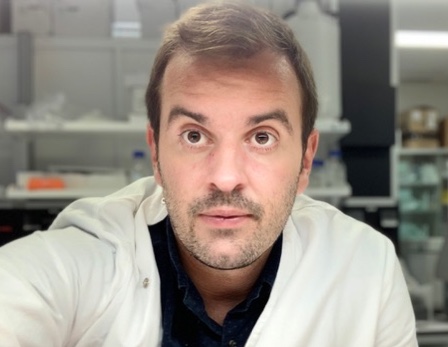
Francisco Díez Fuertes
Investigador Doctor Indefinido
ORCID code: 0000-0003-2413-9229
Degree in Biology from the University of León, PhD specialized in molecular virology from the Complutense University of Madrid in 2010 and master's degree in bioinformatics and computational biology from the same university in 2012. He has done research stays at University of Illinois at Urbana Champaign (USA) in 2010, Nebraska Center for Virology (USA) in 2011, Institut Pasteur (France) in 2013 and J. Craig Venter Institute (USA) in 2015-2016.
He joined the AIDS Immunopathology Unit in 2013 with a contract from the “Sara Borrell” postdoctoral program. After a period at the August Pi i Sunyer Biomedical Research Institute in Barcelona he rejoins the AIDS Immunopathology Unit in 2020 as a PhD researcher.
His lines of research have focused on the genomic and transcriptomic characterization of extreme phenotypes in HIV-1 infection, including long-term non-progressors and elite controllers. He collaborates with other laboratories of the center in the analysis of outbreaks caused by viruses with interest in Public Health, as well as in evolutionary studies on genomic epidemiology. Since 2020 he has led different clinical studies on COVID-19. Currently, he combines omics sciences with different bioinformatics tools to answer different scientific questions in the field of virology, especially in HIV-1 and SARS-CoV-2 research. He currently coordinates together with Dr. Javier García Pérez the AIDS Immunopathology Unit.
-
María Pernas Escario
Senior Specialized Technician of Public Research Organizations (OPIs)
ORCID code: 0000-0003-2966-0160
-

Victor Sánchez Merino
Distinguished Scientist
ORCID code: 0000-0001-9400-427X
He holds a Bachelor's and a Ph.D. in Pharmacy from the Complutense University of Madrid, specializing in virology and molecular biology. His research has focused on the study of HIV and EBV. His doctoral thesis addressed the evolution of HIV-1 and the restoration of mutant HIV-1 reverse transcriptase function.
He completed a postdoctoral stay at Harvard University, investigating new viral interactions (2001–2003). At the University of Massachusetts, he explored CD8+ T lymphocyte responses in vertical HIV transmission (2003–2008).
In Spain, at the Hospital Clínico-IDIBAPS (Barcelona; 2008–2017) and the Carlos III Health Institute (Madrid; 2017–Present), he has led research on HIV-1 neutralizing antibodies and the design of preventive vaccines.He is currently co-leading, alongside Dr. Eloísa Yuste Herranz, the newly established Humoral Immunity and HIV Vaccines Unit. Additionally, he is a professor and principal investigator at Alfonso X el Sabio University (Madrid).
-

Nuria González Fernández
Investigadora Contratada indefinida
ORCID code: 0000-0002-0087-5144
She completed her PhD in 2007 (Universidad Autónoma de Madrid), focused on the development of an envelope recombinant virus system to characterize HIV-1 tropism, as well as on the study of the role of the chemokine CXCL12 in virus propagation at the infectious synapse. Part of this work was carried out in the laboratory of Dr. Quentin Sattentau at the University of Oxford.
During her postdoctoral period, she expanded her research on the mechanisms of HIV entry and specialized in the study of the neutralizing response. She developed a system to measure neutralizing activity, which has been used in clinical trials of HIV vaccine candidates. During a stay at the Vaccine Research Center, NIH (USA), she acquired experience in various techniques for the characterization of broadly neutralizing antibodies, leading to new collaborations and research projects, which she is currently developing in the AIDS Immunopathology Unit of the Carlos III Health Institute.
She has participated in research networks such as EAVI2020 (co-PI), CIBERINFEC, RIS and EUROPRISE (EU). Since 2014 she is a professor of the Master in Microbiology applied to Public Health and Infectious Diseases Research at the University of the University of Alcalá and, since 2023, of the Master in Human Immunodeficiency Virus Infection at the University Rey Juan Carlos.
-

Almudena Rubio Perez
Research Assistant
ORCID code: 0009-0006-4687-7555
Graduated in Biochemistry from the University of Córdoba (Andalusia, Spain) with a master's degree in Biomedicine from the University of Cádiz (Andalusia, Spain). She is currently part of the Humoral Immunity and HIV Vaccines Unit (IHV) at the National Center for Microbiology (CNM) under a Youth Guarantee contract funded by the Community of Madrid and is pursuing a Ph.D. in the Microbiology and Parasitology program at the Complutense University of Madrid.
-
Virginia Sandonís Martín
Senior Specialized Technician of Public Research Organizations (OPIs)
ORCID code: 0000-0001-5762-7531
-
Mercedes Bermejo Herrero
Investigadora post-doctoral contratada
ORCID code: 0000-0001-9909-8578
Degree and PhD in Biological Sciences (Biochemistry and Molecular Biology) from the Autonoma University of Madrid. Her doctoral thesis studied the expression of CXCR4 and SDF-1/CXCL12 in lymphocytes and dendritic cells and their implications in HIV-1 infection.
She has completed internships in various laboratories: the Immunology Department of the Gregorio Marañón University Hospital in Madrid, the Research Center of the 12 de Octubre University Hospital in Madrid (where she was head of the flow cytometry service) and is currently at the CNM (National Research Center) of the Carlos III Health Institute.
Her research interests have focused on the study of HIV biology and its interaction with the immune system. She has currently participated in clinical trials, CombiVacs and ENE-Covid Senior, and in collaboration with Hipra.
-
Rosa Fuentes Fernández
Laboratory Technician
-

Rubén Ayala Suárez
Técnico Superior Especializado OPI
ORCID code: 0000-0002-1271-646.
Graduated in Biotechnology from the University of Cadiz (2015), Master in Microbiology of Infectious Diseases (2016) and PhD in Functional Biology from the University of Alcalá (2023). He carried out his PhD Thesis at the AIDS Immunopathology laboratory (CNM) on post-translational epigenetic mechanisms of natural control of HIV infection. In the same period, he completed a Diploma in Bioinformatics at Pablo de Olavide University (2021).
In 2023 he joined as a postdoctoral researcher in the HIV and AIDS research group at the August Pi i Sunyer Biomedical Research Institute (Barcelona), where he worked on the relationship of HIV and senescence until his incorporation as a Técnico Superior Especializado in the AIDS Immunopathology unit of the Spanish National Center of Microbiology (ISCIII) in 2025.
The main research projects in which he participates focus on resistance and natural control to HIV infection, as well as the evaluation of the immune response in vaccine trials, using mainly bioinformatics techniques focused on massive sequencing (RNA-Seq, single-cell, genome sequencing), the application of biostatistics and machine learning in data management.
-
-

Almudena Cascajero Díaz
Técnico de laboratorio
ORCID code: 0000-0002-9654-3100
Técnico Superior de Actividades Técnicas y Profesionales (Unidades de Inmunopatología del SIDA y Legionella, Centro Nacional de Microbiología). Clinical Diagnostic Laboratory Technician by IES Renacimiento de Madrid.
Experience in cloning techniques and characterization of neutralizing antibodies and participation in different projects on the pathogenesis of HIV by studying the viral envelope and the mechanisms of resistance to antiretroviral drugs. This experience has subsequently allowed me to participate in 5 multicenter clinical studies studying the immune response against different variants of SARS-CoV-2.
Since 2021, I also participate as a laboratory technician in the Legionella Unit as a support to the Spanish National Health System through the microbiological surveillance of the disease to contribute to the prevention and control of legionellosis.
-

Manuela Beltrán Vicente
Técnico de Laboratorio Indefinido
ORCID code: 0000-0001-6185-2280
Senior Technician of Technical and Professional Activities (AIDS Immunopathology Unit, Spanish National Center of Microbiology).
Clinical Analysis Laboratory Specialist Technician by IES Las Musas (Madrid, 1996). Demonstrated experience in the development of strategies against HIV, focused on the screening of compounds of both natural and synthetic origin with antiviral activity and identification and evaluation of potential therapeutic agents, as well as the screening of serological samples for the study of immunity for the identification of possible strategies for the development of vaccines against HIV. -

Silvia Jara Herrera
Técnico de Laboratorio Contratado CIBERINFEC
ORCID code: 0009-0001-2842-2040
Clinical and Biomedical Diagnostic Laboratory Technician.
She is currently working in the AIDS Immunopathology Unit of the Spanish National Center of Microbiology (ISCIII) with a contract through the Spanish Biomedical Research Networking Centre in Infectious Diseases (CIBER-INFEC).
She worked from March 2020 to September 2024 at the Department of Animal Health (Faculty of Veterinary Medicine) of the Universidad Complutense de Madrid.
She has experience in serological techniques (ELISA, Western Blot and IFA), cell culture and molecular biology.
-

Irene Díaz Marín
Técnico de laboratorio contratado
Clinical and Biomedical Diagnostics laboratory technician by CIFP Politécnico de Murcia-CESUR and graduated in Journalism from the Complutense University of Madrid.
She is currently at the AIDS Immunopathology Unit of the Spanish National Center of Microbiology with a contract of the “Garantía Juvenil” program (Community of Madrid), where she performs technical tasks in several research projects about HIV-1 and COVID-19.
-

Lorena Vigón Hernandez
Tenured Specialized Technician from OPIs
ORCID code: 0000-0002-6405-4054
Graduate in Health Biology and PhD in Health Sciences from the University of Alcalá de Henares. In 2016, she joined the CNM-ISCIII under a Youth Guarantee contract funded by the Community of Madrid, and in 2018 she was awarded a pFIS fellowship, which enabled her to remain at the same institution. Subsequently, in 2022, she was appointed as a Tenured Specialized Technical Staff of the Spanish Public Research Organizations (OPIs).
Her research has primarily focused on elucidating the mechanism of action of tyrosine kinase inhibitors in HIV-1 infection (PMID: 32828803; PMID: 34186065), as well as on the identification of biomarkers that could predict COVID-19 severity (PMID: 34616404; PMID: 34122423; PMID: 35960731).
She is currently a member of the recently established Humoral Immunity and HIV Vaccines Unit, led by Dr. Eloisa Yuste and Dr. Victor Sanchez-Merino.
Actualmente forma parte de la recientemente creada Unidad de Inmunidad Humoral y Vacunas frente al VIH, liderada por la Dra. Eloísa Yuste Herranz y el Dr. Víctor Sánchez Merino.
-
Laura Capa Muñoz
Investigadora post-doctoral contratada
ORCID code: 0000-0002-0234-331X
Degree in Biological Sciences from the Universidad Autónoma de Madrid and PhD from the Universidad Complutense de Madrid, she has a master's degree in AIDS (Universidad Complutense de Madrid) and a master's degree in HIV infection (Universidad Rey Juan Carlos de Madrid).
Professional activity developed mainly in the study of infectious diseases, both in the field of basic research in public research centers and in the pharmaceutical industry, as well as in the field of public health and scientific management. She has worked in the international response to the HIV pandemic, representing the Ministry of Health as an expert in meetings of the European Commission and collaborated with the WHO. At the Instituto de Salud Carlos III, she has led the scientific management of national and European projects in the AIDS Immunopathology Unit and has been part of the Institute's Data Protection Working Group. Currently, she continues to coordinate the Cohort of Long-Term Non-Progressing Patients created by the Spanish AIDS Research Network (RIS), is part of the coordination team of the PhD Program in Biomedical Sciences and Public Health IMIENS-UNED-ISCIII and of the Institute's Working Group on Equality.




List of staff