



We protect your health through science
Investigation
Measles, rubella, mumps, parvovirus B19 and rabies
Research Lines
Content with Investigacion .
Inmunología Microbiana e Inmunogenética
1. Análisis de la respuesta innata de mamíferos en la infección por Leishmania.
2. Caracterización inmunoproteómica en :
a. Streptococcus suis
b. Lactococcus garviae
c. Mycobacterium spp
3. Desarrollo de inmunoensayos analíticos basados en anticuerpos monoclonales (AcM) para detectar y cuantificar antígenos de origen animal, vegetal y microbiano.
4. Desarrollo y caracterización de AcM frente a los componentes del sistema del Complemento. Aplicación diagnóstica.
5. Desarrollo de reactivos de referencia y diseño de inmunoensayos para la evaluación cualitativa y cuantitativa de toxinas clostridiales.
6. Oferta tecnológica de producción de AcM y policlonales frente a substancias de interés industrial y biomédico.
El grupo está interesado en el estudio de la respuesta inmune desde una perspectiva multidisciplinar que incluye aproximaciones bioquímicas, biotecnológicas, genómicas, inmunoinformáticas y proteómicas, que junto con el uso adicional de modelos in vivo se encaminan al diseño de estrategias terapéuticas frente a diversas enfermedades crónicas, infecciosas y raras que poseen un claro componente inmunológico en su etiología.
Las principales líneas de investigación que está desarrollando el grupo en la actualidad son:
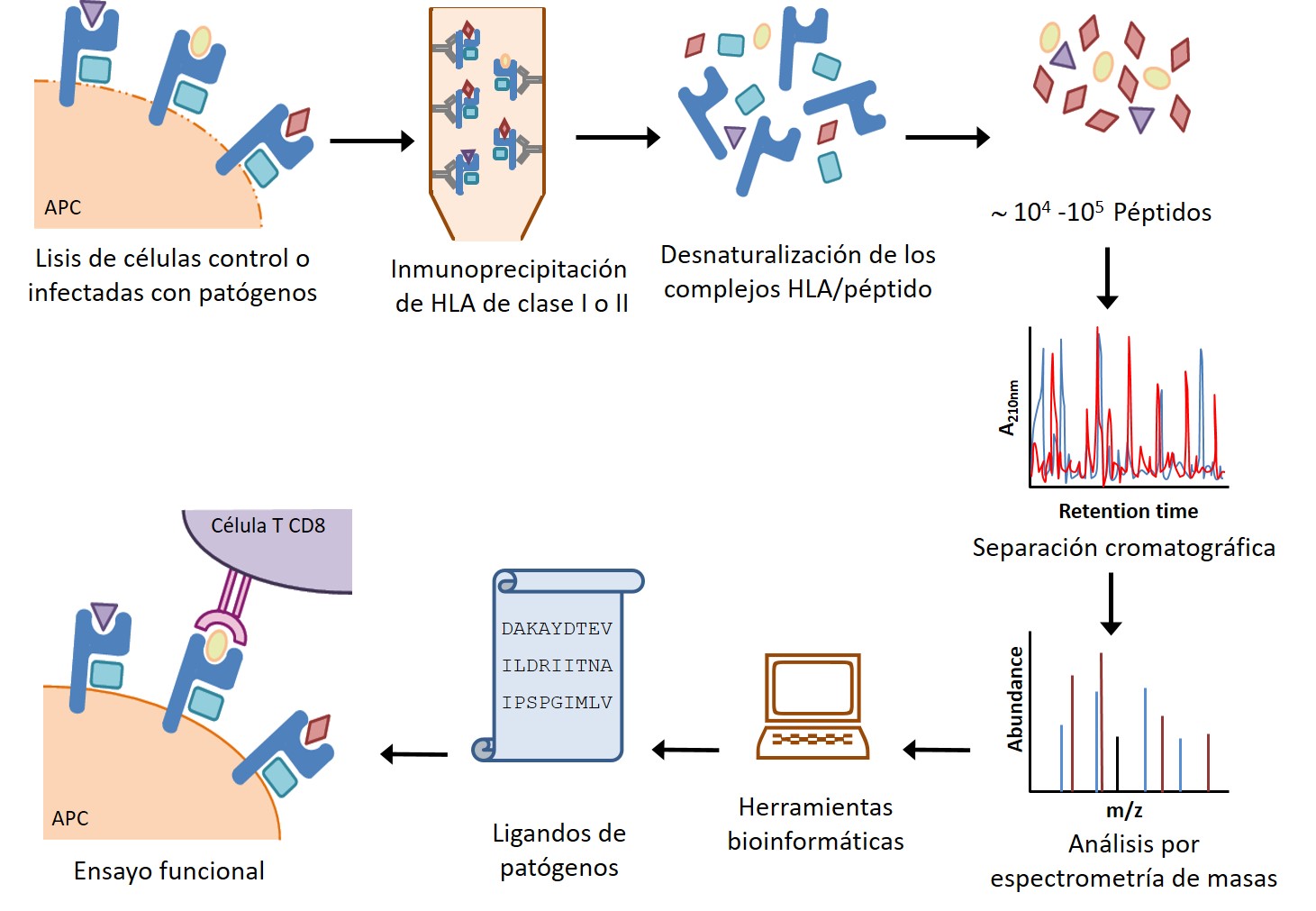
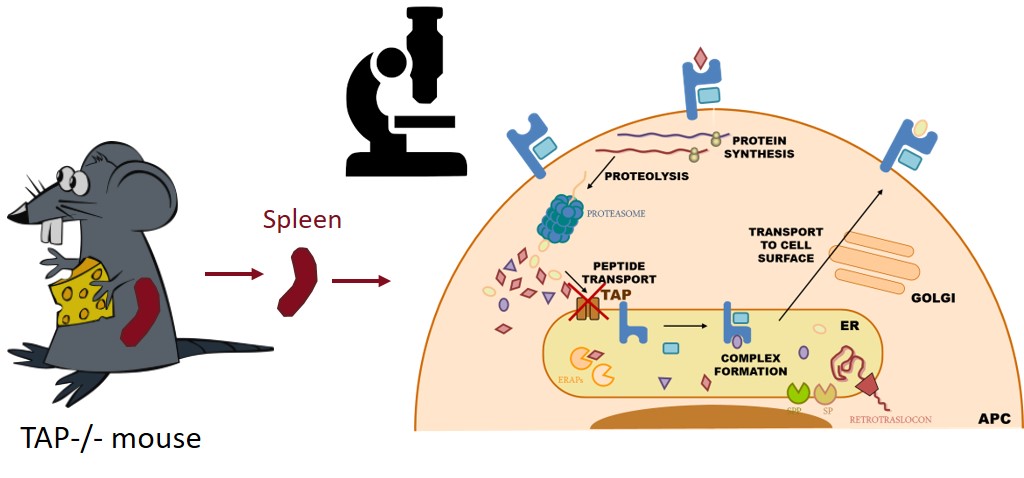
- * Análisis de las respuestas inmunes celulares frente a patógenos virales y bacterianos, mediante técnicas inmunoproteómicas, modelos in vivo con animales transgénicos y muestras humanas.
- * Caracterización de CD69: regulación génica, función reguladora inmune en homeostasis e infección y su uso como diana terapéutica, edición génica por CRISPR en modelos animales y celulares, etc.

* Desarrollo de herramientas inmunoinformáticas que permitan analizar la respuesta inmune celular frente a diversos virus de interés sanitario y determinar la eficacia de sus vacunas a nivel de población mundial.

* Estudio de las respuestas inmunes celulares frente a enfermedades raras (artritis reactiva y síndrome del linfocito desnudo) y crónicas (espondiloartropatías).
* Inclusión de componentes del sistema inmune en la fabricación de tejidos humanos, especialmente piel, para uso clínico, farmacéutico y cosmético.
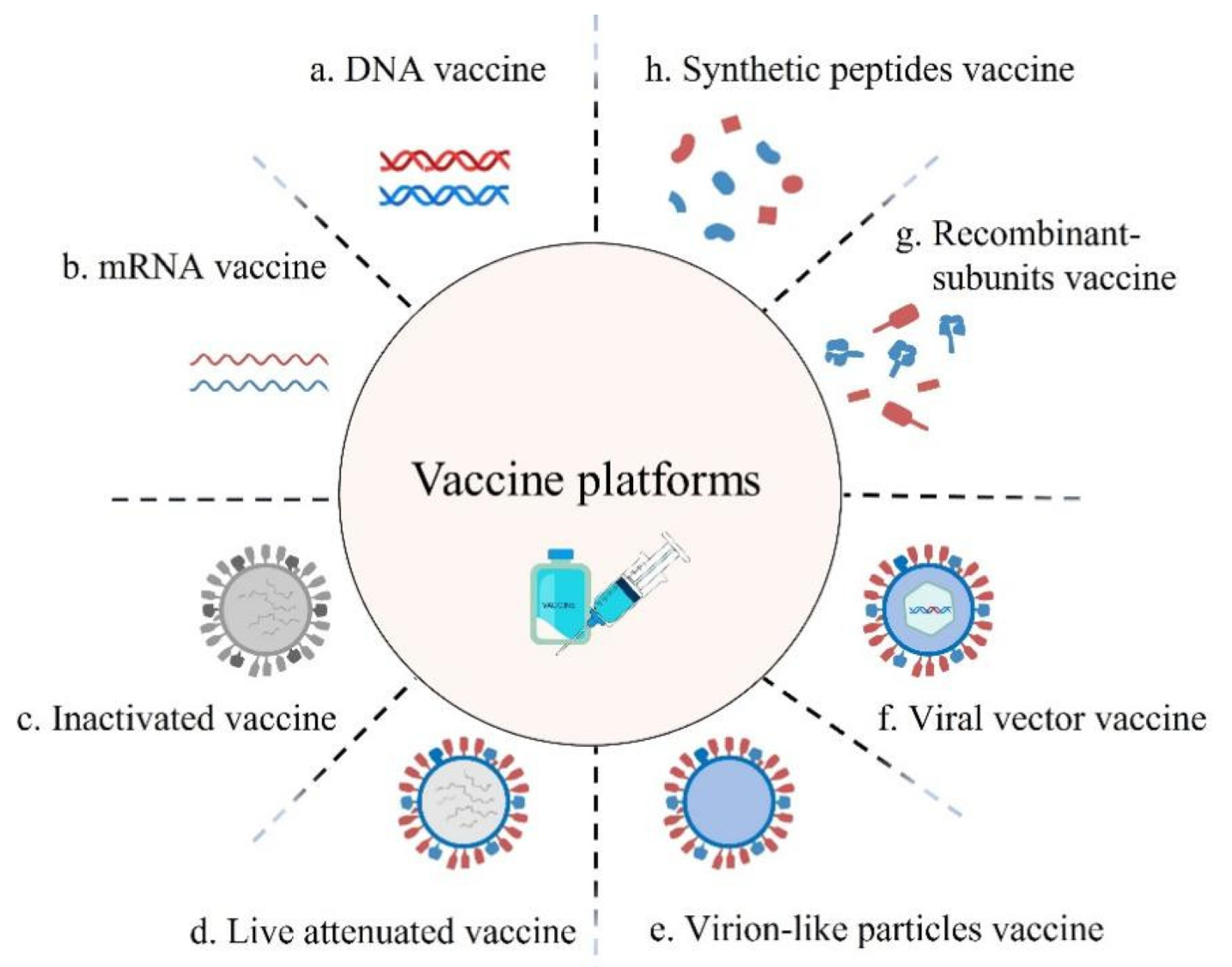
- * Generación de virus recombinantes como vectores vacunales.
Research projects
Content with Investigacion .
Los proyectos del grupo de los últimos años son los siguientes:
Proyecto “La interrelación de CD69 y el procesamiento antigénico en enfermedades infecciosas y autoinmunes" financiado por la Acción Estratégica en Salud del Ministerio de Ciencia, Innovación y Universidades. Año: 2023-2025.
Proyecto “Interacciones génicas y proteicas de CD69 y sus regiones génicas reguladoras con moléculas" financiado por la AEI. Año: 2022-2024.

Proyecto “Nuevas tecnologías de fabricación y optimización de tejidos: la piel como sistema modelo” financiado por el Programa de Actividades de I+D entre grupos de investigación de la Comunidad de Madrid en tecnologías 2018. Año: 2020-2023. Proyecto Coordinado por el Dr. Pablo Acedo de la Universidad Carlos III.
Proyecto “Estudio de CD69 como diana para mejorar el tratamiento de la leucopania y la movilización de células T de memoria de médula ósea" financiado por la Acción Estratégica en Salud del Ministerio de Ciencia, Innovación y Universidades. Año:2020-2024.
Proyecto “Diseño racional de una vacuna contra el virus respiratorio sincitial humano” financiado por la Acción Estratégica en Salud del Ministerio de Ciencia, Innovación y Universidades. Año: 2019-2022
Proyecto “Función de CD69 y sus elementos reguladores" financiado por la Acción Estratégica en Salud del Ministerio de Ciencia, Innovación y Universidades. Año: 2017-2022.
Proyecto “Diseño de vacunas recombinantes poliepitópicas para generar respuestas CD8+ contra virus emergentes” financiado por el Plan Nacional de I+D+i del Ministerio de Economía y Competitividad. Año: 2015-2017.
Proyecto “Análisis de los efectos de CD69 dependientes de S1P1 en modelos de infección e inflamación y estudio de su regulación” financiado por el FIS. Año: 2014-2017.
Proyecto “ADELVAC: Adenovirus con delecciones epitópicas para vacunación” financiado por el programa INNPACTO del Ministerio de Economía y Competitividad. Centro Nacional de Microbiología, Instituto de Salud Carlos III. Año: 2012-2014. Proyecto Coordinado por el Dr. Manel Cascallo de VCN BIOSCIENCES SL.
Proyecto “Diseño de vacunas multiepitópicas recombinantes para aumentar la respuesta inmune celular contra el VRSH” financiado por el Plan Nacional de I+D+i del Ministerio de Ciencia e Innovación. Año: 2012-2014.
Publications
Bertuzzi M, Schrettl M, Alcazar-Fuoli L, Cairns TC, Muñoz A, Walker LA, Herbst S, Safari M, Cheverton AM, Chen D, Liu H, Saijo S, Fedorova ND, Armstrong-James D, Munro CA, Read ND, Filler SG, Espeso EA, Nierman WC, Haas H, Bignell EM. The pH-responsive PacC transcription factor of Aspergillus fumigatus governs epithelial entry and tissue invasion during pulmonary aspergillosis. PLoS Pathog. 2014 Oct 16;10(10):e1004413. doi: 10.1371/journal.ppat.1004413.
Bertuzzi M, Schrettl M, Alcazar-Fuoli L, Cairns TC, Muñoz A, Walker LA, Herbst S, Safari M, Cheverton AM, Chen D, Liu H, Saijo S, Fedorova ND, Armstrong-James D, Munro CA, Read ND, Filler SG, Espeso EA, Nierman WC, Haas H, Bignell EM. The pH-responsive PacC transcription factor of Aspergillus fumigatus governs epithelial entry and tissue invasion during pulmonary aspergillosis. PLoS Pathog. 2014 Oct 16;10(10):e1004413. doi: 10.1371/journal.ppat.1004413.
DOIYasmin S, Alcazar-Fuoli L, Gründlinger M, Puempel T, Cairns T, Blatzer M, Lopez JF, Grimalt JO, Bignell E, Haas H. Mevalonate governs interdependency of ergosterol and siderophore biosyntheses in the fungal pathogen Aspergillus fumigatus. Proc Natl Acad Sci U S A. 2012 Feb 21;109(8):E497-504. doi: 10.1073/pnas.1106399108. Epub 2011 Nov 21. PMID: 22106303; PMCID: PMC3286978.
Yasmin S, Alcazar-Fuoli L, Gründlinger M, Puempel T, Cairns T, Blatzer M, Lopez JF, Grimalt JO, Bignell E, Haas H. Mevalonate governs interdependency of ergosterol and siderophore biosyntheses in the fungal pathogen Aspergillus fumigatus. Proc Natl Acad Sci U S A. 2012 Feb 21;109(8):E497-504. doi: 10.1073/pnas.1106399108. Epub 2011 Nov 21. PMID: 22106303; PMCID: PMC3286978.
PUBMED DOIImpaired Cytotoxic Response in PBMCs From Patients With COVID-19 Admitted to the ICU: Biomarkers to Predict Disease Severity.
Impaired Cytotoxic Response in PBMCs From Patients With COVID-19 Admitted to the ICU: Biomarkers to Predict Disease Severity. Vigón L, Fuertes D, García-Pérez J, Torres M, Rodríguez-Mora S, Mateos E, Corona M, Saez-Marín AJ, Malo R, Navarro C, Murciano-Antón MA, Cervero M, Alcamí J, García-Gutiérrez V, Planelles V, López-Huertas MR, Coiras M (AC). Front Immunol. 2021 May 26;12:665329. doi: 10.3389/fimmu.2021.665329. eCollection 2021. PMID: 34122423.
PUBMED DOIIdentification of Immunological Parameters as Predictive Biomarkers of Relapse in Patients with Chronic Myeloid Leukemia on Treatment-Free Remission
Identification of Immunological Parameters as Predictive Biomarkers of Relapse in Patients with Chronic Myeloid Leukemia on Treatment-Free Remission. Vigón L, Luna A, Galán M, Rodríguez-Mora S, Fuertes D, Mateos E, Piris-Villaespesa M, Bautista G, San José E, Rivera-Torres J, Steegmann JL, de Ory F, Pérez-Olmeda M, Alcamí J, Planelles V, López-Huertas MR, García-Gutiérrez V, Coiras M (AC). J Clin Med. 2020 Dec 25;10(1):42. doi: 10.3390/jcm10010042. PMID: 33375572.
PUBMED DOIAdditional Information
This group, together with the CNM Serology Laboratory (LS), houses the National Reference Laboratories for Rabies (RD 1940/2004) and Measles and Rubella (National Elimination Plan) that are integrated into the corresponding European networks. It has 10 self-developed techniques in its service portfolio (2 accredited by ENAC and 3 by the WHO). In addition, it attends to three CNM microbiological surveillance programs (measles and rubella, mumps and rabies). It is integrated into a CIBERESP group of which Juan E. Echevarría is head and in which other CNM researchers participate.
Research on MMR vaccine diseases is currently financed through an AESI project (PI15CIII/00023) of which Aurora Fernández García is co-PI and in which the LS, the CNE, the CAM (LRSP and the Epidemiology Service) and a network of primary care pediatricians participate. of the CAM.
Research on lisaviruses and other viruses associated with bats is currently funded through the VIROBAT-4 project (MINECO, SAF 2017-89355-P) of which Juan E. Echevarría is PI and in which the CNM Respiratory Viruses Laboratory, the Doñana Biological Station (CSIC) and the University of Alcalá de Henares participate.
This group, together with the CNM Serology Laboratory (LS), houses the National Reference Laboratories for Rabies (RD 1940/2004) and Measles and Rubella (National Elimination Plan) that are integrated into the corresponding European networks. It has 10 self-developed techniques in its service portfolio (2 accredited by ENAC and 3 by the WHO). In addition, it attends to three CNM microbiological surveillance programs (measles and rubella, mumps and rabies). It is integrated into a CIBERESP group of which Juan E. Echevarría is head and in which other CNM researchers participate.
Research on MMR vaccine diseases is currently financed through an AESI project (PI15CIII/00023) of which Aurora Fernández García is co-PI and in which the LS, the CNE, the CAM (LRSP and the Epidemiology Service) and a network of primary care pediatricians participate. of the CAM.
Research on lisaviruses and other viruses associated with bats is currently funded through the VIROBAT-4 project (MINECO, SAF 2017-89355-P) of which Juan E. Echevarría is PI and in which the CNM Respiratory Viruses Laboratory, the Doñana Biological Station (CSIC) and the University of Alcalá de Henares participate.