



We protect your health through science
Investigation
Antibiotic Resistance
Research Lines
Content with Investigacion .

B) Study of the distribution and dynamics of HPV infections in risk groups. There are some particularly vulnerable groups, some of them difficult to access (sex workers, transgender groups, etc.), in which HPV infections deserve special attention. The prevalence of HPV infection is especially high in people living with HIV and/or among men who have sex with men. Knowledge of the distribution and dynamics of infections is especially interesting in these groups, as they may help to improve current algorithms for the prevention of anogenital cancer.
C) Study of infection by HPV genotypes and their relationship with progression to neoplastic processes. The oncogenic capacity of some HPV genotypes and their involvement in the production of anogenital cancer is well known. In addition, there are other oncological processes, such as non-melanoma skin cancer, in which HPV could be implicated. Thus, members of the gamma-24 HPV species have recently been associated with skin cancer. It is to be hoped that the appearance of new genotypes and the performance of more extensive studies may lead to the identification of new associations between HPV and neoplastic processes.
D) Study of co-infections by different HPV genotypes. The presence of co-infections of different HPV genotypes is a very frequent finding, both in skin samples and in different mucous membranes. The great genetic diversity of HPV limits the ability of classical molecular methods to perform a comprehensive detection and study of the genotypes present. However, the use of massive sequencing makes it possible to eliminate some of these biases and to obtain more detailed information on the existing HPV populations, as well as to analyze interactions between the different genotypes.
E) Description of new HPV genotypes/variants. Currently at the International HPV Reference Center (Karolinska Institute, Sweden) more than 220 HPV genotypes are described, distributed in 5 different genera. However, improved molecular detection techniques, as well as the use of massive sequencing, are allowing this number to increase rapidly. The study of new genotypes and variants is essential for the validation and quality control of available diagnostic methods. Similarly, their characterization and the study of possible associations of HPV with pathologies other than those already known is a field of great interest for research.
Research projects
Content with Investigacion .
Título: Impact of vaccination against Human Papillomavirus in Spain: Studye of the distribution of genotypes and its application in surveillance. Principal Investigator: Horacio Gil. Starting/End dates: 2024-2026. Funding Entity: Acción Estratégica de Salud Intramural (AESI) del Instituto de Salud Carlos III. Project Reference: PI23CIII/00006.
Título: Effect of feminizing therapy on immune response in transgender women. Principal Investigator: Victor Manuel Sánchez Merino. Collaborating Investigator: Horacio Gil. Starting/End dates:2025-2027. Funding Entity: Acción Estratégica de Salud Intramural (AESI) del Instituto de Salud Carlos III. Project Reference: PI24CIII/00031.
Publications
Evolution of broadly cross-reactive HIV-1-neutralizing activity: therapy-associated decline, positive association with detectable viremia, and partial restoration of B-cell subpopulations
Ferreira CB, Merino-Mansilla A, Llano A, Perez I, Crespo I, Llinas L, Garcia F, Gatell JM, Yuste E, Sanchez-Merino V; J Virol. 2013 Nov;87(22):12227-36
PUBMED DOIDefinition of the viral targets of protective HIV-1-specific T cell responses
Mothe B, Llano A, Ibarrondo J, Daniels M, Miranda C, Zamarreno J, Bach V, Zuniga R, Perez-Alvarez S, Berger CT, Puertas MC, Martinez-Picado J, Rolland M, Farfan M, Szinger JJ, Hildebrand WH, Yang OO, Sanchez-Merino V, Brumme CJ, Brumme ZL, Heckerman D, Allen TM, Mullins JI, Gomez G, Goulder PJ, Walker BD, Gatell JM, Clotet B, Korber BT, Sanchez J, Brander C; J Transl Med. 2011 Dec 7;9:208
PUBMED DOIBroadly cross-neutralizing antibodies in HIV-1 patients with undetectable viremia
Medina-Ramirez M, Sanchez-Merino V, Sanchez-Palomino S, Merino-Mansilla A, Ferreira CB, Perez I, Gonzalez N, Alvarez A, Alcocer-Gonzalez JM, Garcia F, Gatell JM, Alcami J, Yuste E; J Virol. 2011 Jun;85(12):5804-13.
PUBMED DOISimian immunodeficiency virus engrafted with human immunodeficiency virus type 1 (HIV-1)-specific epitopes: replication, neutralization, and survey of HIV-1-positive plasma
Yuste E, Sanford HB, Carmody J, Bixby J, Little S, Zwick MB, Greenough T, Burton DR, Richman DD, Desrosiers RC, Johnson WE*. 2006. J Virol 80:3030-41.
PUBMED DOIHigh-Resolution Melting Assay to Detect the Mutations That Cause the Y132F and G458S Substitutions at the ERG11 Gene Involved in Azole Resistance in Candida parapsilosis
Nuria Trevijano-Contador, Elena López-Peralta, Jorge López-López, Alejandra Roldán, Cristina de Armentia, Óscar Zaragoza. Mycoses 2024 Nov;67(11):e13811
PUBMED DOIBroad Protection against Invasive Fungal Disease from a Nanobody Targeting the Active Site of Fungal β-1,3-Glucanosyltransferases
Redrado-Hernández S, Macías-León J, Castro-López J, Belén Sanz A, Dolader E, Arias M, González-Ramírez AM, Sánchez-Navarro D, Petryk Y, Farkaš V, Vincke C, Muyldermans S, García-Barbazán I, Del Agua C, Zaragoza O, Arroyo J, Pardo J, Gálvez EM, Hurtado-Guerrero R. Angew Chem Int Ed Engl. 2024 Aug 19;63(34):e202405823.
PUBMED DOIFungal burden assessment in hospital zones with different protection degrees
García-Gutiérrez L, Baena Rojas B, Ruiz M, Hernández Egido S, Ruiz-Gaitán AC, Laiz L, Pemán J, Cuétara-García MS, Mellado E & Martin-Sanchez PM. Build Environ, Volume 269, 1 February 2025, 112454
DOIDistribution of Aspergillus Species and Prevalence of Azole Resistance in clinical and environmental Samples from a Spanish Hospital during a three-year study period
Lucio J, Alcazar-Fuoli L, Gil H, Cano-Pascual S, Hernandez-Egido S, Cuetara MS and Mellado E. Mycoses. 2024 Apr;67(4):e13719.
PUBMED DOIContent with Investigacion .
-

Sara Vázquez Ávila
Técnico de Laboratorio
Obtuve mi título como Técnico de Laboratorio Clínico y Biomédico en el año 2020 y en el 2021obtuve el Grado Superior de Anatomía Patológica y Citodiagnóstico. Trabajé en el Centro Andaluz de Biología Molecular y Medicina Regenerativa (Sevilla) y en el Departamento de Farmacología de la Facultad de Medicina (Universidad Complutense de Madrid). Actualmente soy Técnico de Laboratorio en el Laboratorio de Helmintos del CNM (ISCIII).
-
Maria Jesús Perteguer Prieto
Investigadora Titular, Jefa de grupo
-
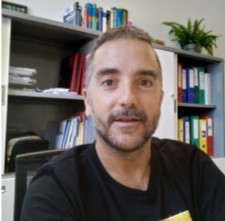
Javier Sotillo Gallego
Científico Titular
ORCID code: 0000-0002-1443-7233
En el año 2011 obtuve mi título de doctor “cum laude” por la Universidad de Valencia. Durante mi etapa postdoctoral en la James Cook University en Australia (2012-2019) me especialicé en estudiar las interacciones parásito-hospedador usando diferentes técnicas ómicas. En 2019 volví España y comencé a trabajar en el Laboratorio de Helmintos del CNM (ISCIII) primero como Investigador Miguel Servet y más adelante como Investigador Ramón y Cajal. Actualmente soy Científico Titular en el mismo laboratorio.
-

Ana Hernández González
Laboral Fijo Doctor
ORCID code: 0000-0001-6762-8175
Licenciada en Biología y doctora en Enfermedades Tropicales por la Universidad de Salamanca. Puestos ocupados con anterioridad: investigadora predoctoral en el IRNASA-CSIC (contrato JAE predoc), investigadora postdoctoral en el CNM (contrato Sara Borrell) e investigadora contratada como técnico superior en el CNM (RICET). Actualmente, personal Laboral Fijo Doctor en el laboratorio de Helmintos del CNM.
-
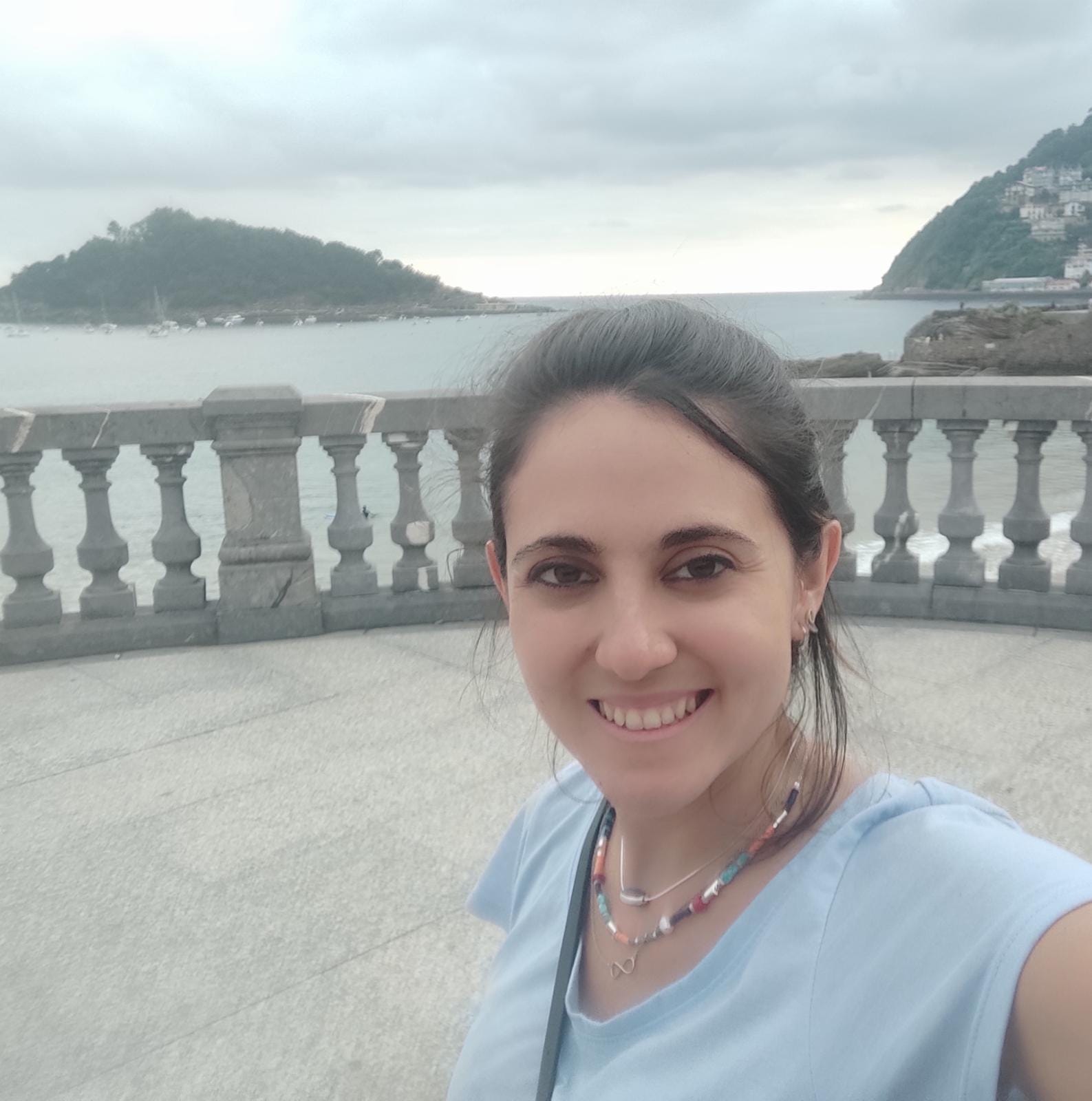
Esther Rodríguez Pérez
Técnico de Laboratorio
ORCID code: 0000-0002-3680-7733
Obtuve mi título como Graduada en Biología Sanitaria en el año 2015 y en el año 2019 obtuve el Grado Superior de Laboratorio de Diagnóstico Clínico. De 2019 a 2022 trabajé en el Museo Nacional de Ciencias Naturales (MNCN-CSIC), en el Departamento de Biogeoquímica y Ecología Microbiana. Actualmente trabajo como Técnico de Laboratorio en el Laboratorio de Helmintos del CNM (ISCIII).
-

Lourdes Castro Companioni
Ayudante de Investigación
ORCID code: 0009-0003-2746-4067
Bióloga sanitaria graduada en la Universidad de Alcalá de Henares (UAH), con master de Microbiología y Salud pública en la UAH en colaboración con el ISCIII.


List of staff
Additional Information
Our general objective is to provide early knowledge about any emerging antibiotic resistance mechanism in our country. This contribution of knowledge is based on transversal objectives that we consider key, such as 1) the ability to adapt research to emerging resistance problems, 2) the promotion of cooperative and multidisciplinary research studies working in networks with different Spanish and foreign centers, 3) the transfer of research results in an agile way to the clinical practice of the national health system, and 4) the promotion of the interrelation of research with reference, advice, training and dissemination seeking the empowerment of all.
More specifically, our main scientific objectives are the characterization of the molecular bases of antibiotic resistance in pathogenic bacteria, the study of the molecular epidemiology and population structure of resistant bacteria, the characterization of the mobile genetic elements that carry resistance genes, and the development of diagnostic techniques and therapeutic alternatives against bacteria with extensive resistance to antibiotics. In this sense, research into the dissemination pathways of Enterobacteriaceae, Acinetobacter baumannii and carbapenemase-producing Pseudomonas aeruginosa (as a paradigm of extensive resistance and pan-resistance) is one of our current priority objectives.
Our general objective is to provide early knowledge about any emerging antibiotic resistance mechanism in our country. This contribution of knowledge is based on transversal objectives that we consider key, such as 1) the ability to adapt research to emerging resistance problems, 2) the promotion of cooperative and multidisciplinary research studies working in networks with different Spanish and foreign centers, 3) the transfer of research results in an agile way to the clinical practice of the national health system, and 4) the promotion of the interrelation of research with reference, advice, training and dissemination seeking the empowerment of all.
More specifically, our main scientific objectives are the characterization of the molecular bases of antibiotic resistance in pathogenic bacteria, the study of the molecular epidemiology and population structure of resistant bacteria, the characterization of the mobile genetic elements that carry resistance genes, and the development of diagnostic techniques and therapeutic alternatives against bacteria with extensive resistance to antibiotics. In this sense, research into the dissemination pathways of Enterobacteriaceae, Acinetobacter baumannii and carbapenemase-producing Pseudomonas aeruginosa (as a paradigm of extensive resistance and pan-resistance) is one of our current priority objectives.