



We protect your health through science

Investigación
Malaria and Emerging Parasitosis
Líneas de investigación
Content with Investigacion .

B) Study of the distribution and dynamics of HPV infections in risk groups. There are some particularly vulnerable groups, some of them difficult to access (sex workers, transgender groups, etc.), in which HPV infections deserve special attention. The prevalence of HPV infection is especially high in people living with HIV and/or among men who have sex with men. Knowledge of the distribution and dynamics of infections is especially interesting in these groups, as they may help to improve current algorithms for the prevention of anogenital cancer.
C) Study of infection by HPV genotypes and their relationship with progression to neoplastic processes. The oncogenic capacity of some HPV genotypes and their involvement in the production of anogenital cancer is well known. In addition, there are other oncological processes, such as non-melanoma skin cancer, in which HPV could be implicated. Thus, members of the gamma-24 HPV species have recently been associated with skin cancer. It is to be hoped that the appearance of new genotypes and the performance of more extensive studies may lead to the identification of new associations between HPV and neoplastic processes.
D) Study of co-infections by different HPV genotypes. The presence of co-infections of different HPV genotypes is a very frequent finding, both in skin samples and in different mucous membranes. The great genetic diversity of HPV limits the ability of classical molecular methods to perform a comprehensive detection and study of the genotypes present. However, the use of massive sequencing makes it possible to eliminate some of these biases and to obtain more detailed information on the existing HPV populations, as well as to analyze interactions between the different genotypes.
E) Description of new HPV genotypes/variants. Currently at the International HPV Reference Center (Karolinska Institute, Sweden) more than 220 HPV genotypes are described, distributed in 5 different genera. However, improved molecular detection techniques, as well as the use of massive sequencing, are allowing this number to increase rapidly. The study of new genotypes and variants is essential for the validation and quality control of available diagnostic methods. Similarly, their characterization and the study of possible associations of HPV with pathologies other than those already known is a field of great interest for research.
Publicaciones destacadas
Interruption of onchocerciasis transmission in Bioko Island: Accelerating the movement from control to elimination in Equatorial Guinea
5. Herrador Z, Garcia B, Ncogo P, Perteguer MJ, Rubio JM, Rivas E, Cimas M, Ordoñez G, de Pablos S, Hernández-González A, Nguema R, Moya L, Romay-Barja M, Garate T, Barbre K, Benito A. Interruption of onchocerciasis transmission in Bioko Island: Accelerating the movement from control to elimination in Equatorial Guinea. PLoS Negl Trop Dis. 2018 May 3;12(5):e0006471.
PUBMED DOILAMP kit for diagnosis of non-falciparum malaria in Plasmodium ovale infected patients
7. Thuy-Huong Ta-Tang, Sergio L. B. Luz, Francisco J. Merino, Isabel de Fuentes, Rogelio López-Vélez, Tatiana A. P. Almeida, Marta Lanza, Cláudia M. M. Abrahim, and José M. Rubio (2016). Atypical Mansonella ozzardi Microfilariae from an Endemic Area of Brazilian Amazonia. Am. J. Trop. Med. Hyg 95(3), 2016, pp. 633–636.
PUBMED DOIComparison of Imported Plasmodium ovale curtisi and P. ovale wallikeri Infections among Patients in Spain, 2005-2011.
9. Rojo-Marcos G, Rubio-Muñoz JM, Ramírez-Olivencia G, García-Bujalance S, Elcuaz-Romano R, Díaz-Menéndez M, Calderón M, García-Bermejo I, Ruiz-Giardín JM, Merino-Fernández FJ, Torrús-Tendero D, Delgado-Iribarren A, Ribell-Bachs M,Arévalo-Serrano J, Cuadros-González J (2014). Comparison of Imported Plasmodium ovale curtisi and P. ovale wallikeri Infections among Patients in Spain, 2005-2011. Emerg Infect Dis. 2014 Mar;20(3):409-16.
PUBMED DOIArbovirus surveillance: first dengue virus detection in local Aedes albopictus mosquitoes in Europe, Catalonia, Spain, 2015.
1. C Aranda; MJ Martínez; T Montalvo; R Eritja; J Navero-Castillejos; E Herreros; E Marqués; R Escosa; I Corbella; E Bigas; L Picart; M Jané; I Barrabeig; N Torner; S Talavera; Ana Vázquez; María Paz Sánchez-Seco; Nuria Busquets. Arbovirus surveillance: first dengue virus detection in local Aedes albopictus mosquitoes in Europe, Catalonia, Spain, 2015.Eurosurveillance. 23 - 47, 2018.
PUBMED DOIPhylogenetic Characterization of Crimean-Congo Hemorrhagic Fever Virus, Spain
2. Eva Ramírez de Arellano; Lourdes Hernández; M José Goyanes; Marta Arsuaga; Ana Fernández Cruz; Anabel Negredo; María Paz Sánchez Seco. Phylogenetic Characterization of Crimean-Congo Hemorrhagic Fever Virus, Spain. Emerging infectious diseases. 23 - 12, pp. 2078 - 2080. 12/2017. ISSN 1080-6059
PUBMED DOIToscana virus infection in Catalonia (Spain).
4. Neus Cardeñosa; Diana Kaptoul; Pedro Fernández Viladrich; Carles Aranda; Fernando de Ory; Jordi Niubó; Pere Plans; Angela Domínguez; Giovanni Fedele; Antonio Tenorio; María Paz Sánchez Seco. Toscana virus infection in Catalonia (Spain). Vector borne and zoonotic diseases (Larchmont, N.Y.). 13 - 4, pp. 273 - 278. 04/2013. ISSN 1557-7759
PUBMED DOI. Autochthonous Crimean-Congo Hemorrhagic Fever in Spain
5. Anabel Negredo; Fernando de la Calle Prieto; Eduardo Palencia Herrejón; Marta Mora Rillo; Jenaro Astray Mochales; María P Sánchez Seco; Esther Bermejo Lopez; Javier Menárguez; Ana Fernández Cruz; Beatriz Sánchez Artola; Elena Keough Delgado; Eva Ramírez de Arellano; Fátima Lasala; Jakob Milla; Jose L Fraile; Maria Ordobás Gavín; Amalia Martinez de la Gándara; Lorenzo López Perez; Domingo Diaz Diaz; M Aurora López García; Pilar Delgado Jimenez; Alejandro Martín Quirós; Elena Trigo; Juan C Figueira; Jesús Manzanares; Elena Rodriguez Baena; Luis Garcia Comas; Olaia Rodríguez Fraga; Nicolás García Arenzana; Maria V Fernández Díaz; Victor M Cornejo; Petra Emmerich; Jonas Schmidt Chanasit; Jose R Arribas. Autochthonous Crimean-Congo Hemorrhagic Fever in Spain.The New England journal of medicine. 377 - 2, pp. 154 - 161. 13/07/2017. ISSN 1533-4406
PUBMED DOIZika Virus Screening among Spanish Team Members After 2016 Rio de Janeiro, Brazil, Olympic Games
6. Natalia Rodriguez Valero; Alberto M Borobia; Mar Lago; Maria Paz Sánchez Seco; Fernando de Ory; Ana Vázquez; Jose Luis Pérez Arellano; Cristina Carranza Rodríguez; Miguel J Martínez; Alicia Capón; Elias Cañas; Joaquin Salas Coronas; Arkaitz Azcune Galparsoro; Jose Muñoz. Zika Virus Screening among Spanish Team Members After 2016 Rio de Janeiro, Brazil, Olympic Games. Emerging infectious diseases. 23 - 8, pp. 1426 - 1428. 08/2017. ISSN 1080-6059
PUBMED DOIContent with Investigacion .
-
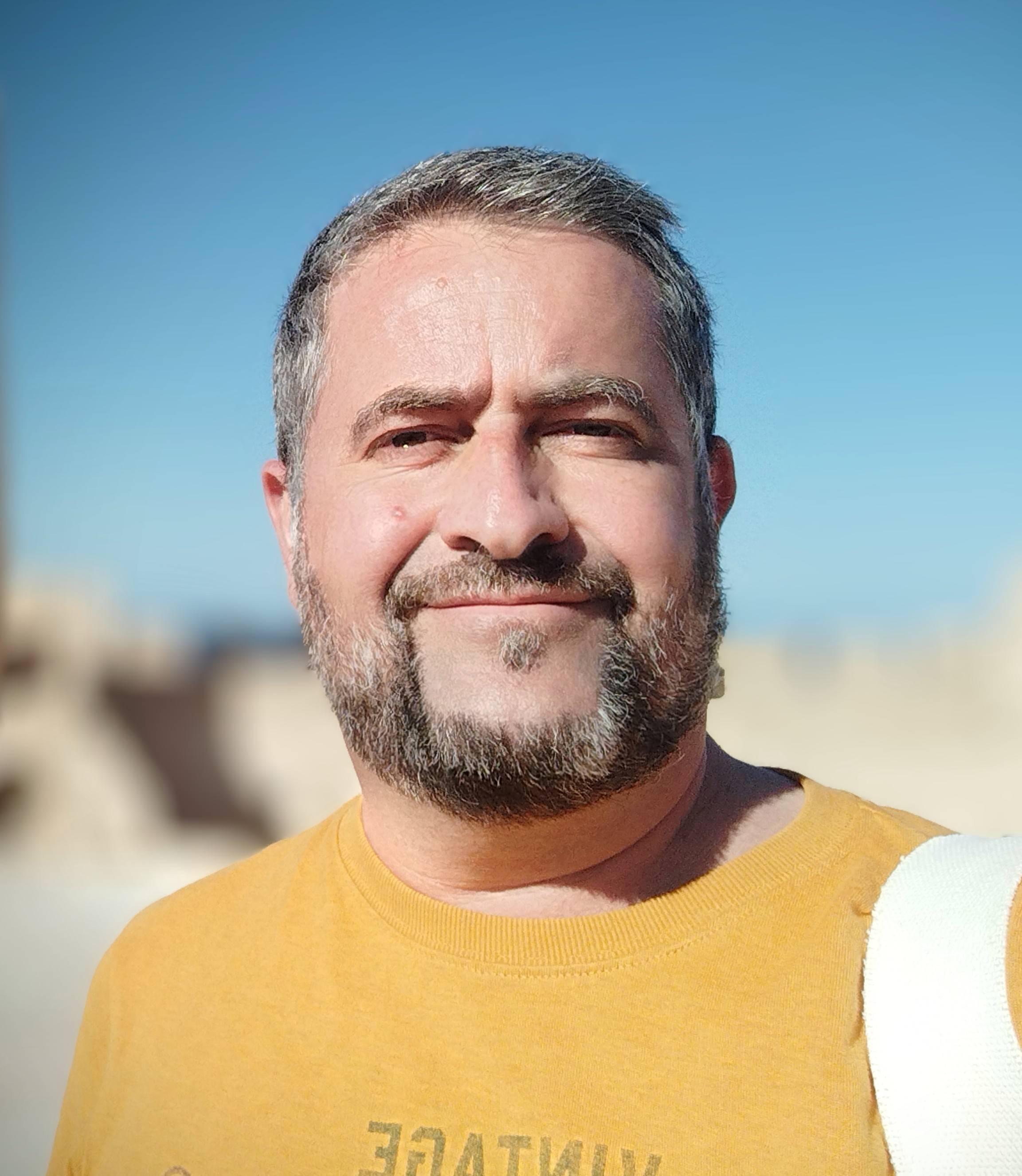
Horacio Gil Gil
Research Scientist
ORCID code: 0000-0002-7114-6686
Degree in Veterinary Medicine in 1995 and PhD in Veterinary Medicine in 2002 from the University of Zaragoza. He did his PhD thesis at NEIKER Tecknalia (Derio, Vizcaya) and the National Center for Microbiology of Instituto de Salud Carlos III (CNM-ISCIII, Majadahonda, Madrid) on the biological cycle of Lyme disease in the Basque Country. After that, he developed his postdoctoral training in different aspects of the pathogenesis of tularemia at the Center for Infectious Diseases, Stony Brook University, New York (USA) for 3 years. In December 2005, he joined the Reference and Research Laboratory in Special Pathogens of the CNM-ISCIII where he developed diagnostic, reference and research activities, in Bartonella, Leptospira and pathogens of interest in bioterrorism. Between 2014-2016 he participated in the European Program for the Training of Microbiologists in Public Health (EUPHEM), organized by the European Centre for Disease Prevention and Control. During this program, he participated in an international mission for the investigation of a cholera outbreak in Ghana, proposed by the Bernhard Nocht Institute for Tropical Diseases in Hamburg (Germany). In December 2016, he worked as a laboratory consultant for the World Health Organization at their office in Phnom Penh (Cambodia). Subsequently, he worked one year with Médecins Sans Frontières as director and quality manager of the TB laboratory in Nukus (Uzbekistan).
In 2019, he joined the HIV Variability and Biology Unit at CNM-ISCIII, where he developed different reference and research activities, including his contribution to the molecular epidemiological surveillance of HIV-1 in Spain and the study of HIV-1 antiretroviral resistance. Since September 2022 he has been leading the Human Papillomavirus Unit at the CNM-ISCIII. -

Manuela Rodríguez Vargas
Técnico de Laboratorio
-
Alicia Inés García Señán
Predoctoral Student UNED
Degree in Pharmacy in 2013 from the Complutense University of Madrid. She completed specialized health training in Microbiology and Parasitology at the Complejo Asistencial Universitario de Salamanca (2014-2018). During this period he studied a master's degree in Tropical Diseases at the University of Salamanca (2016). She has developed her professional activity as a clinical microbiologist at the Hospital de Santa Bárbara (Soria) (2018), Hospital Universitario Vall d'Hebrón (Barcelona) (2019-2022), and Hospital Central de la Defensa (Gómez Ulla) C.S.V.E, since 2022. In September 2024 she has started PhD studies at the Human Papillomavirus Unit of the CNM-ISCIII.

List of staff
Información adicional
Despite progress, parasitic diseases remain a major challenge for humans. Its rapid and accurate detection, as well as the identification of specific genes related to virulence and/or resistance to treatments, is a necessity for management and planning control strategies.
The main objective of the group is to carry out quality, competitive and innovative research, to acquire, disseminate and apply in clinical parasitology with the ultimate goal of improving and innovating in the diagnoses, therapies and control of parasitic diseases. This general objective is implemented through external projects and collaborations with different funding sources:
- Characterization of submicroscopic malaria. National Hospital Network. (FIS-ISCIII).
- Design, optimization and validation of advanced diagnostic methods for the detection of blood parasites (Retos-MICINN).
- Control of onchocerciasis in Equatorial Guinea. CNMTrop-ISCIII (Task Force, USA).
- Characterization and control of Mansonellosis and Onchocerciasis in the Amazon region in Brazil. FIOCRUZ from Amazonas, Brazil. (Cpnqt-Brazil).
- Plasmodium knowlesi and its implication as the fifth species of human malaria. MRC, Malaysia.
- Intestinal parasitosis in Egypt from Cryptosporidium (protozoan) to Capillaria (Nematode). Cairo University and Al-Azhar University, Egypt. (MHESR, AECID).