



We protect your health through science

Investigación
Leishmaniasis and Chagas Disease
Publicaciones destacadas
Acute flaccid paralysis (AFP) surveillance: challenges and opportunities from 18 years’ experience, Spain, 1998 to 2015.
J Masa-Calles, N Torner, N López-Perea, MV Torres de Mier, B Fernández-Martínez, M Cabrerizo, V Gallardo-García, C Malo, M Margolles, M Portell, N Abadía, A Blasco, S García-Hernández, H Marcos, N Rabella, C Marín, A Fuentes, I Losada, A Nieto, V García Ortúzar, M García Cenoz, JM Arteagoitia, Á Blanco Martínez, A Rivas, D Castrillejo, Spanish AFP Surveillance Working Group. Acute flaccid paralysis (AFP) surveillance: challenges and opportunities from 18 years’ experience, Spain, 1998 to 2015. EuroSurveill 2018 23(47):pii=1700423.
PUBMED DOIRecommendations for enterovirus diagnostics and characterisation within and beyond Europe.
H Harvala, E Broberg, K Benschop, N Berginc, S Ladhani, P Susi, C Christiansen, J McKenna, D Allen, P Makiello, G McAllister, M Carmen, M Sveinsdottir, K Zakikhany, T Gunnarsdottir, R Dyrdak, X Nielsen, T Madsen, J Paul, C Moore, K von Eije, A Piralla , M Strutt, M Carileir, L Vanoverschelde, R Poelman, A Anton, X López-Labrador, C Galli, K Keeren, M Maier, H Cassidy, S Derdas, C Savolainen-Kopra, S Diedrich, S Nordbø, P Minor, J Buesa, H Yu, Q Liao, JL Bailly, F Baldanti, A MacAdam, N Grossly, A Mirand, S Dudman, I Schuffenecker, S Kadamba, n Neyts, M Griffiths, J Richter, C Margaretto, S Govind, U Morley, S Krokstad, J Dean, M Salort, B Prochazka, H-R Honkanen, M Cabrerizo, M Majumdar, L Pellegrinelli, G Nebbia, M Wiewel, S Cottrell, P Coyle, O Adams, J Martin, S Midgley, P Horby, K Wolthers, B Hubert Niesters, P Simmonds and TK Fischer. Recommendations for enterovirus diagnostics and characterisation within and beyond Europe. J Clin Virol 101: 11-17 (2018).
PUBMED DOIMolecular surveillance of norovirus, 2005-16: an epidemiological analysis of data collected from the NoroNet network.
4. J van Beek, M de Graaf, H Al-Hhello, DJ Allen, K Ambert-Balay, N Botteldoorn, M Brytting, J Buesa, M Cabrerizo, M Chan, F Cloak, I Di Bartolo, S Guix, J Hewitt, N Iritani, M Jin, R Johne, I Lederer, J Mans, V Martella, L Maunula, G McAllister, S Niendorf, HG Niesters, AT Podkolzin, M Poljsak-Prijatelj, L Dam Rasmussen, G Reuter, G Tuite, A Kroneman, H Vennema, MPG Koopmans, on behalf of NoroNet. Molecular surveillance of norovirus, 2005-16: an epidemiological analysis of data collected from the NoroNet network. Lancet Infect Dis 18:545-553 (2018)
PUBMED DOIFirst Cases of Severe Flaccid Paralysis Associated with Enterovirus D68 Infection in Spain, 2015-2016.
M Cabrerizo*, JP García-Iñiguez, F Munell, A Amado, P Madurga-Revilla, C Rodrigo, S Pérez, A Martínez-Sapiña, A Antón, G Suárez, N Rabella, V Del Campo, A Otero, J Masa-Calles. First Cases of Severe Flaccid Paralysis Associated with Enterovirus D68 Infection in Spain, 2015-2016. Pediatric Infect Dis J; 36: 1214-1216 (2017).
PUBMED DOIContent with Investigacion .
-
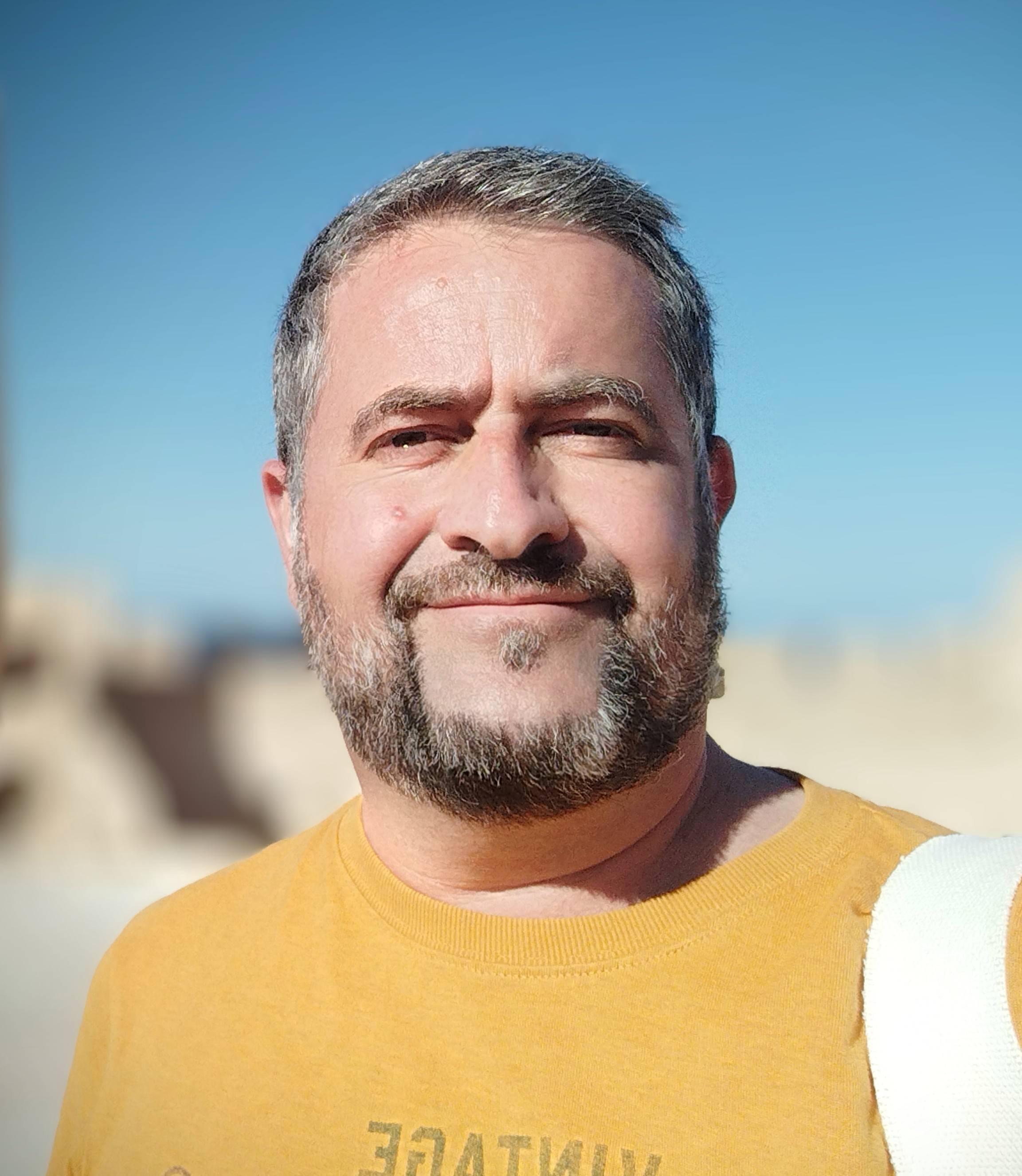
Horacio Gil Gil
Research Scientist
ORCID code: 0000-0002-7114-6686
Degree in Veterinary Medicine in 1995 and PhD in Veterinary Medicine in 2002 from the University of Zaragoza. He did his PhD thesis at NEIKER Tecknalia (Derio, Vizcaya) and the National Center for Microbiology of Instituto de Salud Carlos III (CNM-ISCIII, Majadahonda, Madrid) on the biological cycle of Lyme disease in the Basque Country. After that, he developed his postdoctoral training in different aspects of the pathogenesis of tularemia at the Center for Infectious Diseases, Stony Brook University, New York (USA) for 3 years. In December 2005, he joined the Reference and Research Laboratory in Special Pathogens of the CNM-ISCIII where he developed diagnostic, reference and research activities, in Bartonella, Leptospira and pathogens of interest in bioterrorism. Between 2014-2016 he participated in the European Program for the Training of Microbiologists in Public Health (EUPHEM), organized by the European Centre for Disease Prevention and Control. During this program, he participated in an international mission for the investigation of a cholera outbreak in Ghana, proposed by the Bernhard Nocht Institute for Tropical Diseases in Hamburg (Germany). In December 2016, he worked as a laboratory consultant for the World Health Organization at their office in Phnom Penh (Cambodia). Subsequently, he worked one year with Médecins Sans Frontières as director and quality manager of the TB laboratory in Nukus (Uzbekistan).
In 2019, he joined the HIV Variability and Biology Unit at CNM-ISCIII, where he developed different reference and research activities, including his contribution to the molecular epidemiological surveillance of HIV-1 in Spain and the study of HIV-1 antiretroviral resistance. Since September 2022 he has been leading the Human Papillomavirus Unit at the CNM-ISCIII. -
Manuela Rodríguez Vargas
Técnico de Laboratorio
-
Alicia Inés García Señán
Predoctoral Student UNED
Degree in Pharmacy in 2013 from the Complutense University of Madrid. She completed specialized health training in Microbiology and Parasitology at the Complejo Asistencial Universitario de Salamanca (2014-2018). During this period he studied a master's degree in Tropical Diseases at the University of Salamanca (2016). She has developed her professional activity as a clinical microbiologist at the Hospital de Santa Bárbara (Soria) (2018), Hospital Universitario Vall d'Hebrón (Barcelona) (2019-2022), and Hospital Central de la Defensa (Gómez Ulla) C.S.V.E, since 2022. In September 2024 she has started PhD studies at the Human Papillomavirus Unit of the CNM-ISCIII.

List of staff
Información adicional
The Leishmaniasis and Chagas Disease Unit supports the National Health System through a multidisciplinary approach that includes the development and validation of diagnostic tests, the molecular characterization of parasites, molecular epidemiology, field studies, as well as experimental research into new therapeutic and prophylactic approaches for their control.
The laboratory has extensive experience in the characterization of the cellular and humoral immune response of leishmaniasis and post-treatment monitoring, as well as in asymptomatic individuals and in experimental animal models. The laboratory also contributes to immunological studies of the pathogenesis of leishmaniasis under immunosuppressive conditions (HIV/Leishmania co-infection, malnutrition, immunosuppressive treatment...). The laboratory has been a WHO Collaborating Center for Leishmaniasis since 1997, providing technical support to the various research and training activities of the WHO and participating in the evaluation of outbreaks of human leishmaniasis in endemic countries.
The laboratory also participates in the evaluation of prognostic markers for the evolution of T. cruzi infection and vertical (transplacental) transmission, an important public health problem in our country. It also carries out studies on the pharmacokinetics of drugs against Chagas disease.