



We protect your health through science

Investigación
Leishmaniasis and Chagas Disease
Publicaciones destacadas
Alcazar-Fuoli L, Clavaud C, Lamarre C, Aimanianda V, Seidl-Seiboth V, Mellado E, Latgé JP. Functional analysis of the fungal/plant class chitinase family in Aspergillus fumigatus.
Alcazar-Fuoli L, Clavaud C, Lamarre C, Aimanianda V, Seidl-Seiboth V, Mellado E, Latgé JP. Functional analysis of the fungal/plant class chitinase family in Aspergillus fumigatus. Fungal Genet Biol. 2011 Apr;48(4):418-29. doi: 10.1016/j.fgb.2010.12.007. Epub 2010 Dec 22. PMID: 21184840.
PUBMED DOIImpact of DARC rs12075 Variants on Liver Fibrosis Progression in Patients with Chronic Hepatitis C: A Retrospective Study.
Jiménez-Sousa MA (AC); Gómez-Moreno AZ; Pineda-Tenor D; et al. (1/9) Impact of DARC rs12075 Variants on Liver Fibrosis Progression in Patients with Chronic Hepatitis C: A Retrospective Study. Biomolecules 2019; 9(4).
DBP rs16846876 and rs12512631 polymorphisms are associated with progression to AIDS naïve HIV-infected patients: a retrospective study.
Jiménez-Sousa MA (AC); Jiménez JL; Fernández-Rodríguez A; et al. (1/10). DBP rs16846876 and rs12512631 polymorphisms are associated with progression to AIDS naïve HIV-infected patients: a retrospective study. Journal of Biomedical Science. 2019; 23;26(1):83. doi: 10.1186/s12929-019-0577-y.
TRPM5 rs886277 Polymorphism Predicts Hepatic Fibrosis Progression in Non-Cirrhotic HCV-Infected Patients.Journal of Clinical Medicine.
Resino S; Fernández-Rodríguez A; Pineda-Tenor D; et al; Jiménez-Sousa MA. (11/11). 2021. TRPM5 rs886277 Polymorphism Predicts Hepatic Fibrosis Progression in Non-Cirrhotic HCV-Infected Patients.Journal of Clinical Medicine. 10-3, pp.483. ISSN 2077-0383. https://doi.org/10.3390/jcm10030483.
Plasma metabolomic fingerprint of advanced cirrhosis stages among HIV/HCV-coinfected and HCV-monoinfected patients
Salguero, Sergio; Rojo, David; Berenguer, Juan; et al; Jimenez-Sousa, Maria A. (AC) (15/15). 2020. Plasma metabolomic fingerprint of advanced cirrhosis stages among HIV/HCV-coinfected and HCV-monoinfected patients LIVER INTERNATIONAL. 40-9, pp.2215-2227. ISSN 1478-3223. https://doi.org/10.1111/liv.14580 3
Telomere Length Increase in HIV/HCV-Coinfected Patients with Cirrhosis after HCV Eradication with Direct-Acting Antivirals JOURNAL OF CLINICAL MEDICINE.
Molina-Carrion, Silvia; Brochado-Kith, Oscar; Gonzalez-Garcia, Juan; et al; Jimenez-Sousa, Maria Angeles. (12/12). 2020. Telomere Length Increase in HIV/HCV-Coinfected Patients with Cirrhosis after HCV Eradication with Direct-Acting Antivirals JOURNAL OF CLINICAL MEDICINE. 9. ISSN 2077-0383. https://doi.org/10.3390/jcm9082407.
Treatment of Chronic Pulmonary Aspergillosis: Current Standards and Future Perspectives. Respiration. 2018 Jul
Alastruey-Izquierdo A, Cadranel J, Flick H, Godet C, Hennequin C, Hoenigl M, Kosmidis C, Lange C, Munteanu O, Page I, Salzer HJF; on behalf of CPAnet. Treatment of Chronic Pulmonary Aspergillosis: Current Standards and Future Perspectives. Respiration. 2018 Jul 6:1-12. doi: 10.1159/000489474. [Epub ahead of print] Review. PMID: 29982245.
PUBMED DOIThe Diagnostic Laboratory Hub: A New Health Care System Reveals the Incidence and Mortality of Tuberculosis, Histoplasmosis, and Cryptococcosis of PWH in Guatemala. Open Forum Infect Dis. 2019 Dec
Samayoa B, Aguirre L, Bonilla O, Medina N, Lau-Bonilla D, Mercado D, Moller A, Perez JC, Alastruey-Izquierdo A, Arathoon E, Denning DW, Rodríguez-Tudela JL; “Fungired”. The Diagnostic Laboratory Hub: A New Health Care System Reveals the Incidence and Mortality of Tuberculosis, Histoplasmosis, and Cryptococcosis of PWH in Guatemala. Open Forum Infect Dis. 2019 Dec 15;7(1):ofz534. doi: 10.1093/ofid/ofz534. PMID: 31915715.
PUBMED DOIFungired. Comparative performance of the laboratory assays used by a Diagnostic Laboratory Hub for opportunistic infections in people living with HIV. AIDS. 2020 Sep 1
Medina N, Alastruey-Izquierdo A, Mercado D, Bonilla O, Pérez JC, Aguirre L, Samayoa B, Arathoon E, Denning DW, Rodriguez-Tudela JL; Fungired. Comparative performance of the laboratory assays used by a Diagnostic Laboratory Hub for opportunistic infections in people living with HIV. AIDS. 2020 Sep 1;34(11):1625-1632. doi: 10.1097/QAD.0000000000002631. PMID: 32694415.
PUBMED DOIPopulation-Based Program of filamentous fungi and Antifungal Resistance in Spain (FILPOP STUDY). Antimicrob Agents Chemother. 2013 Jul
Ana Alastruey-Izquierdo*, Emilia Mellado, Teresa Pelaez, Javier Pemán, Soledad Zapico, María Álvarez, Juan L Rodriguez-Tudela, Manuel Cuenca-Estrella Population-Based Program of filamentous fungi and Antifungal Resistance in Spain (FILPOP STUDY). Antimicrob Agents Chemother. 2013 Jul;57(7):3380-7. doi: 10.1128/AAC.01287-13. PMID: 28319466
PUBMED DOIThe global problem of antifungal resistance: prevalence, mechanisms, and management. Lancet Infect Dis. 2017 Dec
Perlin DS, Rautemaa-Richardson R, Alastruey-Izquierdo A. The global problem of antifungal resistance: prevalence, mechanisms, and management. Lancet Infect Dis. 2017 Dec;17(12. doi: 10.1016/S1473-3099(17)30316-X. PMID: 28774698.
PUBMED DOISequence Analysis of In Vivo-Expressed HIV-1 Spliced RNAs Reveals the Usage of New and Unusual Splice Sites by Viruses of Different Subtypes.
Vega Y, Delgado E, de la Barrera J, Carrera C, Zaballos Á, Cuesta I, Mariño A, Ocampo A, Miralles C, Pérez-Castro S, Álvarez H, López-Miragaya I, García-Bodas E, Díez-Fuertes F, Thomson MM. Sequence Analysis of In Vivo-Expressed HIV-1 Spliced RNAs Reveals the Usage of New and Unusual Splice Sites by Viruses of Different Subtypes. PLoS One. 2016 Jun 29;11(6):e0158525.
PUBMED DOIY155H amino acid substitution in influenza A(H1N1)pdm09 viruses does not confer a phenotype of reduced susceptibility to neuraminidase inhibitors
Perez-Sautu U, Pozo F, Cuesta I, Monzon S, Calderon A, Gonzalez M, Molinero M, Lopez-Miragaya I, Rey S, Cañizares A, Rodriguez G, Gonzalez-Velasco C, Lackenby A, Casas I. Y155H amino acid substitution in influenza A(H1N1)pdm09 viruses does not confer a phenotype of reduced susceptibility to neuraminidase inhibitors. Euro Surveill. 2014 Jul 10;19(27):14-20.
PUBMED DOIComparison of two highly discriminatory typing methods to analyze Aspergillus fumigatus azole resistance
Garcia-Rubio R, Escribano P, Gomez A, Guinea J, and Mellado E. Comparison of two highly discriminatory typing methods to analyze Aspergillus fumigatus azole resistance. Frontiers in Microbiology 2018. Jul 20;9:1626.
PUBMED DOIEvaluation of the possible influence of trailing and paradoxical effects on the clinical outcome of patients with candidemia.
Rueda C, Puig-Asensio M, Guinea J, Almirante B, Cuenca-Estrella M, Zaragoza O. Evaluation of the possible influence of trailing and paradoxical effects on the clinical outcome of patients with candidemia. CANDIPOP Project from GEIH-GEMICOMED (SEIMC) and REIPI. Clin Microbiol Infect. 2017 Jan; 23(1):49.e1-49.e8.
PUBMED DOIDevelopment and Validation of a High-Resolution Melting Assay To Detect Azole Resistance in Aspergillus fumigatus.
Bernal-Martínez L, Gil H, Rivero-Menéndez O, Gago S, Cuenca-Estrella M, Mellado E, Alastruey-Izquierdo A. Development and Validation of a High-Resolution Melting Assay To Detect Azole Resistance in Aspergillus fumigatus. Antimicrob Agents Chemother. 2017 Nov 22;61(12). pii: e01083-17.
PUBMED DOICervicofacial lymphadenitis due Mycobacterium mantenii: rapid and reliable identification by MALDI-TOF MS.
Nebreda T, Andres AG, Fuentes S, Calleja R, Jimenez MS. Cervicofacial lymphadenitis due Mycobacterium mantenii: rapid and reliable identification by MALDI-TOF MS. New Microbes and New Infections .2018. March 22:1-3.
PUBMED DOIIn-depth analysis of the genome sequence of a clinical, extensively drug-resistant Mycobacterium bovis strain.
Sagasta S, Millan-Lou MI, Jiménez MS, Martin C, Samper S. In-depth analysis of the genome sequence of a clinical, extensively drug-resistant Mycobacterium bovis strain. Tuberculosis. 2016. Sep. 100:46-52.
PUBMED DOIGeneration and Characterization of ALX-0171, a Potent Novel Therapeutic Nanobody for the Treatment of Respiratory Syncytial Virus Infection
Detalle L, Stohr T, Palomo C, Piedra PA, Gilbert BE, Mas V, et al. Generation and Characterization of ALX-0171, a Potent Novel Therapeutic Nanobody for the Treatment of Respiratory Syncytial Virus Infection. Antimicrob Agents Chemother. 2016;60(1):6-13.
PUBMED DOI-

Laura Alfonso Alarcón
PhD student
ORCID code: 0000-0003-1560-1100
Degree in Biochemistry in 2020 from National University of Asunción (Paraguay). Master in Microbiology and Health in 2024 from Pais Vasco University (Spain). Stays in Paraguay in Instituto de Investigaciones en Ciencias de la Salud; Facultad de Ciencias Químicas and Hospital Nacional de Itaugua. She is actually a predoctoral student of the Microbiología y Parasitología program of Complutense University of Madrid, with a “Don Carlos Antonio López” (BECAL) fellowship from Paraguay Goverment.
-
-

Caroline Stephanie Crisóstomo Vergara
Técnico de Laboratorio
ORCID code: 0009-0008-0525-1737
Técnico de Laboratorio. Técnico superior de Laboratorio Clínico y Biomédico por la Escuela Técnica de Enseñanzas Especializadas de Madrid. Máster en Microbiología Clínica por el Instituto Europeo de Química, Física y Biología de Madrid.
-

Pablo Herrera Marcelino
Research Assistant
ORCID code: 0009-0003-5137-3712
Graduated in Biochemistry in 2022 from the University of Malaga, and in Master's degrees in Microbiology and Parasitology (2024) and Virology (2025) from the Complutense University of Madrid. He also holds degrees in Clinical Laboratory Science (2023) from the same university and in Biotechnology Applied to Health (2023) from the UNED. He currently has a research assistant contract focusing on the study of pneumococcal proteins involved in RNA interaction.
-
Jorge Amich Elías
Tenure Scientist
ORCID code: 0000-0002-8987-5115
Doctor en Microbiología y Genética Molecular, realizó su tesis doctoral (2010) en la Universidad de Salamanca bajo la dirección del Dr. José Antonio Calera Abad. Realizó estancias postdoctorales en la Universidad de Würzburg (Alemania) bajo la supervisión del Prof. Sven Krappmann (2011-2012) y en el Hospital Clínico de Würzbug bajo la supervisión del Prof. Andreas Beilhack (2013-2015). Entre 2016 y 2021 fue Investigador Principal en el Manchester Fungal Infection Group (MFIG, Universidad de Manchester, Reino Unido) financiado con un MRC Career Development Award. En 2022 me he incorporado al Centro Nacional de Microbiología del ISCIII gracias a un contrato de Atracción de Talento de la Comunidad de Madrid. En 2024, pasó a ser Científico Titular de los OPIs en el CNM.
-
Mª Cruz Sánchez Martínez
Técnico
-

Laura del Estal Gómez
Ayudante de investigación
ORCID code: 0009-0000-2773-8986
Graduada en Biología Sanitaria por la Universidad de Alcalá. Máster Universitario en Microbiología Aplicada a la Salud Pública e Investigación en Enfermedades Infecciosas.
-
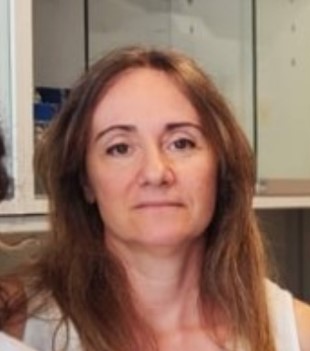
Mónica Amblar Esteban
Research Scientist
ORCID code: 0000-0003-3530-615X
Dr. Mónica Amblar obtained her degree in Biology in 1993 and her PhD in 2000 from the Complutense University of Madrid. She did her doctoral thesis in the laboratory of Dr. Paloma López at the Centro de Investigaciones Biológicas of CSIC. Subsequently, she worked for 5 and half years at the Instituto de Tecnología Química e Biológica/Universidade Nova de Lisboa, Oeiras (Portugal) in the laboratory of Prof. Cecilia M. Arraiano. After this postdoctoral stage he rejoined the Centro de Investigaciones Biológicas del CSIC where he worked for 2 years as a Postdoctoral Researcher in the laboratory of Dr. Paloma López. Subsequently, he joined the National Microbiology Center of the ISCIII with a Ramón y Cajal contract and in 2010 he obtained a position as a Full Scientist at the same center.
-
Victor Arribas Antón
Contratado posdoctoral
ORCID code: 0000-0002-6079-8988
PhD in Functional Biology and Genomics from the University of Salamanca (2019) under the supervision of Dr. Pilar Pérez and Dr. Pedro Coll. He completed a short-term predoctoral fellowship at the University of Glasgow in Glasgow Polyomics (United Kingdom). In 2020, he obtained a Torres Quevedo postdoctoral fellowship to support the hiring of early-career PhD researchers in industry, focusing on the production of recombinant antibodies with therapeutic applications. In 2022, he received a Margarita Salas postdoctoral fellowship to carry out a long-term research stay at the Complutense University of Madrid, where he worked on identifying novel antifungal targets for C. albicans using proteomics. In 2025, he joined ISCIII at National Center for Microbiology under a contract funded by a European project.
-
Elena García Bodas
Ayudante de investigación
-

Almudena Cascajero Díaz
Técnico de laboratorio
ORCID code: 0000-0002-9654-3100
Técnico Superior de Actividades Técnicas y Profesionales (Unidades de Inmunopatología del SIDA y Legionella, Centro Nacional de Microbiología). Clinical Diagnostic Laboratory Technician by IES Renacimiento de Madrid.
Experience in cloning techniques and characterization of neutralizing antibodies and participation in different projects on the pathogenesis of HIV by studying the viral envelope and the mechanisms of resistance to antiretroviral drugs. This experience has subsequently allowed me to participate in 5 multicenter clinical studies studying the immune response against different variants of SARS-CoV-2.
Since 2021, I also participate as a laboratory technician in the Legionella Unit as a support to the Spanish National Health System through the microbiological surveillance of the disease to contribute to the prevention and control of legionellosis.
-

María José Ferrándiz Avellano
Research Scientist
ORCID code: 0000-0003-1428-9506
Dr. María José Ferrández obtained her degree in Biology in 1990 and her PhD in 1997 from the Complutense University of Madrid. She completed her doctoral thesis at the Centro de Investigaciones Biológicas of CSIC in the laboratory of Dr. Miguel Vicente. She completed her postdoctoral training at the Centro Nacional de Microbiología of Instituto de Salud Carlos III (1998-2001 and 2003-2006) and at the Institute of Infection and Immunity (University of Nottingham) from 2001- 2003. From 2007 to 2015, she participated as a researcher of the CIBER of Respiratory Diseases (CIBERES). Since 2006, she is a Full Scientist at the National Microbiology Center of the ISCIII.
-
-
Ramón Luis Díaz-Regañón Fernández
Facultativo
Licenciado en Veterinaria.
-
-
-

Juana María González Rubio
Científica Titular
ORCID code: 0000-0001-6979-2964
La Dra. Juana María González Rubio es Licenciada en Bioquímica por la Universidad de Salamanca y Doctora por la Facultad de Medicina de la Universidad Autónoma de Madrid. Actualmente, es Científico Titular de plantilla en el Centro Nacional de Microbiología del Instituto de Salud Carlos III (ISCIII), donde trabaja en la Unidad de Legionella del Laboratorio de Referencia e Investigación en Enfermedades Bacterianas transmitidas por agua y alimentos.
Dentro del laboratorio, realiza las actividades propias del Programa de Vigilancia Microbiológica de Legionella, y lleva las líneas de investigación del laboratorio sobre la caracterización de biofilms y la puesta a punto de nuevas técnicas para la caracterización de Legionella. También forma parte del equipo investigador del proyecto “Búsqueda de marcadores de patogenicidad para el análisis de riesgos en las instalaciones".
Anteriormente, ha trabajado en la Unidad de Biomonitorización humana del Centro Nacional de Sanidad Ambiental (ISCIII) participando en diferentes proyectos de investigación relacionados con la Sanidad Ambiental, siendo el último más destacado el proyecto “HBM4EU" en el que ha trabajado hasta junio de 2023.
-

María Dolores Pérez Vázquez
Científica Titular OPI
Licenciada y doctora en Farmacia (Universidad de Santiago de Compostela, Universidad Complutense de Madrid). Especialista en Microbiología y Parasitología clínicas (F.I.R.). Mi trayectoria investigadora se ha centrado en la resistencia a los antibióticos y la epidemiología de patógenos resistentes, desarrollándose principalmente en el Centro Nacional de Microbiología (ISCIII), así como en el ámbito hospitalario (HU Ramón y Cajal) y en el Wellcome Sanger Institute (Cambridge). Desde 2012, tras mi formación en bioinformática, he consolidado una línea de investigación basada en la secuenciación masiva (WGS) aplicada a la vigilancia microbiológica, promoviendo la creación de la RedLabRA para la vigilancia nacional de bacterias multirresistentes. Mi producción científica alcanza 111 publicaciones (7056 citas; h-index 39/36) y he destacado por integrar investigación, vigilancia y transferencia al Sistema Nacional de Salud, junto con una sólida actividad docente y formadora.
-
Maria Jesús Perteguer Prieto
Investigadora Titular, Jefa de grupo
-





List of staff
Información adicional
The Leishmaniasis and Chagas Disease Unit supports the National Health System through a multidisciplinary approach that includes the development and validation of diagnostic tests, the molecular characterization of parasites, molecular epidemiology, field studies, as well as experimental research into new therapeutic and prophylactic approaches for their control.
The laboratory has extensive experience in the characterization of the cellular and humoral immune response of leishmaniasis and post-treatment monitoring, as well as in asymptomatic individuals and in experimental animal models. The laboratory also contributes to immunological studies of the pathogenesis of leishmaniasis under immunosuppressive conditions (HIV/Leishmania co-infection, malnutrition, immunosuppressive treatment...). The laboratory has been a WHO Collaborating Center for Leishmaniasis since 1997, providing technical support to the various research and training activities of the WHO and participating in the evaluation of outbreaks of human leishmaniasis in endemic countries.
The laboratory also participates in the evaluation of prognostic markers for the evolution of T. cruzi infection and vertical (transplacental) transmission, an important public health problem in our country. It also carries out studies on the pharmacokinetics of drugs against Chagas disease.
The current director of CNM is Dr. José Miguel Rubio Muñoz.
Dr. José Miguel Rubio has a degree in Biological Sciences from the Universidad Autónoma de Madrid (1986) and a PhD in Biological Sciences from the same university (1992). He carried out his doctoral thesis at the Department of Genetics of the Universidad Autónoma de Madrid, as Associate Professor (1988-1989), and at the School of Biology of the University of East Anglia in Norwich, UK, as Senior Research Assistant (1989-1992).
During his postdoctoral period he obtained a grant from the European Commission within the Human Capital and Mobility Program to be carried out at the University of “La Sapienza” in Rome, Italy and the Institute of Molecular Biology and Biotechnology in Crete, Greece (1993-1994). Subsequently, he made a further stay funded by the WHO and the university itself at the Department of Entomology, Wageningen University, The Netherlands (1994-1996).
Since 1997 he has been a member of the Instituto de Salud Carlos III (ISCIII), where he joined the Department of Parasitology of the National Center of Microbiology, as an EU-INCO postdoctoral fellow and later with a grant from the Autonomous Community of Madrid (CAM). She was part of the founding group of the National Center for Tropical Medicine (2003-2006) and of the 24/7 Alerts and Emergencies Unit (2006-2018) and is currently Head of the Malaria and Emerging Parasitosis Unit of the National Microbiology Center and is part, as research staff, of the Center for Biomedical Research Network on Infectious Diseases (CIBERINFEC/ISCIII).
During his scientific career he has been Visiting Scientist at the Leonidas e Marie Dean Center (FIOCRUZ-AMAZONAS, Manaus, Brazil) and is an External Consultant of the Parasitology Departments of Cairo University (Egypt) and the Medical Research Center (MRC) of Kuala Lumpur (Malaysia). He also belongs or has belonged to different national and international committees: Member of the expert group for malaria control of the European Centre for Disease Control (ECDC) since 2011; Expert-Evaluator for health programs of the European Commission since 2004; Spanish Representative (commissioned by ISCIII and MSC) in the Technical Scientific Committee of the TDR (WHO) 2007-2008; Spanish Deputy Focal Point for microbiology at the European Centre for Disease Control (ECDC) from 2012 to 2020; and, member of the Research Ethics Committee of ISCIII until 2019.
In this period he has published more than 100 articles in international indexed journals, 10 book chapters and has been co-editor of two books in the area of malaria, tropical medicine and neglected diseases. He has participated in 58 competitively funded research projects, 20 of them international, having been the principal investigator in 8 national and 11 international projects as PI of the project or WP leader. In addition, he has led five agreements with companies. Currently he has been awarded four sexenios of research, being presented this year 2025 to the fifth. In the teaching field, he participates in different postgraduate programs in the areas of microbiology and parasitology, having directed seven doctoral theses and more than 20 Master's or Degree final projects, both nationally and internationally.
El laboratorio de Referencia e Investigación en Resistencia a Antibióticos ofrece una amplia cartera de servicios al Sistema Nacional de Salud, las cuales pueden solicitarse en cnm-laboratorios.isciii.es. Jefe del Laboratorio: Jesús Oteo Iglesias (Punto focal Nacional de Resistencia antibiótica).
Dispone de dos programas de Vigilancia oficiales y gratuitos que engloban los ensayos ofertados ya sea como aislamientos individuales o mediante estudio de brotes. El Laboratorio utiliza asimismo técnicas de PCR en tiempo real para la detección de genes de resistencia, estas técnicas se han adaptado a un formato multiplex que permite detectar varios genes en la misma reacción. En los últimos años se han incluido metodologías basadas en la secuenciación de genomas completos para el análisis de bacterias multiresistentes (WGS).
Programa de vigilancia de Haemophilus influenzae. Responsables: María Pérez Vázquez (Punto focal Nacional de Haemophilus influenzae) y Belén Aracil. Laboratorio encargado de la identificación, estudio de sensibilidad y análisis genotípico de aislados de Haemophilus influenzae, centrándose esencialmente en la patología invasiva debida este patógeno.
Programa de vigilancia de Resistencia a Antibióticos. Responsables: María Pérez Vázquez y Belén Aracil (Punto focal Nacional de Resistencia antibiótica). Laboratorio encargado de la identificación, el estudio de sensibilidad antibiótica, y el diagnóstico fenotípico y genotípico de los diferentes mecanismos de resistencia a antibióticos fundamentalmente en enterobacterias y gram-negativos no fermentadores y Enterococcus spp.
Estudio de brotes. Responsables: Belén Aracil y María Pérez Vázquez. El programa incluye la caracterización de brotes nosocomiales y clones emergentes de alto riesgo mediante diferentes técnicas moleculares (tabla resumen). Éstas, nos permiten realizar estudios filogenéticos con el fin de obtener una información detallada acerca la relación entre los diferentes aislados y su trazabilidad. El objetivo final es generar datos que se transfieren a los hospitales como ayuda para la prevención o control de la propagación del brote.
Acreditación y Calidad. Responsable: Belén Aracil. El laboratorio Referencia e Investigación en Resistencia a Antibióticos ha sido de los primeros en el ISCIII en la utilización de técnicas acreditadas por la Entidad Nacional de Acreditaciones (ENAC). Este laboratorio consiguió la primera acreditación homologada de técnicas diagnósticas en 2012, programa que ha sido ampliado, de manera que en la actualidad más de la mitad de las técnicas ofrecidas al Sistema Nacional de Salud están debidamente acreditadas por ENAC.
Técnicos responsables de las técnicas realizadas en el Laboratorio: Noelia Lara Fuella y Verónica Bautista Sánchez.
En la siguiente imagen se resumen las técnicas ofrecidas al Sistema Nacional de Salud.
| PROGRAMAS | NOMBRE CARTERA SERVICIO | PATÓGENO | DETERMINACIÓN, DETECCIÓN, ANÁLISIS | MÉTODOS |
|
Programa de vigilancia de Haemophilus Programa de vigilancia de resistencia a antibióticos. |
Identificación bacteriana |
Haemophilus sp. Enterobacterias, gram-negativos no fermentadores, Enterococcus spp |
Identificación bacteriana |
Bioquímicos MALDI TOF Secuenciación de RNAr |
| | Identificación capsular |
Haemophilus influenzae
|
Identificación capsular fenotípica y genotípica |
Aglutinación serológica en latex PCR ind/multiplex |
| | Determinación de Sensibilidad |
Haemophilus sp. Enterobacterias, gram-negativos no fermentadores, Enterococcus
|
Determinación de Sensibilidad |
Microdilución Tiras epsilon Kirby Bauer |
| | Métodos fenotípicos de detección de mecanismos de resistencia |
Enterobacterias, gram-negativos no fermentadores,
|
Métodos fenotípicos de detección de mecanismos de resistencia |
Discos y tabletas combinados con inhibidores Tiras combinadas Test de Hodge modificado CabaNP Inmunocromatografía CBP |
| | Métodos genotípicos de detección de mecanismos de resistencia |
Haemophilus sp. Enterobacterias, gram-negativos no fermentadores, Enterococcus
|
ADN, PCR y secuenciación |
PCR ind/multiplex Análisis comparativo de las secuencias |
| | Tipificación molecular/análisis filogenéticos |
Haemophilus sp. Enterobacterias, gram-negativos no fermentadores, Enterococcus
|
Corte enzimas de restricción, electroforesis ADN, PCR y secuenciación Preparación de librerías y secuenciación y análisis de genomas completos |
PFGE
MLST
WGS |