



We protect your health through science
Investigation
Transcriptomic tools applied to the diagnosis and prognosis of infectious diseases
Research Lines
Content with Investigacion .
Caracterización molecular de los estafilococcus
El Laboratorio de Referencia e investigación en Infecciones Relacionadas con la Asistencia Sanitaria dispone de un Programa de Vigilancia de Staphylococcus aureus y Estafilococos coagulasa negativa y de la siguiente cartera de servicios:
Estafilococos coagulasa negativa
Identificación:
Por secuencia del gen 16S del ARN ribosómico
Por secuencia del gen rpoB
Por secuencia del gen tuf
Marcadores moleculares
Perfil por PFGE
SSC
mec
MLST
Detección de genes
Genes mec
Genes de resistencia
Mecanismos de resistencia al linezolid
Dominio V del gen 23S ARNr
Gen rplC (riboproteína L3)
Gen rplD (riboproteína L4)
Gen rplV (riboproteína L22)
Staphylococcus aureus
Identificación:
PCR del gen Sau
Por secuencia del gen 16S del ARN ribosómico
Por secuencia del gen rpoB
Por secuencia del gen tuf
Marcadores moleculares
PFGE
MLST
SSC
mec
Spa-tipo
Detección de genes
Genes mec
Gen PVL
Toxinas exfoliativas (SST)
Toxina del Shock Tóxico (TSST)
Research projects
Content with Investigacion .
En el Laboratorio de I.R.A.S., también denominado de "Infecciones Intrahospitalarias", nos centramos actualmente en la caracterización molecular de los estafilococos, tanto S. aureus, como coagulasa negativos.
Los marcadores moleculares habituales, en el caso de los S. aureus son: electroforesis en campo pulsado (PFGE), tipificación multilocus de secuencias (MLST), tipo de casete cromosómico estafilocócico (SSCmec), tipificación spa, También detectamos, entre otros, los genes mec y PVL, los genes que codifican la Toxina exfoliativa (SST) y la Toxina del Shock Tóxico. Asimismo, para la identificación de los estafilococos coagulasa negativos, secuenciamos los genes 16S, rpoB, tuf., a los que también aplicamos PFGE, SSCmec, MLST.
Nuestras líneas de investigación se centran, por un lado, en el estudio de los mecanismos de resistencia a las oxazolidinonas: gen cfr, dominio del gen 23S ARNr , gen rplC (riboproteína L3), gen rplD (riboproteína L4), gen rplV (riboproteína L22). Hemos detectado, por primera vez, la existencia de nuevas mutaciones en la riboproteína L4 en un paciente con fibrosis quística. Aparte de los estudios llevados a cabo de las resistencias al linezolid en distintos hospitales, estudiamos en colaboración con la Universidad de Tsukuba (Japón) y la Universidad Europea la prevalencia del plásmido pSCFS7 entre cepas cfr positivas de distintos hospitales españoles.
Por otra parte, participamos en estudios multicéntricos (2002-2014) para conocer mejor el estado de la población estafilocócica española, centrándonos fundamentalmente en las cepas de S. aureus resistentes a meticilina (SARM); dado que es un importante patógeno humano que causa una amplia variedad de infecciones que pueden ser leves, como algunas infecciones de piel y partes blandas, o graves, como bacteriemia, endocarditis, neumonía e infecciones de localización quirúrgica. Además, pueden producir una colonización asintomática, lo que facilita su transmisión y diseminación. Desde su descripción inicial en 1959 y durante varias décadas, el SARM se había considerado un patógeno confinado al ámbito sanitario, pero a partir de la década de los noventa, se describe la emergencia de cepas SARM responsables de infecciones aparentemente adquiridas en la comunidad.
Dentro de esta línea estamos colaborando en el proyecto: "Colonización por S. aureus resistente a la meticilina en niños sanos de la comunidad (estudio C.O.S.A.C.O.)", que es un estudio multicéntrico de ámbito nacional.
También colaboramos con otros laboratorios en distintos estudios, como: "Mecanismos de patogenicidad y protección en bacterias Gram positivas causantes de enfermedades respiratorias y bacteriemia".
Publications
Alcazar-Fuoli L, Mellado E, Cuenca-Estrella M, Sanglard D. Probing the role of point mutations in the cyp51A gene from Aspergillus fumigatus in the model yeast Saccharomyces cerevisiae. Med Mycol. 2011 Apr
Alcazar-Fuoli L, Mellado E, Cuenca-Estrella M, Sanglard D. Probing the role of point mutations in the cyp51A gene from Aspergillus fumigatus in the model yeast Saccharomyces cerevisiae. Med Mycol. 2011 Apr;49(3):276-84. doi: 10.3109/13693786.2010.512926. Epub 2010 Sep 10. PMID: 20831364.
PUBMED DOIAlcazar-Fuoli L, Cuesta I, Rodriguez-Tudela JL, Cuenca-Estrella M, Sanglard D, Mellado E. Three-dimensional models of 14α-sterol demethylase (Cyp51A) from Aspergillus lentulus and Aspergillus fumigatus: an insight into differences in voriconazole interaction. Int J Antimicrob Agents. 2011 Nov
Alcazar-Fuoli L, Cuesta I, Rodriguez-Tudela JL, Cuenca-Estrella M, Sanglard D, Mellado E. Three-dimensional models of 14α-sterol demethylase (Cyp51A) from Aspergillus lentulus and Aspergillus fumigatus: an insight into differences in voriconazole interaction. Int J Antimicrob Agents. 2011 Nov;38(5):426-34. doi: 10.1016/j.ijantimicag.2011.06.005. Epub 2011 Aug 25. PMID: 21871783.
PUBMED DOIAlcazar-Fuoli L, Mellado E. Ergosterol biosynthesis in Aspergillus fumigatus: its relevance as an antifungal target and role in antifungal drug resistance.
Alcazar-Fuoli L, Mellado E. Ergosterol biosynthesis in Aspergillus fumigatus: its relevance as an antifungal target and role in antifungal drug resistance. Front Microbiol. 2013 Jan 10;3:439. doi: 10.3389/fmicb.2012.00439. PMID: 23335918; PMCID: PMC3541703.
PUBMED DOIBernal-Martínez L, Alcazar Fuoli L, Miguel-Revilla B, Carvalho A, Cuétara Garcia MS, Garcia-Rodriguez J, Cunha C, Gómez-García de la Pedrosa E, Gomez-Lopez A. High-Resolution Melting Assay for Genotyping Variants of the CYP2C19 Enzyme and Predicting Voriconazole Effectiveness. Antimicrob Agents Chemother. 2019 May 24
Bernal-Martínez L, Alcazar Fuoli L, Miguel-Revilla B, Carvalho A, Cuétara Garcia MS, Garcia-Rodriguez J, Cunha C, Gómez-García de la Pedrosa E, Gomez-Lopez A. High-Resolution Melting Assay for Genotyping Variants of the CYP2C19 Enzyme and Predicting Voriconazole Effectiveness. Antimicrob Agents Chemother. 2019 May 24;63(6):e02399-18. doi: 10.1128/AAC.02399-18. PMID: 30910893; PMCID:PMC6535561.
PUBMED DOILupiañez CB, Martínez-Bueno M, Sánchez-Maldonado JM, Badiola J, Cunha C, Springer J, Lackner M, Segura-Catena J, Canet LM, Alcazar-Fuoli L, López-Nevot MA, Fianchi L, Aguado JM, Pagano L, López-Fernández E, Alarcón-Riquelme M, Potenza L, Gonçalves SM, Luppi M, Moratalla L, Solano C, Sampedro A, González-Sierra P, Cuenca-Estrella M, Lagrou K, Maertens JA, Lass-Flörl C, Einsele H, Vazquez L; PCRAGA Study Group, Loeffler J, Ríos-Tamayo R, Carvalho A, Jurado M, Sainz J. Polymorphisms within the ARNT2 and CX3CR1 Genes Are Associated with the Risk of Developing Invasive Aspergillosis. Infect Immun. 2020 Mar 23
Lupiañez CB, Martínez-Bueno M, Sánchez-Maldonado JM, Badiola J, Cunha C, Springer J, Lackner M, Segura-Catena J, Canet LM, Alcazar-Fuoli L, López-Nevot MA, Fianchi L, Aguado JM, Pagano L, López-Fernández E, Alarcón-Riquelme M, Potenza L, Gonçalves SM, Luppi M, Moratalla L, Solano C, Sampedro A, González-Sierra P, Cuenca-Estrella M, Lagrou K, Maertens JA, Lass-Flörl C, Einsele H, Vazquez L; PCRAGA Study Group, Loeffler J, Ríos-Tamayo R, Carvalho A, Jurado M, Sainz J. Polymorphisms within the ARNT2 and CX3CR1 Genes Are Associated with the Risk of Developing Invasive Aspergillosis. Infect Immun. 2020 Mar 23;88(4):e00882-19. doi: 10.1128/IAI.00882-19. PMID: 31964743; PMCID: PMC7093133.
PUBMED DOIAre Reduced Levels of Coagulation Proteins Upon Admission Linked to COVID-19 Severity and Mortality? Front Med (Laussane).
Ceballos FC; Ryan P; Blancas R; et al; Jiménez-Sousa MÁ (20/20). Are Reduced Levels of Coagulation Proteins Upon Admission Linked to COVID-19 Severity and Mortality? Front Med (Laussane). 2021; 8:718053. PMID: 34660629. doi: 10.3389/fmed.2021.718053.
T allele was linked to non-AIDS progression in ART-naïve HIV-infected patients: a retrospective study.
Jiménez-Sousa MA; Jiménez JL; Bellón JM; et al (1/10). CYP27B1 rs10877012 T allele was linked to non-AIDS progression in ART-naïve HIV-infected patients: a retrospective study. J Acquir Immune Defic Syndr 2020 ;85(5):659-664. doi: 10.1097/QAI.0000000000002485.
PBMCs gene expression signature of advanced cirrhosis with high risk for clinically significant portal hypertension in HIV/HCV coinfected patients
Salguero, Sergio; Brochado-Kith, Oscar; Verdices, Ana Virseda; et al; Jiménez-Sousa María A (‡, AC); Resino, Salvador (‡, AC). (12/12). 2023. PBMCs gene expression signature of advanced cirrhosis with high risk for clinically significant portal hypertension in HIV/HCV coinfected patients: A cross-control study. Biomedicine & pharmacotherapy. 159, pp.114220. ISSN 1950-6007.
Relative telomere length impact on mortality of COVID-19: Sex differences.Journal of medical virology.
Virseda-Berdices, Ana; Concostrina-Martinez, Leyre; Martinez-Gonzalez, Oscar; et al; Fernandez-Rodriguez, Amanda (‡), Jiménez-Sousa María A (‡). (14/14). 2023. Relative telomere length impact on mortality of COVID-19: Sex differences.Journal of medical virology. 95-1, pp.e28368. ISSN 1096-9071.
Plasma miRNA profile at COVID-19 onset predicts severity status and mortality.
Fernandez-Pato, Asier; Virseda-Berdices, Ana; Resino, Salvador; et al; Jiménez-Sousa María A (‡, AC); Fernandez-Rodriguez, Amanda (‡). (20/20). 2022. Plasma miRNA profile at COVID-19 onset predicts severity status and mortality. EMERGING MICROBES & INFECTIONS. 11(1):676-688. doi: 10.1080/22221751.2022.2038021.
Blood microbiome is associated with changes in portal hypertension after successful direct-acting antiviral therapy in patients with HCV-related cirrhosis.The Journal of antimicrobial chemotherapy.
Virseda-Berdices, Ana; Brochado-Kith, Oscar; Diez, Cristina; et al; Jimenez-Sousa, Maria Angeles. (16/16). 2021. Blood microbiome is associated with changes in portal hypertension after successful direct-acting antiviral therapy in patients with HCV-related cirrhosis.The Journal of antimicrobial chemotherapy. 77(3):719-726. doi: 10.1093/jac/dkab444. ISSN 1460-2091.
Chronic pulmonary aspergillosis update: A year in review. Med Mycol. 2019 Apr 1
Barac A, Kosmidis C, Alastruey-Izquierdo A, Salzer HJF; CPAnet. Chronic pulmonary aspergillosis update: A year in review. Med Mycol. 2019 Apr 1;57(Supplement_2):S104-S109. doi: 10.1093/mmy/myy070. PMID: 30816975.
PUBMED DOILaursen CB, Davidsen JR, Van Acker L, Salzer HJF, Seidel D, Cornely OA, Hoenigl M, Alastruey-Izquierdo A, Hennequin C, Godet C, Barac A, Flick H, Munteanu O, Van Braeckel E. CPAnet Registry-An International Chronic Pulmonary Aspergillosis Registry. J Fungi (Basel). 2020 Jun
Laursen CB, Davidsen JR, Van Acker L, Salzer HJF, Seidel D, Cornely OA, Hoenigl M, Alastruey-Izquierdo A, Hennequin C, Godet C, Barac A, Flick H, Munteanu O, Van Braeckel E. CPAnet Registry-An International Chronic Pulmonary Aspergillosis Registry. J Fungi (Basel). 2020 Jun 29;6(3):E96. doi: 10.3390/jof6030096. PMID: 32610566.
PUBMED DOIProject from GEMICOMED (SEIMC) and REIPI. Molecular identification and susceptibility testing of molds isolated in a Prospective Surveillance of Triazole Resistance in Spain (FILPOP2 study). Antimicrob Agents Chemother. 2018 Jun
Alastruey-Izquierdo A*, Alcazar-Fuoli L, Rivero-Menéndez O, Ayats J, Castro C, García-Rodríguez J, Goterris-Bonet L, Ibáñez-Martínez E, Linares-Sicilia MJ, Martin-Gomez MT, Martín-Mazuelos E, Pelaez T, Peman J, Rezusta A, Rojo S, Tejero R, Vicente Anza D, Viñuelas J, Zapico MS, Cuenca-Estrella M; members of the FILPOP2 Project from GEMICOMED (SEIMC) and REIPI. Molecular identification and susceptibility testing of molds isolated in a Prospective Surveillance of Triazole Resistance in Spain (FILPOP2 study). Antimicrob Agents Chemother. 2018 Jun 25. doi: 10.1128/AAC.00358-18. PMID: 29941643.
PUBMED DOIIn vitro activity of APX001A against rare moulds using EUCAST and CLSI methodologies. J Antimicrob Chemother. 2019 May 1
Rivero-Menendez O, Cuenca-Estrella M, Alastruey-Izquierdo A.* In vitro activity of APX001A against rare moulds using EUCAST and CLSI methodologies. J Antimicrob Chemother. 2019 May 1;74(5):1295-1299. doi: 10.1093/jac/dkz022. PMID: 30753499.
PUBMED DOIIn vitro activity of olorofim (F901318) against clinical isolates of cryptic species of Aspergillus by EUCAST and CLSI methodologies. J Antimicrob Chemother. 2019 Jun 1
Rivero-Menendez O, Cuenca-Estrella M, Alastruey-Izquierdo A.* In vitro activity of olorofim (F901318) against clinical isolates of cryptic species of Aspergillus by EUCAST and CLSI methodologies. J Antimicrob Chemother. 2019 Jun 1;74(6):1586-1590. doi: 10.1093/jac/dkz078. PMID: 30891600.
PUBMED DOIMolecular Identification, Antifungal Susceptibility Testing, and Mechanisms of Azole Resistance in Aspergillus Species Received within a Surveillance Program on Antifungal Resistance in Spain. Antimicrob Agents Chemother. 2019 Aug 23
Rivero-Menendez O, Soto-Debran JC, Medina N, Lucio J, Mellado E, Alastruey-Izquierdo A*. Molecular Identification, Antifungal Susceptibility Testing, and Mechanisms of Azole Resistance in Aspergillus Species Received within a Surveillance Program on Antifungal Resistance in Spain. Antimicrob Agents Chemother. 2019 Aug 23;63(9). doi: 10.1128/AAC.00865-19. PMID: 31285229.
PUBMED DOIClinical and Laboratory Development of Echinocandin Resistance in Candida glabrata: Molecular Characterization. Front Microbiol. 2019 Jul 11
Rivero-Menendez O, Navarro-Rodriguez P, Bernal-Martinez L, Martin-Cano G, Lopez-Perez L, Sanchez-Romero I, Perez-Ayala A, Capilla J, Zaragoza O, Alastruey-Izquierdo A*. Clinical and Laboratory Development of Echinocandin Resistance in Candida glabrata: Molecular Characterization. Front Microbiol. 2019 Jul 11;10:1585. doi: 10.3389/fmicb.2019.01585. PMID: 31354675.
PUBMED DOIIn vitro activity of olorofim against clinical isolates of Scedosporium species and Lomentospora prolificans using EUCAST and CLSI methodologies. J Antimicrob Chemother. 2020 Aug 28
Rivero-Menendez O, Cuenca-Estrella M, Alastruey-Izquierdo A.* In vitro activity of olorofim against clinical isolates of Scedosporium species and Lomentospora prolificans using EUCAST and CLSI methodologies. J Antimicrob Chemother. 2020 Aug 28. doi: 10.1093/jac/dkaa351. PMID:32856079.
PUBMED DOIEarly innate immune response triggered by the human respiratory syncytial virus and its regulation by ubiquitination/deubiquitination processes.
Martín-Vicente M*, Resino S#, Martínez I#*. Early innate immune response triggered by the human respiratory syncytial virus and its regulation by ubiquitination/deubiquitination processes. J Biomed Sci. 2022 Feb 13;29(1):11. doi: 10.1186/s12929-022-00793-3. PMID: 35152905 (R; FI= 12.771; D1 Medicine, Research & Experimental; JCR 2021).
PUBMEDContent with Investigacion .
-

María Luisa Gaspar Alonso-Vega
Research Professor
ORCID code: 0000-0001-9858-3862
Dr. María Luis Gaspar Alons-Vega graduated in 1980 and obtained her PhD in 1985 in Medicine and Surgery from the Autonomous University of Madrid. She completed the specialty of Immunology (1981-1985), and her doctoral thesis under the direction of Dr. Carmen Gutierrez, in the Immunology laboratory of the Puerta de Hierro Clinic directed by Dr. Miguel Kreisler. She completed a predoctoral stay in the Cytogenetics Laboratory of the National Institute of Autoimmune, Diabetes, Digestive and Kidney Diseases (NIDDK, NIH), under the supervision of Dr. JH Tjio and Dr. E. Raveché. She joined the Immunology Service of the National Center for Health Microbiology, Virology and Immunology (CNMVIS, AISNA and later ISCIII) as a Physician-Specialist in 1986, in the Immunology Laboratory directed by Dr. Alfredo Toraño. She completed a postdoctoral stay (1989-1991) at the Immunogenetics Unit of the Pasteur Institute (Paris) directed by Dr. T. Meo. From 1991 to 2006 she was Head of the Immunology Section successively at the CNMVIS, at the National Center for Fundamental Biology (CNBF-ISCIII) and at the National Center for Microbiology (CNM-ISCIII). From 2006 to 2016 she has been a Senior Researcher and Senior Scientist of OPIs, in the Immunobiology laboratory of the CNM-ISCIII. From 2016 to 2018 she was a Scientific Researcher at OPIs and since 2018, she is a Research Professor at OPIs at the CNM.
-
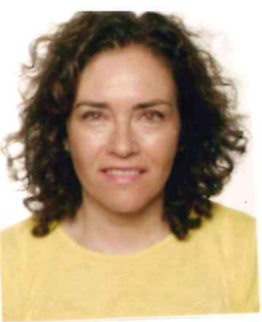
Belén de Andrés Muguruza
Research Scientist
ORCID code: 0000-0002-7391-2823
Graduated in Biology in 1987 and PhD in 1992 from the Autonomous University of Madrid. He completed his doctoral thesis in the laboratory of Dr. Carlos Lahoz in the Immunology department of the Jiménez Díaz Foundation with a pre-doctoral stay at the Institute Curie in Paris, in the laboratory of Dr. Wolf H. Fridman. Subsequently, he completed a two-year postdoctoral stay in the Department of Pathology of the College of Medicine at the University of Iowa, USA, in the laboratory of Dr. Richard G. Lynch. After a year as an Adjunct in the Immunology department of the Jiménez Diaz Foundation, she worked for 2 years with a reinstatement contract from the Ministry of Science in the Immunobiology department of the CNM/ISCIII in the laboratory of Dr. Mª Luisa Gaspar and later with a Ramón y Cajal contract. In 2006 she obtained a position as Staff Senior Scientist.
-
Isabel Cortegano Jimeno
Research Scientist
ORCID code: 0000-0002-6504-6347
Graduated in Biology in 1995 (Specialty in Biochemistry and Molecular Biology) and PhD in 1999 from the Autonomous University of Madrid. He completed his doctoral thesis at the Jiménez Díaz Foundation in the Immunology laboratory directed by Dr. Carlos Lahoz. Later he obtained a postdoctoral fellowship in the Immunobiology laboratory of Dr. Mª Luisa Gaspar at the National Center of Microbiology (CNM) of the Carlos IIII Health Institute (ISCIII) (2002-2006). He then enjoyed an I3P contract from the CSIC in the laboratory of Professor Miguel Ángel Rodríguez-Marcos (2007-2009). She has been a researcher associated with research projects in the ISCIII Immunobiology laboratory during the years 2010-2018. Since 2018 she has been an associate professor in the Department of Cell Biology of the UCM Faculty of Medicine. He coordinates the scientific dissemination group of the Spanish Society of Immunology (GESEI), is part of the editorial committee of the SEI magazine and is a member of the board of the CAM Immunology Society. She is a Senior Scientist of the ISCIII at the National Center for Microbiology since 2020.
-

Carolina Ruiz Sánchez
Specialized Technician
ORCID code: 0000-0002-2177-8132
Graduated in Chemical Sciences (biochemistry specialty) in 1998 and PhD in 2022 from the Complutense University of Madrid. In 2008 he joined the OPIS Assistant in the Immunobiology laboratory of the National Center for Microbiology of the ISCIII, specializing in flow cytometry the first year and subsequently becoming part of the laboratory's technical team. In 2012 he was promoted to Intermediate Level Technician and in 2018 to Higher Specialized Technician of the OPIS, currently occupying this position in the same laboratory.
-

Mercedes Rodríguez García
Specialized Higher Technician
Graduated in Biology from the Complutense University of Madrid in 2003, she began her doctoral studies in the Bone Metabolism laboratory of the La Paz University Hospital.
In 2007 he joined as a Research Assistant at the Carlos III Health Institute, at the CNM, in the Transplant Immunology laboratory. After 5 years, he began working in the Immunobilology laboratory where he was promoted in 2018 to Specialized Technician, in 2024 to Senior Specialized Technician and where he currently continues to develop his professional career. -

Alejandro Arrabal Sierra
Predoctoral Contract (Industrial Doctorate from CAM / Inmunotek).
ORCID code: 0000-0002-9354-9224
Graduated in Biotechnology in 2021 from the Polytechnic University of Madrid, carrying out his final degree project in the Immunobiology laboratory of the National Microbiology Center of the ISCIII. In 2021, he completed a Master's Degree in Research in Immunology at the Complutense University of Madrid and completed his master's thesis in the same CNM laboratory. Subsequently, he worked for a year as a Research Assistant in the laboratory of Dr. Elena Fernández Ruiz at the Hospital Universitario de la Princesa. Since the end of 2023, he has been a predoctoral fellow in the CNM Immunobiology laboratory with an Industrial Doctorate scholarship from the Community of Madrid in collaboration with the company Inmunotek.
-
Pilar Portolés Pérez
Científico Titular de OPIs. Jefa de Unidad
-
Begoña Galocha Iragüen
Científico Titular
-
Jordi Cano Ochando
Investigador principal
-
Patricia Conde Sanromán
Postdoctoral
-
Haisul Chang
Postdoctoral
-
María González Gómez
Estudiante de doctorado
-
Ana Belén Martin Ezquerra
Técnico especializada de OPIs
-
Soledad Crespo Carrasco
Técnico Contratada
-
Pilar Lauzurica Gómez
Investigador Principal
-
Daniel López Rodríguez
Investigador Principal
-
Elena Lorente Galán
Técnico Especializado de OPIS
-
Almudena Albentosa Cocho
Ayudante de Investigación
-
Carmen Mir Guerrero
Técnico de Laboratorio
-
Miguel Gómez Fontela
Contrato Predoctoral




List of staff