



We protect your health through science
Investigation
Medical Entomology
Research Lines
Content with Investigacion .
The Laboratory of Medical Entomology (LME) develops an intense reference and research activity, focused on the field of disease vectors of interest in Public Health. The LME has an insectary where biological cycles of insect vectors are currently maintained, allowing the performance, among others, of vector competence and xenodiagnostic studies. The LME supports the national health system by offering techniques available in the portfolio of services for the taxonomic identification of arthropods of health interest. In addition, it performs entomological surveillance of outbreaks, supporting Surveillance Plans. In particular, the LME plays a leading role in the Entomological Surveillance Plan for Leishmaniasis in the Community of Madrid. On the other hand, the LME offers scientific advice to the CCAES (Centro de Coordinación de Alertas y Emergencias Sanitarias, Ministerio de Sanidad, Consumo y Bienestar Social), and participates in the elaboration of reports and rapid risk assessments.

The main research lines of the Laboratory of Medical Entomology are:
1. Maintenance of insect vector colonies: phlebotomine sand flies (Phlebotomus perniciosus, Phlebotomus papatasi and Phlebotomus argentipes, vectors of Leishmania infantum, Leishmania major and Leishmania donovani, respectively), Culex and Aedes mosquitoes (vectors of various arboviruses) and Rhodnius prolixus (vector of Trypanosoma cruzi).
2. Biology of disease vectors of public health interest: biology, vector competence, experimental infections. The CNM has a BSL3 safety laboratory to carry out vector competence studies with culicidae and phlebotomine sand flies.
3. Entomological sampling, infectivity of potential reservoirs of leishmaniasis.
4. Insecticides and repellents: evaluation of their efficacy.
5. Characterization of saliva proteins of hematophagous Diptera: genomics, proteomics, biochemistry and gene editing. Study of salivary proteins as markers of bite exposure, virulence factors and/or vaccines.
6. Xenodiagnosis of leishmaniasis.
7. Molecular biology and taxonomy of phlebotomine sand flies. Molecular detection of Leishmania infantum in phlebotomine sand flies and characterization of Leishmania spp. Molecular identification of blood ingested by vectors.
Research projects
Content with Investigacion .
CURRENT PROJECTS
Project title: "Biochemical and functional characterisation of salivary proteins of Phlebotomus perniciosus and their role in infection by Leishmania infantum (PERNIPROT)"Reference: Project PID2023-147773NA-I00 funded by MICIU/AEI/10.13039/501100011033 and by FEDER, EU.
Start date: 01/09/2024
End date: 31/08/2028
Funding: €175,000
Principal investigator: Inés Elena Martín Martín.
Funding agency: Agencia Estatal de Investigación (Proyecto de Generación del Conocimiento 2023).

Project title: "Surveillance of leishmaniasis in the Community of Madrid from a “One Health” perspective: study of the infectious capacity of patients with visceral leishmaniasis and their role as reservoirs"
Reference: PI24CIII/00026
Start date: 01/01/2025
End date: 31/12/2027
Funding: €60,000.00
Principal investigator: Inés Elena Martín Martín.
Co-principal investigator: Maribel Jiménez Alonso
Funding agency: Instituto de Salud Carlos III (Strategic Action in Intramural Health, AESI).
Service Contract: "Analysis for the surveillance of the vector and wild reservoirs that transmit leishmaniasis in the Community of Madrid"
Reference: file no. 17/2024 (A/SER-008455/2024).
Start date: 26/06/2024
End date: 10/12/25, extendable to 2026
Total funding: €171,084
Principal Investigator: Maribel Jiménez Alonso
Funding agency: Service Contract between the Instituto de Salud Carlos III and the Directorate-General for Public Health, Regional Ministry of Health of the Community of Madrid
Project Title: CIBERINFEC Research Group (CB21/13/00110)
Start date: 2021
End date: currently active
Principal Investigator: Dr. Mª Paz Sánchez-Seco, Arbovirus and Imported Viral Diseases Unit.
Researchers from the Medical Entomology Laboratory: Maribel Jiménez (member), Inés Martín Martín (collaborator).
Funding: €108,134. File number: CB21/13/00110.
Funding agency: Consortium Centre for Biomedical Research in NETWORK (CIBER)
PAST PROJECTS
Service Contract: "Evaluation of the anti-leishmania effect of the bacteria Tc1 and its derivatives in the intravectorial cycle"
Reference: ISCIII-06896
Start date: 15/12/2022
End date: 15/04/2025
Funding: €71,265.67
Principal Investigator: Inés Elena Martín Martín
Funding agency: Service Contract between the company GlaxoSmithKline R&D (GSK) and the Instituto de Salud Carlos III
Service Contract: "Analysis for the surveillance of the vector and wild reservoirs that transmit leishmaniasis in the Community of Madrid"
Reference: 59/2020 (A/SER-040739/2020)
Start date: 10/12/2021
End date: 10/12/2023.
Funding: €42,612.17 per year Total 2021-2023: €127,836.51
Principal Investigators: Ricardo Molina /Maribel Jiménez Alonso
Funding agency: Service contract between the Instituto de Salud Carlos III (ISCIII) and the Directorate-General for Public Health, Regional Ministry of Health of the Community of Madrid
Project title: "Research and Integrated Surveillance of Emerging Arboviruses West Nile, Toscana and Dengue in some areas of Spain"
Reference: PI19CIII/00014
Start date: 2020
End date: 2022
Principal Investigator: Ana Vázquez González
Co-Principal Investigator: Ricardo Molina
Funding: €60,000.00
Funding agency: Instituto de Salud Carlos III (Strategic Action in Intramural Health, AESI).
Project title: "Characterisation of the concept of ‘asymptomatic carrier’ in leishmaniasis: implications for treatment".
Start date: 01/01/2015
End date: 31/12/2017
Principal investigators: Javier Moreno and Javier García
Funding: €159,940
Funding agency: Study Agreement between Drugs for Neglected Diseases Initiative (DNDi), the Spanish Foundation for International Cooperation, Health and Social Policy (FCSAI) and Fuenlabrada Hospital. Subcontractor: ISCIII Medical Entomology Unit (Maribel Jiménez and Ricardo Molina).
Project title: "Biology and control of vector-borne infections in Europe (EDENext Collaborative Project): Sandfly-borne diseases".
Reference: Subproject (PBD) (EU, FP7-HEALTH-2010-single-stage, contract No. 261504).
Start date: 2011
End date: 2014
Principal investigator: Ricardo Molina General coordinator: Petr Volf
Funding: €140,000
Funding agency: EU-FP7
Project Title: "Phlebotomus perniciosus saliva as a source in the search for potential targets for the development of vaccines against Leishmania infantum"
Reference: AGL2008-01592/GAN (MICINN)
Start date: 2009
End date: 2011
Principal investigator: Ricardo Molina
Funding: €70,180
Funding agency: Ministry of Science and Innovation
Publications
María Paz Sánchez-Seco, María José Sierra, Agustín Estrada-Peña, Félix Valcárcel, Ricardo Molina, Eva Ramírez de Arellano, Angeles Sonia Olmeda, Lucía García San Miguel, Maribel Jiménez, Luis J Romero, Anabel Negredo; Group for CCHFv Research. Widespread Detection of Multiple Strains of Crimean-Congo Hemorrhagic Fever Virus in Ticks, Spain.
María Paz Sánchez-Seco, María José Sierra, Agustín Estrada-Peña, Félix Valcárcel, Ricardo Molina, Eva Ramírez de Arellano, Angeles Sonia Olmeda, Lucía García San Miguel, Maribel Jiménez, Luis J Romero, Anabel Negredo; Group for CCHFv Research. Widespread Detection of Multiple Strains of Crimean-Congo Hemorrhagic Fever Virus in Ticks, Spain. Emerg Infect Dis. 2022 Feb;28(2):394-402. doi: 10.3201/eid2802.211308.
DOINegredo A, Sánchez-Ledesma M, Llorente F, Pérez-Olmeda M, Belhassen-García M, González-Calle D, Sánchez-Seco MP, Jiménez-Clavero MÁ. Retrospective Identification of Early Autochthonous Case of Crimean-Congo Hemorrhagic Fever, Spain, 2013
Negredo A, Sánchez-Ledesma M, Llorente F, Pérez-Olmeda M, Belhassen-García M, González-Calle D, Sánchez-Seco MP, Jiménez-Clavero MÁ. Retrospective Identification of Early Autochthonous Case of Crimean-Congo Hemorrhagic Fever, Spain, 2013. Emerg Infect Dis. 2021 Jun;27(6):1754-1756. doi: 10.3201/eid2706.204643.
DOINegredo A, Sánchez-Arroyo R, Díez-Fuertes F, de Ory F, Budiño MA, Vázquez A, Garcinuño Á, Hernández L, la Hoz González C, Gutiérrez-Arroyo A, Grande C, Sánchez-Seco P. Fatal Case of Crimean-Congo Hemorrhagic Fever Caused by Reassortant Virus, Spain, 2018.
Negredo A, Sánchez-Arroyo R, Díez-Fuertes F, de Ory F, Budiño MA, Vázquez A, Garcinuño Á, Hernández L, la Hoz González C, Gutiérrez-Arroyo A, Grande C, Sánchez-Seco P. Fatal Case of Crimean-Congo Hemorrhagic Fever Caused by Reassortant Virus, Spain, 2018. Emerg Infect Dis. 2021 Apr;27(4):1211-1215. doi: 10.3201/eid2704.203462.
DOILaura Davó, Laura Herrero, Maria Paz Sánchez-Seco, Nuria Labiod, David Roiz, Elena Gómez-Díaz, Lourdes Hernandez, Jordi Figuerola and Ana Vázquez. Real-time PCR assay to detect Granada virus and the related Massilia and Arrabida phleboviruses
Laura Davó, Laura Herrero, Maria Paz Sánchez-Seco, Nuria Labiod, David Roiz, Elena Gómez-Díaz, Lourdes Hernandez, Jordi Figuerola and Ana Vázquez. Real-time PCR assay to detect Granada virus and the related Massilia and Arrabida phleboviruses. Davó et al. Parasit Vectors. 2020 May 29;13(1):270. doi: 10.1186/s13071-020-04110-5.
DOIContent with Investigacion .
-
Carmen Marcos Moreno
Ayudante de Investigación de OPIs
-
Antonio Javier Martín Galiano
Investigador Miguel Servet II
-
Mireia López Siles
Investigadora Posdoctoral
-
Andrés Corral Lugo
Investigador Posdoctoral
-
Ana Tajuelo Moreno-Palancas
Investigadora predoctoral
-
Marta Vicente Pazos
Investigador predoctoral
-
Astrid Pérez Gomez
Investigador posdoctoral
-
Mar Cordero Alba
Investigador posdoctoral
-
Sonia Prieto Martín Gil
Investigador predoctoral
-
Beatriz Cano Castaño
Investigador predoctoral
-
Michael McConnell
Científico Titular
-
Federico Román Alonso
Científico Titular de OPIs
-
Miriam García López
Contratada predoctoral pFIS
-
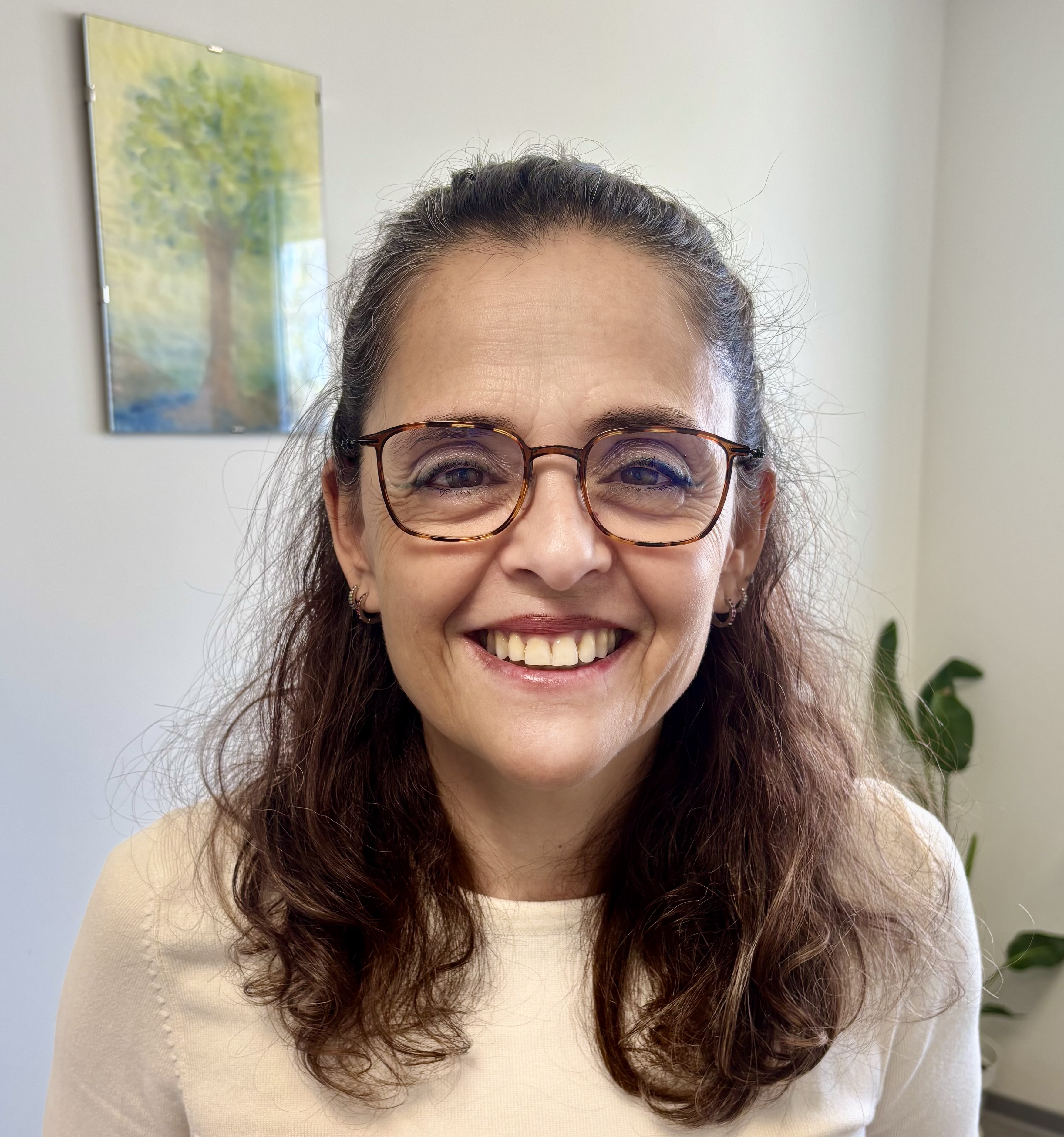
María Dolores Pérez Vázquez
Científica Titular OPI
Licenciada y doctora en Farmacia (Universidad de Santiago de Compostela, Universidad Complutense de Madrid). Especialista en Microbiología y Parasitología clínicas (F.I.R.). Mi trayectoria investigadora se ha centrado en la resistencia a los antibióticos y la epidemiología de patógenos resistentes, desarrollándose principalmente en el Centro Nacional de Microbiología (ISCIII), así como en el ámbito hospitalario (HU Ramón y Cajal) y en el Wellcome Sanger Institute (Cambridge). Desde 2012, tras mi formación en bioinformática, he consolidado una línea de investigación basada en la secuenciación masiva (WGS) aplicada a la vigilancia microbiológica, promoviendo la creación de la RedLabRA para la vigilancia nacional de bacterias multirresistentes. Mi producción científica alcanza 111 publicaciones (7056 citas; h-index 39/36) y he destacado por integrar investigación, vigilancia y transferencia al Sistema Nacional de Salud, junto con una sólida actividad docente y formadora.
-

Noelia Lara Fuella
Técnico Superior
ORCID code: 0009-0004-8912-7741
Noelia Lara Fuella (NLF) es Técnica Superior Especialista en Anatomía Patológica y Citología, con amplia experiencia en técnicas fenotípicas y genotípicas de identificación de mecanismos de resistencia en enterobacterias y gran positivos, amplia experiencia en técnicas de biología molecular, incluyendo aislamiento de ADN, PCR, RT-Y qPCR, campo Pulsante, preparación de librerías para su posterior análisis por secuenciación masiva, análisis de secuencias mediante herramienta Galaxy. Posee experiencia en manipulación de animales, realizando técnicas de inoculación y posterior sangrado para realización de posteriores ensayos, cultivo de células tumorales y mantenimiento de líneas celulares. Su trayectoria investigadora abarca un periodo de 22 años llevados a cabo en el Centro Nacional de Microbiología, en el Laboratorio de Referencia e Investigación en Resistencia a Antibióticos e IRAS, durante todo este tiempo NLF ha sido clave para la realización y puesta a punto de diversas técnicas moleculares y pruebas diagnósticas del programa de vigilancia de Haemophilus Influenzae y Programa de Vigilancia de Resistencia a Antibióticos donde permanece en la actualidad.
-

Verónica Casquero García
Técnico Superior Especializado de OPIs
ORCID code: 0000-0002-2365-394X
Verónica Casquero García es Licenciada en Bioquímica y en Biología, con amplia experiencia en técnicas de biología molecular, incluyendo aislamiento de ADN y ARN, PCR, RT- y qPCR, clonaje, mutagénesis dirigida, silenciamiento génico mediante shRNA y edición génica con CRISPR-Cas9. Posee experiencia en cultivo y manipulación de células madre embrionarias de ratón, células primarias de ratón y humano y líneas celulares, así como en técnicas de bioquímica de proteínas y en microscopía. Su trayectoria investigadora abarca varios centros incluyendo CSIC, CNIC y CNIO. Desde su incorporación al CNM en el Laboratorio de Referencia e Investigación en Resistencia a Antibióticos e IRAS ha sido clave en la actualización y desarrollo de técnicas moleculares y pruebas diagnósticas del Programa de Vigilancia en Infecciones Estafilocócicas. Domina la extracción de ADN/ARN bacteriano de distintos tipos de muestras y la preparación de librerías para secuenciación genómica, metagenómica y metatranscriptómica.
-

Jesús Oteo Iglesias
Investigador Científico OPI
ORCID code: 0000-0003-3327-8263
Licenciado en Medicina y Cirugía en 1992 y Doctor en 2005 por la Universidad Complutense de Madrid. Realizó la especialidad en Microbiología y Parasitología en el Hospital de Móstoles (2000) y desde 2001 ha desarrollado su carrera profesional en el CNM del ISCIII, del cual fue Director entre 2019-2021 liderando el plan de acción del CNM-ISCIII frente a la pandemia de COVID-19. Es profesor de investigación de OPIs, director científico del CIBER de Enfermedades Infecciosas (CIBERINFEC), coordinador de la Red Nacional de Laboratorios para la Vigilancia de Microorganismos Resistentes (RedLabRA) y National Focal Point español en resistencia a antimicrobianos. Su actividad investigadora está centrada en el campo de la resistencia a antibióticos, ha publicado más de 200 artículos en revistas con índice de impacto y ha sido investigador principal de numerosos proyectos. Ha sido secretario científico de la Junta Directiva de la SEIMC, y presidente de su grupo para el estudio de los mecanismos de acción y resistencia a antibióticos (GEMARA).
-

Silvia García Cobos
Investigador Posdoctoral
ORCID code: 0000-0002-1417-5691
Doctora en Biología por la Universidad Complutense de Madrid (2009), realizó su tesis en el Centro Nacional de Microbiología (CNM) del Instituto de Salud Carlos III, donde investigó los mecanismos de resistencia a antibióticos β-lactámicos en Haemophilus influenzae. Continuó su investigación en el mismo centro hasta el 2013, especializándose en la caracterización molecular de mecanismos de resistencia a antibióticos y su vigilancia epidemiológica, colaborando en redes nacionales como REIPI. Entre 2013 y 2019 desarrolló su labor en el University Medical Center Groningen (UMCG), Países Bajos, donde aplicó la secuenciación completa de genomas en el estudio de la diseminación de bacterias resistentes a los antibióticos bajo el enfoque One Health y la colaboración transfronteriza (programa INTERREG), además de investigar el resistoma intestinal humano en proyectos europeos de investigación. En 2019 regresó a España con financiación del programa Atracción de Talento de la Comunidad de Madrid para iniciar una línea de investigación sobre el papel del microbioma humano en las enfermedades infecciosas bacterianas y la resistencia a antibióticos, mediante secuenciación y análisis de datos metagenómicos y metatranscriptómicos.
-

María Belén Aracil García
Científica Titular OPI
ORCID code: 0000-0002-6156-8252
Licenciada y doctora en Medicina y Cirugía (Universidad Autónoma de Madrid, y Universidad Complutense de Madrid, respectivamente). Especialista en Microbiología y Parasitología clínicas (M.I.R.). Experiencia clínica en enfermedades infecciosas y microbiología desarrollada en el ámbito hospitalario (HU de Móstoles y HM Hospitales- Madrid-Montepríncipe) y en el Laboratorio de Referencia e Investigación de .Resistencia a Antibióticos y Enfermedades Relacionadas con la Asistencia Sanitaria (IRAS) del Centro Nacional de Microbiología del Instituto de Salud Carlos III, donde desde 2000 se ha desarrollado también mi actividad investigadora, enfocada en el estudio de la resistencia a los antibióticos esencialmente en patógenos multirresistentes gnosocomiales desde el punto de vista de la epidemiología molecular y la salud pública. Desde 2012, responsable de calidad del laboratorio, punto focal alternate de resistencia a antibióticos en España y coordinadora de la red EARS-Net en España, red del ECDC para la vigilancia de la resistencia a antibióticos en infecciones invasivas causadas por los principales microorganismos involucrados en la multirresistencia. Labor formativa de posgrado en la Universidad de Alcalá y la UNED y en otros ciclos formativos relacionados. Destacada producción científica con 114 publicaciones e informes técnicos y 30 proyectos de investigación.
-

Isabela Alonzo González
Dra.
ORCID code: 0009-0007-4291-4870
La Dra. Isabela Alonso González es licenciada en Biología por la Universidad Complutense de Madrid, en 2002. Realizó su tesis doctoral en el ámbito de la regulación de la expresión génica en células de mamífero en el Centro de Biología Molecular Severo Ochoa (CBMSO-UAM), donde concluyó su doctorado en Biología Molecular en 2009. Tras varias estancias posdoctorales, se especializó mediante un Máster en Gestión de Proyectos de I+D y es experta en la coordinación y gestión de redes de investigación. Desde 2023 trabaja como Project Manager del proyecto MePRAM, contratada por el CIBER y, en paralelo, desarrolla su labor en el Centro Nacional de Microbiología (CNM) en el grupo de investigación del Dr. Jesús Oteo, explorando oportunidades en una nueva línea de trabajo relacionada con la proteómica y la resistencia a antimicrobianos en patógenos de interés para el Sistema Nacional de Salud (SNS), así como en el estudio de nuevas terapias celulares frente a las infecciones producidas por bacterias multirresistentes.


List of staff
Additional Information
The Medical Entomology Laboratory has accumulated extensive experience in this field, especially in entomological field studies, biology of arthropods of medical interest, vector competence and vector control. Also, in the molecular detection of Leishmania infantum promastigotes in naturally parasitized phlebotomine sand flies, in the molecular identification of blood ingested by hematophagous arthropods and in the study of the immunomodulatory properties of proteins present in the saliva of phlebotomine sand flies and mosquitoes. Our laboratory is currently co-leading the studies of vectors and wild reservoirs of leishmaniasis in the leishmaniasis focus of Fuenlabrada, Madrid. In this sense, we have studied the role of asymptomatic individuals as reservoirs in the outbreak by xenodiagnosis. On the other hand, we have participated since 2007 in the Entomological Surveillance Program in Airports and Ports against Potential Vectors of Exotic Infectious Diseases, a program that is allowing to develop the expansion map in Spain of Aedes albopictus. In 2016-2017, we carried out surveillance of Ae. albopictus in the Community of Castilla-La Mancha. On the other hand, we conducted studies on the role of patients with post-kala-azar dermal leishmaniasis (PKDL) in the transmission of the parasite in Bangladesh and Sudan. In addition, we participate in research studying ticks transmitting Crimean-Congo hemorrhagic fever in Spain.
Currently, it maintains confidentiality agreements with several companies participating in the evaluation of molecules with activity against pathogens in vectors (GSK), in the development of vector traps using artificial intelligence algorithms (Irideon, Spain), and in the evaluation of repellents against phlebotomine sand flies (IRSEA, France).
The laboratory actively participates in outreach activities such as the Science Week or the European Researchers' Night, among others, making medical entomology science available to the general population.
The Medical Entomology Laboratory has accumulated extensive experience in this field, especially in entomological field studies, biology of arthropods of medical interest, vector competence and vector control. Also, in the molecular detection of Leishmania infantum promastigotes in naturally parasitized phlebotomine sand flies, in the molecular identification of blood ingested by hematophagous arthropods and in the study of the immunomodulatory properties of proteins present in the saliva of phlebotomine sand flies and mosquitoes. Our laboratory is currently co-leading the studies of vectors and wild reservoirs of leishmaniasis in the leishmaniasis focus of Fuenlabrada, Madrid. In this sense, we have studied the role of asymptomatic individuals as reservoirs in the outbreak by xenodiagnosis. On the other hand, we have participated since 2007 in the Entomological Surveillance Program in Airports and Ports against Potential Vectors of Exotic Infectious Diseases, a program that is allowing to develop the expansion map in Spain of Aedes albopictus. In 2016-2017, we carried out surveillance of Ae. albopictus in the Community of Castilla-La Mancha. On the other hand, we conducted studies on the role of patients with post-kala-azar dermal leishmaniasis (PKDL) in the transmission of the parasite in Bangladesh and Sudan. In addition, we participate in research studying ticks transmitting Crimean-Congo hemorrhagic fever in Spain.
Currently, it maintains confidentiality agreements with several companies participating in the evaluation of molecules with activity against pathogens in vectors (GSK), in the development of vector traps using artificial intelligence algorithms (Irideon, Spain), and in the evaluation of repellents against phlebotomine sand flies (IRSEA, France).
The laboratory actively participates in outreach activities such as the Science Week or the European Researchers' Night, among others, making medical entomology science available to the general population.