



We protect your health through science
Investigation
Viral Biology
Research Lines
Content with Investigacion .
Inmunología Microbiana e Inmunogenética
1. Análisis de la respuesta innata de mamíferos en la infección por Leishmania.
2. Caracterización inmunoproteómica en :
a. Streptococcus suis
b. Lactococcus garviae
c. Mycobacterium spp
3. Desarrollo de inmunoensayos analíticos basados en anticuerpos monoclonales (AcM) para detectar y cuantificar antígenos de origen animal, vegetal y microbiano.
4. Desarrollo y caracterización de AcM frente a los componentes del sistema del Complemento. Aplicación diagnóstica.
5. Desarrollo de reactivos de referencia y diseño de inmunoensayos para la evaluación cualitativa y cuantitativa de toxinas clostridiales.
6. Oferta tecnológica de producción de AcM y policlonales frente a substancias de interés industrial y biomédico.
El grupo está interesado en el estudio de la respuesta inmune desde una perspectiva multidisciplinar que incluye aproximaciones bioquímicas, biotecnológicas, genómicas, inmunoinformáticas y proteómicas, que junto con el uso adicional de modelos in vivo se encaminan al diseño de estrategias terapéuticas frente a diversas enfermedades crónicas, infecciosas y raras que poseen un claro componente inmunológico en su etiología.
Las principales líneas de investigación que está desarrollando el grupo en la actualidad son:
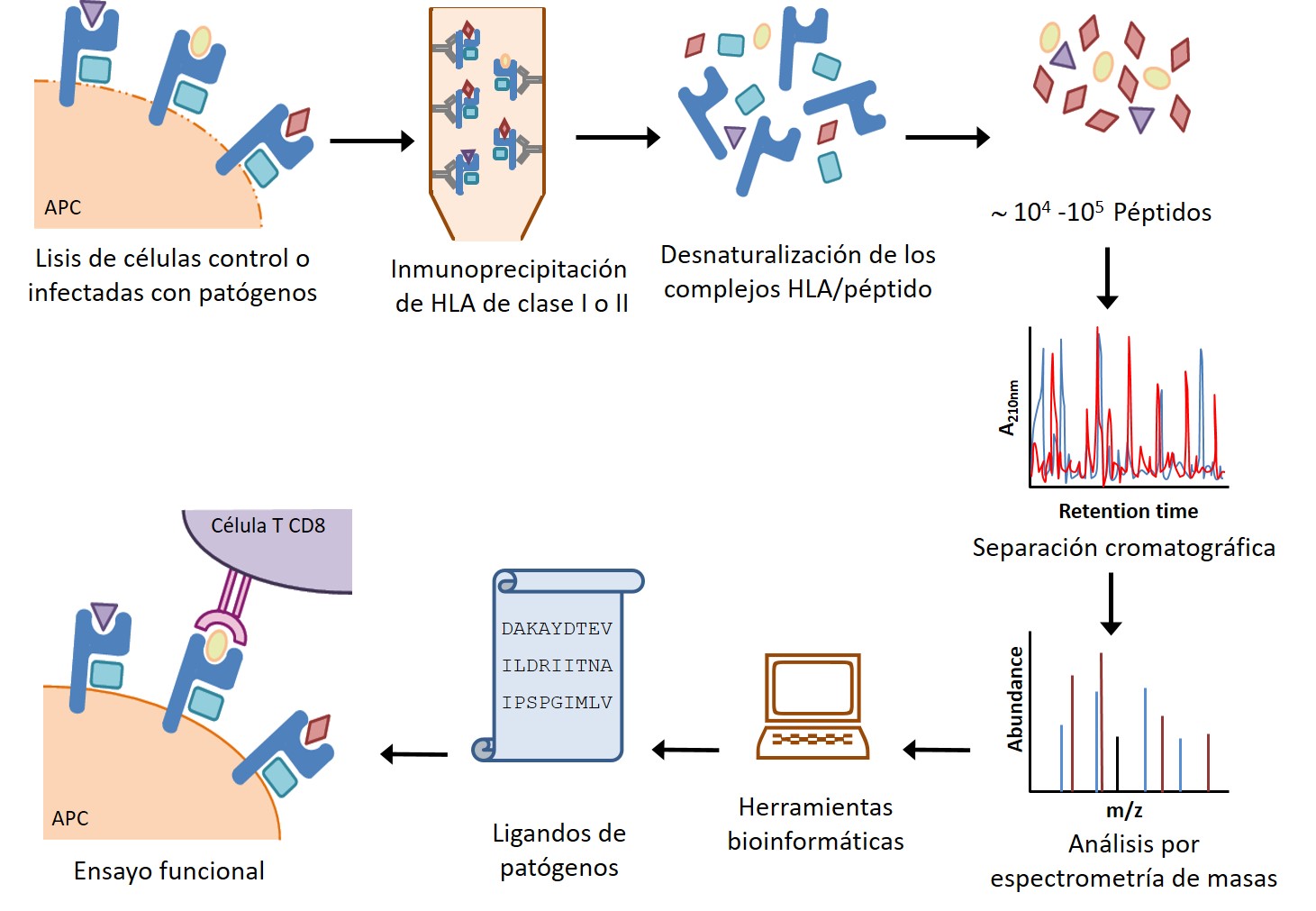
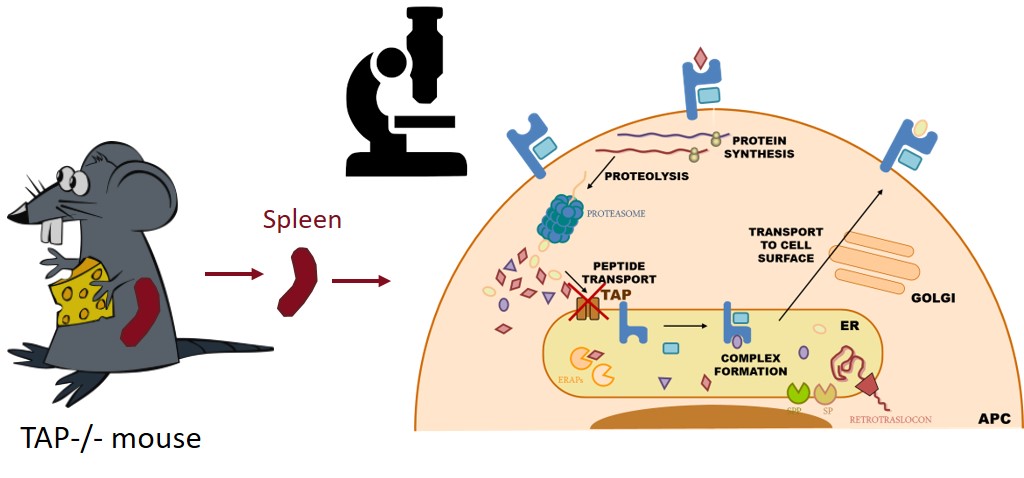
- * Análisis de las respuestas inmunes celulares frente a patógenos virales y bacterianos, mediante técnicas inmunoproteómicas, modelos in vivo con animales transgénicos y muestras humanas.
- * Caracterización de CD69: regulación génica, función reguladora inmune en homeostasis e infección y su uso como diana terapéutica, edición génica por CRISPR en modelos animales y celulares, etc.

* Desarrollo de herramientas inmunoinformáticas que permitan analizar la respuesta inmune celular frente a diversos virus de interés sanitario y determinar la eficacia de sus vacunas a nivel de población mundial.

* Estudio de las respuestas inmunes celulares frente a enfermedades raras (artritis reactiva y síndrome del linfocito desnudo) y crónicas (espondiloartropatías).
* Inclusión de componentes del sistema inmune en la fabricación de tejidos humanos, especialmente piel, para uso clínico, farmacéutico y cosmético.
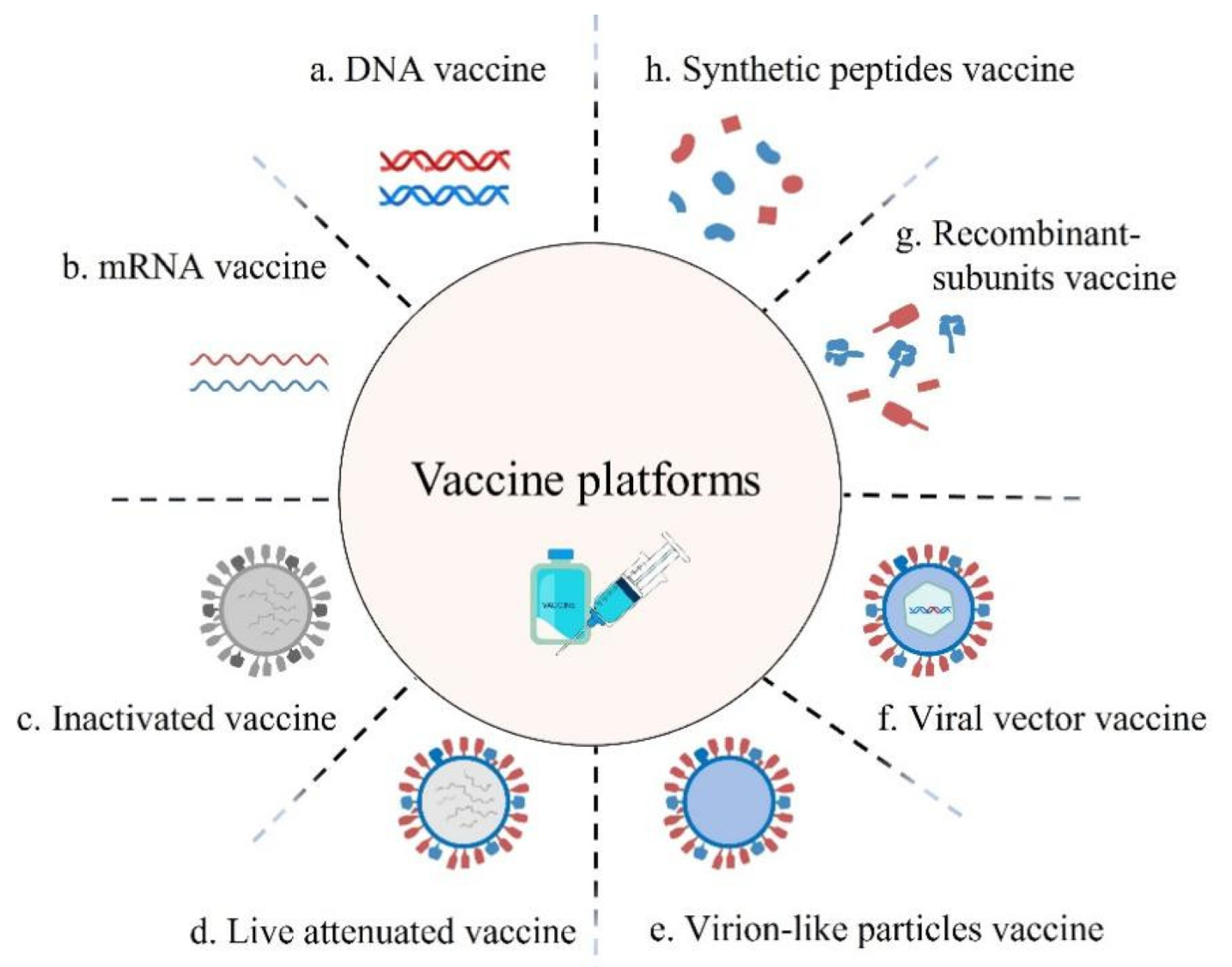
- * Generación de virus recombinantes como vectores vacunales.
Research projects
Content with Investigacion .
Los proyectos del grupo de los últimos años son los siguientes:
Proyecto “La interrelación de CD69 y el procesamiento antigénico en enfermedades infecciosas y autoinmunes" financiado por la Acción Estratégica en Salud del Ministerio de Ciencia, Innovación y Universidades. Año: 2023-2025.
Proyecto “Interacciones génicas y proteicas de CD69 y sus regiones génicas reguladoras con moléculas" financiado por la AEI. Año: 2022-2024.

Proyecto “Nuevas tecnologías de fabricación y optimización de tejidos: la piel como sistema modelo” financiado por el Programa de Actividades de I+D entre grupos de investigación de la Comunidad de Madrid en tecnologías 2018. Año: 2020-2023. Proyecto Coordinado por el Dr. Pablo Acedo de la Universidad Carlos III.
Proyecto “Estudio de CD69 como diana para mejorar el tratamiento de la leucopania y la movilización de células T de memoria de médula ósea" financiado por la Acción Estratégica en Salud del Ministerio de Ciencia, Innovación y Universidades. Año:2020-2024.
Proyecto “Diseño racional de una vacuna contra el virus respiratorio sincitial humano” financiado por la Acción Estratégica en Salud del Ministerio de Ciencia, Innovación y Universidades. Año: 2019-2022
Proyecto “Función de CD69 y sus elementos reguladores" financiado por la Acción Estratégica en Salud del Ministerio de Ciencia, Innovación y Universidades. Año: 2017-2022.
Proyecto “Diseño de vacunas recombinantes poliepitópicas para generar respuestas CD8+ contra virus emergentes” financiado por el Plan Nacional de I+D+i del Ministerio de Economía y Competitividad. Año: 2015-2017.
Proyecto “Análisis de los efectos de CD69 dependientes de S1P1 en modelos de infección e inflamación y estudio de su regulación” financiado por el FIS. Año: 2014-2017.
Proyecto “ADELVAC: Adenovirus con delecciones epitópicas para vacunación” financiado por el programa INNPACTO del Ministerio de Economía y Competitividad. Centro Nacional de Microbiología, Instituto de Salud Carlos III. Año: 2012-2014. Proyecto Coordinado por el Dr. Manel Cascallo de VCN BIOSCIENCES SL.
Proyecto “Diseño de vacunas multiepitópicas recombinantes para aumentar la respuesta inmune celular contra el VRSH” financiado por el Plan Nacional de I+D+i del Ministerio de Ciencia e Innovación. Año: 2012-2014.
Publications
Off-label use of maraviroc in HIV-1-infected paediatric patients in clinical practice.
Palladino C, Navarro Gomez ML, Soler-Palacin P, Gonzalez-Tome MI, Jiménez de Ory S, Espiau M, Pérez-Hoyos S, León-Leal JA, Méndez M, Moreno-Pérez D, Fortuny C, uer A, Pocheville I, Moreno S, Briz V, on behalf of the CoRISpe Working Group. Off-label use of maraviroc in HIV-1-infected paediatric patients in clinical practice. AIDS 2015; 29-16, pp.2155-2159. (A; FI= 4,407; Q1 Infectious Disease).
PUBMED DOIComparative sensitivity of commercial tests for hepatitis E genotype 3 virus antibody detection.
Comparative sensitivity of commercial tests for hepatitis E genotype 3 virus antibody detection. Avellon A, Morago L, Garcia-Galera del Carmen M, Munoz M, Echevarría JM. J Med Virol. 2015 Nov;87(11):1934-9. Epub 2015 May 29.
PUBMED DOIRelative telomere length impact on mortality of COVID-19: sex differences.
Virseda-Berdices A, Concostrina-Martinez L, Martínez-González O, Blancas R, Resino S, Ryan P, De Juan C, Moreira-Escriche P, Martin-Vicente M, Brochado-Kith O, Blanca-López N, Jiménez-Sousa MA (‡,*), Fernández-Rodríguez A (‡). Relative telomere length impact on mortality of COVID-19: sex differences. J Med Virol 2023; 98 (1): e28368 (A; FI= 20.96; D1, Virology; JCR 2021).
PUBMEDActivity of host antimicrobials against multidrug resistant Acinetobacter baumannii acquiring colistin resistance through loss of lipopolysaccharide
García-Quintanilla, M., Pulido, M. R., Moreno-Martínez, P., Martín-Peña, R., López-Rojas, R., Pachón, J. and McConnell, M.J.* Activity of host antimicrobials against multidrug resistant Acinetobacter baumannii acquiring colistin resistance through loss of lipopolysaccharide. Antimicrobial Agents and Chemotherapy 2014. May;58(5):2972-5.
PUBMED DOICharacterization of broadly neutralizing antibody responses to HIV-1 in a cohort of long term non-progressors
Characterization of broadly neutralizing antibody responses to HIV-1 in a cohort of long term non-progressors. González N, McKee K, Lynch RM, Georgiev IS, Jimenez L, Grau E, Yuste E, Kwong PD, Mascola JR, Alcamí J. PLoS One. 2018;13:e0193773.
PUBMED DOIDiverse large HIV-1 non-subtype B clusters are spreading among men who have sex with men in Spain
Delgado E, Benito S, Montero V, Cuevas MT, Fernández-García A, Sánchez-Martínez M, García-Bodas E, Díez-Fuertes F, Gil H, Cañada J, Carrera C, Martínez-López J, Sintes M, Pérez-Álvarez L, Thomson MM; Spanish Group for the Study of New HIV Diagnoses. Diverse large HIV-1 non-subtype B clusters are spreading among men who have sex with men in Spain. Front Microbiol. 2019; 3;10:655.
PUBMED DOIImprovement of HIV-1 coreceptor tropism prediction by employing selected nucleotide positions of the env gene in a Bayesian network classifier.
Díez-Fuertes F, Delgado E, Vega Y, Fernández-García A, Cuevas MT, Pinilla M, García V, Pérez-Álvarez L, Thomson MM. Improvement of HIV-1 coreceptor tropism prediction by employing selected nucleotide positions of the env gene in a Bayesian network classifier. J Antimicrob Chemother. 2013; 68:1471-1485.
PUBMED DOIPredominance of CXCR4 tropism in HIV-1 CRF14_BG strains from newly diagnosed infections.
Pérez-Álvarez L, Delgado E, Vega Y, Montero V, Cuevas T, Fernández-García A, García-Riart B, Pérez-Castro S, Rodríguez-Real R, López-Álvarez MJ, Fernández-Rodríguez R, Lezaun MJ, Ordóñez P, Ramos C, Bereciartua E, Calleja S, Sánchez-García AM, Thomson MM. Predominance of CXCR4 tropism in HIV-1 CRF14_BG strains from newly diagnosed infections. J Antimicrob Chemother. 2014; 69:246-253.
PUBMED DOIMolecular epidemiology, phylogeny, and phylodynamics of CRF63_02A1, a recently originated HIV-1 circulating recombinant form spreading in Siberia.
Shcherbakova NS, Shalamova LA, Delgado E, Fernández-García A, Vega Y, Karpenko LI, Ilyichev AA, Sokolov YV, Shcherbakov DN, Pérez-Álvarez L, Thomson MM. Molecular epidemiology, phylogeny, and phylodynamics of CRF63_02A1, a recently originated HIV-1 circulating recombinant form spreading in Siberia. AIDS Res Hum Retroviruses. 2014; 30:912-919.
PUBMED DOIEpidemiological surveillance of HIV-1 transmitted drug resistance in Spain in 2004-2012: relevance of transmission clusters in the propagation of resistance mutations.
Vega Y, Delgado E, Fernández-García A, Cuevas MT, Thomson MM, Montero V, Sánchez M, Sánchez AM, Pérez-Álvarez L; Spanish Group for the Study of New HIV-1 Diagnoses in Galicia and Basque Country. Epidemiological surveillance of HIV-1 transmitted drug resistance in Spain in 2004-2012: relevance of transmission clusters in the propagation of resistance mutations. PLoS One. 2015; 10:e0125699.
PUBMED DOIPhylogeny and phylogeography of a recent HIV-1 subtype F outbreak among men who have sex with men in Spain deriving from a cluster with a wide geographic circulation in Western Europe.
Delgado E, Cuevas MT, Domínguez F, Vega Y, Cabello M, Fernández-García A, Pérez-Losada M, Castro MÁ, Montero V, Sánchez M, Mariño A, Álvarez H, Ordóñez P, Ocampo A, Miralles C, Pérez-Castro S, López-Álvarez MJ, Rodríguez R, Trigo M, Diz-Arén J, Hinojosa C, Bachiller P, Hernáez-Crespo S, Cisterna R, Garduño E, Pérez-Álvarez L, Thomson MM. Phylogeny and phylogeography of a recent HIV-1 subtype F outbreak among men who have sex with men in Spain deriving from a cluster with a wide geographic circulation in Western Europe. PLoS One. 2015; 10:e0143325.
PUBMED DOIIdentification of an HIV-1 BG intersubtype recombinant form (CRF73_BG), partially related to CRF14_BG, which Is circulating in Portugal and Spain.
Fernández-García A, Delgado E, Cuevas MT, Vega Y, Montero V, Sánchez M, Carrera C, López-Álvarez MJ, Miralles C, Pérez-Castro S, Cilla G, Hinojosa C, Pérez-Álvarez L, Thomson MM. Identification of an HIV-1 BG intersubtype recombinant form (CRF73_BG), partially related to CRF14_BG, which Is circulating in Portugal and Spain. PLoS One. 2016; 11:e0148549.
PUBMED DOISequence analysis of in vivo-expressed HIV-1 spliced RNAs reveals the usage of new and unusual splice sites by viruses of different subtypes
Vega Y, Delgado E, de la Barrera J, Carrera C, Zaballos Á, Cuesta I, Mariño A, Ocampo A, Miralles C, Pérez-Castro S, Álvarez H, López-Miragaya I, García-Bodas E, Díez-Fuertes F, Thomson MM. Sequence analysis of in vivo-expressed HIV-1 spliced RNAs reveals the usage of new and unusual splice sites by viruses of different subtypes. PLoS One. 2016; 11:e0158525.
PUBMED DOIHIV-1 genetic diversity in recently diagnosed infections in Moscow: predominance of AFSU, frequent branching in clusters, and circulation of the Iberian subtype G variant.
Karamov E, Epremyan K, Siniavin A, Zhernov Y, Cuevas MT, Delgado E, Sánchez-Martínez M, Carrera C, Kornilaeva G, Turgiev A, Bacqué J, Pérez-Álvarez L, Thomson MM. HIV-1 genetic diversity in recently diagnosed infections in Moscow: predominance of AFSU, frequent branching in clusters, and circulation of the Iberian subtype G variant. AIDS Res Hum Retroviruses. 2018; 34:629-634.
PUBMED DOIBayesian phylogeographic analyses clarify the origin of the HIV-1 subtype A variant circulating in former Soviet Union's countries.
Díez-Fuertes F, Cabello M, Thomson MM. Bayesian phylogeographic analyses clarify the origin of the HIV-1 subtype A variant circulating in former Soviet Union's countries. Infect Genet Evol. 2015; 33:197-205.
PUBMED DOIAlcazar-Fuoli L, Clavaud C, Lamarre C, Aimanianda V, Seidl-Seiboth V, Mellado E, Latgé JP. Functional analysis of the fungal/plant class chitinase family in Aspergillus fumigatus.
Alcazar-Fuoli L, Clavaud C, Lamarre C, Aimanianda V, Seidl-Seiboth V, Mellado E, Latgé JP. Functional analysis of the fungal/plant class chitinase family in Aspergillus fumigatus. Fungal Genet Biol. 2011 Apr;48(4):418-29. doi: 10.1016/j.fgb.2010.12.007. Epub 2010 Dec 22. PMID: 21184840.
PUBMED DOIImpact of DARC rs12075 Variants on Liver Fibrosis Progression in Patients with Chronic Hepatitis C: A Retrospective Study.
Jiménez-Sousa MA (AC); Gómez-Moreno AZ; Pineda-Tenor D; et al. (1/9) Impact of DARC rs12075 Variants on Liver Fibrosis Progression in Patients with Chronic Hepatitis C: A Retrospective Study. Biomolecules 2019; 9(4).
DBP rs16846876 and rs12512631 polymorphisms are associated with progression to AIDS naïve HIV-infected patients: a retrospective study.
Jiménez-Sousa MA (AC); Jiménez JL; Fernández-Rodríguez A; et al. (1/10). DBP rs16846876 and rs12512631 polymorphisms are associated with progression to AIDS naïve HIV-infected patients: a retrospective study. Journal of Biomedical Science. 2019; 23;26(1):83. doi: 10.1186/s12929-019-0577-y.
TRPM5 rs886277 Polymorphism Predicts Hepatic Fibrosis Progression in Non-Cirrhotic HCV-Infected Patients.Journal of Clinical Medicine.
Resino S; Fernández-Rodríguez A; Pineda-Tenor D; et al; Jiménez-Sousa MA. (11/11). 2021. TRPM5 rs886277 Polymorphism Predicts Hepatic Fibrosis Progression in Non-Cirrhotic HCV-Infected Patients.Journal of Clinical Medicine. 10-3, pp.483. ISSN 2077-0383. https://doi.org/10.3390/jcm10030483.
Plasma metabolomic fingerprint of advanced cirrhosis stages among HIV/HCV-coinfected and HCV-monoinfected patients
Salguero, Sergio; Rojo, David; Berenguer, Juan; et al; Jimenez-Sousa, Maria A. (AC) (15/15). 2020. Plasma metabolomic fingerprint of advanced cirrhosis stages among HIV/HCV-coinfected and HCV-monoinfected patients LIVER INTERNATIONAL. 40-9, pp.2215-2227. ISSN 1478-3223. https://doi.org/10.1111/liv.14580 3
Additional Information
The research activity of the Viral Biology group since its beginnings in the 1980s has focused on respiratory viruses, especially on the study of the mechanisms of virus entry into the cell, evolutionary aspects, antigenic properties and vaccine development.
Currently, the group's objectives are focused on the characterisation of the immune response and the development of vaccines against human pneumoviruses: human respiratory syncytial virus (hRSV) and human metapneumovirus (hMPV).
Both viruses are considered to be important respiratory pathogens of high clinical relevance, especially in the paediatric population.
Safe and effective vaccines against these viruses are currently not available. Soluble protein subunits based on the fusion protein (F-protein) of hRSV and hMPV are being developed in the laboratory by protein engineering for use as vaccines against human pneumoviruses.
On the other hand, and thanks to the characterisation of the type of humoral response induced by the F proteins of these viruses, the laboratory is also involved in the isolation of monoclonal antibodies and nanoantibodies for use as treatments against these viruses.
The research activity of the Viral Biology group since its beginnings in the 1980s has focused on respiratory viruses, especially on the study of the mechanisms of virus entry into the cell, evolutionary aspects, antigenic properties and vaccine development.
Currently, the group's objectives are focused on the characterisation of the immune response and the development of vaccines against human pneumoviruses: human respiratory syncytial virus (hRSV) and human metapneumovirus (hMPV).
Both viruses are considered to be important respiratory pathogens of high clinical relevance, especially in the paediatric population.
Safe and effective vaccines against these viruses are currently not available. Soluble protein subunits based on the fusion protein (F-protein) of hRSV and hMPV are being developed in the laboratory by protein engineering for use as vaccines against human pneumoviruses.
On the other hand, and thanks to the characterisation of the type of humoral response induced by the F proteins of these viruses, the laboratory is also involved in the isolation of monoclonal antibodies and nanoantibodies for use as treatments against these viruses.