



We protect your health through science
Investigation
Enteric viruses
Publications
Frecuencia de sustituciones relevantes asociadas a resistencia en la región NS5A a elbasvir en el virus de la hepatitis C en pacientes con genotipo 1a en España
2. Palladino C, Esteban-Cartelle B, Mate-Cano I, Sánchez-Carrillo M, Resino S, Briz V. Frecuencia de sustituciones relevantes asociadas a resistencia en la región NS5A a elbasvir en el virus de la hepatitis C en pacientes con genotipo 1a en España Enferm Infecc Microbiol Clin. 2018; 36 (5): 262-267. (A; FI= 1.707; Q2 Microbiology).
PUBMED DOIDevelopment of water-soluble polyanionic carbosilane dendrimers as novel and highly potent topical anti-HIV-2 microbicides.
4. Briz V, Sepulveda-Crespo D, Diniz AR; Borrego P, Rodes B; Javier de la Mata F, Gomez R, Taveira N, Muñoz-Fernandez MA. Development of water-soluble polyanionic carbosilane dendrimers as novel and highly potent topical anti-HIV-2 microbicides. Nanoscale 2015, 7(35): 14669-14683. (A; FI= 7.76; D1 Materials Science, Multidisciplinary).
PUBMED DOIHepatitis A outbreak disproportionately affecting men who have sex with men (MSM) in the European Union and European Economic Area, June 2016 to May 2017.
6. Hepatitis A outbreak disproportionately affecting men who have sex with men (MSM) in the European Union and European Economic Area, June 2016 to May 2017. Ndumbi P, Freidl GS, Williams CJ, Mårdh O, Varela C, Avellón A, …. Severi E; Members Of The European Hepatitis A Outbreak Investigation Team. Euro Surveill. 2018 Aug;23(33). doi: 10.2807/1560-7917.ES.2018.23.33.1700641.
PUBMED DOIDetection of hepatitis C virus (HCV) core-specific antibody suggests occult HCV infection among blood donors
7. Detection of hepatitis C virus (HCV) core-specific antibody suggests occult HCV infection among blood donors. Quiroga JA, Avellón A, Bartolomé J, Andréu M, Flores E, González MI, González R, Pérez S, Richart LA, Castillo I, Alcover J, Palacios R, Carreño V, Echevarría JM. Transfusion. 2016 Jul;56(7):1883-90. Epub 2016 May 17.
PUBMED DOIHepatitis E virus: Assessment of the epidemiological situation in humans in Europe, 2014/15.
8. Hepatitis E virus: Assessment of the epidemiological situation in humans in Europe, 2014/15. Adlhoch C, Avellon A, Baylis SA, Ciccaglione AR, Couturier E, de Sousa R, Epštein J, Ethelberg S, Faber M, Fehér Á, Ijaz S, Lange H, Manďáková Z, Mellou K, Mozalevskis A, Rimhanen-Finne R, Rizzi V, Said B, Sundqvist L, Thornton L, Tosti ME, van Pelt W, Aspinall E, Domanovic D, Severi E, Takkinen J, Dalton HR. J Clin Virol. 2016 Sep;82:9-16. Epub 2016 Jun 23.
PUBMED DOIFull coding hepatitis E virus genotype 3 genome amplification method
9. Full coding hepatitis E virus genotype 3 genome amplification method. Muñoz-Chimeno M, Forero JE, Echevarría JM, Muñoz-Bellido JL, Vázquez-López L, Morago L, García-Galera MC, Avellón A. J Virol Methods. 2016 Apr;230:18-23. Epub 2016 Jan 16.
PUBMED DOIAntigenicity of Leishmania-Activated C-Kinase Antigen (LACK) in Human Peripheral Blood Mononuclear Cells, and Protective Effect of Prime-Boost Vaccination With pCI-neo-LACK Plus Attenuated LACK-Expressing Vaccinia Viruses in Hamsters
2. Fernández L, Carrillo E, Sánchez-Sampedro L, Sánchez C, Ibarra-Meneses AV, Jimenez MA, Almeida VDA, Esteban M, Moreno J. Antigenicity of Leishmania-Activated C-Kinase Antigen (LACK) in Human Peripheral Blood Mononuclear Cells, and Protective Effect of Prime-Boost Vaccination With pCI-neo-LACK Plus Attenuated LACK-Expressing Vaccinia Viruses in Hamsters. Front Immunol. 2018 Apr 23;9:843.
PUBMED DOIInterleukin-2 as a marker for detecting asymptomatic individuals in areas where Leishmania infantum is endemic.
5. Ibarra-Meneses AV, Carrillo E, Sánchez C, García-Martínez J, López Lacomba D, San Martin JV, Alves F, Alvar J, Moreno J. Interleukin-2 as a marker for detecting asymptomatic individuals in areas where Leishmania infantum is endemic. Clin Microbiol Infect. 2016 Aug;22(8):739.e1-4.
PUBMED DOIProtein malnutrition impairs the immune response and influences the severity of infection in a hamster model of chronic visceral leishmaniasis.
7. Carrillo E, Jimenez MA, Sanchez C, Cunha J, Martins CM, da Paixão Sevá A, Moreno J. Protein malnutrition impairs the immune response and influences the severity of infection in a hamster model of chronic visceral leishmaniasis. PLoS One. 2014 Feb 25;9(2):e89412.
PUBMED DOIMolecular typing of Leishmania infantum isolates from a leishmaniasis outbreak in Madrid, Spain, 2009 to 2012
9. Chicharro C, Llanes-Acevedo IP, García E, Nieto J, Moreno J, Cruz I. Molecular typing of Leishmania infantum isolates from a leishmaniasis outbreak in Madrid, Spain, 2009 to 2012. Euro Surveill. 2013 Jul 25;18(30):20545.
PUBMED DOIHigh levels of anti-Phlebotomus perniciosus saliva antibodies in different reservoirs from the re-emerging leishmaniasis focus in Madrid, Spain.
2. Martín-Martín I, Molina R, Rohoušová I, Drahota J., Volf P, Jiménez M. High levels of anti-Phlebotomus perniciosus saliva antibodies in different reservoirs from the re-emerging leishmaniasis focus in Madrid, Spain. Vet Parasitol 2014, 202: 207–216.
PUBMED DOICould wild rabbits (Oryctolagus cuniculus) be reservoirs for Leishmania infantum in the focus of Madrid, Spain?
3. Jiménez M, González E, Martín-Martín I, Hernández S, Molina R. Could wild rabbits (Oryctolagus cuniculus) be reservoirs for Leishmania infantum in the focus of Madrid, Spain?. Vet Parasitol 2014, 202: 296–300.
PUBMED DOIReview of ten-years presence of Aedes albopictus in Spain 2004–2014: known distribution and public health concerns.
5. Collantes F, Delacour S, Alarcón-Elbal PM, Ruiz-Arrondo I, Delgado JA, Torrell-Sorio A, Bengoa M, Eritja R, Miranda MA, Molina R, Lucientes J. Review of ten-years presence of Aedes albopictus in Spain 2004–2014: known distribution and public health concerns. Parasit Vectors. 2015 Dec 23;8:655.
PUBMED DOIPhleboviruses detection in Phlebotomus perniciosus from a human leishmaniasis focus in South-West Madrid region, Spain.
6. Remoli ME, Jiménez M, Fortuna C, Benedetti E, Marchi A, Genovese D, Gramiccia M, Molina R, Ciufolini MG. Phleboviruses detection in Phlebotomus perniciosus from a human leishmaniasis focus in South-West Madrid region, Spain. Parasit Vectors 2016, 9:205.
PUBMED DOIInfectivity of Post-Kala-azar Dermal Leishmaniasis patients to sand flies: revisiting a proof of concept in the context of the Kala-azar Elimination Program in the Indian subcontinent.
7. Molina R, Ghosh D, Carrillo E, Monnerat S, Bern C, Mondal D, Alvar J. Infectivity of Post-Kala-azar Dermal Leishmaniasis patients to sand flies: revisiting a proof of concept in the context of the Kala-azar Elimination Program in the Indian subcontinent. Clin Infect Dis 2017, 65:
PUBMED DOIPrevalence and molecular characterization of Strongyloides stercoralis, Giardia duodenalis, Cryptosporidium spp., and Blastocystis spp. isolates in schoolchildren in Cubal, Central Angola
2. Dacal E, Saugar JM, de Lucio A, Hernández de Mingo M, Robinson E, Aznar Ruiz de Alegría ML, Espasa M, Ninda A, Gandasegui J, Sulleiro E, Moreno M, Salvador F, Molina I, Rodríguez E, Carmena D. 2018. Prevalence and molecular characterization of Strongyloides stercoralis, Giardia duodenalis, Cryptosporidium spp., and Blastocystis spp. isolates in schoolchildren in Cubal, Central Angola. Parasites and Vectors, 11: 67.
PUBMED DOIMolecular diversity and frequency of the diarrheagenic enteric protozoan Giardia duodenalis and Cryptosporidium spp. in a hospital setting in Northern Spain.
3. Azcona-Gutiérrez JM, de Lucio A, Hernández-de-Mingo M, García-García C, Soria-Blanco LM, Morales L, Aguilera M, Fuentes I, Carmena D. 2017. Molecular diversity and frequency of the diarrheagenic enteric protozoan Giardia duodenalis and Cryptosporidium spp. in a hospital setting in Northern Spain. PLoS One, 12: e0178575.
PUBMED DOIDetection of zoonotic protozoa Toxoplasma gondii and Sarcocystis suihominis in wild boars from Spain. Zoonoses Public Health
4. Calero-Bernal, R., Pérez-Martín, J.E., Reina, D., Serrano, F.J., Frontera, E., Fuentes, I, Dubey, J.P., 2016. Detection of zoonotic protozoa Toxoplasma gondii and Sarcocystis suihominis in wild boars from Spain. Zoonoses Public Health. 63:346-50
PUBMED DOIEpidemiological and clinical profile of adult patients with Blastocystis sp. infection in Barcelona, Spain.
5. Salvador F, Sulleiro E, Sánchez-Montalvá A, Alonso C, Santos J, Fuentes I, Molina I. 2016; Epidemiological and clinical profile of adult patients with Blastocystis sp. infection in Barcelona, Spain. Parasit Vectors; 9:548.
PUBMED DOIPrevalence and genetic diversity of Giardia duodenalis and Cryptosporidium spp. among schoolchildren in a rural area of the Amhara Region, North-West Ethiopia
6. de Lucio A, Amor-Aramendía A, Bailo B, Saugar JM, Anegagrie M, Arroyo A, López-Quintana B, Zewdie D, Ayehubizu Z, Yizengaw E, Abera B, Yimer M, Mulu W, Hailu T, Herrador Z, Fuentes I, Carmena D. 2016. Prevalence and genetic diversity of Giardia duodenalis and Cryptosporidium spp. among schoolchildren in a rural area of the Amhara Region, North-West Ethiopia. PLoS One 11: e0159992.
PUBMED DOIContent with Investigacion .
-
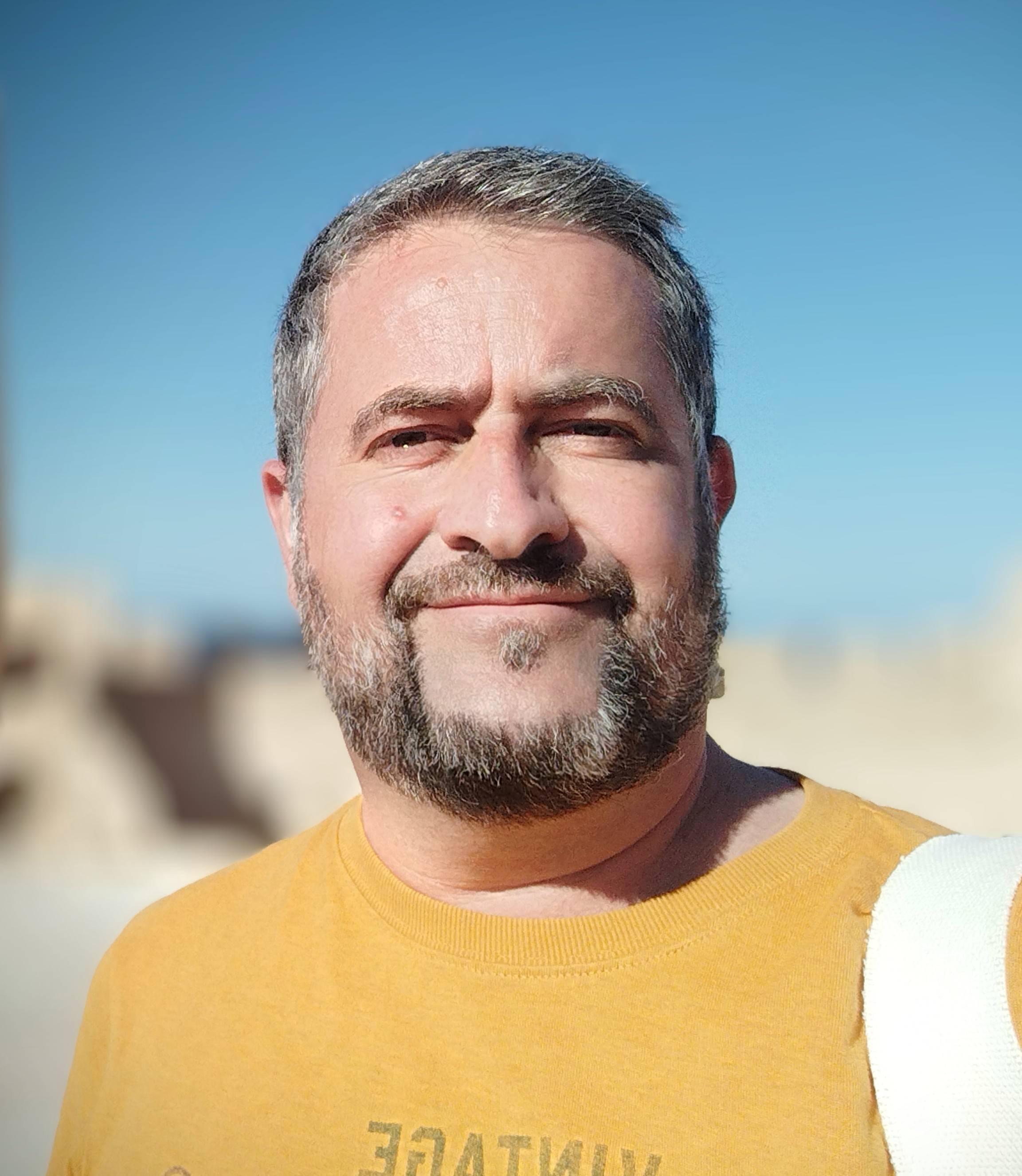
Horacio Gil Gil
Research Scientist
ORCID code: 0000-0002-7114-6686
Degree in Veterinary Medicine in 1995 and PhD in Veterinary Medicine in 2002 from the University of Zaragoza. He did his PhD thesis at NEIKER Tecknalia (Derio, Vizcaya) and the National Center for Microbiology of Instituto de Salud Carlos III (CNM-ISCIII, Majadahonda, Madrid) on the biological cycle of Lyme disease in the Basque Country. After that, he developed his postdoctoral training in different aspects of the pathogenesis of tularemia at the Center for Infectious Diseases, Stony Brook University, New York (USA) for 3 years. In December 2005, he joined the Reference and Research Laboratory in Special Pathogens of the CNM-ISCIII where he developed diagnostic, reference and research activities, in Bartonella, Leptospira and pathogens of interest in bioterrorism. Between 2014-2016 he participated in the European Program for the Training of Microbiologists in Public Health (EUPHEM), organized by the European Centre for Disease Prevention and Control. During this program, he participated in an international mission for the investigation of a cholera outbreak in Ghana, proposed by the Bernhard Nocht Institute for Tropical Diseases in Hamburg (Germany). In December 2016, he worked as a laboratory consultant for the World Health Organization at their office in Phnom Penh (Cambodia). Subsequently, he worked one year with Médecins Sans Frontières as director and quality manager of the TB laboratory in Nukus (Uzbekistan).
In 2019, he joined the HIV Variability and Biology Unit at CNM-ISCIII, where he developed different reference and research activities, including his contribution to the molecular epidemiological surveillance of HIV-1 in Spain and the study of HIV-1 antiretroviral resistance. Since September 2022 he has been leading the Human Papillomavirus Unit at the CNM-ISCIII. -
Alicia Inés García Señán
Predoctoral Student UNED
Degree in Pharmacy in 2013 from the Complutense University of Madrid. She completed specialized health training in Microbiology and Parasitology at the Complejo Asistencial Universitario de Salamanca (2014-2018). During this period he studied a master's degree in Tropical Diseases at the University of Salamanca (2016). She has developed her professional activity as a clinical microbiologist at the Hospital de Santa Bárbara (Soria) (2018), Hospital Universitario Vall d'Hebrón (Barcelona) (2019-2022), and Hospital Central de la Defensa (Gómez Ulla) C.S.V.E, since 2022. In September 2024 she has started PhD studies at the Human Papillomavirus Unit of the CNM-ISCIII.
-

Manuela Rodríguez Vargas
Técnico de Laboratorio

List of staff
Additional Information
This group constitutes the National Poliovirus Laboratory (Polio Eradication Plan), integrated into the European network WHO/EURO Polio Laboratory Network and coordinating, in turn, the National Network of Laboratories for the study of paralysis cases in Research on enterovirus and parechovirus infections in the pediatric population has been funded since 2013 through research projects (PI PI12/00904; PI15CIII/00020; PI18CIII/00017), of which María Cabrerizo is PI and in which epidemiologists (CNE) and pediatricians and microbiologists from more than 20 SNS hospitals participate.
The PI belongs to the consolidated research group RITIP-IdiPaz and CIBERESP. Since 1999, the group has been carrying out the virological study of environmental samples (wastewater and treated water) from the CAM, through a contract with the CYII. Finally, the group is responsible for the diagnosis and characterization of gastrointestinal infections caused by viruses (norovirus, rotavirus and others) and for the investigation of outbreaks (CS of the CNM).
This group constitutes the National Poliovirus Laboratory (Polio Eradication Plan), integrated into the European network WHO/EURO Polio Laboratory Network and coordinating, in turn, the National Network of Laboratories for the study of paralysis cases in Research on enterovirus and parechovirus infections in the pediatric population has been funded since 2013 through research projects (PI PI12/00904; PI15CIII/00020; PI18CIII/00017), of which María Cabrerizo is PI and in which epidemiologists (CNE) and pediatricians and microbiologists from more than 20 SNS hospitals participate.
The PI belongs to the consolidated research group RITIP-IdiPaz and CIBERESP. Since 1999, the group has been carrying out the virological study of environmental samples (wastewater and treated water) from the CAM, through a contract with the CYII. Finally, the group is responsible for the diagnosis and characterization of gastrointestinal infections caused by viruses (norovirus, rotavirus and others) and for the investigation of outbreaks (CS of the CNM).