



We protect your health through science
Investigation
Organ Transplant
Research Lines
Content with Investigacion .
Inmunología Microbiana e Inmunogenética
1. Análisis de la respuesta innata de mamíferos en la infección por Leishmania.
2. Caracterización inmunoproteómica en :
a. Streptococcus suis
b. Lactococcus garviae
c. Mycobacterium spp
3. Desarrollo de inmunoensayos analíticos basados en anticuerpos monoclonales (AcM) para detectar y cuantificar antígenos de origen animal, vegetal y microbiano.
4. Desarrollo y caracterización de AcM frente a los componentes del sistema del Complemento. Aplicación diagnóstica.
5. Desarrollo de reactivos de referencia y diseño de inmunoensayos para la evaluación cualitativa y cuantitativa de toxinas clostridiales.
6. Oferta tecnológica de producción de AcM y policlonales frente a substancias de interés industrial y biomédico.
El grupo está interesado en el estudio de la respuesta inmune desde una perspectiva multidisciplinar que incluye aproximaciones bioquímicas, biotecnológicas, genómicas, inmunoinformáticas y proteómicas, que junto con el uso adicional de modelos in vivo se encaminan al diseño de estrategias terapéuticas frente a diversas enfermedades crónicas, infecciosas y raras que poseen un claro componente inmunológico en su etiología.
Las principales líneas de investigación que está desarrollando el grupo en la actualidad son:
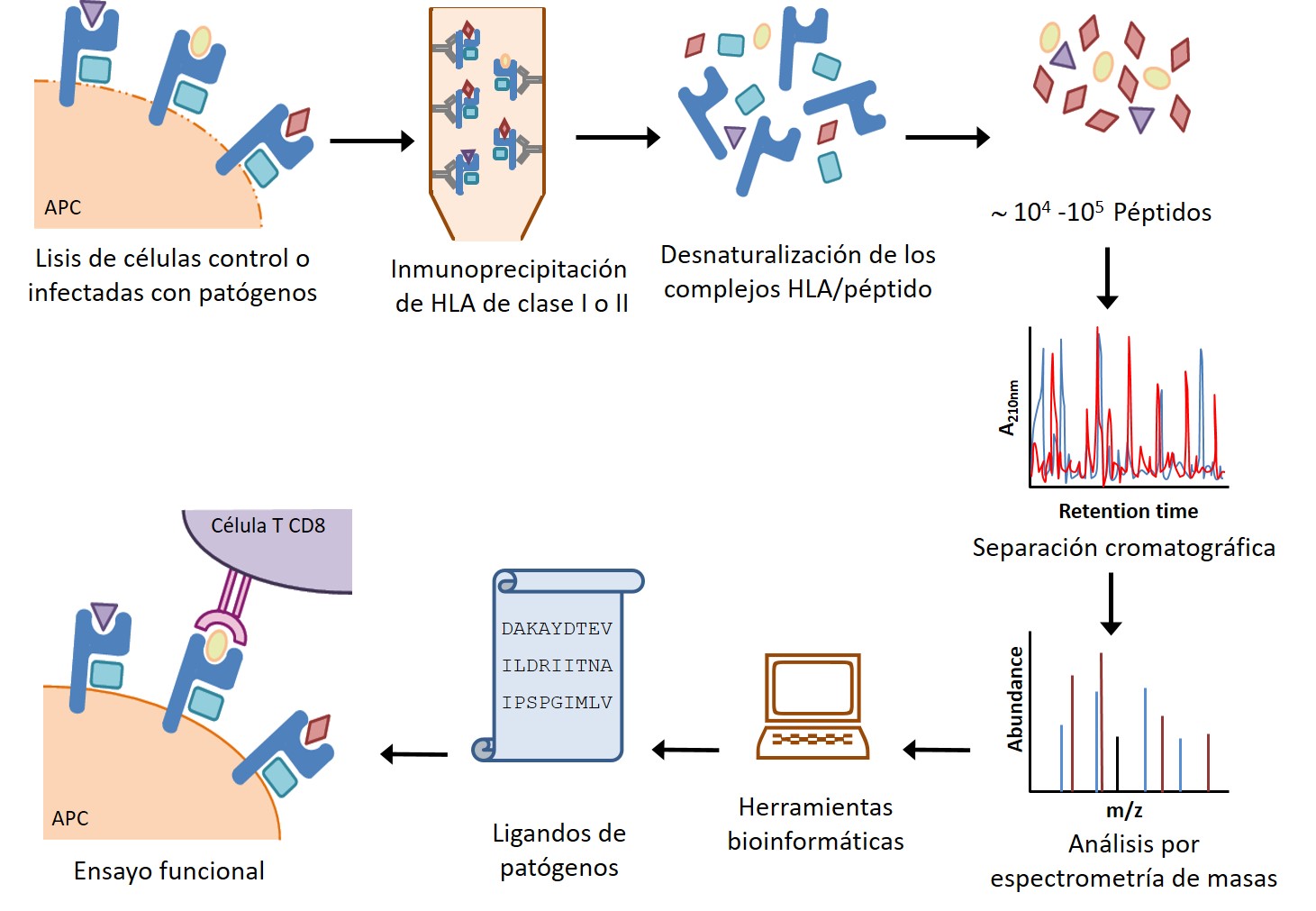
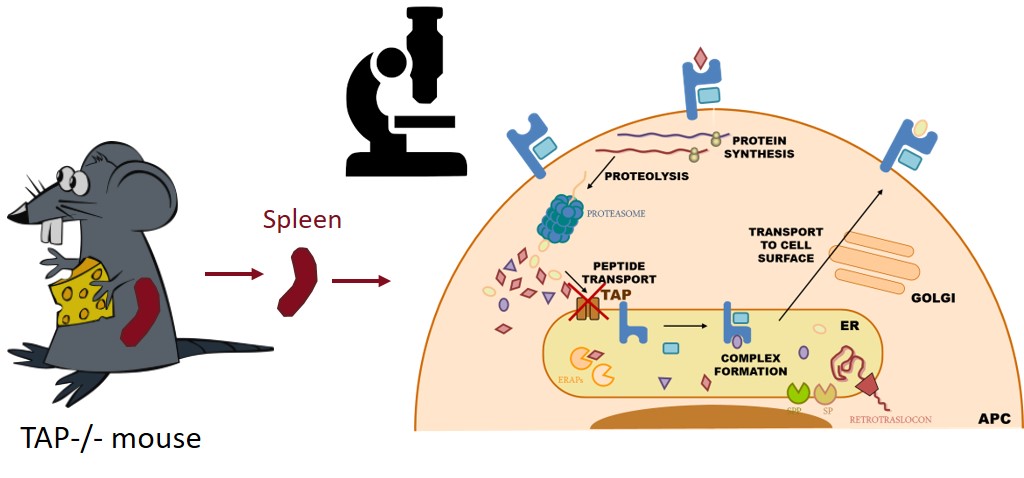
- * Análisis de las respuestas inmunes celulares frente a patógenos virales y bacterianos, mediante técnicas inmunoproteómicas, modelos in vivo con animales transgénicos y muestras humanas.
- * Caracterización de CD69: regulación génica, función reguladora inmune en homeostasis e infección y su uso como diana terapéutica, edición génica por CRISPR en modelos animales y celulares, etc.

* Desarrollo de herramientas inmunoinformáticas que permitan analizar la respuesta inmune celular frente a diversos virus de interés sanitario y determinar la eficacia de sus vacunas a nivel de población mundial.

* Estudio de las respuestas inmunes celulares frente a enfermedades raras (artritis reactiva y síndrome del linfocito desnudo) y crónicas (espondiloartropatías).
* Inclusión de componentes del sistema inmune en la fabricación de tejidos humanos, especialmente piel, para uso clínico, farmacéutico y cosmético.
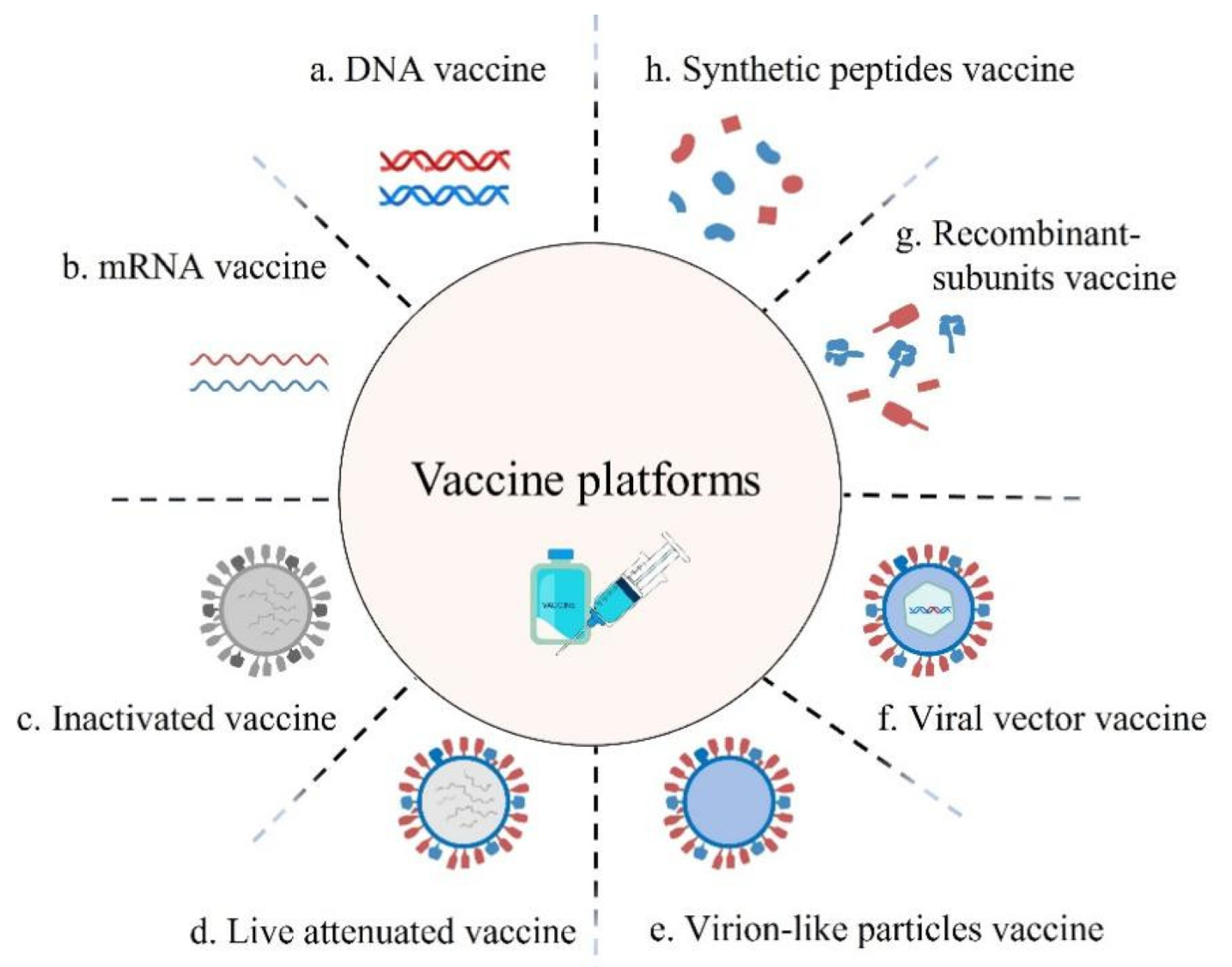
- * Generación de virus recombinantes como vectores vacunales.
Research projects
Content with Investigacion .
Los proyectos del grupo de los últimos años son los siguientes:
Proyecto “La interrelación de CD69 y el procesamiento antigénico en enfermedades infecciosas y autoinmunes" financiado por la Acción Estratégica en Salud del Ministerio de Ciencia, Innovación y Universidades. Año: 2023-2025.
Proyecto “Interacciones génicas y proteicas de CD69 y sus regiones génicas reguladoras con moléculas" financiado por la AEI. Año: 2022-2024.

Proyecto “Nuevas tecnologías de fabricación y optimización de tejidos: la piel como sistema modelo” financiado por el Programa de Actividades de I+D entre grupos de investigación de la Comunidad de Madrid en tecnologías 2018. Año: 2020-2023. Proyecto Coordinado por el Dr. Pablo Acedo de la Universidad Carlos III.
Proyecto “Estudio de CD69 como diana para mejorar el tratamiento de la leucopania y la movilización de células T de memoria de médula ósea" financiado por la Acción Estratégica en Salud del Ministerio de Ciencia, Innovación y Universidades. Año:2020-2024.
Proyecto “Diseño racional de una vacuna contra el virus respiratorio sincitial humano” financiado por la Acción Estratégica en Salud del Ministerio de Ciencia, Innovación y Universidades. Año: 2019-2022
Proyecto “Función de CD69 y sus elementos reguladores" financiado por la Acción Estratégica en Salud del Ministerio de Ciencia, Innovación y Universidades. Año: 2017-2022.
Proyecto “Diseño de vacunas recombinantes poliepitópicas para generar respuestas CD8+ contra virus emergentes” financiado por el Plan Nacional de I+D+i del Ministerio de Economía y Competitividad. Año: 2015-2017.
Proyecto “Análisis de los efectos de CD69 dependientes de S1P1 en modelos de infección e inflamación y estudio de su regulación” financiado por el FIS. Año: 2014-2017.
Proyecto “ADELVAC: Adenovirus con delecciones epitópicas para vacunación” financiado por el programa INNPACTO del Ministerio de Economía y Competitividad. Centro Nacional de Microbiología, Instituto de Salud Carlos III. Año: 2012-2014. Proyecto Coordinado por el Dr. Manel Cascallo de VCN BIOSCIENCES SL.
Proyecto “Diseño de vacunas multiepitópicas recombinantes para aumentar la respuesta inmune celular contra el VRSH” financiado por el Plan Nacional de I+D+i del Ministerio de Ciencia e Innovación. Año: 2012-2014.
Publications
HCV eradication with IFN-based therapy does not completely restore gene expression in PBMCs from HIV/HCV-coinfected patients.
10.1186/s40249-021-00894-5. 9. Brochado O, Martínez I (*), Berenguer J, Medrano L, González-García J, Jiménez-Sousa MA, Carrero A, Hontañón V, Navarro J, Guardiola JM, Pérez-Latorre L, Micán R, Fernández-Rodríguez A (‡), Resino S (* ‡). HCV eradication with IFN-based therapy does not completely restore gene expression in PBMCs from HIV/HCV-coinfected patients. J Biomed Sci 2021; 28:23 (A; FI= 12.77; D1, Medicine, Research & Experimental; JCR 2021). PMID: 33785040. DOI: 10.1186/s12929-021-00718-6.
PUBMEDRelationship of vitamin D status with advanced liver fibrosis and response to hepatitis C virus therapy: A meta-analysis.
12. García-Álvarez M, Pineda-Tenor D, Jiménez-Sousa Ma, Fernández-Rodríguez A, Guzmán-Fulgencio M; Resino S (*). Relationship of vitamin D status with advanced liver fibrosis and response to hepatitis C virus therapy: A meta-analysis. Hepatology. 2014, 6(5):1541-1550. (A; FI= 11.05; D1, Gastroenterology & Hepatology; JCR 2014). PMID: 24975775. DOI: 10.1002/hep.27281.
PUBMEDFTO rs9939609 polymorphism is associated with metabolic disturbances and response to HCV therapy in HIV/HCV-coinfected patients.
13. Pineda-Tenor D, Berenguer J, Jiménez-Sousa MA, García-Álvarez M, Aldamiz-Echevarría T, Carrero A, Vázquez-Morón S, García-Broncano P, Diez C, Tejerina F, Guzmán-Fulgencio M, Resino S (*). FTO rs9939609 polymorphism is associated with metabolic disturbances and response to HCV therapy in HIV/HCV-coinfected patients. BMC Med. 2014, 12:198. (A; FI= 7.34; D1, Medicine, General & Internal; JCR 2014). PMID: 25367448. DOI: 10.1186/s12916-014-0198-y.
PUBMEDHLA-E variants are associated with sustained virological response in HIV/hepatitis C virus-coinfected patients on hepatitis C virus therapy.
14. Guzmán-Fulgencio M, Berenguer J; Rallón N, Fernández-Rodríguez A, Miralles P, Soriano V, Jiménez-Sousa MA, Cosin J, Medrano J, García-Álvarez M, López JC, Benito JM, Resino S (*). HLA-E variants are associated with sustained virological response in HIV/hepatitis C virus-coinfected patients on hepatitis C virus therapy. AIDS 2013; 27(8):1231-1238. (A; FI= 6.55; D1, Infectious Diseases; JCR 2013). PMID: 23811951. DOI: 10.1097/QAD.0b013e32835f5b9c.
PUBMEDEva Orviz, Anabel Negredo, Oskar Ayerdi, Ana Vázquez, Ana Muñoz-Gomez, Sara Monzón, Petunia Clavo, Angel Zaballos, Mar Vera, Patricia Sánchez, Noemi Cabello, Pilar Jiménez, Jorge A Pérez-García, Sarai Varona, Jorge Del Romero, Isabel Cuesta, Alberto Delgado-Iribarren, Montse Torres, Iñigo Sagastagoitia, Gustavo Palacios, Vicente Estrada, Maria Paz Sánchez-Seco, Grupo Viruela del Simio Madrid CNM/ISCIII/HCSC/Sandoval.
Eva Orviz, Anabel Negredo, Oskar Ayerdi, Ana Vázquez, Ana Muñoz-Gomez, Sara Monzón, Petunia Clavo, Angel Zaballos, Mar Vera, Patricia Sánchez, Noemi Cabello, Pilar Jiménez, Jorge A Pérez-García, Sarai Varona, Jorge Del Romero, Isabel Cuesta, Alberto Delgado-Iribarren, Montse Torres, Iñigo Sagastagoitia, Gustavo Palacios, Vicente Estrada, Maria Paz Sánchez-Seco, Grupo Viruela del Simio Madrid CNM/ISCIII/HCSC/Sandoval. Monkeypox outbreak in Madrid (Spain): Clinical and virological aspects. J Infect. 2022 Jul 10;S0163-4453(22)00415-7. doi: 10.1016/j.jinf.2022.07.005.
DOIEuropean mitochondrial haplogroups are associated with CD4+ T-cell recovery in HIV-infected patients on combination antiretroviral therapy.
15. Guzmán-Fulgencio M; Berenguer J, Micheloud D, Fernández-Rodríguez A; García–Álvarez M, Jiménez-Sousa MA, Bellón JM, Campos Y, Cosin J, Aldámiz-Echevarría T, Catalán P, López JC, Resino S (*). European mitochondrial haplogroups are associated with CD4+ T-cell recovery in HIV-infected patients on combination antiretroviral therapy. J Antimicrob Chemoth 2013; 68 (10): 2349–2357 (A; FI= 5.44; D1, Infectious Diseases; JCR 2013). PMID: 23749950. DOI: 10.1093/jac/dkt206.
PUBMEDMaría Paz Sánchez-Seco, María José Sierra, Agustín Estrada-Peña, Félix Valcárcel, Ricardo Molina, Eva Ramírez de Arellano, Angeles Sonia Olmeda, Lucía García San Miguel, Maribel Jiménez, Luis J Romero, Anabel Negredo; Group for CCHFv Research. Widespread Detection of Multiple Strains of Crimean-Congo Hemorrhagic Fever Virus in Ticks, Spain.
María Paz Sánchez-Seco, María José Sierra, Agustín Estrada-Peña, Félix Valcárcel, Ricardo Molina, Eva Ramírez de Arellano, Angeles Sonia Olmeda, Lucía García San Miguel, Maribel Jiménez, Luis J Romero, Anabel Negredo; Group for CCHFv Research. Widespread Detection of Multiple Strains of Crimean-Congo Hemorrhagic Fever Virus in Ticks, Spain. Emerg Infect Dis. 2022 Feb;28(2):394-402. doi: 10.3201/eid2802.211308.
DOINegredo A, Sánchez-Ledesma M, Llorente F, Pérez-Olmeda M, Belhassen-García M, González-Calle D, Sánchez-Seco MP, Jiménez-Clavero MÁ. Retrospective Identification of Early Autochthonous Case of Crimean-Congo Hemorrhagic Fever, Spain, 2013
Negredo A, Sánchez-Ledesma M, Llorente F, Pérez-Olmeda M, Belhassen-García M, González-Calle D, Sánchez-Seco MP, Jiménez-Clavero MÁ. Retrospective Identification of Early Autochthonous Case of Crimean-Congo Hemorrhagic Fever, Spain, 2013. Emerg Infect Dis. 2021 Jun;27(6):1754-1756. doi: 10.3201/eid2706.204643.
DOINegredo A, Sánchez-Arroyo R, Díez-Fuertes F, de Ory F, Budiño MA, Vázquez A, Garcinuño Á, Hernández L, la Hoz González C, Gutiérrez-Arroyo A, Grande C, Sánchez-Seco P. Fatal Case of Crimean-Congo Hemorrhagic Fever Caused by Reassortant Virus, Spain, 2018.
Negredo A, Sánchez-Arroyo R, Díez-Fuertes F, de Ory F, Budiño MA, Vázquez A, Garcinuño Á, Hernández L, la Hoz González C, Gutiérrez-Arroyo A, Grande C, Sánchez-Seco P. Fatal Case of Crimean-Congo Hemorrhagic Fever Caused by Reassortant Virus, Spain, 2018. Emerg Infect Dis. 2021 Apr;27(4):1211-1215. doi: 10.3201/eid2704.203462.
DOILaura Davó, Laura Herrero, Maria Paz Sánchez-Seco, Nuria Labiod, David Roiz, Elena Gómez-Díaz, Lourdes Hernandez, Jordi Figuerola and Ana Vázquez. Real-time PCR assay to detect Granada virus and the related Massilia and Arrabida phleboviruses
Laura Davó, Laura Herrero, Maria Paz Sánchez-Seco, Nuria Labiod, David Roiz, Elena Gómez-Díaz, Lourdes Hernandez, Jordi Figuerola and Ana Vázquez. Real-time PCR assay to detect Granada virus and the related Massilia and Arrabida phleboviruses. Davó et al. Parasit Vectors. 2020 May 29;13(1):270. doi: 10.1186/s13071-020-04110-5.
DOIMaría Velasco, María Paz Sánchez-Seco, Carolina Campelo, Fernando de Ory, Oriol Martin, Laura Herrero, Octavio J. Salmerón Béliz, Teodora Minguito, Mª Carmen Campos, Francisca Molero, Alejandro Algora and Ana Vázquez. Imported Human West Nile Virus Lineage 2 Infection in Spain
María Velasco, María Paz Sánchez-Seco, Carolina Campelo, Fernando de Ory, Oriol Martin, Laura Herrero, Octavio J. Salmerón Béliz, Teodora Minguito, Mª Carmen Campos, Francisca Molero, Alejandro Algora and Ana Vázquez. Imported Human West Nile Virus Lineage 2 Infection in Spain: Neurological and Gastrointestinal Complications. Viruses 2020 Jan 29;12(2):156. doi: 10.3390/v12020156.
DOINegredo A, Habela MÁ, Ramírez de Arellano E, Diez F, Lasala F, López P, Sarriá A, Labiod N, Calero-Bernal R, Arenas M, Tenorio A, Estrada-Peña A, Sánchez-Seco MP. Survey of Crimean-Congo Hemorrhagic Fever Enzootic Focus, Spain, 2011-2015
Negredo A, Habela MÁ, Ramírez de Arellano E, Diez F, Lasala F, López P, Sarriá A, Labiod N, Calero-Bernal R, Arenas M, Tenorio A, Estrada-Peña A, Sánchez-Seco MP. Survey of Crimean-Congo Hemorrhagic Fever Enzootic Focus, Spain, 2011-2015. Emerg Infect Dis. 2019 Jun;25(6):1177-1184. doi: 10.3201/eid2506.180877.
DOIRamírez de Arellano E, Sanchez-Lockhart M, Perteguer MJ, Bartlett M, Ortiz M, Campioli P, Hernández A, Gonzalez J, Garcia K, Ramos M, Jiménez-Clavero MÁ, Tenorio A, Sánchez-Seco MP, González F, Echevarría JE, Palacios G, Negredo A. First Evidence of Antibodies Against Lloviu Virus in Schreiber's Bent-Winged Insectivorous Bats Demonstrate a Wide Circulation of the Virus in Spain
Ramírez de Arellano E, Sanchez-Lockhart M, Perteguer MJ, Bartlett M, Ortiz M, Campioli P, Hernández A, Gonzalez J, Garcia K, Ramos M, Jiménez-Clavero MÁ, Tenorio A, Sánchez-Seco MP, González F, Echevarría JE, Palacios G, Negredo A. First Evidence of Antibodies Against Lloviu Virus in Schreiber's Bent-Winged Insectivorous Bats Demonstrate a Wide Circulation of the Virus in Spain. Viruses. 2019 Apr 19;11(4):360. doi: 10.3390/v11040360.
DOIMeta-analysis: diagnostic accuracy of hepatitis C core antigen detection during therapy with direct-acting antivirals.
3. Sepúlveda-Crespo D, Treviño-Nakoura A, Bellon JM, Ardizone Jiménez B, Jiménez‑Sousa MA, Fernández-Rodríguez A, Martínez I (‡), Resino S (*‡). Meta-analysis: diagnostic accuracy of hepatitis C core antigen detection during therapy with direct-acting antivirals. Aliment Pharmacol Ther 2022; 56 (8): 1224-1234 (A; FI= 9.52; D1, Pharmacology & Pharmacy; JCR 2021).
PUBMED DOIAntibody levels to SARS-CoV-2 spike protein in mothers and children from delivery to six months later.
4. Martin-Vicente M, Carrasco I, Muñoz-Gomez MJ, Lobo AH, Mas V, Vigil-Vázquez S, Vázquez M, Manzanares A, Cano O, Alonso R, Sepúlveda-Crespo D, Tarancón-Díez L, Muñoz-Fernández MÁ, Muñoz-Chapuli M, Resino S#*, Navarro ML#, Martinez I#*. Antibody levels to SARS-CoV-2 spike protein in mothers and children from delivery to six months later. Birth. 2022 Jul 8:10.1111/birt.12667. doi: 10.1111/birt.12667. Online ahead of print. PMID: 35802776.
PUBMEDHepatitis E virus seroprevalence is associated with neurodegenerative disorders in older people with dementia: a case-control study.
5. Pérez-García F, Vázquez-Morón S, Burgueño-García I, José Muñoz-Gómez M, Zea-Sevilla MA, Calero M, Martínez I#, Rábano A#, Resino S#. Hepatitis E virus seroprevalence is associated with neurodegenerative disorders in older people with dementia: a case-control study. J Infect Dis. 2022 Jun 27:jiac268. doi: 10.1093/infdis/jiac268. Online ahead of print. PMID: 35759220 (A; FI= 7.759; Q1 Microbiology; JCR 2021).
PUBMEDNegative impact of HIV infection on broad-spectrum anti-HCV neutralizing antibody titers in HCV-infected patients with advanced HCV-related cirrhosis.
6. Sepúlveda-Crespo D, Yélamos MB, Díez C, Gómez J, Hontañón V, Torresano-Felipe F, Berenguer J, González-García J, Ibañez-Samaniego L, Llop E, Olveira A, Martínez J, Resino S (‡ *), Martínez I (‡ *). Negative impact of HIV infection on broad-spectrum anti-HCV neutralizing antibody titers in HCV-infected patients with advanced HCV-related cirrhosis. Biomed Pharmacother 2022, 150: 113024. (A; FI= 7.42; D1, Pharmacology & Pharmacy; JCR 2021).
PUBMED DOI. Environmental factors linked to hospital admissions in young children due to acute viral lower respiratory infections: A bidirectional case-crossover study.
7. Álvaro-Meca A, Goez MDC, Resino R, Matías V, Sepúlveda-Crespo D, Martínez I#, Resino S#. Environmental factors linked to hospital admissions in young children due to acute viral lower respiratory infections: A bidirectional case-crossover study. Environ Res. 2022 Sep; 212(Pt B):113319. doi: 10.1016/j.envres.2022.113319. PMID: 35447151. (A; FI= 8.431; D1 Public, Environmental & Occupational Health; JCR 2021).
PUBMEDMisdiagnosis rate of among negative COVID-19 patients in real-life with Panbio COVID-19 Antigen Rapid Test during 2021.
8. Ryan P, Pérez-García F, Torres-Macho J, Bibiano C, Ignacio Lazo J, Castaño-Ochoa G, Vidal-Alcántara EJ, Muñoz-Gómez MJ, Martínez I#, Resino S#. Misdiagnosis rate of among negative COVID-19 patients in real-life with Panbio COVID-19 Antigen Rapid Test during 2021. J Infect. 2022 May; 84(5):e42-e44. doi: 10.1016/j.jinf.2022.03.013. PMID: 35306106 (L; FI= 38.637; D1 Infectious Diseases; JCR 2021).
PUBMEDSimilar humoral immune responses against the SARS-CoV-2 spike protein in HIV and non-HIV individuals after COVID-19.
11. Martín-Vicente M, Berenguer J, Muñoz-Gómez MJ, Díez C, Micán R, Pérez-Elías MJ, García-Fraile LJ, Peraire J, Suárez-García I, Jiménez-Sousa MÁ, Fernández-Rodríguez A, Vázquez M, Ryan P, González-García J, Jarrín I, Mas V, Martínez I#, Resino S#. Similar humoral immune responses against the SARS-CoV-2 spike protein in HIV and non-HIV individuals after COVID-19. J Infect. 2022 Mar;84(3):418-467. doi: 10.1016/j.jinf.2021.11.002. PMID: 34752819 (L; FI= 38.637; D1 Infectious Diseases; JCR 2021).
PUBMEDAdditional Information
Induction of allograft tolerance remains a goal to be achieved in organ transplantation. Most therapeutic strategies focus on inhibition of the adaptive immune system, but recent data demonstrate that allogeneic recognition of myeloid cells initiates transplant rejection. Therapies targeting myeloid cells “in vivo” represent a potential target to induce immunological tolerance, but remain clinically unexplored.
Our laboratory uses a revolutionary nanoimmunotherapy of high-density lipoprotein (HDL) nanoparticles loaded with rapamycin (mTORi-HDL) that prevents epigenetic modifications associated with trained immunity, a recently discovered functional state of macrophages. Using an experimental mouse transplant model, our results demonstrate that the administration of this immunotherapy with mTORi-HDL prevents the immune response and promotes tolerance to the transplanted organ.
Our laboratory shows a multidisciplinary research approach articulated in three different objectives to evaluate the clinical relevance and therapeutic effects of immunotherapy in preparation for a clinical trial in organ transplantation. The general objectives will be aimed at confirming the identification of trained immunity as a biomarker and analytical value to predict the risk of rejection in transplant patients under three conditions: prolonged periods of ischemic reperfusion (IRI) (objective 1), allosensitization (objective 2) and infection (objective 3).
Induction of allograft tolerance remains a goal to be achieved in organ transplantation. Most therapeutic strategies focus on inhibition of the adaptive immune system, but recent data demonstrate that allogeneic recognition of myeloid cells initiates transplant rejection. Therapies targeting myeloid cells “in vivo” represent a potential target to induce immunological tolerance, but remain clinically unexplored.
Our laboratory uses a revolutionary nanoimmunotherapy of high-density lipoprotein (HDL) nanoparticles loaded with rapamycin (mTORi-HDL) that prevents epigenetic modifications associated with trained immunity, a recently discovered functional state of macrophages. Using an experimental mouse transplant model, our results demonstrate that the administration of this immunotherapy with mTORi-HDL prevents the immune response and promotes tolerance to the transplanted organ.
Our laboratory shows a multidisciplinary research approach articulated in three different objectives to evaluate the clinical relevance and therapeutic effects of immunotherapy in preparation for a clinical trial in organ transplantation. The general objectives will be aimed at confirming the identification of trained immunity as a biomarker and analytical value to predict the risk of rejection in transplant patients under three conditions: prolonged periods of ischemic reperfusion (IRI) (objective 1), allosensitization (objective 2) and infection (objective 3).