



We protect your health through science
Investigation
Toxoplasmosis and intestinal protozoa
Research projects
Content with Investigacion .
PROYECTOS VIGENTES
Título del proyecto: "Vesículas extracelulares y otras moléculas de parásitos para el tratamiento de la enfermedad inflamatoria intestinal: PARATREAT-IBD"
Referencia: Proyecto PID2022-137661OB-I00 (MPY 341/23) financiado por MCIN/AEI /10.13039/501100011033/ y por FEDER Una manera de hacer Europa
Fecha Inicio: 01/12/2023
Fecha Fin: 31/08/2026
Financiación: 162.500 Euros
Investigador principal: Javier Sotillo
Agencia Financiadora: Agencia Estatal de Investigación. MICINN.

Título del proyecto: "Desarrollo de nuevos métodos diagnósticos y de seguimiento de la infección por schistosoma haematobium"
Referencia: PI23CIII00034 / MPY 386/23
Fecha Inicio: 01/01/2024
Fecha Fin: 31/12/2026
Financiación: 131.500 Euros
Investigador principal: Javier Sotillo
Agencia Financiadora: Instituto de Salud Carlos III (ISCIII/AESI)

Título del proyecto: "Desarrollo de herramientas para el control de la teniosis / cisticercosis en zonas endémicas y vigilancia de las helmintosis humanas emergentes en España"
Referencia: PI22CIII/00010
Fecha Inicio: 01/01/2023
Fecha Fin: 31/12/2025
Financiación: 80.000 Euros
Investigador principal: María Jesús Perteguer
Agencia Financiadora: Instituto de Salud Carlos III (ISCIII/AESI)
PROYECTOS PASADOS
Título del proyecto: "PERITAS: Molecular epidemiological studies on pathways of transmission and longlasting capacity building to prevent cystic echinococcosis infection."
Coordinador: Adriano Casulli. IP of ISCIII: Maria J. Perteguer.
Entidad financiadora: EULAC Health JOINT CALL on Research and Innovation 016-2017
Periodo: 01/03/2019-31/12/2022.
Cuantía total: 1.083.580 €.
Título del proyecto: "Producción de antígenos y controles positivos recombinantes para el desarrollo y la estandarización de nuevos ensayos serológicos aplicados al diagnóstico y control de helmintosis olvidadas. "
Investigador principal: María Jesús Perteguer.
Entidad financiadora: ISCIII-AESI. Instituto de Salud Carlos III
Periodo: 02/11/2018 - 31/06/2022.
Cuantía total: 78.050 €.
Título del proyecto: "Diagnóstico serológico diferencial de helmintiasis asociadas a eosinofilia: desarrollo de ensayos multianalito (xMAP) con antígenos recombinantes de especies de interés clínico"
Investigador principal: María Jesús Perteguer.
Entidad financiadora: ISCIII-AESI. Instituto de Salud Carlos III
Periodo: 01/01/2015 - 31/12/2018 .
Cuantía total: 91.000 €.
Publications
Detection of Rhabdovirus viral RNA in oropharyngeal swabs and ectoparasites of Spanish bats
Aznar C, Vazquez-Moron S, Martson D, Juste J, Ibáñez C, Berciano JM, Salsamendi E, Aihartza J, Banyard AC, McElhinney L, Fooks AR, Echevarria JE. Detection of Rhabdovirus viral RNA in oropharyngeal swabs and ectoparasites of Spanish bats. Journal of General Virology. 2013. 94: 69-75.
PUBMED DOIGenomic non-coding regions reveal hidden patterns of mumps virus circulation in Spain, 2005 to 2015
Gavilán AM, Fernández-García A*, Rueda A, Castellanos A, Masa J, López-Perea N, Torres de Mier MV, de Ory F, Echevarría JE. Non-coding sequences reveal hidden patterns of mumps virus circulation in Spain, 2005 to 2015. Eurosurveillance,2018, 23(15): 1-8. *Corresponding author.
PUBMED DOIFirst cases of European Bat Lyssavirus type 1 in Iberian serotine bats: implications for the molecular epidemiology of bat rabies in Europe.
Mingo-Casas P, Sandonís V, Obón E, Berciano JM, Vázquez-Morón S, Juste J, Echevarría JE. First cases of European Bat Lyssavirus type 1 in Iberian serotine bats: implications for the molecular epidemiology of bat rabies in Europe. Plos Neglected Tropical Diseases, 2018: 12(4): e0006290.
PUBMED DOILast cases of rubella and congenital rubella syndrome in Spain, 1997–2016: The success of a vaccination program
Seppälä EM, López-Perea N, Torres de Mier MV, Echevarría JE, Fernández García A, Masa-Calles J. Last cases of rubella and congenital rubella syndrome in Spain, 1997–2016: The success of a vaccination program. Vaccine, 2019, 37(1):169-175.
PUBMED DOICombination of Cefditoren and N-acetyl-l-Cysteine Shows a Synergistic Effect against Multidrug-Resistant Streptococcus pneumoniae Biofilms
Llamosí M, Sempere J, Coronel P, Gimeno M, Yuste J, Domenech M. Combination of Cefditoren and N-acetyl-l-Cysteine Shows a Synergistic Effect against Multidrug-Resistant Streptococcus pneumoniae Biofilms. Microbiol Spectr. 2022 Dec 21;10(6):e0341522
PUBMED DOIClearance of mixed biofilms of Streptococcus pneumoniae and methicillin-susceptible/resistant Staphylococcus aureus by antioxidants N-acetyl-L-cysteine and cysteamine
Sempere J, Llamosí M, Román F, Lago D, González-Camacho F, Pérez-García C, Yuste J, Domenech M. Clearance of mixed biofilms of Streptococcus pneumoniae and methicillin-susceptible/resistant Staphylococcus aureus by antioxidants N-acetyl-L-cysteine and cysteamine. Sci Rep. 2022 Apr 23;12(1):6668
PUBMED DOIClinical Relevance and Molecular Pathogenesis of the Emerging Serotypes 22F and 33F of Streptococcus pneumoniae in Spain
Sempere J, de Miguel S, González-Camacho F, Yuste J, Domenech M. Clinical Relevance and Molecular Pathogenesis of the Emerging Serotypes 22F and 33F of Streptococcus pneumoniae in Spain. Front Microbiol. 2020 Feb 27;11:309.
PUBMED DOICombination of Antibodies and Antibiotics as a Promising Strategy Against Multidrug-Resistant Pathogens of the Respiratory Tract
Domenech M, Sempere J, de Miguel S, Yuste J. Combination of Antibodies and Antibiotics as a Promising Strategy Against Multidrug-Resistant Pathogens of the Respiratory Tract. Front Immunol. 2018 Nov 20;9:2700. doi: 10.3389/fimmu.2018.02700. PMID: 30515172; PMCID: PMC6256034.
DOIChemotherapy with Phage Lysins Reduces Pneumococcal Colonization of the Respiratory Tract
Corsini B, Díez-Martínez R, Aguinagalde L, González-Camacho F, García-Fernández E, Letrado P, García P, Yuste J. Chemotherapy with Phage Lysins Reduces Pneumococcal Colonization of the Respiratory Tract. Antimicrob Agents Chemother. 2018 May 25;62(6):e02212-17. doi: 10.1128/AAC.02212-17. PMID: 29581113; PMCID: PMC5971604.
DOIImpact of Biological Therapies on the Immune Response after Pneumococcal Vaccination in Patients with Autoimmune Inflammatory Diseases
Richi P, Yuste J, Navío T, González-Hombrado L, Salido M, Thuissard-Vasallo I, Jiménez-Díaz A, Llorente J, Cebrián L, Lojo L, Steiner M, Cobo T, Martín MD, García-Castro M, Castro P, Muñoz-Fernández S. Impact of Biological Therapies on the Immune Response after Pneumococcal Vaccination in Patients with Autoimmune Inflammatory Diseases. Vaccines. 2021 Feb 28;9(3):203. doi: 10.3390/vaccines9030203. PMID: 33671007; PMCID: PMC7997274.
DOIPleiotropic Effects of Cell Wall Amidase LytA on Streptococcus pneumoniae Sensitivity to the Host Immune Response
Ramos-Sevillano E, Urzainqui A, Campuzano S, Moscoso M, González-Camacho F, Domenech M, Rodríguez de Córdoba S, Sánchez-Madrid F, Brown JS, García E, Yuste J. Pleiotropic effects of cell wall amidase LytA on Streptococcus pneumoniae sensitivity to the host immune response. Infect Immun. 2015 Feb;83(2):591-603. doi: 10.1128/IAI.02811-14. PMID: 25404032; PMCID: PMC4294232.
DOIPSGL-1 on Leukocytes is a Critical Component of the Host Immune Response against Invasive Pneumococcal Disease
Ramos-Sevillano E, Urzainqui A, de Andrés B, González-Tajuelo R, Domenech M, González-Camacho F, Sánchez-Madrid F, Brown JS, García E, Yuste J. PSGL-1 on Leukocytes is a Critical Component of the Host Immune Response against Invasive Pneumococcal Disease. PLoS Pathog. 2016 Mar 14;12(3):e1005500. doi: 10.1371/journal.ppat.1005500. PMID: 26975045; PMCID: PMC4790886.
DOIComparison of methods and characterization of small RNAs from plasma extracellular vesicles of HIV/HCV coinfected patients
Martínez-González E; Brochado-Kith O; Gómez-Sanz A; et al; Fernández-Rodríguez A (AC). (9/9). 2020. Small RNA sequencing from plasma extracellular vesicles of HIV/HCV coinfected patients: a protocol comparison SCIENTIFIC REPORTS. 9. ISSN 2045-2322.
DOIRelative telomere length impact on mortality of COVID-19: Sex differences
Virseda-Berdices A; Concostrina-Martinez L; Martínez-González O;et al; Fernández-Rodríguez A (AC). (14/14). 2022. Relative telomere length impact on mortality of COVID-19: Sex differences.Journal of medical virology. 95, pp.e28368. ISSN 0146-6615.
DOIHepatitis C Virus Influences HIV-1 Viral Splicing in Coinfected Patients
Martínez-Román P; López-Huertas MR; Crespo-Bermejo C; et al; Briz V (AC). (16/15). 2020. Hepatitis C virus influences HIV-1 viral splicing in coinfected patients JOURNAL OF CLINICAL MEDICINE. MDPI. ISSN 2077-0383.
DOIHCV eradication with IFN-based therapy does not completely restore gene expression in PBMCs from HIV/HCV-coinfected patients
Brochado-Kith; Martínez I; Berenguer J; et al; Fernández-Rodríguez A (AC); Resino S. (11/12). 2021. HCV eradication with IFN-based therapy does not completely restore gene expression in PBMCs from HIV/HCV-coinfected patients. Journal of Biomedical Sciences. Springer Nature. 28-1.
DOIOLFM4 polymorphisms predict septic shock survival after major surgery. Eur J Clin Invest.
Pérez-García F; Resino S; Gómez-Sánchez E; et al; Jiménez-Sousa MÁ (10/10). OLFM4 polymorphisms predict septic shock survival after major surgery. Eur J Clin Invest. 2021. 51(4):e13416. doi: 10.1111/eci.13416.
Alcazar-Fuoli L, Mellado E, Garcia-Effron G, Buitrago MJ, Lopez JF, Grimalt JO, Cuenca-Estrella JM, Rodriguez-Tudela JL. Aspergillus fumigatus C-5 sterol desaturases Erg3A and Erg3B: role in sterol biosynthesis and antifungal drug susceptibility. Antimicrob Agents Chemother. 2006 Feb
Alcazar-Fuoli L, Mellado E, Garcia-Effron G, Buitrago MJ, Lopez JF, Grimalt JO, Cuenca-Estrella JM, Rodriguez-Tudela JL. Aspergillus fumigatus C-5 sterol desaturases Erg3A and Erg3B: role in sterol biosynthesis and antifungal drug susceptibility. Antimicrob Agents Chemother. 2006 Feb;50(2):453-60. doi: 10.1128/AAC.50.2.453-460.2006. PMID: 16436696; PMCID: PMC1366924.
PUBMED14. Alcazar-Fuoli L, Mellado E, Alastruey-Izquierdo A, Cuenca-Estrella M, Rodriguez-Tudela JL. Aspergillus section Fumigati: antifungal susceptibility patterns and sequence-based identification. Antimicrob Agents Chemother. 2008 Apr
Alcazar-Fuoli L, Mellado E, Alastruey-Izquierdo A, Cuenca-Estrella M, Rodriguez-Tudela JL. Aspergillus section Fumigati: antifungal susceptibility patterns and sequence-based identification. Antimicrob Agents Chemother. 2008 Apr;52(4):1244-51. doi: 10.1128/AAC.00942-07. Epub 2008 Jan 22. PMID: 18212093; PMCID: PMC2292508.
PUBMED DOIAlcazar-Fuoli L, Mellado E, Alastruey-Izquierdo A, Cuenca-Estrella M, Rodriguez-Tudela JL. Species identification and antifungal susceptibility patterns of species belonging to Aspergillus section Nigri. Antimicrob Agents Chemother. 2009 Oct
Alcazar-Fuoli L, Mellado E, Alastruey-Izquierdo A, Cuenca-Estrella M, Rodriguez-Tudela JL. Species identification and antifungal susceptibility patterns of species belonging to Aspergillus section Nigri. Antimicrob Agents Chemother. 2009 Oct;53(10):4514-7. doi: 10.1128/AAC.00585-09. Epub 2009 Jul 27. PMID: 19635955; PMCID: PMC2764190.
PUBMED DOIContent with Investigacion .
-

Sara Vázquez Ávila
Técnico de Laboratorio
Obtuve mi título como Técnico de Laboratorio Clínico y Biomédico en el año 2020 y en el 2021obtuve el Grado Superior de Anatomía Patológica y Citodiagnóstico. Trabajé en el Centro Andaluz de Biología Molecular y Medicina Regenerativa (Sevilla) y en el Departamento de Farmacología de la Facultad de Medicina (Universidad Complutense de Madrid). Actualmente soy Técnico de Laboratorio en el Laboratorio de Helmintos del CNM (ISCIII).
-
Maria Jesús Perteguer Prieto
Investigadora Titular, Jefa de grupo
-
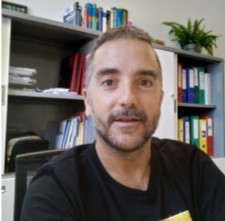
Javier Sotillo Gallego
Científico Titular
ORCID code: 0000-0002-1443-7233
En el año 2011 obtuve mi título de doctor “cum laude” por la Universidad de Valencia. Durante mi etapa postdoctoral en la James Cook University en Australia (2012-2019) me especialicé en estudiar las interacciones parásito-hospedador usando diferentes técnicas ómicas. En 2019 volví España y comencé a trabajar en el Laboratorio de Helmintos del CNM (ISCIII) primero como Investigador Miguel Servet y más adelante como Investigador Ramón y Cajal. Actualmente soy Científico Titular en el mismo laboratorio.
-

Ana Hernández González
Laboral Fijo Doctor
ORCID code: 0000-0001-6762-8175
Licenciada en Biología y doctora en Enfermedades Tropicales por la Universidad de Salamanca. Puestos ocupados con anterioridad: investigadora predoctoral en el IRNASA-CSIC (contrato JAE predoc), investigadora postdoctoral en el CNM (contrato Sara Borrell) e investigadora contratada como técnico superior en el CNM (RICET). Actualmente, personal Laboral Fijo Doctor en el laboratorio de Helmintos del CNM.
-

Esther Rodríguez Pérez
Técnico de Laboratorio
ORCID code: 0000-0002-3680-7733
Obtuve mi título como Graduada en Biología Sanitaria en el año 2015 y en el año 2019 obtuve el Grado Superior de Laboratorio de Diagnóstico Clínico. De 2019 a 2022 trabajé en el Museo Nacional de Ciencias Naturales (MNCN-CSIC), en el Departamento de Biogeoquímica y Ecología Microbiana. Actualmente trabajo como Técnico de Laboratorio en el Laboratorio de Helmintos del CNM (ISCIII).
-

Lourdes Castro Companioni
Ayudante de Investigación
ORCID code: 0009-0003-2746-4067
Bióloga sanitaria graduada en la Universidad de Alcalá de Henares (UAH), con master de Microbiología y Salud pública en la UAH en colaboración con el ISCIII.


List of staff
Additional Information
Our group carries out research studies in the diagnosis, reference and epidemiology of zoonoses and emerging diseases, both indigenous and imported, caused by protozoa. Coordinates the study in the human field with the relevance of the animal field and the environment (One Health initiative), with special interest in Toxoplasmosis, a highly prevalent zoonosis (WHO lists it as the 3rd food-borne zoonosis in Europe), presents a complex epidemiological cycle and causes neurological, ocular and systemic symptoms. We carry out diagnostic and characterization studies of Toxoplasma gondii from human and animal cases, to obtain greater epidemiological information and analyze the possible relationship with virulence and pathology.
Cryptosporidium, Giardia, Blastocystis and Entamoeba histolytica cause gastrointestinal diseases, affecting children, immunosuppressed people and travelers. They can cause outbreaks. We develop diagnostic and characterization studies of isolates from humans and animals, from different areas and countries, to establish the presence of the main species and genotypes and the epidemiological situation. We are beginning the study of associations between these parasites and the intestinal microbiota.
The pathogenic Free-Living Amoebas, Acanthamoeba, Naegleria fowleri and Balamuthia mandrillaris, cause emerging diseases, highlighting the importance of the environment in transmission. They cause underdiagnosed neurological and ocular cases. The diagnostic and genotyping study of human and animal isolates that we are carrying out aims to establish the real prevalence, transmission routes and epidemiology.
Our group carries out research studies in the diagnosis, reference and epidemiology of zoonoses and emerging diseases, both indigenous and imported, caused by protozoa. Coordinates the study in the human field with the relevance of the animal field and the environment (One Health initiative), with special interest in Toxoplasmosis, a highly prevalent zoonosis (WHO lists it as the 3rd food-borne zoonosis in Europe), presents a complex epidemiological cycle and causes neurological, ocular and systemic symptoms. We carry out diagnostic and characterization studies of Toxoplasma gondii from human and animal cases, to obtain greater epidemiological information and analyze the possible relationship with virulence and pathology.
Cryptosporidium, Giardia, Blastocystis and Entamoeba histolytica cause gastrointestinal diseases, affecting children, immunosuppressed people and travelers. They can cause outbreaks. We develop diagnostic and characterization studies of isolates from humans and animals, from different areas and countries, to establish the presence of the main species and genotypes and the epidemiological situation. We are beginning the study of associations between these parasites and the intestinal microbiota.
The pathogenic Free-Living Amoebas, Acanthamoeba, Naegleria fowleri and Balamuthia mandrillaris, cause emerging diseases, highlighting the importance of the environment in transmission. They cause underdiagnosed neurological and ocular cases. The diagnostic and genotyping study of human and animal isolates that we are carrying out aims to establish the real prevalence, transmission routes and epidemiology.