



We protect your health through science
Investigation
Bacterial Taxonomy
Research Lines
Content with Investigacion .
Patogénesis e inmunidad viral
A) Desarrollo de metodología point of care frente a hepatitis virales en el reservorio del VIH
El tratamiento precoz de las hepatitis virales reduce el deterioro progresivo del hígado y evita el trasplante hepático. Resulta esencial disponer de métodos diagnóstico rápido, sencillos y coste-efectivos, para el cribado, en la vigilancia epidemiológica y el diagnóstico virológico temprano de enfermedades virales hepáticas. Línea de investigación llevada a cabo en colaboración con el Dr. Ricardo Madrid (BioAssays S.L).
B) Impacto de la coinfección y eliminación de las hepatitis virales en el reservorio del VIH
La coinfección por el VHC impacta en el reservorio del VIH, principal obstáculo para eliminar esta infección. Se realizan distintos abordajes del estudio del reservorio del VIH en pacientes VIH+ con distinta exposición al VHC, y tras su eliminación espontánea o con antivirales de acción directa, con el objetivo de identificar y proponer nuevas estrategias de eliminación/curación del VIH. Esta línea de Investigación se desarrolla en el seno del Grupo Multidisciplinar COVIHEP (COinfección por VIH y HEPatitis).
C) Identificación de marcadores de senescencia inducida por virus y estrategias paliativas
Las infecciones virales inducen una senescencia acelerada cuyo impacto afecta a la evolución de la enfermedad y a posibles comorbilidades. Nuestro objetivo es profundizar en los mecanismos que desencadenan la inmunosenescencia y estrés oxidativo asociado a infecciones virales e identificar nuevas estrategias terapéuticas que palien el envejecimiento prematuro en estos pacientes.
D) Impacto de SARS-CoV-2 en la infección por el VIH y hepatitis virales
Se desconocen las complicaciones a largo plazo de la infección por SARS-CoV-2 en personas que viven con VIH y/o hepatitis virales que podrían experimentar un desarrollo clínico de la enfermedad más desfavorable. La identificación de biomarcadores de gravedad no invasivos (como en sangre/plasma) resulta de especial interés en estos pacientes.
E) Origen y Epidemiología de la enfermedad hepática
Estudio del origen y la dinámica de transmisión espacio-temporal de los virus hepáticos, clave para el entendimiento de su evolución y propagación, así como en el análisis de la carga global de las enfermedades, lo que podría ayudar a desarrollar programas de Salud Pública encaminados a prevenir y frenar su transmisión.
F) Impacto de la viremia de bajo grado del VIH
Se desconoce tanto el origen como los mecanismos de la viremia de bajo grado, presente entre el 3 y 16% que las personas que viven con VIH. Su presencia podría desembocar en un mayor riesgo de sufrir comorbilidades relacionadas con enfermedades cardiovasculares, cáncer y trastornos metabólicos.
G) Calidad del aire y su impacto en poblaciones vulnerables
La contaminación del aire agrava las patologías infecciosas y la salud cardiovascular y respiratoria. La evolución de la enfermedad en personas con enfermedades crónicas con VIH y hepatitis puede verse agravada tras la inhalación continua de contaminantes ambientales. Línea de investigación llevada a cabo en colaboración con el CNSA y el CNE del ISCIII.
H) Coinfección por VHE y protistas entéricos en el reservorio humano y animal: vigilancia e investigación
La coinfección entre virus y protistas entéricos podría influir en la cotransmisión y patogenicidad de dichas especies. Línea de investigación, bajo el concepto “One Health” que se centra en la vigilancia y estudio de la coinfección del VHE y protistas entéricos. Colaboración con el grupo multidisciplinar COHEPROEN (COinfección HEpatitis y PROtistas ENtéricos).
Research projects
Content with Investigacion .
A) Proyectos de investigación financiados en los últimos 10 años
-
Como investigadora principal
1. Impact of long-tem HCV eradication on HIV infection: integration of Immune-virologic HIV markers, host transcriptome, and plasma microbiome data. Ministerio de Ciencia (Proyectos de Generación de Conocimiento 2021). Expediente: PID2021-126781OB-I00 financiado por por MICIU/AEI /10.13039/501100011033 y por FEDER, UE Septiembre 2022 - agosto 2025. 157.300€.

2. Identificación de biomarcadores inmunológicos asociados a las infecciones virales crónicas hepatitis C y VIH relacionados con la infección por SARS-COV-2 y su pronóstico. Consejo de Educación e Investigación. Comunidad de Madrid. Doctorados Industriales. Expediente: IND2020/BMD-17373. 2021-2024. 150.000€.
3. Impacto de la erradicación y aclaramiento del VHC con los nuevos antivirales de acción directa, en pacientes coinfectados VIH/VHC en el reservorio VIH en sangre periférica y sistema inmune. Organismo Financiador: Fondo de Investigación Sanitaria (ISCIII). Expediente: PI18CIII/00020. 2019-2021. 154.000€.
4. Desarrollo de un sistema de diagnóstico in vitro para la determinación del virus de la Hepatitis C mediante nanosondas. Organismo Financiador: Comunidad Autónoma de Madrid. Doctorados Industriales. Expediente: IND2017/BMD7683. 2018-2020. 128.000€.
5. Validación preclínica de un nuevo método de diagnóstico in vitro para la determinación de la infección por el virus de la hepatitis C en humanos. Organismo financiador: BioAssays SL. Expediente: MVP-325/19. 2019-2023. 193.400€.
6. Estudio del reservorio VIH en sangre periférica y su relación con la infección por VHC, sistema inmune y perfil de microARNs. Organismo Financiador: Fondo de Investigación Sanitaria (ISCIII). Expediente: PI15CIII/00031. 2016-2018. 154.000€.
7. Development of a cell-based assay to characterize resistance mutations and drug susceptibility to protease inhibitors against hepatitis C virus and evaluation in vivo as predictors of failure. Organismo Financiador: Fondo de Investigación Sanitaria (ISCIII). Expediente: CP13/00098. 2014-2016. 120.000€.
- Como investigadora asociada
1. URBANOME (Urban Observatory for Multi-participatory Enhancement of Health and Wellbeing). IP: Saúl García Dos Santos-Alves. Agencia Financiadora: Horizon 2020 H2020-SC1-BHC-2018-2020 / H2020-SC1-2020-Two-Stage-RTDework. Call topic: Innovative actions for improving urban health and wellbeing - addressing environment, climate and socioeconomic factors". Expediente: 945391. 01/04/2021 - 01/04/2025. 268.000 €.
2. Antibiotics, hormones, persistent and mobile organic contaminants and pathogens, the complex mixture in agriculture and livestock scenario. Risk to health or natural attenuation? (Nat4Health). IP: Ana de Santiago y Raffaella Meffe. Agencia Financiadora: Ministerio de ciencia e Innovación. Convocatoria: Proyectos I+D+i 2020. Modalidad: Retos Investigación. Expediente: PID2020-118521RB-I00. 01/09/2021 - 01/09/2025. 170.000 €.
3. Inmunopatogenía del VIH. Red Temática De Investigación Cooperativa (RIS). Expediente: RD16CIII/00025. IP: Salvador Resino. (Instituto de Salud Carlos III). 01/01/2017-06/03/2022. 250.000 €.
4. Efectos de la erradicación del VHC en pacientes con cirrosis avanzada por VHC. Una aproximación traslacional. Investigador principal: Salvador Resino García. Organismo Financiador: Fondo de Investigación Sanitaria (ISCIII). Expediente: PI14/CIII/00011. 2016-2018. 154.000 €.
5. Desarrollo y mecanismo de acción de dendrímeros como microbicidas para frenar la infección por el VIH por transmisión sexual (vaginal y anal): prueba de concepto. IP: Mª Angeles Muñoz Fernández. Organismo Financiador: Fondo de Investigación Sanitaria (ISCIII). Expediente: PI13/02016. 2014-2016. 180.000 €.
6. Peptides-associated dendrimers in dendritic cells for the development of new nano-HIV vaccines. DENPEPTHIV. EuroNanoMed. IP: Mª Angeles Muñoz Fernández. Organismo financiador: Instituto de Salud Carlos III. Proyectos al amparo del Espacio Europeo de Investigación dentro del VII Programa Europeo. FP7 Cooperation Work Programme: Health-2010. Expediente: PS09102669. 2010-2013. 220.000 €.
Publications
Toll-like receptor signaling-deficient cells enhance antitumor activity of cell-based immunotherapy by increasing tumor homing
A. Morales-Molina, M.A. Rodríguez-Milla, S,. Gambera, T. Cejalvo, B. de Andrés M.L. Gaspar, J. Garcia-Castro. Cancer Res Commun 2023 Mar 1;3(3):347-360. eCollection 2023 Mar
PUBMED DOIImmune stress suppresses innate immune signaling in preleukemic precursor B-cells to provoke leukemia in predisposed mice
Isidro-Hernández M, Casado-García A, Oak N, Alemán-Arteaga S, Ruiz-Corzo B, Martínez-Cano J, Mayado A, G. Sánchez E, Blanco O, Gaspar ML, Orfao A, Alonso-López D, De las Rivas J, Riesco S, Prieto-Matos P, González-Murilo A, García Criado FJ, García Cenador MB, Ramírez-Orellana M, De Andrés B, Vicente-Dueñas C, Cobaleda C, Nichols KE, Sánchez-García I. Nat Commun 2023 Aug 24;14(1):5159.
PUBMED DOIRole of Toll-like receptor 4 in intravascular hemolisis-mediated injury
Vázquez-Carballo C, Herencia C, Guerrero-Hue M, García-Caballero C, Rayego-Mateos S, Morgado-Pascual JL, Opazo-Rios L, González-Guerrero C, Vallejo-Mudarra M, Cortegano I, Gaspar ML, de Andrés B, Egido J, Moreno JA. J Pathol. 2022 Nov; 258(3): 236–249.
PUBMED DOIAge-dependent nasal immune responses in non-hospitalized bronchiolitis children
Cortegano I, Rodríguez M, Hernángómez S, Arrabal A, Garcia-Vao C, Rodríguez J, Sandra Fernández S, Díaz J, de la Rosa B, Solís B, Arribas C, Garrido F, Zaballos A, Roa S, López V, Gaspar ML, de Andrés B. Front Immunol 2022 Dec 6:13:1011607.
PUBMED DOIToll-like receptors in acute kidney injury
Vázquez-Carballo C, Guerrero-Hue M, García Caballero C, Rayego-Mateos S, Opazo-Rios L, Morgado-Pascual JL, Herencia-Bellido C, Vallejo-Mudarra M, Cortegano I, Gaspar ML, de Andrés B, Egido J, Moreno-Gutiérrez JA. Int J Mol Sci. 2021 Jan; 22(2): 816.
PUBMED DOIThe TLR4-MyD88 Signaling Regulates Lung Monocyte Differentiation Pathways in Response to Streptococcus pneumoniae
Sánchez-Tarjuelo R, Cortegano I, Manosalva J, Rodríguez M, Ruiz C, Alía M, Prado MC, Cano EM, Ferrándiz MJ, de la Campa A, Gaspar ML, de Andrés B. Front Immunol 2020 Sep 16:11:2120.
PUBMED DOINrf2 plays a protective role against intravascular hemolysis-mediated acute kidney injury.
Rubio-Navarro A, Vázquez-Carballo C, Guerrero-Hue M, García-Caballero C, Herencia C, Gutierrez E, Yuste C, Sevillano A, Praga M, Egea J, Cannata P, Cortegano I, de Andrés B, Gaspar ML, Cadenas S, Michalska P, León R, Ortiz, A, Egido J, Moreno JA. Front Pharmacol. 2019; 10: 740.
PUBMED DOIPodocytes as new cellular targets of hemoglobin toxicity in massive intravascular hemolysis.
Rubio-Navarro A, Sanchez-Niño MD, Guerrero-Hue M, García-Caballero C, Gutiérrez E, Yuste C, Sevillano A, Praga M, Egea J, Román E, Cannata P, Ortega R, Cortegano I, de Andrés B, Gaspar ML, Cadenas S, Ortiz A, Egido J, Moreno JA. Podocytes as new cellular targets of hemoglobin toxicity in massive intravascular hemolysis. 2018. J.Pathol. 244(3):296-310.
PUBMED DOISpatially-restricted JAG1-Notch signaling in the human thymus provides permissive microenvironments for dendritic cell development.
Martín Gayo, E., González-García, S., García-León, M., Murcia-Ceballos, A., Alcain, J., García-Peydró, M., Allende, L., de Andrés, B., Gaspar, ML. and Toribio, ML. J.Exp.Med. (2017) 214:3361-3379
PUBMED DOIThe formation of titan cells in Cryptococcus neoformans depends on the mouse strain and correlates with induction of Th2-type responses
García-Barbazán, I., Trevijano-Contador, N., Rueda, C., de Andrés, B., Pérez-Tavárez, R., Herrero-Fernández, I., Gaspar ML., and Zaragoza, O. Cellular Microbiology (2015) 18:111-124
PUBMED DOIContent with Investigacion .
-

Sara Vázquez Ávila
Técnico de Laboratorio
Obtuve mi título como Técnico de Laboratorio Clínico y Biomédico en el año 2020 y en el 2021obtuve el Grado Superior de Anatomía Patológica y Citodiagnóstico. Trabajé en el Centro Andaluz de Biología Molecular y Medicina Regenerativa (Sevilla) y en el Departamento de Farmacología de la Facultad de Medicina (Universidad Complutense de Madrid). Actualmente soy Técnico de Laboratorio en el Laboratorio de Helmintos del CNM (ISCIII).
-
Maria Jesús Perteguer Prieto
Investigadora Titular, Jefa de grupo
-
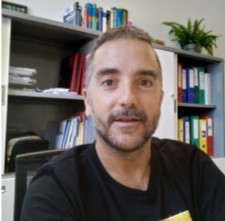
Javier Sotillo Gallego
Científico Titular
ORCID code: 0000-0002-1443-7233
En el año 2011 obtuve mi título de doctor “cum laude” por la Universidad de Valencia. Durante mi etapa postdoctoral en la James Cook University en Australia (2012-2019) me especialicé en estudiar las interacciones parásito-hospedador usando diferentes técnicas ómicas. En 2019 volví España y comencé a trabajar en el Laboratorio de Helmintos del CNM (ISCIII) primero como Investigador Miguel Servet y más adelante como Investigador Ramón y Cajal. Actualmente soy Científico Titular en el mismo laboratorio.
-

Ana Hernández González
Laboral Fijo Doctor
ORCID code: 0000-0001-6762-8175
Licenciada en Biología y doctora en Enfermedades Tropicales por la Universidad de Salamanca. Puestos ocupados con anterioridad: investigadora predoctoral en el IRNASA-CSIC (contrato JAE predoc), investigadora postdoctoral en el CNM (contrato Sara Borrell) e investigadora contratada como técnico superior en el CNM (RICET). Actualmente, personal Laboral Fijo Doctor en el laboratorio de Helmintos del CNM.
-
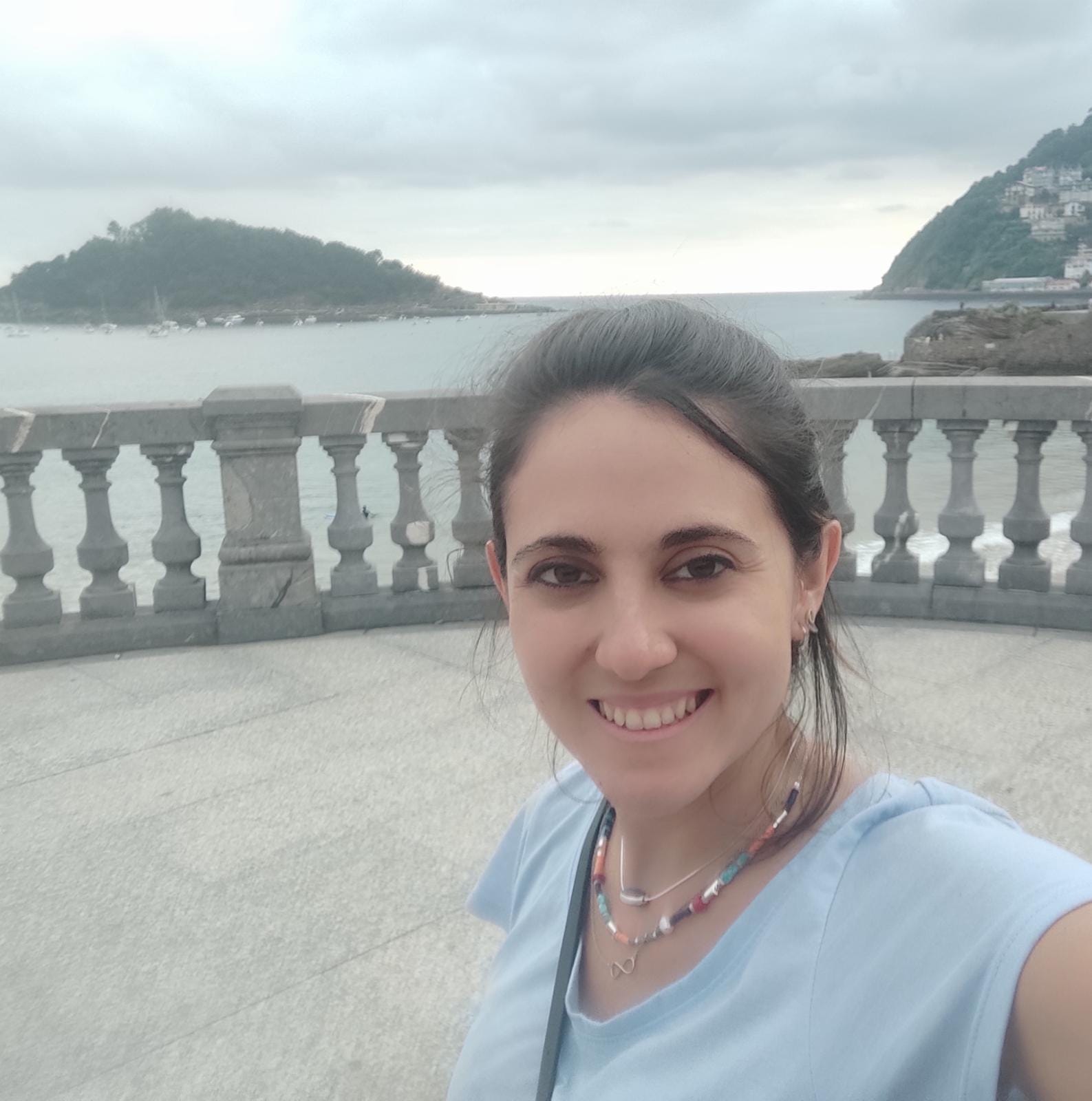
Esther Rodríguez Pérez
Técnico de Laboratorio
ORCID code: 0000-0002-3680-7733
Obtuve mi título como Graduada en Biología Sanitaria en el año 2015 y en el año 2019 obtuve el Grado Superior de Laboratorio de Diagnóstico Clínico. De 2019 a 2022 trabajé en el Museo Nacional de Ciencias Naturales (MNCN-CSIC), en el Departamento de Biogeoquímica y Ecología Microbiana. Actualmente trabajo como Técnico de Laboratorio en el Laboratorio de Helmintos del CNM (ISCIII).
-

Lourdes Castro Companioni
Ayudante de Investigación
ORCID code: 0009-0003-2746-4067
Bióloga sanitaria graduada en la Universidad de Alcalá de Henares (UAH), con master de Microbiología y Salud pública en la UAH en colaboración con el ISCIII.


List of staff
Additional Information
The research objectives focus on the areas of Bacterial Taxonomy and Microbiology in Public Health:
- Identification of pathogenic bacteria that are difficult to assign taxonomically
- Description of new species
- Study of bacterial population biology through typing
- Epidemiology of antimicrobial resistance and virulence factors for certain bacterial pathogens in different nosocomial/community settings.
These objectives are addressed from the perspective of polyphasic taxonomy (phenotypic and genotypic taxonomy) through the study of targets for genus/species assignment and phylogenetic analyses. The analysis of the virulome and resistome of certain species is approached from the perspective of complete genome sequencing.
Research on invasive infection by Streptococcus pyogenes and other beta-hemolytic streptococci has been carried out since 1994, through the Surveillance Program of the National Center for Microbiology. The typing of invasive S. pyogenes strains circulating in Spain includes determination of: serotype (emm-type); the genetic profile of streptococcal pyrogenic exotoxins; the antimicrobial resistance phenotype; and the genotypes of epidemiologically related strains and/or outbreaks.
The research objectives focus on the areas of Bacterial Taxonomy and Microbiology in Public Health:
- Identification of pathogenic bacteria that are difficult to assign taxonomically
- Description of new species
- Study of bacterial population biology through typing
- Epidemiology of antimicrobial resistance and virulence factors for certain bacterial pathogens in different nosocomial/community settings.
These objectives are addressed from the perspective of polyphasic taxonomy (phenotypic and genotypic taxonomy) through the study of targets for genus/species assignment and phylogenetic analyses. The analysis of the virulome and resistome of certain species is approached from the perspective of complete genome sequencing.
Research on invasive infection by Streptococcus pyogenes and other beta-hemolytic streptococci has been carried out since 1994, through the Surveillance Program of the National Center for Microbiology. The typing of invasive S. pyogenes strains circulating in Spain includes determination of: serotype (emm-type); the genetic profile of streptococcal pyrogenic exotoxins; the antimicrobial resistance phenotype; and the genotypes of epidemiologically related strains and/or outbreaks.