



We protect your health through science
Investigation
Serology
Research Lines
Content with Investigacion .

B) Study of the distribution and dynamics of HPV infections in risk groups. There are some particularly vulnerable groups, some of them difficult to access (sex workers, transgender groups, etc.), in which HPV infections deserve special attention. The prevalence of HPV infection is especially high in people living with HIV and/or among men who have sex with men. Knowledge of the distribution and dynamics of infections is especially interesting in these groups, as they may help to improve current algorithms for the prevention of anogenital cancer.
C) Study of infection by HPV genotypes and their relationship with progression to neoplastic processes. The oncogenic capacity of some HPV genotypes and their involvement in the production of anogenital cancer is well known. In addition, there are other oncological processes, such as non-melanoma skin cancer, in which HPV could be implicated. Thus, members of the gamma-24 HPV species have recently been associated with skin cancer. It is to be hoped that the appearance of new genotypes and the performance of more extensive studies may lead to the identification of new associations between HPV and neoplastic processes.
D) Study of co-infections by different HPV genotypes. The presence of co-infections of different HPV genotypes is a very frequent finding, both in skin samples and in different mucous membranes. The great genetic diversity of HPV limits the ability of classical molecular methods to perform a comprehensive detection and study of the genotypes present. However, the use of massive sequencing makes it possible to eliminate some of these biases and to obtain more detailed information on the existing HPV populations, as well as to analyze interactions between the different genotypes.
E) Description of new HPV genotypes/variants. Currently at the International HPV Reference Center (Karolinska Institute, Sweden) more than 220 HPV genotypes are described, distributed in 5 different genera. However, improved molecular detection techniques, as well as the use of massive sequencing, are allowing this number to increase rapidly. The study of new genotypes and variants is essential for the validation and quality control of available diagnostic methods. Similarly, their characterization and the study of possible associations of HPV with pathologies other than those already known is a field of great interest for research.
Research projects
Content with Investigacion .
Título: Impact of vaccination against Human Papillomavirus in Spain: Studye of the distribution of genotypes and its application in surveillance. Principal Investigator: Horacio Gil. Starting/End dates: 2024-2026. Funding Entity: Acción Estratégica de Salud Intramural (AESI) del Instituto de Salud Carlos III. Project Reference: PI23CIII/00006.
Título: Effect of feminizing therapy on immune response in transgender women. Principal Investigator: Victor Manuel Sánchez Merino. Collaborating Investigator: Horacio Gil. Starting/End dates:2025-2027. Funding Entity: Acción Estratégica de Salud Intramural (AESI) del Instituto de Salud Carlos III. Project Reference: PI24CIII/00031.
Publications
Fernandez-Garcia MD, Simon-Loriere E, Kebe O, Sakuntabhai A, Ndiaye K. Identification and molecular characterization of the first complete genome sequence of Human Parechovirus type 15. Sci Rep. 2020 Apr 21
Fernandez-Garcia MD, Simon-Loriere E, Kebe O, Sakuntabhai A, Ndiaye K. Identification and molecular characterization of the first complete genome sequence of Human Parechovirus type 15. Sci Rep. 2020 Apr 21;10(1):6759. doi: 10.1038/s41598-020-63467-w. PMID: 32317760; PMCID: PMC7174385.
Casas-Alba D, Valero-Rello A, Muchart J, Armangué T, Jordan I, Cabrerizo M, Molero-Luís M, Artuch R, Fortuny C, Muñoz-Almagro C, Launes C. Cerebrospinal Fluid Neopterin in Children With Enterovirus-Related Brainstem Encephalitis. Pediatr Neurol. 2019 Jul
Casas-Alba D, Valero-Rello A, Muchart J, Armangué T, Jordan I, Cabrerizo M, Molero-Luís M, Artuch R, Fortuny C, Muñoz-Almagro C, Launes C. Cerebrospinal Fluid Neopterin in Children With Enterovirus-Related Brainstem Encephalitis. Pediatr Neurol. 2019 Jul; 96:70-73. doi: 10.1016/j.pediatrneurol.2019.01.024. Epub 2019 Feb 7. PMID: 30935719.
González-Sanz R, Taravillo I, Reina J, Navascués A, Moreno-Docón A, Aranzamendi M, Romero MP, Del Cuerpo M, Pérez-González C, Pérez-Castro S, Otero A, Cabrerizo M. Enterovirus D68-associated respiratory and neurological illness in Spain, 2014-2018.
González-Sanz R, Taravillo I, Reina J, Navascués A, Moreno-Docón A, Aranzamendi M, Romero MP, Del Cuerpo M, Pérez-González C, Pérez-Castro S, Otero A, Cabrerizo M. Enterovirus D68-associated respiratory and neurological illness in Spain, 2014-2018. Emerg Microbes Infect. 2019;8(1):1438-1444. doi: 10.1080/22221751.2019.1668243. PMID: 31571527; PMCID: PMC6781473.
Monocytic Myeloid-Derived Suppressor Cells Accumulate in Renal Transplant Patients and Mediate CD4(+) Foxp3(+) Treg Expansion
Luan Y, Mosheir E, Menon MC, Wilson D, Woytovich C, Ochando J, Murphy B. Monocytic Myeloid-Derived Suppressor Cells Accumulate in Renal Transplant Patients and Mediate CD4(+) Foxp3(+) Treg Expansion. 2013. Am J Transplant.13(12):3123-31.
PUBMED DOIContent with Investigacion .
-

María Luisa Gaspar Alonso-Vega
Research Professor
ORCID code: 0000-0001-9858-3862
Dr. María Luis Gaspar Alons-Vega graduated in 1980 and obtained her PhD in 1985 in Medicine and Surgery from the Autonomous University of Madrid. She completed the specialty of Immunology (1981-1985), and her doctoral thesis under the direction of Dr. Carmen Gutierrez, in the Immunology laboratory of the Puerta de Hierro Clinic directed by Dr. Miguel Kreisler. She completed a predoctoral stay in the Cytogenetics Laboratory of the National Institute of Autoimmune, Diabetes, Digestive and Kidney Diseases (NIDDK, NIH), under the supervision of Dr. JH Tjio and Dr. E. Raveché. She joined the Immunology Service of the National Center for Health Microbiology, Virology and Immunology (CNMVIS, AISNA and later ISCIII) as a Physician-Specialist in 1986, in the Immunology Laboratory directed by Dr. Alfredo Toraño. She completed a postdoctoral stay (1989-1991) at the Immunogenetics Unit of the Pasteur Institute (Paris) directed by Dr. T. Meo. From 1991 to 2006 she was Head of the Immunology Section successively at the CNMVIS, at the National Center for Fundamental Biology (CNBF-ISCIII) and at the National Center for Microbiology (CNM-ISCIII). From 2006 to 2016 she has been a Senior Researcher and Senior Scientist of OPIs, in the Immunobiology laboratory of the CNM-ISCIII. From 2016 to 2018 she was a Scientific Researcher at OPIs and since 2018, she is a Research Professor at OPIs at the CNM.
-
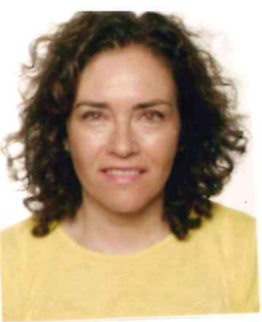
Belén de Andrés Muguruza
Research Scientist
ORCID code: 0000-0002-7391-2823
Graduated in Biology in 1987 and PhD in 1992 from the Autonomous University of Madrid. He completed his doctoral thesis in the laboratory of Dr. Carlos Lahoz in the Immunology department of the Jiménez Díaz Foundation with a pre-doctoral stay at the Institute Curie in Paris, in the laboratory of Dr. Wolf H. Fridman. Subsequently, he completed a two-year postdoctoral stay in the Department of Pathology of the College of Medicine at the University of Iowa, USA, in the laboratory of Dr. Richard G. Lynch. After a year as an Adjunct in the Immunology department of the Jiménez Diaz Foundation, she worked for 2 years with a reinstatement contract from the Ministry of Science in the Immunobiology department of the CNM/ISCIII in the laboratory of Dr. Mª Luisa Gaspar and later with a Ramón y Cajal contract. In 2006 she obtained a position as Staff Senior Scientist.
-
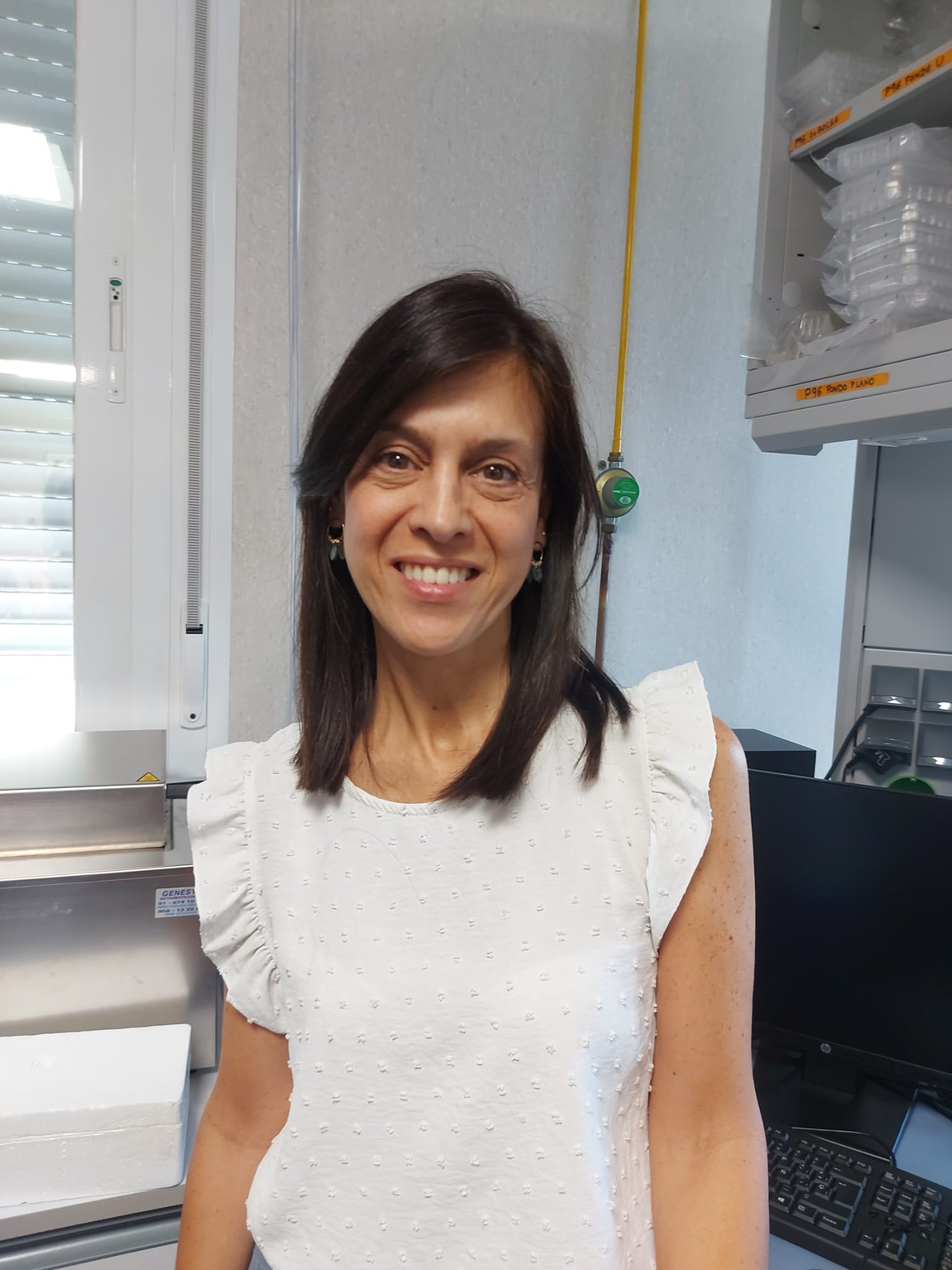
Isabel Cortegano Jimeno
Research Scientist
ORCID code: 0000-0002-6504-6347
Graduated in Biology in 1995 (Specialty in Biochemistry and Molecular Biology) and PhD in 1999 from the Autonomous University of Madrid. He completed his doctoral thesis at the Jiménez Díaz Foundation in the Immunology laboratory directed by Dr. Carlos Lahoz. Later he obtained a postdoctoral fellowship in the Immunobiology laboratory of Dr. Mª Luisa Gaspar at the National Center of Microbiology (CNM) of the Carlos IIII Health Institute (ISCIII) (2002-2006). He then enjoyed an I3P contract from the CSIC in the laboratory of Professor Miguel Ángel Rodríguez-Marcos (2007-2009). She has been a researcher associated with research projects in the ISCIII Immunobiology laboratory during the years 2010-2018. Since 2018 she has been an associate professor in the Department of Cell Biology of the UCM Faculty of Medicine. He coordinates the scientific dissemination group of the Spanish Society of Immunology (GESEI), is part of the editorial committee of the SEI magazine and is a member of the board of the CAM Immunology Society. She is a Senior Scientist of the ISCIII at the National Center for Microbiology since 2020.
-

Carolina Ruiz Sánchez
Specialized Technician
ORCID code: 0000-0002-2177-8132
Graduated in Chemical Sciences (biochemistry specialty) in 1998 and PhD in 2022 from the Complutense University of Madrid. In 2008 he joined the OPIS Assistant in the Immunobiology laboratory of the National Center for Microbiology of the ISCIII, specializing in flow cytometry the first year and subsequently becoming part of the laboratory's technical team. In 2012 he was promoted to Intermediate Level Technician and in 2018 to Higher Specialized Technician of the OPIS, currently occupying this position in the same laboratory.
-
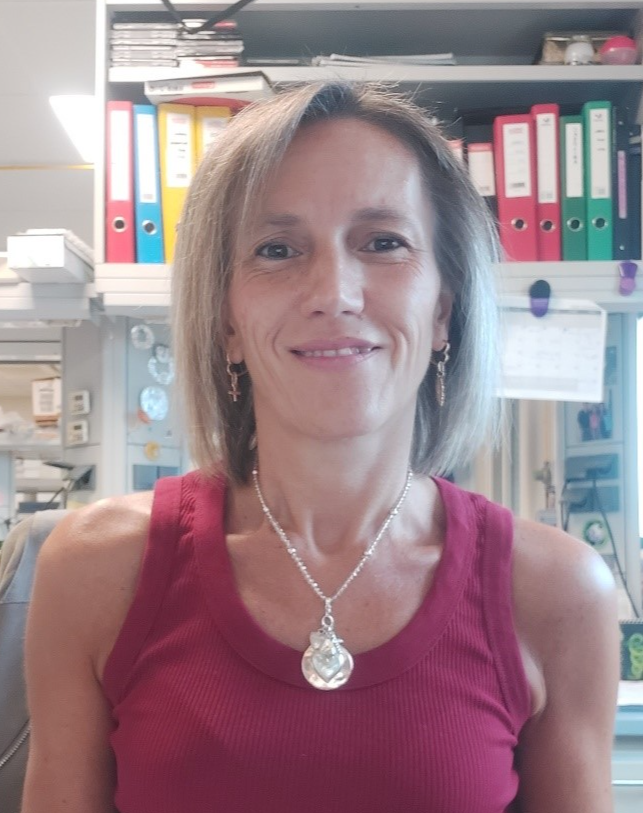
Mercedes Rodríguez García
Specialized Higher Technician
Graduated in Biology from the Complutense University of Madrid in 2003, she began her doctoral studies in the Bone Metabolism laboratory of the La Paz University Hospital.
In 2007 he joined as a Research Assistant at the Carlos III Health Institute, at the CNM, in the Transplant Immunology laboratory. After 5 years, he began working in the Immunobilology laboratory where he was promoted in 2018 to Specialized Technician, in 2024 to Senior Specialized Technician and where he currently continues to develop his professional career. -

Alejandro Arrabal Sierra
Predoctoral Contract (Industrial Doctorate from CAM / Inmunotek).
ORCID code: 0000-0002-9354-9224
Graduated in Biotechnology in 2021 from the Polytechnic University of Madrid, carrying out his final degree project in the Immunobiology laboratory of the National Microbiology Center of the ISCIII. In 2021, he completed a Master's Degree in Research in Immunology at the Complutense University of Madrid and completed his master's thesis in the same CNM laboratory. Subsequently, he worked for a year as a Research Assistant in the laboratory of Dr. Elena Fernández Ruiz at the Hospital Universitario de la Princesa. Since the end of 2023, he has been a predoctoral fellow in the CNM Immunobiology laboratory with an Industrial Doctorate scholarship from the Community of Madrid in collaboration with the company Inmunotek.



List of staff
Additional Information
The main objective of the Serology Laboratory is to provide services to centers of the National Health System, through the offer in the service portfolio of the National Microbiology Center, in carrying out diagnosis and reference through the detection of antibodies, both for primary diagnosis and for reference activities.
For this, it has the appropriate serological methodologies, many of them accredited by ENAC in accordance with the ISO15189 standard. Conducts test validation studies through collaboration agreements with private entities.
Participates in seroprevalence studies, carried out through management assignments with the Ministry of Health and with the Public Health authorities of different autonomous communities.
On the other hand, it participates in research projects in relation to infectious diseases, in recent years on neurological diseases, on emerging diseases and on the viruses included in the MMR vaccine.
The main objective of the Serology Laboratory is to provide services to centers of the National Health System, through the offer in the service portfolio of the National Microbiology Center, in carrying out diagnosis and reference through the detection of antibodies, both for primary diagnosis and for reference activities.
For this, it has the appropriate serological methodologies, many of them accredited by ENAC in accordance with the ISO15189 standard. Conducts test validation studies through collaboration agreements with private entities.
Participates in seroprevalence studies, carried out through management assignments with the Ministry of Health and with the Public Health authorities of different autonomous communities.
On the other hand, it participates in research projects in relation to infectious diseases, in recent years on neurological diseases, on emerging diseases and on the viruses included in the MMR vaccine.