



We protect your health through science
Investigation
Measles, rubella, mumps, parvovirus B19 and rabies
Research Lines
Content with Investigacion .
Inmunología Microbiana e Inmunogenética
1. Análisis de la respuesta innata de mamíferos en la infección por Leishmania.
2. Caracterización inmunoproteómica en :
a. Streptococcus suis
b. Lactococcus garviae
c. Mycobacterium spp
3. Desarrollo de inmunoensayos analíticos basados en anticuerpos monoclonales (AcM) para detectar y cuantificar antígenos de origen animal, vegetal y microbiano.
4. Desarrollo y caracterización de AcM frente a los componentes del sistema del Complemento. Aplicación diagnóstica.
5. Desarrollo de reactivos de referencia y diseño de inmunoensayos para la evaluación cualitativa y cuantitativa de toxinas clostridiales.
6. Oferta tecnológica de producción de AcM y policlonales frente a substancias de interés industrial y biomédico.
El grupo está interesado en el estudio de la respuesta inmune desde una perspectiva multidisciplinar que incluye aproximaciones bioquímicas, biotecnológicas, genómicas, inmunoinformáticas y proteómicas, que junto con el uso adicional de modelos in vivo se encaminan al diseño de estrategias terapéuticas frente a diversas enfermedades crónicas, infecciosas y raras que poseen un claro componente inmunológico en su etiología.
Las principales líneas de investigación que está desarrollando el grupo en la actualidad son:
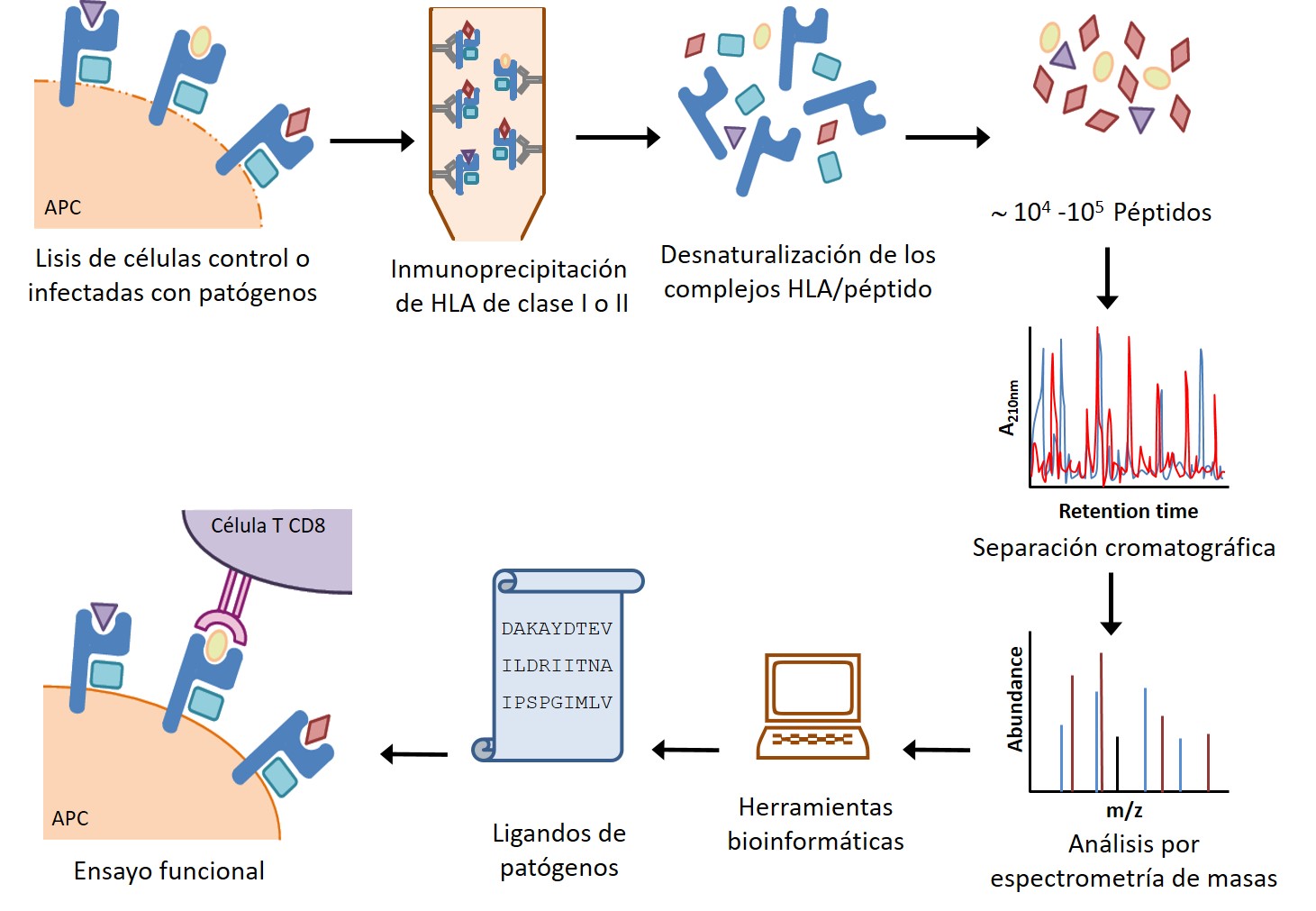
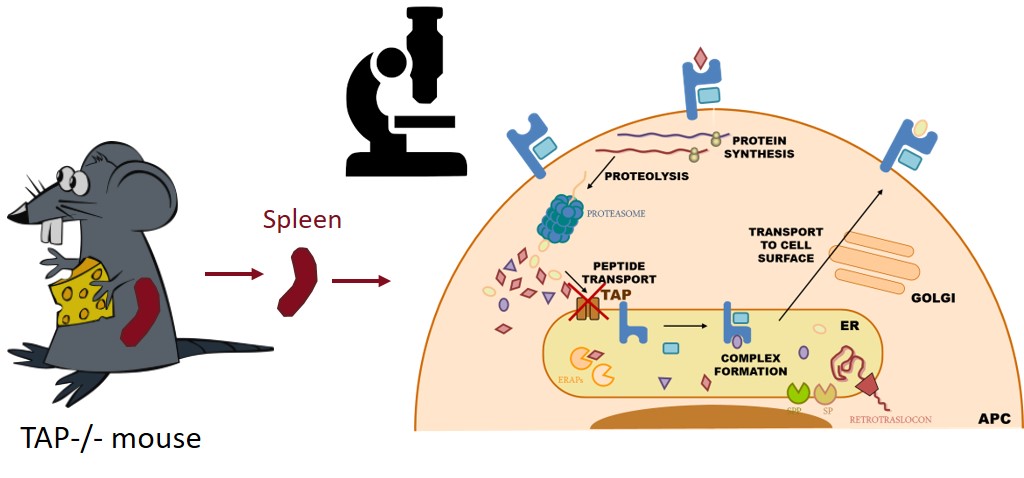
- * Análisis de las respuestas inmunes celulares frente a patógenos virales y bacterianos, mediante técnicas inmunoproteómicas, modelos in vivo con animales transgénicos y muestras humanas.
- * Caracterización de CD69: regulación génica, función reguladora inmune en homeostasis e infección y su uso como diana terapéutica, edición génica por CRISPR en modelos animales y celulares, etc.

* Desarrollo de herramientas inmunoinformáticas que permitan analizar la respuesta inmune celular frente a diversos virus de interés sanitario y determinar la eficacia de sus vacunas a nivel de población mundial.

* Estudio de las respuestas inmunes celulares frente a enfermedades raras (artritis reactiva y síndrome del linfocito desnudo) y crónicas (espondiloartropatías).
* Inclusión de componentes del sistema inmune en la fabricación de tejidos humanos, especialmente piel, para uso clínico, farmacéutico y cosmético.
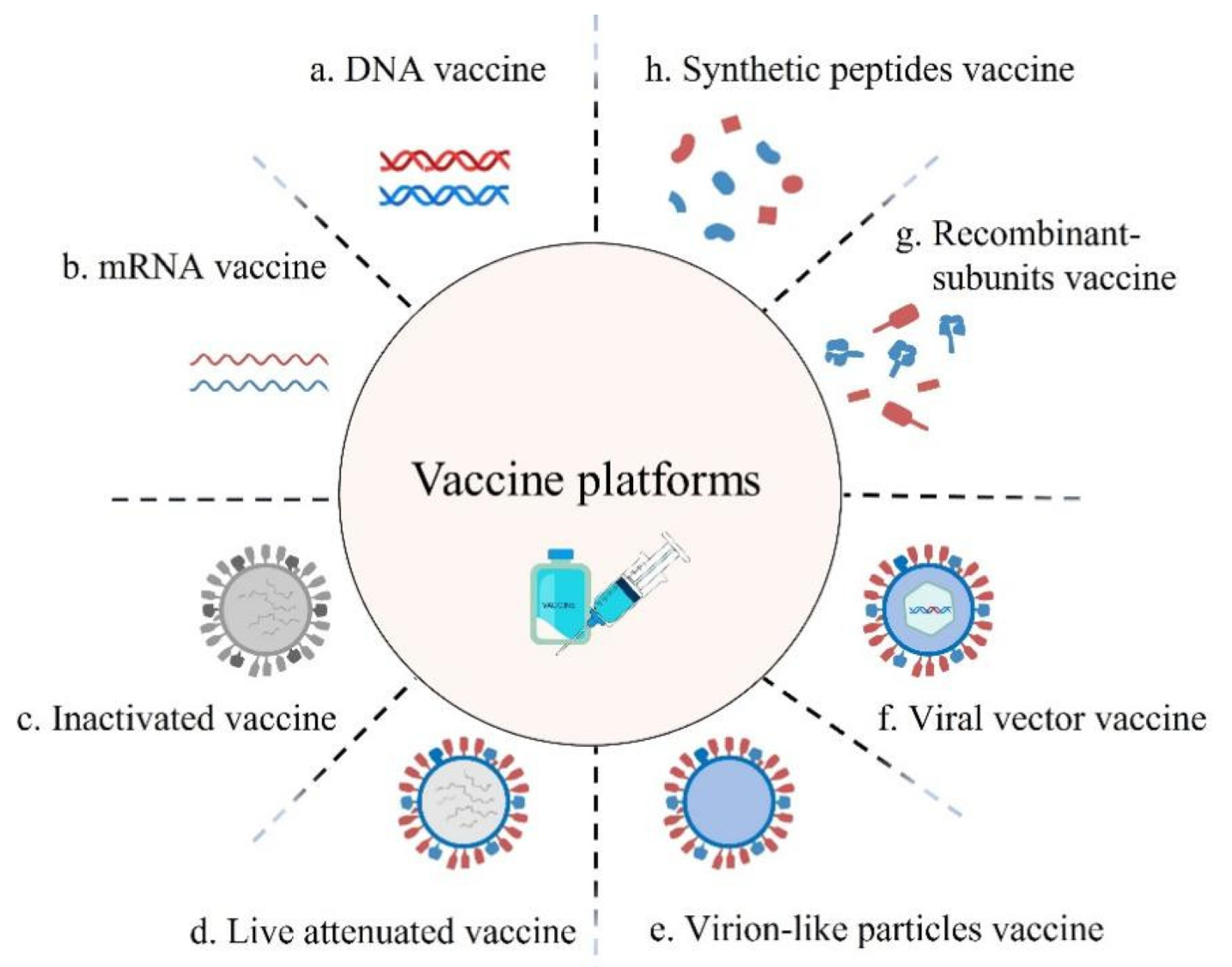
- * Generación de virus recombinantes como vectores vacunales.
Research projects
Content with Investigacion .
Proyectos de investigación financiados en los últimos 5 años
- Investigación de las infecciones neurológicas graves en niños causadas por enterovirus emergentes en España: EV-A71 y EV-D68 (PI18CIII/00017). Financiación: ISCIII. 2019-2021. IP: M. Cabrerizo
- Metagenomic sequencing to identify viral etiologies in undiagnosed cases of meningitis and encephalitis (PI20CIII/00005). Financiación: ISCIII. 2021-2023. IP: M.D. Fernández-García
- Investigación en infecciones por enterovirus y parechovirus que causan patologías neurológicas y sistémicas graves en población infantil (PI15CIII/00020). Financiación: ISCIII. 2016-2019. IP: M. Cabrerizo
- Aplicación de la secuenciación masiva para el diagnóstico de infecciones neurológicas de origen vírico no filiadas (PI-0216-2019). Financiación: Junta de Andalucía, Consejería de Salud y Familias. 2019-2021. IP: M.D. Fernández-García (2019)/ Ana Belen Pérez-Jiménez (2020-21)
- Epidemiología y patogenia molecular de los enterovirus y parechovirus asociados a sepsis e infecciones neurológicas en población infantil en España (PI12/00904). Financiación: ISCIII. 2013-2016. IP: M. Cabrerizo
Otros proyectos de investigación relevantes en los que ha colaborado o colabora el grupo
- Dinámica de colonización e infección por E. coli enteroagregativo en poblaciones pediátricas y su asociación con la composición de la microbiota intestinal mediante análisis metagenómico (PI18CIII/00043). Financiación: ISCIII. 2019-2021. IP: S. Sánchez
- Paving the way for implementing a syndromic diagnostic scheme at the CNM for the diagnosis of diarrhoea-causing pathogens in stool samples based on molecular and metagenomics methods (PI19CIII/00029). Financiación: ISCIII. 2020-2022. IP: D. Carmena
- Engineering lactobacilli for intranasal immunization against the emerging enterovirus D68 (EV-D68) infections and prevention of acute flaccid myelitis. Financiación: ESCMID. 2019-2020. IP: M.C. Póvoa-Cabral
- Análisis epidemiológico y virológico de los agentes virales incluidos en la vacuna triple vírica: nuevos retos (PI15CIII/00023). Financiación: ISCIII. 2016-2019. IP: F. de Ory/A. Fernández
- Epidemiología general y molecular de la hepatitis E en España: ¿una zoonosis emergente? (PI080865). Financiación: ISCIII. 2009-2012. IP: M. Fogeda
- Etiología de las meningitis y encefalitis víricas en España (PI07/90154). Financiación: ISCIII. 2008-2010. IP: F. de Ory
- Investigation of the dynamics and geography of the spread of recombinant forms of human enteroviruses (WT081173MA). Financiación: Wellcome Trust. 2007-2010. IP: P. Simmonds.
Convenios
- Servicios para la realización de estudios virológicos previstos en el agua procedentes para Canal de Isabel II-Gestión (MVP-207/18). Financiación: Canal de Isabel II. 2018-2021. IP: M. Cabrerizo
- Análisis virológico en muestras de aguas procedentes del Canal de Isabel II (MVI-1005/99). Financiación: Canal de Isabel II. 2016-2017. IP: M. Cabrerizo
Publications
Outbreak of invasive meningococcal disease caused by a meningococcus serogroup B expressing a rare porA genosubtype (19-54, 15), Spain, March to April 2024.
Abad R, Navarro C, García-Amil C, Montes M, Castañeda-García A, Cuadros JA, Galar A, Martin F, Mena E, Pérez de Madrid S, Román C, Soler M, Vázquez JA. Euro Surveill. 2025 Nov;30(44):2500222
PUBMED DOIT-Cell-Specific Loss of the PI-3-Kinase p110α Catalytic Subunit Results in Enhanced Cytokine Production and Antitumor Response.
1. Aragoneses-Fenoll L, Ojeda G, Montes-Casado M, Acosta-Ampudia Y, Dianzani U, Portolés P, Rojo JM. T-Cell-Specific Loss of the PI-3-Kinase p110α Catalytic Subunit Results in Enhanced Cytokine Production and Antitumor Response. Front. Immunol. 2018 Feb 27;9:332.
PUBMED DOIContent with Investigacion .
-
María Cabrerizo Sanz
Tenure Scientist and Group Leader
ORCID code: 0000-0001-7054-5696
Doctor in Chemistry, specializing in Biochemistry and Molecular Biology, Universidad Autónoma de Madrid (2000). Except for a postdoctoral period of 2 years at the Hospital de La Princesa, in which her research was related to onco-hematological diseases, the rest of her scientific career has focused on the study of infectious diseases caused by viruses and their surveillance. She joined the Instituto de Salud Carlos III in 2003, first in the Laboratory of Arbovirus and Imported Viral Diseases, then in the Laboratory of Viral Hepatitis and finally, in the Laboratory of Enterovirus (which is accredited as a National Polio Laboratory -LNP- for the WHO since 1998). She obtained the position of Tenure Scientist in 2016, at the same time she assumed the responsibility of the laboratory, currently of Enteric Viruses: Poliovirus/Enterovirus, Parechovirus and Gastroenteritis-producing Viruses, of the CNM. She has 4 scientific sexennials and 4 quinquennials recognized.
She has been and is PI of 4 consecutive research projects and 3 service contracts, from 2012 to the present, participating, in addition, in other 20 projects. As head of the LNP, she is part of the Working Group of the National Plan for the Eradication of Poliomyelitis and of the WHO European Polio Laboratory Network. She is also a member of the European Non-Polio Enterovirus Network (ENPEN), and of the national cooperation networks CIBERESP and RITIP (IdiPAZ). Since 2023 she is a Council Member from Spain of the European Society.
In total she has published 98 articles in WoS indexed journals (23 Q1 and 22 D1), being first author, senior author or correspondence author in 43 of them (H=27). She has supervised 1 PhD Thesis (2017) and 12 TFM. She is currently supervising another doctoral thesis (IMIENS-UNED). She participates as a teacher in three university masters (UCM, UAH and UV), being coordinator of the subject H2 of the Master of Virology at UCM.
-
Mª Dolores Fernández García
Tenure Scientist
ORCID code: 0000-0003-0336-6596
Degree in Pharmacy (2005) and PhD from the University VII Paris Diderot in Microbiology (2010). She completed her doctoral thesis at the Pasteur Institute in Paris characterizing the molecular and cellular basis of flavivirus entry into cells. Specialist in Public Health Microbiology (European Program EUPHEM coordinated by ECDC). She has worked 3 years for the French Ministry of Foreign Affairs as a researcher at the Pasteur Institute in Dakar (Senegal) carrying out microbiological surveillance activities and research on polioviruses and non-polio enteroviruses in West Africa. She has obtained two Miguel Servet contracts: one to work at IMIBIC in Cordoba (2019) and an intramural one to work at CNM (2020). Both were awarded for the study of neurotropic viruses applying massive sequencing for their diagnosis. In 2021 he joined the CNM-ISCIII as a Tenure Research Scientist at the Enterovirus and Viral Gastroenteritis Unit of the CNM-ISCIII. Since then, she combines her scientific activity with the assistance to the National Health System in the microbiological research of outbreaks and in the Genomic Surveillance of Enteroviruses and Gastroenteritis-producing Viruses.
She is a researcher in the Epidemiology and Public Health Area of the Centro de Investigación Biomédica en Red (CIBERESP-ISCIII). In addition, she is an evaluator and panelist for the HORIZON health program projects of the European Commission, the French National Agency ANRS-Emerging Infectious Diseases, R&D&I in HEALTH of the Strategic Action in Health (ISCIII) and the Andalusian Public Foundation Progreso y Salud. She has worked as scientific advisor to the Spanish Ministry of Health on Rotavirus and Polio. Since 2020 she has been teaching virology in different Spanish universities.
She has worked for WHO in the investigation of numerous outbreaks caused by viruses (Ebola, Zika, Yellow Fever, Dengue, etc.) in African and Asian countries strengthening laboratory capacities through technology transfer of diagnostic methods, training of laboratory personnel in these countries and scientific advisory tasks to the Ministries of Health. She has been the Health Coordinator of the START Project (Spanish Technical Aid Response Team) of the AECID, framed in the “Emergency Medical Teams” initiative of the WHO, participating in the establishment for Spain of a field hospital classified by the WHO as EMT Level 2 for interventions in humanitarian emergencies.
-
Nerea García Ibáñez
Ayudante de Investigación de OPI. Técnico de laboratorio
-
Vanesa Recio Huertas
Ayudante de Investigación de OPI. Técnico de laboratorio (apoyo)
-
Ana Donoso Almenara
Contratada predoctoral pFIS
-
Rubén González Sanz
Técnico Superior Especializado OPI
-
Juan Camacho Padilla
Investigador predoctoral (PFIS)
-
Clara Martín Martín
Investigador predoctoral (PFIS)
-
Nazaret Díaz Sánchez
Técnico Superior Especializado OPI (apoyo)
-
Carmen Serrano Risquez
Investigador predoctoral (CAM)
-
Yasmin Biya Assiry
Técnico de laboratorio en formación (PEJ-CAM)
-
Estrella Ruiz de Pedro
Técnico de laboratorio (PTA para Infraestructuras de I+D+I)
List of staff
Additional Information
This group, together with the CNM Serology Laboratory (LS), houses the National Reference Laboratories for Rabies (RD 1940/2004) and Measles and Rubella (National Elimination Plan) that are integrated into the corresponding European networks. It has 10 self-developed techniques in its service portfolio (2 accredited by ENAC and 3 by the WHO). In addition, it attends to three CNM microbiological surveillance programs (measles and rubella, mumps and rabies). It is integrated into a CIBERESP group of which Juan E. Echevarría is head and in which other CNM researchers participate.
Research on MMR vaccine diseases is currently financed through an AESI project (PI15CIII/00023) of which Aurora Fernández García is co-PI and in which the LS, the CNE, the CAM (LRSP and the Epidemiology Service) and a network of primary care pediatricians participate. of the CAM.
Research on lisaviruses and other viruses associated with bats is currently funded through the VIROBAT-4 project (MINECO, SAF 2017-89355-P) of which Juan E. Echevarría is PI and in which the CNM Respiratory Viruses Laboratory, the Doñana Biological Station (CSIC) and the University of Alcalá de Henares participate.
This group, together with the CNM Serology Laboratory (LS), houses the National Reference Laboratories for Rabies (RD 1940/2004) and Measles and Rubella (National Elimination Plan) that are integrated into the corresponding European networks. It has 10 self-developed techniques in its service portfolio (2 accredited by ENAC and 3 by the WHO). In addition, it attends to three CNM microbiological surveillance programs (measles and rubella, mumps and rabies). It is integrated into a CIBERESP group of which Juan E. Echevarría is head and in which other CNM researchers participate.
Research on MMR vaccine diseases is currently financed through an AESI project (PI15CIII/00023) of which Aurora Fernández García is co-PI and in which the LS, the CNE, the CAM (LRSP and the Epidemiology Service) and a network of primary care pediatricians participate. of the CAM.
Research on lisaviruses and other viruses associated with bats is currently funded through the VIROBAT-4 project (MINECO, SAF 2017-89355-P) of which Juan E. Echevarría is PI and in which the CNM Respiratory Viruses Laboratory, the Doñana Biological Station (CSIC) and the University of Alcalá de Henares participate.