



We protect your health through science
Investigation
Antibiotic Resistance
Research projects
Content with Investigacion .
PROYECTOS VIGENTES
Título del proyecto: "Vesículas extracelulares y otras moléculas de parásitos para el tratamiento de la enfermedad inflamatoria intestinal: PARATREAT-IBD"
Referencia: Proyecto PID2022-137661OB-I00 (MPY 341/23) financiado por MCIN/AEI /10.13039/501100011033/ y por FEDER Una manera de hacer Europa
Fecha Inicio: 01/12/2023
Fecha Fin: 31/08/2026
Financiación: 162.500 Euros
Investigador principal: Javier Sotillo
Agencia Financiadora: Agencia Estatal de Investigación. MICINN.

Título del proyecto: "Desarrollo de nuevos métodos diagnósticos y de seguimiento de la infección por schistosoma haematobium"
Referencia: PI23CIII00034 / MPY 386/23
Fecha Inicio: 01/01/2024
Fecha Fin: 31/12/2026
Financiación: 131.500 Euros
Investigador principal: Javier Sotillo
Agencia Financiadora: Instituto de Salud Carlos III (ISCIII/AESI)

Título del proyecto: "Desarrollo de herramientas para el control de la teniosis / cisticercosis en zonas endémicas y vigilancia de las helmintosis humanas emergentes en España"
Referencia: PI22CIII/00010
Fecha Inicio: 01/01/2023
Fecha Fin: 31/12/2025
Financiación: 80.000 Euros
Investigador principal: María Jesús Perteguer
Agencia Financiadora: Instituto de Salud Carlos III (ISCIII/AESI)
PROYECTOS PASADOS
Título del proyecto: "PERITAS: Molecular epidemiological studies on pathways of transmission and longlasting capacity building to prevent cystic echinococcosis infection."
Coordinador: Adriano Casulli. IP of ISCIII: Maria J. Perteguer.
Entidad financiadora: EULAC Health JOINT CALL on Research and Innovation 016-2017
Periodo: 01/03/2019-31/12/2022.
Cuantía total: 1.083.580 €.
Título del proyecto: "Producción de antígenos y controles positivos recombinantes para el desarrollo y la estandarización de nuevos ensayos serológicos aplicados al diagnóstico y control de helmintosis olvidadas. "
Investigador principal: María Jesús Perteguer.
Entidad financiadora: ISCIII-AESI. Instituto de Salud Carlos III
Periodo: 02/11/2018 - 31/06/2022.
Cuantía total: 78.050 €.
Título del proyecto: "Diagnóstico serológico diferencial de helmintiasis asociadas a eosinofilia: desarrollo de ensayos multianalito (xMAP) con antígenos recombinantes de especies de interés clínico"
Investigador principal: María Jesús Perteguer.
Entidad financiadora: ISCIII-AESI. Instituto de Salud Carlos III
Periodo: 01/01/2015 - 31/12/2018 .
Cuantía total: 91.000 €.
Publications
Isolation of Functional SARS-CoV-2 Antigen-Specific T-Cells with Specific Viral Cytotoxic Activity for Adoptive Therapy of COVID-19. García-Ríos, E.; Leivas, A.; Mancebo, F.J.; Sánchez-Vega, L.; Lanzarot, D.; Aguado, J.M.; Martínez-López, J.; Paciello, M.L.; Pérez-Romero, P. Biomedicines 2022, 10, 630. doi: 10.3390/biomedicines10030630.
Isolation of Functional SARS-CoV-2 Antigen-Specific T-Cells with Specific Viral Cytotoxic Activity for Adoptive Therapy of COVID-19. García-Ríos, E.; Leivas, A.; Mancebo, F.J.; Sánchez-Vega, L.; Lanzarot, D.; Aguado, J.M.; Martínez-López, J.; Paciello, M.L.; Pérez-Romero, P. Biomedicines 2022, 10, 630. doi: 10.3390/biomedicines10030630.
Deciphering the Potential Coding of Human Cytomegalovirus: New Predicted Transmembrane Proteome. Mancebo, F.J., Parras-Moltó, M., García-Ríos, E., Pérez-Romero, P. International Journal of Molecular Sciences, 2022, 23(5), 2768. doi: 10.3390/ijms23052768.
Deciphering the Potential Coding of Human Cytomegalovirus: New Predicted Transmembrane Proteome. Mancebo, F.J., Parras-Moltó, M., García-Ríos, E., Pérez-Romero, P. International Journal of Molecular Sciences, 2022, 23(5), 2768. doi: 10.3390/ijms23052768.
Detection of cytomegalovirus drug resistance mutations in solid organ transplant recipients with suspected resistance
Cross-Recognition of SARS-CoV-2 B-Cell Epitopes with Other Betacoronavirus Nucleoproteins. Tajuelo, A.; López-Siles, M.; Más, V.; Pérez-Romero, P.; Aguado, J.M.; Briz, V.; McConnell, M.J.; Martín-Galiano, A.J.; López, D. Int. J. Mol. Sci. 2022, 23, 2977. doi: 10.3390/ijms23062977.
PUBMEDDetection of cytomegalovirus drug resistance mutations in solid organ transplant recipients with suspected resistance
Immunogenicity of Anti-SARS-CoV-2 Vaccines in Common Variable Immunodeficiency. Arroyo-Sánchez D, Cabrera-Marante O, Laguna-Goya R, Almendro-Vázquez P, Carretero O, Gil-Etayo FJ, Suàrez-Fernández P, Pérez-Romero, P, Rodríguez de Frías E, Serrano A, Allende LM, Pleguezuelo D, Paz-Artal E. J Clin Immunol. 2022 Feb;42(2):240-252. doi: 10.1007/s10875-021-01174-5. PMID: 34787773.
PUBMEDOptimization of a Lambda-RED Recombination Method for Rapid Gene Deletion in Human Cytomegalovirus
Optimization of a Lambda-RED Recombination Method for Rapid Gene Deletion in Human Cytomegalovirus. García-Ríos E, Gata-de-Benito J, López-Siles M, McConnell MJ, Pérez-Romero, P. Int J Mol Sci. 2021 Sep 29;22(19):10558. doi: 10.3390/ijms221910558. PMID: 34638896.
PUBMEDCirculatory follicular helper T lymphocytes associate with lower incidence of CMV infection in kidney transplant recipients
Circulatory follicular helper T lymphocytes associate with lower incidence of CMV infection in kidney transplant recipients. Suàrez-Fernández P, Utrero-Rico A, Sandonis V, García-Ríos E, Arroyo-Sánchez D, Fernández-Ruiz M, Andrés A, Polanco N, González-Cuadrado C, Almendro-Vázquez P, Pérez-Romero P, Aguado JM, Paz-Artal E, Laguna-Goya R. Am J Transplant. 2021 Dec;21(12):3946-3957. doi: 10.1111/ajt.16725. PMID: 34153157.
PUBMEDIs It Feasible to Use CMV-Specific T-Cell Adoptive Transfer as Treatment Against Infection in SOT Recipients?
Is It Feasible to Use CMV-Specific T-Cell Adoptive Transfer as Treatment Against Infection in SOT Recipients? García-Ríos E, Nuévalos M, Mancebo FJ, Pérez-Romero P. Front Immunol. 2021 Apr 23;12:657144. doi: 10.3389/fimmu.2021.657144. PMID: 33968058.
PUBMEDCytotoxic cell populations developed during treatment with tyrosine kinase inhibitors protect autologous CD4+ T cells from HIV-1 infection
Cytotoxic cell populations developed during treatment with tyrosine kinase inhibitors protect autologous CD4+ T cells from HIV-1 infection. Vigón L, Rodríguez-Mora S, Luna A, Sandonís V, Mateos E, Bautista G, Steegmann JL, Climent N, Plana M, Pérez-Romero P, de Ory F, Alcamí J, García-Gutierrez V, Planelles V, López-Huertas MR, Coiras M. Biochem Pharmacol. 2020 Aug 20;182:114203. doi: 10.1016/j.bcp.2020.114203. PMID: 32828803
PUBMEDContent with Investigacion .
-

Sara Vázquez Ávila
Técnico de Laboratorio
Obtuve mi título como Técnico de Laboratorio Clínico y Biomédico en el año 2020 y en el 2021obtuve el Grado Superior de Anatomía Patológica y Citodiagnóstico. Trabajé en el Centro Andaluz de Biología Molecular y Medicina Regenerativa (Sevilla) y en el Departamento de Farmacología de la Facultad de Medicina (Universidad Complutense de Madrid). Actualmente soy Técnico de Laboratorio en el Laboratorio de Helmintos del CNM (ISCIII).
-
Maria Jesús Perteguer Prieto
Investigadora Titular, Jefa de grupo
-

Javier Sotillo Gallego
Científico Titular
ORCID code: 0000-0002-1443-7233
En el año 2011 obtuve mi título de doctor “cum laude” por la Universidad de Valencia. Durante mi etapa postdoctoral en la James Cook University en Australia (2012-2019) me especialicé en estudiar las interacciones parásito-hospedador usando diferentes técnicas ómicas. En 2019 volví España y comencé a trabajar en el Laboratorio de Helmintos del CNM (ISCIII) primero como Investigador Miguel Servet y más adelante como Investigador Ramón y Cajal. Actualmente soy Científico Titular en el mismo laboratorio.
-

Ana Hernández González
Laboral Fijo Doctor
ORCID code: 0000-0001-6762-8175
Licenciada en Biología y doctora en Enfermedades Tropicales por la Universidad de Salamanca. Puestos ocupados con anterioridad: investigadora predoctoral en el IRNASA-CSIC (contrato JAE predoc), investigadora postdoctoral en el CNM (contrato Sara Borrell) e investigadora contratada como técnico superior en el CNM (RICET). Actualmente, personal Laboral Fijo Doctor en el laboratorio de Helmintos del CNM.
-
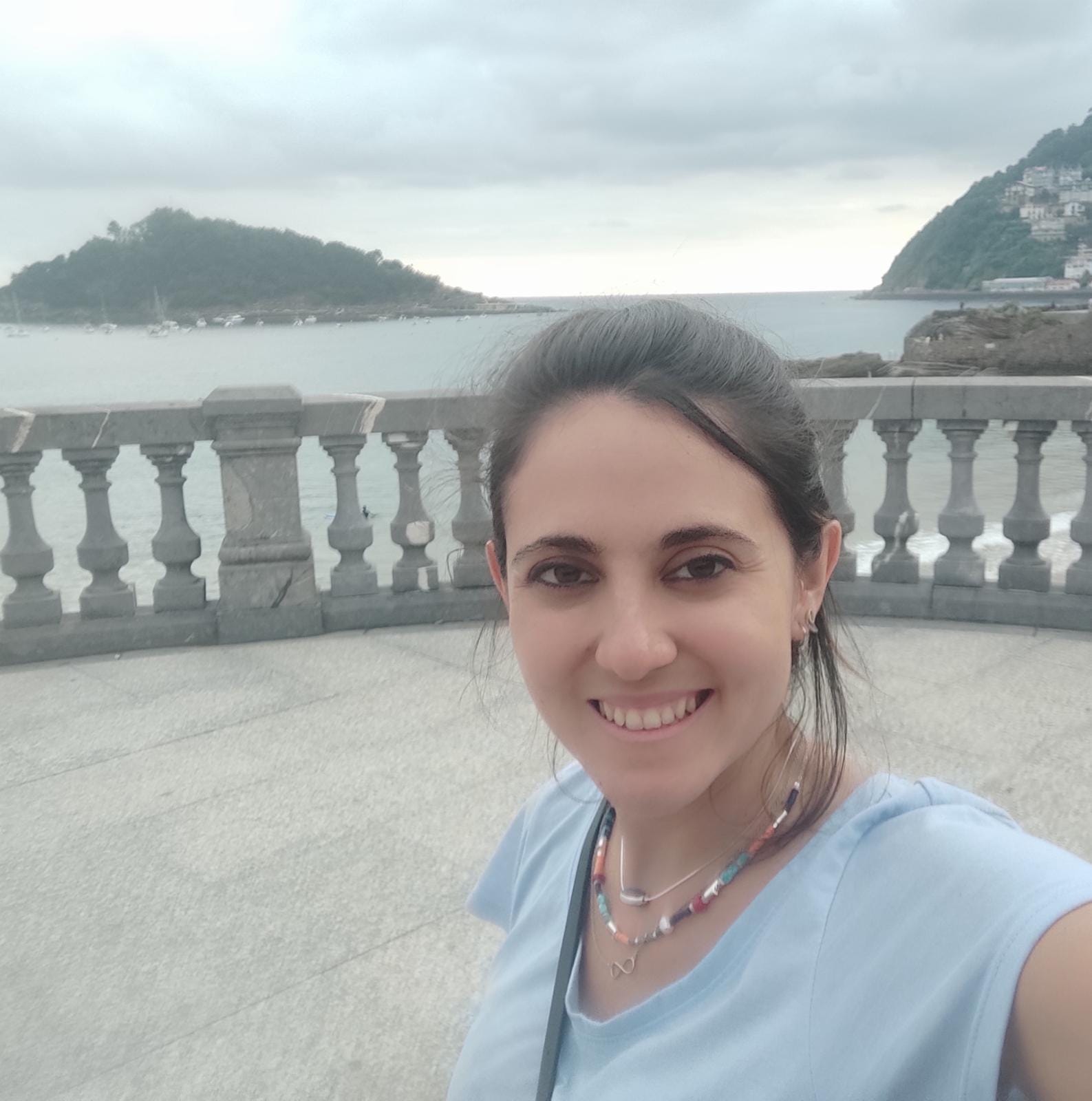
Esther Rodríguez Pérez
Técnico de Laboratorio
ORCID code: 0000-0002-3680-7733
Obtuve mi título como Graduada en Biología Sanitaria en el año 2015 y en el año 2019 obtuve el Grado Superior de Laboratorio de Diagnóstico Clínico. De 2019 a 2022 trabajé en el Museo Nacional de Ciencias Naturales (MNCN-CSIC), en el Departamento de Biogeoquímica y Ecología Microbiana. Actualmente trabajo como Técnico de Laboratorio en el Laboratorio de Helmintos del CNM (ISCIII).
-

Lourdes Castro Companioni
Ayudante de Investigación
ORCID code: 0009-0003-2746-4067
Bióloga sanitaria graduada en la Universidad de Alcalá de Henares (UAH), con master de Microbiología y Salud pública en la UAH en colaboración con el ISCIII.


List of staff
Additional Information
Our general objective is to provide early knowledge about any emerging antibiotic resistance mechanism in our country. This contribution of knowledge is based on transversal objectives that we consider key, such as 1) the ability to adapt research to emerging resistance problems, 2) the promotion of cooperative and multidisciplinary research studies working in networks with different Spanish and foreign centers, 3) the transfer of research results in an agile way to the clinical practice of the national health system, and 4) the promotion of the interrelation of research with reference, advice, training and dissemination seeking the empowerment of all.
More specifically, our main scientific objectives are the characterization of the molecular bases of antibiotic resistance in pathogenic bacteria, the study of the molecular epidemiology and population structure of resistant bacteria, the characterization of the mobile genetic elements that carry resistance genes, and the development of diagnostic techniques and therapeutic alternatives against bacteria with extensive resistance to antibiotics. In this sense, research into the dissemination pathways of Enterobacteriaceae, Acinetobacter baumannii and carbapenemase-producing Pseudomonas aeruginosa (as a paradigm of extensive resistance and pan-resistance) is one of our current priority objectives.
Our general objective is to provide early knowledge about any emerging antibiotic resistance mechanism in our country. This contribution of knowledge is based on transversal objectives that we consider key, such as 1) the ability to adapt research to emerging resistance problems, 2) the promotion of cooperative and multidisciplinary research studies working in networks with different Spanish and foreign centers, 3) the transfer of research results in an agile way to the clinical practice of the national health system, and 4) the promotion of the interrelation of research with reference, advice, training and dissemination seeking the empowerment of all.
More specifically, our main scientific objectives are the characterization of the molecular bases of antibiotic resistance in pathogenic bacteria, the study of the molecular epidemiology and population structure of resistant bacteria, the characterization of the mobile genetic elements that carry resistance genes, and the development of diagnostic techniques and therapeutic alternatives against bacteria with extensive resistance to antibiotics. In this sense, research into the dissemination pathways of Enterobacteriaceae, Acinetobacter baumannii and carbapenemase-producing Pseudomonas aeruginosa (as a paradigm of extensive resistance and pan-resistance) is one of our current priority objectives.