



We protect your health through science
Investigation
Reference and Research on Helminths
Research Lines
Content with Investigacion .
Hepatitis
- Diseño de métodos diagnósticos para el estudio de los virus de las hepatitis (VH) A, B, C, D, E: Diseñamos sistemas de PCR para su detección y caracterización.
- Evaluación de métodos diagnósticos de los VH. Colaboramos con empresas para estudios de sensibilidad y especificidad de equipos diagnósticos.
- Estudios de Seroprevalencia de los virus de las hepatitis.
- Epidemiología genómica de genomas completos de VHA, VHB, VHC, VHD y VHE en colaboración con el ECDC. Estudios de trazabilidad del VHE.
- Caracterización molecular de virus de las hepatitis mediante secuenciación masiva: a) VHB: mutantes de escape HBsAg (prevalencia y efectos en la detección del HBsAg). Estudio de mutaciones en epítopos de estimulación inmune y mutaciones asociadas a evolución clínica desfavorable.
- b) VHC: resistencias a los antivirales de acción directa. Análisis molecular de subtipos poco frecuentes.
c) Estudios filogenéticos del VHD.
d) Análisis genómico del VHE.
e) Investigación etiológica de hepatitis no filiadas mediante estudios de metagenómica.
- b) VHC: resistencias a los antivirales de acción directa. Análisis molecular de subtipos poco frecuentes.
Research projects
Content with Investigacion .
1. Proyecto CIBEREPS 2022. Microbiological and genomic investigation of hepatitis in children by metagenomic approach in case and control subjects (IP: Ana Avellón).
2023-2024. En colaboración con el Hospital San Joan de Deu de Barcelona.
2. MPY 501-19: Tracking hepatitis E virus infection by means of epidemiological research and whole genome sequencing. Project TrazHE. (IP: Ana Avellón). 2020-2024.
3. Proyecto CIBEREPS 2021 Metagenomic sequencing to identify viral aetiologies in undiagnosed paediatric cases of meningitis and encephalitis (IP: D. Tarragó). 2021-2022.
4. MPY 383/19 (PEJ2018-004446-A). Ayudas para la promoción de empleo joven e implantación de la garantía juvenil en I+D+I. análisis de la complejidad de secuencias de los virus de la hepatitis A, B, C; D y E (VHA, VHB, VHC, VHD y VHE) mediante técnicas de secuenciación masiva. (IP: Ana Avellón). 2020-2021.
5. MPY 1285/16 Movilidad "Salvador de Madariaga" programa estatal de promoción de talento y su empleabilidad. (IP: Ana Avellón). 2016.
Publications
Serum galactomannan-based early detection of invasive aspergillosis in hematology patients receiving effective antimold prophylaxis
8: Duarte RF, Sánchez-Ortega I, Cuesta I, Arnan M, Patiño B, Fernández de Sevilla A, Gudiol C, Ayats J, Cuenca-Estrella M. Serum galactomannan-based early detection of invasive aspergillosis in hematology patients receiving effective antimold prophylaxis. Clin Infect Dis. 2014 Dec 15;59(12):1696-702.
PUBMED DOIAnalysis of the protein domain and domain architecture content in fungi and its application in the search of new antifungal targets.
9: Barrera A, Alastruey-Izquierdo A, Martín MJ, Cuesta I, Vizcaíno JA. Analysis of the protein domain and domain architecture content in fungi and its application in the search of new antifungal targets. PLoS Comput Biol. 2014 Jul 17;10(7):e1003733.
PUBMED DOICryptococcus neoformans can form titan-like cells in vitro in response to multiple signals
2. Trevijano-Contador N, de Oliveira HC, García-Rodas R, Rossi SA, Llorente I, Zaballos Á, Janbon G, Ariño J, Zaragoza Ó. Cryptococcus neoformans can form titan-like cells in vitro in response to multiple signals. PLoS Pathog. 2018 May 18;14(5):e1007007.
PUBMED DOIReclassification of the Candida haemulonii complex as Candida haemulonii (C. haemulonii group I), C. duobushaemulonii sp. nov. (C. haemulonii group II), and C. haemulonii var. vulnera var. nov.: three multiresistant human pathogenic yeasts
4. Cendejas-Bueno E, Kolecka A, Alastruey-Izquierdo A, Theelen B, Groenewald M, Kostrzewa M, Cuenca-Estrella M, Gómez-López A, Boekhout T. Reclassification of the Candida haemulonii complex as Candida haemulonii (C. haemulonii group I), C. duobushaemulonii sp. nov. (C. haemulonii group II), and C. haemulonii var. vulnera var. nov.: three multiresistant human pathogenic yeasts. J Clin Microbiol.
PUBMED DOIMolecular Identification and Susceptibility Testing of Molds Isolated in a Prospective Surveillance of Triazole Resistance in Spain (FILPOP2 Study).
5. Alastruey-Izquierdo A, Alcazar-Fuoli L, Rivero-Menéndez O, Ayats J, Castro C, García-Rodríguez J, Goterris-Bonet L, Ibáñez-Martínez E, Linares-Sicilia MJ, Martin-Gomez MT, Martín-Mazuelos E, Pelaez T, Peman J, Rezusta A, Rojo S, Tejero R, Anza DV, Viñuelas J, Zapico MS, Cuenca-Estrella M; the FILPOP2 Project from GEMICOMED (SEIMC) and REIPI. Molecular Identification and Susceptibility Testing of Molds Isolated in a Prospective Surveillance of Triazole Resistance in Spain (FILPOP2 Study). Antimicrob Agents Chemother. 2018 Aug 27;62(9).
PUBMED DOIEvaluation of Bronchoalveolar Lavage Fluid Cytokines as Biomarkers for Invasive Pulmonary Aspergillosis in At-Risk Patients
6. Gonçalves SM, Lagrou K, Rodrigues CS, Campos CF, Bernal-Martínez L, Rodrigues F, Silvestre R, Alcazar-Fuoli L, Maertens JA, Cunha C, Carvalho A. Evaluation of Bronchoalveolar Lavage Fluid Cytokines as Biomarkers for Invasive Pulmonary Aspergillosis in At-Risk Patients. Front Microbiol. 2017 Nov 29;8:2362.
PUBMED DOIPolymorphisms in Host Immunity-Modulating Genes and Risk of Invasive Aspergillosis: Results from the AspBIOmics Consortium
7. Lupiañez CB, Canet LM, Carvalho A, Alcazar-Fuoli L, Springer J, Lackner M, Segura-Catena J, Comino A, Olmedo C, Ríos R, Fernández-Montoya A, Cuenca-Estrella M, Solano C, López-Nevot MÁ, Cunha C, Oliveira-Coelho A, Villaescusa T, Fianchi L, Aguado JM, Pagano L, López-Fernández E, Potenza L, Luppi M, Lass-Flörl C, Loeffler J, Einsele H, Vazquez L; PCRAGA Study Group, Jurado M, Sainz J. Polymorphisms in Host Immunity-Modulating Genes and Risk of Invasive Aspergillosis: Results from the AspBIOmics Consortium. Infect Immun. 2015 Dec 14;84(3):643-57.
PUBMED DOICell Wall Changes in Amphotericin B-Resistant Strains from Candida tropicalis and Relationship with the Immune Responses Elicited by the Host.
9. Mesa-Arango AC, Rueda C, Román E, Quintin J, Terrón MC, Luque D, Netea MG, Pla J and Zaragoza O. Cell Wall Changes in Amphotericin B-Resistant Strains from Candida tropicalis and Relationship with the Immune Responses Elicited by the Host. Antimicrob. Agents Chemother. 2016. 60(4):2326-35.
PUBMED DOIContent with Investigacion .
-
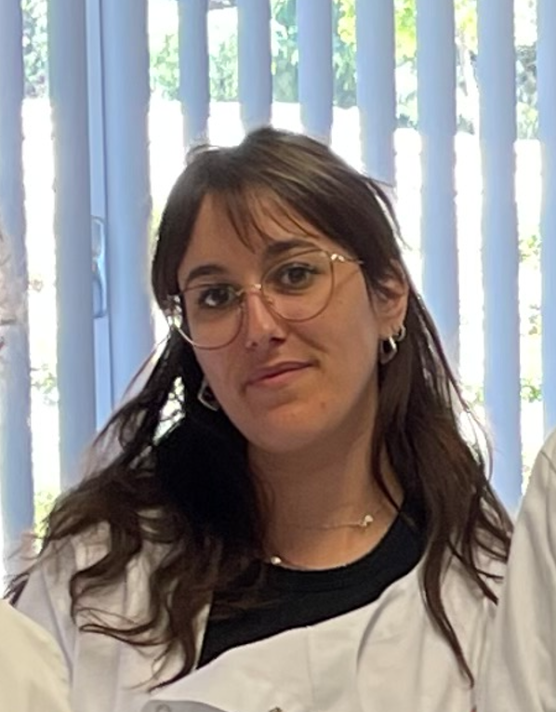
Aída Úbeda Trillo
Técnico de Laboratorio
Técnico superior en laboratorio de diagnóstico clínico en 2019. Lleva vinculada a la Unidad de Neumococos desde 2023 como técnico de laboratorio contratada. Anteriormente estuvo contratada en el Servicio de Microbiología y Urgencias del Hospital Infanta Sofía de Madrid.
-
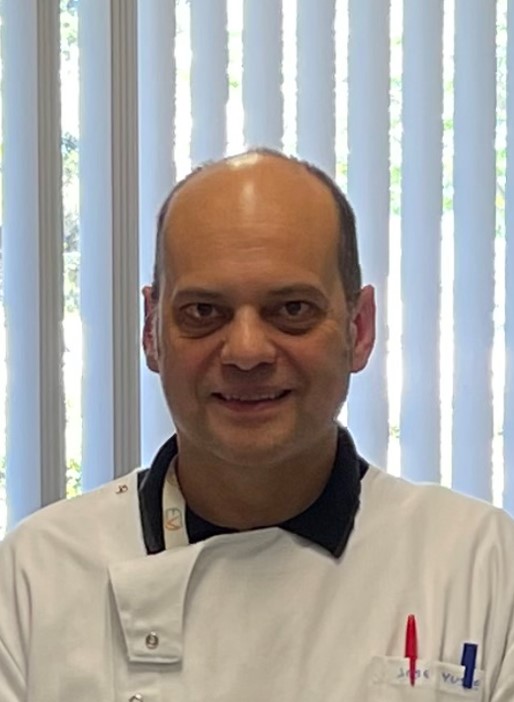
José Enrique Yuste Lobo
Científico Titular
ORCID code: 0000-0001-7996-0837
Licenciado en Farmacia en 1998 y Doctor en 2002 por la Universidad Complutense de Madrid. Realizó su tesis doctoral en el laboratorio de neumococos del Centro Nacional de Microbiología del ISCIII. Posteriormente trabajó durante 5 años en Londres, primero como Investigador Asociado en el Centre for Molecular Microbiology and Infection Biology de Imperial College hasta 2003 y luego en el Centre for Respiratory Research de University College hasta 2007. Tras esta etapa posdoctoral en Reino Unido, trabajó durante 3 años como Investigador Senior en el Centro de Investigaciones Biológicas del CSIC hasta 2010. Desde entonces trabaja como Científico Titular en la Unidad de Neumococos del CNM-ISCIII, siendo el responsable científico del laboratorio desde el año 2016. Es investigador principal del grupo CIBER de Enfermedades Respiratorias (CIBERES) CB06/06/0003 (https://www.ciberes.org/grupos/grupo-de-investigacion?id=18143)
-
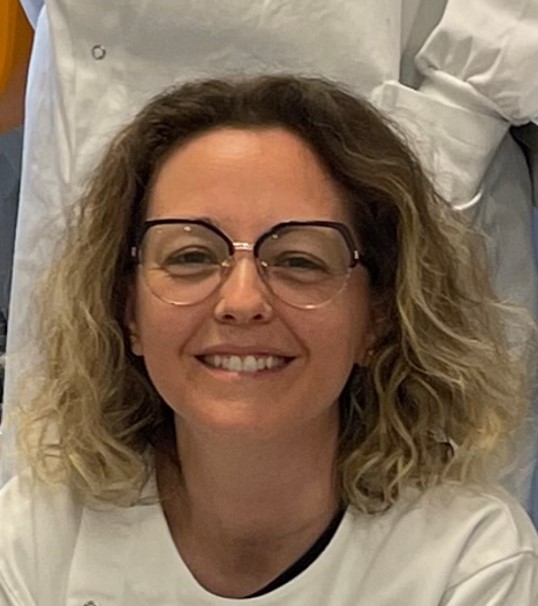
Mirian Domenech Luchas
Investigadora posdoctoral
ORCID code: 0000-0002-0942-8180
Licenciada en Ciencias Biológicas en 2005 y Doctora en 2012 por la Universidad Complutense de Madrid. Realizó su tesis doctoral en el Centro de Investigaciones Biológicas del CSIC bajo la dirección del Profesor Ernesto García y la Dra. Miriam Moscoso caracterizando el biofilm neumocócico y estudiando distintos antimicrobianos para prevenir y tratar las infecciones producidas por neumococo y otros patógenos. Posteriormente ha trabajado como investigadora junior para el CIBER de Enfermedades Respiratorias y para la empresa Investigación y Proyectos Microbiológicos realizando estudios sobre biofilms de patógenos respiratorios. A finales del 2018 se incorporó a la Unidad de Neumococos del Centro Nacional Microbiología del ISCIII, donde participa en las distintas labores de investigación y referencia de la Unidad y es profesora ayudante Doctor de la Facultad de Biología de la Universidad Complutense de Madrid.
-
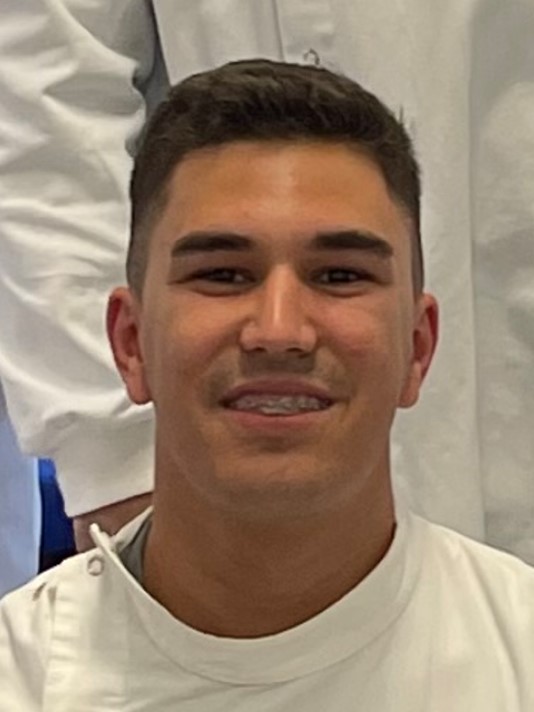
Julio Sempere García
Investigador Posdoctoral
ORCID code: 0000-0001-9340-6867
Graduado en Bioquímica por la Universidad Complutense de Madrid, donde posteriormente cursó estudios de Máster en Microbiología y Parasitología. Actualmente realiza el programa de doctorado en Microbiología y Parasitología. Lleva asociado a la Unidad de Neumococos desde 2017, donde realizó las prácticas extracurriculares de grado y posteriormente realizó su trabajo de fin de grado (2018) y trabajo de fin de máster (2019). En 2022 obtuvo el grado de Doctor y actualmente investiga biofilms de bacterias Gram positivas, la matriz de estos y cómo interaccionan con el sistema inmune. También trabaja en la interacción de diferentes cápsulas de Streptococcus pneumoniae con el sistema inmune y patogénesis de serotipos emergentes incluidos en las futuras vacunas antineumocócicas.
-
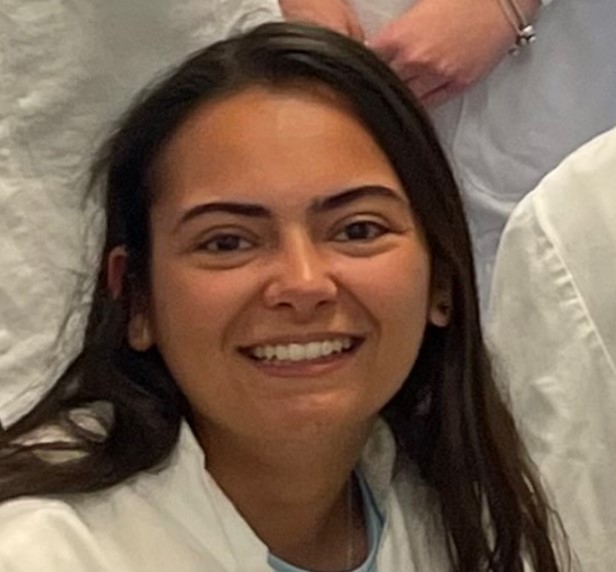
Covadonga Pérez García
Contratada predoctoral FPU
ORCID code: 0000-0002-5295-6480
Graduada en Biología por la Universidad Complutense de Madrid, donde posteriormente cursó estudios de Máster en Microbiología y Parasitología. Lleva vinculada a la Unidad de Neumococos desde 2019, donde realizó las prácticas extracurriculares de grado y posteriormente realizó su trabajo de fin de grado (2020) y trabajo de fin de máster (2021). En 2022 obtuvo beca predoctoral del programa FPU y actualmente investiga mecanismos de patogenicidad y protección de serotipos emergentes de neumococo.
-

Erick Joan Vidal Alcántara
Ayudante de Investigación
ORCID code: 0000-0001-8946-3754
Graduado en Biología por la Universidad Complutense de Madrid, y posteriormente cursó estudios de Máster en Microbiología aplicada a salud pública e investigación en enfermedades infecciosas por la Universidad de Alcalá de Henares. Lleva vinculado a la Unidad de Neumococos desde 2022 como ayudante de investigación y es personal de plantilla.
-
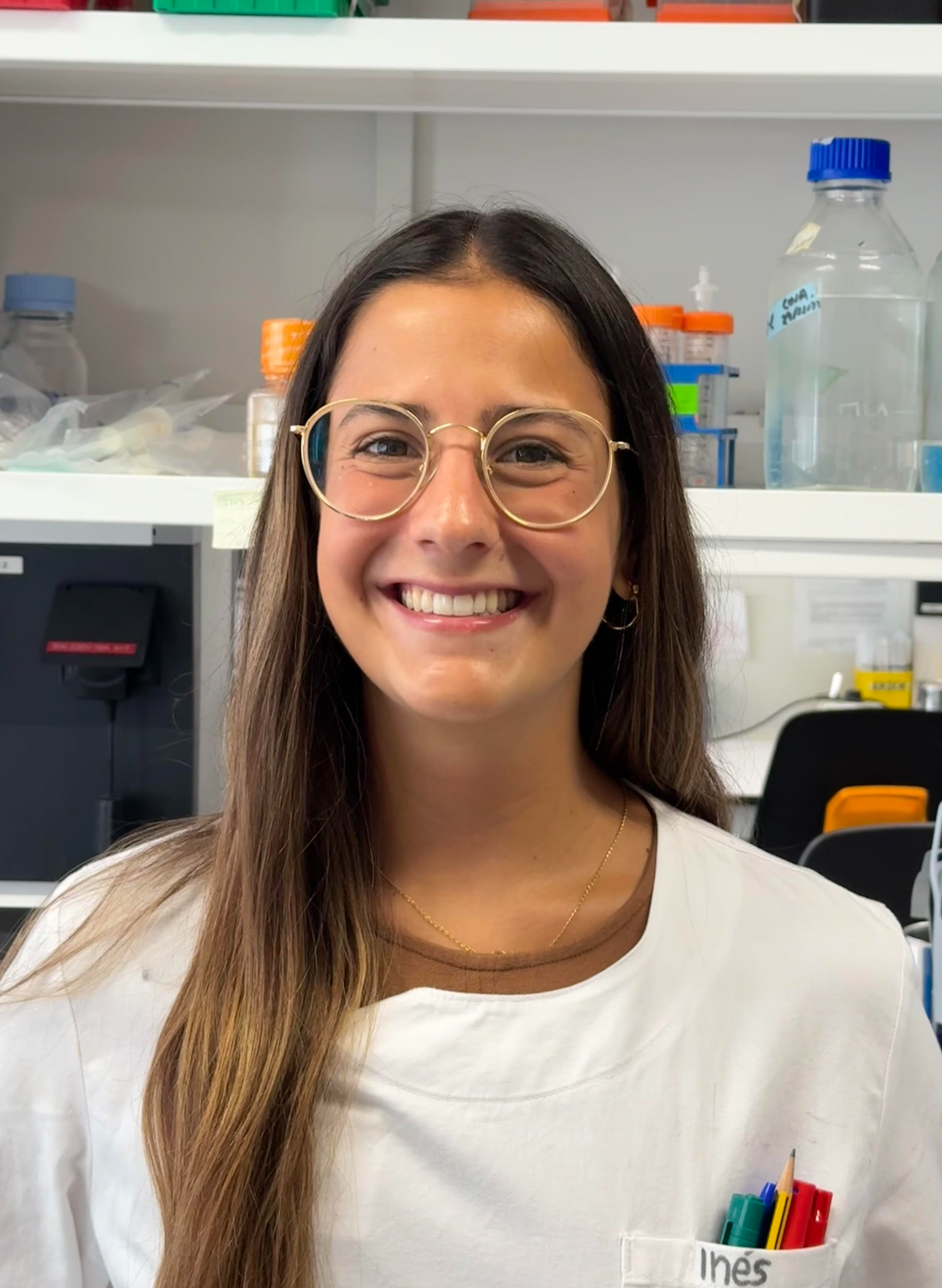
Inés Pareja Cerbán
Estudiante predoctoral CIBERES
ORCID code: 0009-0006-8015-7367
Graduada en Bioquímica por la Universidad de Málaga. Es contratada predoctoral del CIBER de Enfermedades Respiratorias (CIBERES) y en nuestro grupo está realizando su Tesis Doctoral en la caracterización de factores de virulencia de aislados prevalentes así como en el estudio y caracterización de nuevos antimicrobianos frente a bacterias respiratorias.
-

Mirella Llamosí Fornés
Contratada predoctoral
ORCID code: 0000-0002-4369-9558
Graduada en Biología por la Universidad Complutense de Madrid, donde posteriormente cursó estudios de Máster en Microbiología y Parasitología. Está realizando su Tesis Doctoral en el campo de la resistencia antibiótica así como en la búsqueda y caracterización de nuevos antimicrobianos con especial interés en lograr compuestos activos frente a infecciones producidas por biofilms.


List of staff
Additional Information
The research group that makes up the Helminth Reference and Research Laboratory (RIHE) of the CNM-ISCIII works on different aspects of helminth immunobiology, taking advantage of recombinant DNA approaches, omics sciences, bioinformatics tools and biochemical assays. The research is basically oriented towards:
- The biochemical and molecular characterization of parasitic antigens of interest.
- The analysis of the immune response produced in the host against these antigens and the molecular mechanisms of these diseases.
- To the development and improvement of diagnostic systems.
- The definition of helminth allergenic candidates.
- The design of possible vaccines and participation in helminthosis control and surveillance strategies.
- Search for antiparasitic drugs.
- Research into new therapeutic alternatives for autoimmune diseases using helminth molecules.
The group works on helminthosis projects caused by species of Taenia spp., Fasciola spp., Trichinella spp., Filarias, O. volvulus, Anisakis spp., Ancylostoma spp., Opisthorchis spp., Schistosoma spp. and with experimental models such as Nippostrongylus brasiliensis and Trichuris muris, among others.
The research group that makes up the Helminth Reference and Research Laboratory (RIHE) of the CNM-ISCIII works on different aspects of helminth immunobiology, taking advantage of recombinant DNA approaches, omics sciences, bioinformatics tools and biochemical assays. The research is basically oriented towards:
- The biochemical and molecular characterization of parasitic antigens of interest.
- The analysis of the immune response produced in the host against these antigens and the molecular mechanisms of these diseases.
- To the development and improvement of diagnostic systems.
- The definition of helminth allergenic candidates.
- The design of possible vaccines and participation in helminthosis control and surveillance strategies.
- Search for antiparasitic drugs.
- Research into new therapeutic alternatives for autoimmune diseases using helminth molecules.
The group works on helminthosis projects caused by species of Taenia spp., Fasciola spp., Trichinella spp., Filarias, O. volvulus, Anisakis spp., Ancylostoma spp., Opisthorchis spp., Schistosoma spp. and with experimental models such as Nippostrongylus brasiliensis and Trichuris muris, among others.