



We protect your health through science
Investigation
Reference and Research on Helminths
Research Lines
Content with Investigacion .
Neumococos
Vigilancia epidemiológica de los serotipos y genotipos que causan enfermedad neumocócica invasiva (ENI) en España. Caracterización molecular de factores de virulencia de neumococo. Identificación y caracterización de proteínas de neumococo candidatas a vacuna. Evaluación de mecanismos de evasión de la respuesta inmune en Streptococcus pneumoniae. Impacto de los biofilms bacterianos en la persistencia del tracto respiratorio. Mecanismos de cronicidad de aislados clínicos de neumococo en pacientes con enfermedad pulmonar obstructiva crónica.
Research projects
Content with Investigacion .
1: Título del proyecto: Desarrollo de enzibióticos para combatir infecciones en pacientes con fibrosis quística provocadas por los patógenos Pseudomonas aeruginosa y Staphylococcus aureus: CF-TREAT
Referencia: CPP2022-009574 / MPY 375/23
Agencia Financiadora: Agencia Estatal de Investigación. MICINN.

Fecha Inicio: 01/12/2023
Fecha Fin: 30/11/2026
Financiación: 238.938 Euros
Investigadores principales: Roberto Díez Martínez, José E. Yuste Lobo y Pilar García Suárez
2: Título del proyecto: Desarrollo de enzibióticos para combatir infecciones humanas producidas por Enterococcus faecium resistente a vancomicina (ANTI‐VRE).
Proyecto CPP2021-009054 financiado por MICIU/AEI /10.13039/501100011033 y por la Unión Europea NextGenerationEU/ PRTR

Investigadores principales: Roberto Díez Martínez, Jose Yuste Lobo y Mirian Domenech
Periodo: 18/11/2022 - 17/11/2025
Cuantía total: 231.455 €
3: Título del proyecto: Mecanismos de virulencia en patógenos respiratorios.
Entidad financiadora: Ministerio de Ciencia e Innovación, Agencia Estatal de Investigación (Convocatoria «Proyectos I+D+I» 2020 - Modalidades «Retos Investigación» y «Generación de Conocimiento»). Referencia: PID2020-119298RB-I00

Investigador principal: Jose Yuste Lobo
Periodo: 01/09/2021 - 30/08/2024
Cuantía total: 121.000 €
4: Título del proyecto: Efectividad de la vacuna antineumocócica conjugada 13-valente frente a la hospitalización por neumonía adquirida en la comunidad en adultos de 60 años o mayores, mediante un estudio de casos y controles modificado. Estudio CIBELES.
Investigadores principales: Jose Yuste Lobo y Ángel Gil de Miguel
Entidad financiadora: PFIZER. Referencia: MVP 249/20
Periodo: 23/02/2021 - 22/02/2025
Cuantía total: 168.000 €
5: Título del proyecto: Evolution of Invasive Pneumococcal Disease in Spain with special focus on the pathogenesis of serotypes 3, 8, 11A, 19A, 22F and 33F. Investigadores principales: Jose Yuste Lobo y Mirian Domenech.
Entidad financiadora: Merck Sharp & Dohme USA. Referencia: MVP 132/21
Período: 16/06/2021 - 15/12/2023
Cuantía total: 157.448€
6: Título del proyecto: Mecanismos de patogenicidad y protección en bacterias Gram-positivas causantes de enfermedad respiratoria y bacteriemia
Investigador principal: Jose Yuste Lobo
Entidad financiadora: MINECO. Referencia: SAF2017-83388-R
Periodo: 31/12/2017 - 30/06/2021
Cuantía total: 145.200 €
7: Título del proyecto: Characterization of susceptibility to cefditoren investigating penicillin resistant clinical isolates of Streptococcus pneumoniae.
Investigadores: Jose Yuste Lobo y Mirian Domenech Lucas
Entidad financiadora: Tedec Meiji Farma, S.A. Referencia: MVP 119/20
Periodo: 11/07/2020 – 10-07-2022
Cuantía total: 76.517 €
8: Título del proyecto: Impact of clinical isolates of serotypes 22F and 33F in the epidemiology and pathogenesis of Streptococcus pneumoniae.
Investigador principal: Jose Yuste Lobo
Entidad financiadora: Merck Sharp & Dohme España, S.A. Referencia: MVE 213/18
Periodo: 10/05/2018 - 30/05/2021
Cuantía total: 157.604 €
Publications
Suppression of CD4+ T lymphocyte activation in vitro and experimental encephalomyelitis in vivo by the phosphatidyl inositol 3-kinase inhibitor PIK-75.
3. Acosta YY, Montes-Casado M, Aragoneses-Fenoll L, Dianzani U, Portoles P, Rojo JM. Suppression of CD4+ T lymphocyte activation in vitro and experimental encephalomyelitis in vivo by the phosphatidyl inositol 3-kinase inhibitor PIK-75. Int. J. Immunopathol. Pharmacol. 2014 Jan-Mar;27(1):53-67.
PUBMED DOIHorizontal gene transmission of the cfr gene to MRSA and Enterococcus: role of Staphylococcus epidermidis as a reservoir and alternative pathway for the spread of linezolid resistance.
Horizontal gene transmission of the cfr gene to MRSA and Enterococcus: role of Staphylococcus epidermidis as a reservoir and alternative pathway for the spread of linezolid resistance. Cafini F, Nguyen le TT, Higashide M, Román F, Prieto J, Morikawa K. J Antimicrob Chemother. 2016 Mar;71(3):587-92.
PUBMEDFocusing on Gordonia Infections: Distribution, Antimicrobial Susceptibilities and Phylogeny
Pino-Rosa S, Medina-Pascual MJ, Carrasco G, Garrido N, Villalón P, Valiente M, Valdezate S. (2023). Focusing on Gordonia Infections: Distribution, Antimicrobial Susceptibilities and Phylogeny. Antibiotics (Basel). 26;12(11):1568
PUBMED DOIAntibody responses to chimeric peptides derived from parasite antigens in mice and other animal species.
Orbegozo-Medina RA, Martínez-Sernández V, Folgueira I, Mezo M, González-Warleta M, Perteguer MJ, Romarís F, Leiro JM, Ubeira FM. Antibody responses to chimeric peptides derived from parasite antigens in mice and other animal species. Mol Immunol. 2018 Dec 17;106:1-11.
PUBMED DOIRole of Toll-like receptor 4 in intravascular hemolisis-mediated injury
Vázquez-Carballo C, Herencia C, Guerrero-Hue M, García-Caballero C, Rayego-Mateos S, Morgado-Pascual JL, Opazo-Rios L, González-Guerrero C, Vallejo-Mudarra M, Cortegano I, Gaspar ML, de Andrés B, Egido J, Moreno JA. J Pathol. 2022 Nov; 258(3): 236–249.
PUBMED DOICarbapenemase-Producing Klebsiella pneumoniae in COVID-19 Intensive Care Patients: Identification of IncL-VIM-1 Plasmid in Previously Non-Predominant Sequence Types.
3. Carbapenemase-Producing Klebsiella pneumoniae in COVID-19 Intensive Care Patients: Identification of IncL-VIM-1 Plasmid in Previously Non-Predominant Sequence Types. Autores: Cañada-García JE, Ramírez de Arellano E, Jiménez-Orellana M, Viedma E, Sánchez A, Alhambra A, Villa J, Delgado-Iribarren A, Bautista V, Lara N, García-Cobos S, Aracil B, Cercenado E, Pérez-Vázquez M, Oteo-Iglesias J. Revista: Antibiotics (Basel). 2023 Jan 6;12(1):107.
DOIContent with Investigacion .
-
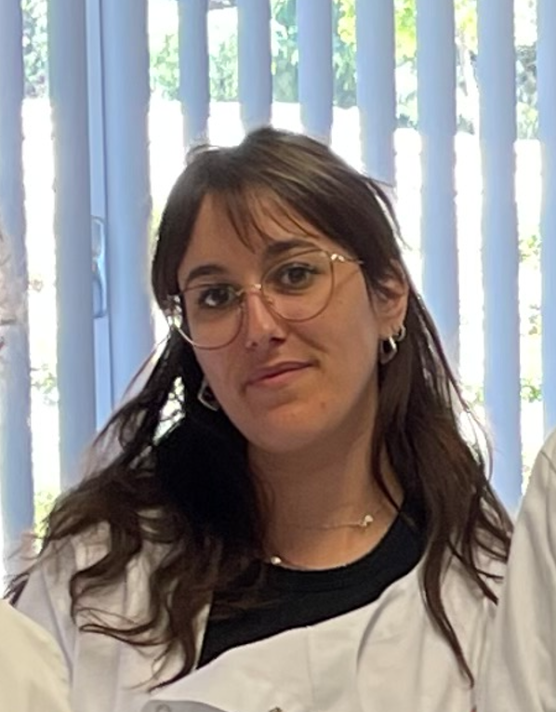
Aída Úbeda Trillo
Técnico de Laboratorio
Técnico superior en laboratorio de diagnóstico clínico en 2019. Lleva vinculada a la Unidad de Neumococos desde 2023 como técnico de laboratorio contratada. Anteriormente estuvo contratada en el Servicio de Microbiología y Urgencias del Hospital Infanta Sofía de Madrid.
-

José Enrique Yuste Lobo
Científico Titular
ORCID code: 0000-0001-7996-0837
Licenciado en Farmacia en 1998 y Doctor en 2002 por la Universidad Complutense de Madrid. Realizó su tesis doctoral en el laboratorio de neumococos del Centro Nacional de Microbiología del ISCIII. Posteriormente trabajó durante 5 años en Londres, primero como Investigador Asociado en el Centre for Molecular Microbiology and Infection Biology de Imperial College hasta 2003 y luego en el Centre for Respiratory Research de University College hasta 2007. Tras esta etapa posdoctoral en Reino Unido, trabajó durante 3 años como Investigador Senior en el Centro de Investigaciones Biológicas del CSIC hasta 2010. Desde entonces trabaja como Científico Titular en la Unidad de Neumococos del CNM-ISCIII, siendo el responsable científico del laboratorio desde el año 2016. Es investigador principal del grupo CIBER de Enfermedades Respiratorias (CIBERES) CB06/06/0003 (https://www.ciberes.org/grupos/grupo-de-investigacion?id=18143)
-

Mirian Domenech Luchas
Investigadora posdoctoral
ORCID code: 0000-0002-0942-8180
Licenciada en Ciencias Biológicas en 2005 y Doctora en 2012 por la Universidad Complutense de Madrid. Realizó su tesis doctoral en el Centro de Investigaciones Biológicas del CSIC bajo la dirección del Profesor Ernesto García y la Dra. Miriam Moscoso caracterizando el biofilm neumocócico y estudiando distintos antimicrobianos para prevenir y tratar las infecciones producidas por neumococo y otros patógenos. Posteriormente ha trabajado como investigadora junior para el CIBER de Enfermedades Respiratorias y para la empresa Investigación y Proyectos Microbiológicos realizando estudios sobre biofilms de patógenos respiratorios. A finales del 2018 se incorporó a la Unidad de Neumococos del Centro Nacional Microbiología del ISCIII, donde participa en las distintas labores de investigación y referencia de la Unidad y es profesora ayudante Doctor de la Facultad de Biología de la Universidad Complutense de Madrid.
-
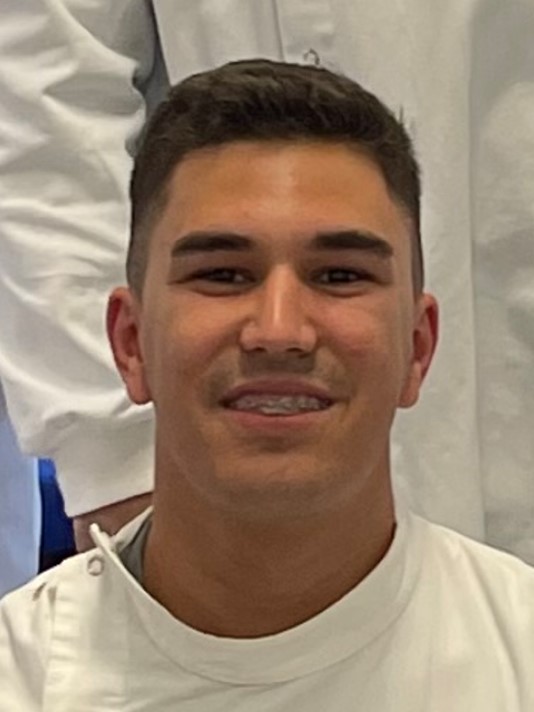
Julio Sempere García
Investigador Posdoctoral
ORCID code: 0000-0001-9340-6867
Graduado en Bioquímica por la Universidad Complutense de Madrid, donde posteriormente cursó estudios de Máster en Microbiología y Parasitología. Actualmente realiza el programa de doctorado en Microbiología y Parasitología. Lleva asociado a la Unidad de Neumococos desde 2017, donde realizó las prácticas extracurriculares de grado y posteriormente realizó su trabajo de fin de grado (2018) y trabajo de fin de máster (2019). En 2022 obtuvo el grado de Doctor y actualmente investiga biofilms de bacterias Gram positivas, la matriz de estos y cómo interaccionan con el sistema inmune. También trabaja en la interacción de diferentes cápsulas de Streptococcus pneumoniae con el sistema inmune y patogénesis de serotipos emergentes incluidos en las futuras vacunas antineumocócicas.
-
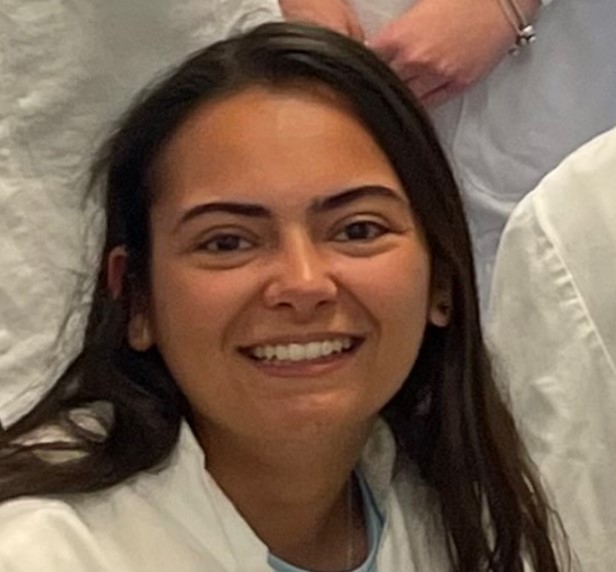
Covadonga Pérez García
Contratada predoctoral FPU
ORCID code: 0000-0002-5295-6480
Graduada en Biología por la Universidad Complutense de Madrid, donde posteriormente cursó estudios de Máster en Microbiología y Parasitología. Lleva vinculada a la Unidad de Neumococos desde 2019, donde realizó las prácticas extracurriculares de grado y posteriormente realizó su trabajo de fin de grado (2020) y trabajo de fin de máster (2021). En 2022 obtuvo beca predoctoral del programa FPU y actualmente investiga mecanismos de patogenicidad y protección de serotipos emergentes de neumococo.
-

Erick Joan Vidal Alcántara
Ayudante de Investigación
ORCID code: 0000-0001-8946-3754
Graduado en Biología por la Universidad Complutense de Madrid, y posteriormente cursó estudios de Máster en Microbiología aplicada a salud pública e investigación en enfermedades infecciosas por la Universidad de Alcalá de Henares. Lleva vinculado a la Unidad de Neumococos desde 2022 como ayudante de investigación y es personal de plantilla.
-
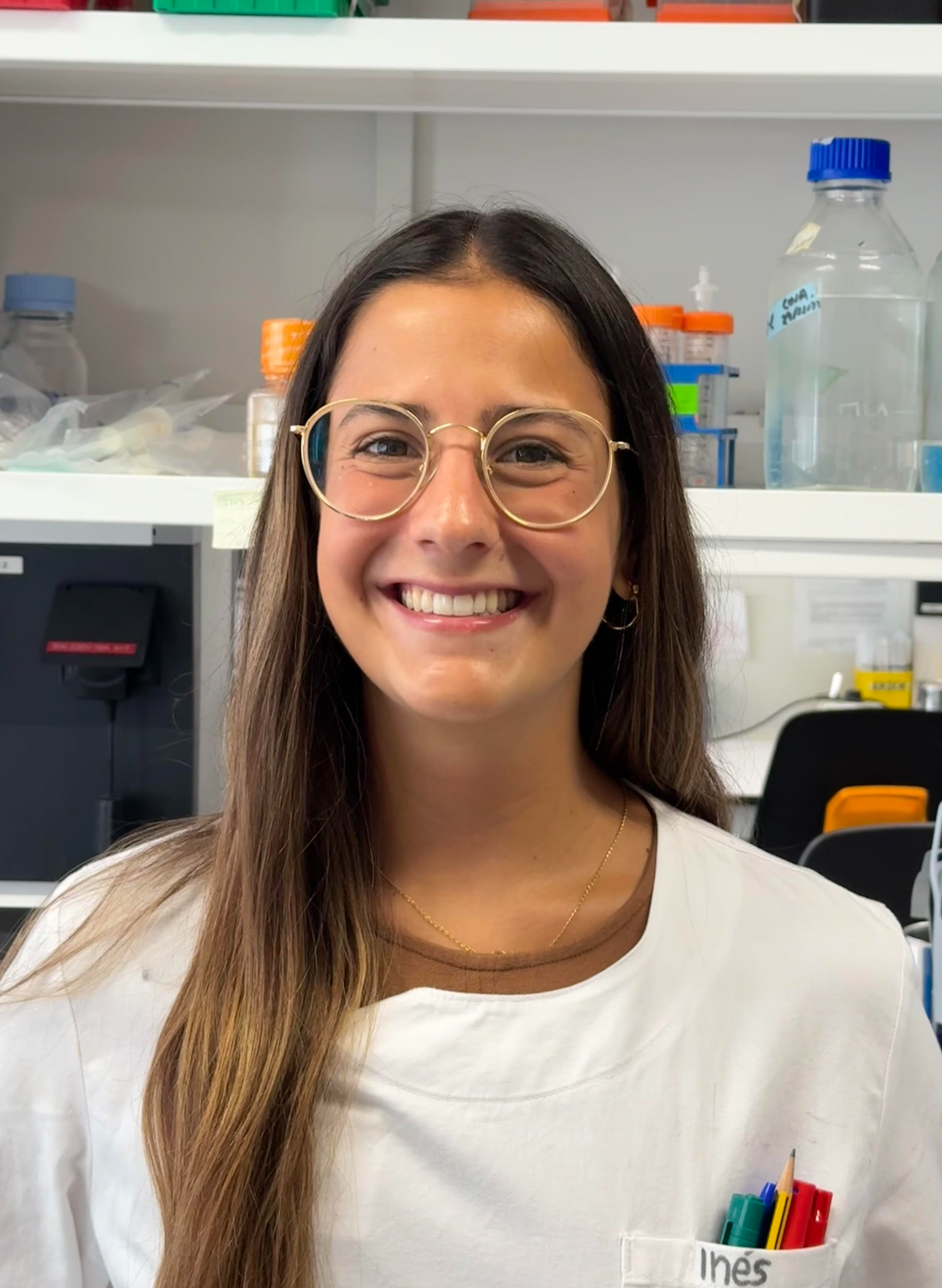
Inés Pareja Cerbán
Estudiante predoctoral CIBERES
ORCID code: 0009-0006-8015-7367
Graduada en Bioquímica por la Universidad de Málaga. Es contratada predoctoral del CIBER de Enfermedades Respiratorias (CIBERES) y en nuestro grupo está realizando su Tesis Doctoral en la caracterización de factores de virulencia de aislados prevalentes así como en el estudio y caracterización de nuevos antimicrobianos frente a bacterias respiratorias.
-

Mirella Llamosí Fornés
Contratada predoctoral
ORCID code: 0000-0002-4369-9558
Graduada en Biología por la Universidad Complutense de Madrid, donde posteriormente cursó estudios de Máster en Microbiología y Parasitología. Está realizando su Tesis Doctoral en el campo de la resistencia antibiótica así como en la búsqueda y caracterización de nuevos antimicrobianos con especial interés en lograr compuestos activos frente a infecciones producidas por biofilms.


List of staff
Additional Information
The research group that makes up the Helminth Reference and Research Laboratory (RIHE) of the CNM-ISCIII works on different aspects of helminth immunobiology, taking advantage of recombinant DNA approaches, omics sciences, bioinformatics tools and biochemical assays. The research is basically oriented towards:
- The biochemical and molecular characterization of parasitic antigens of interest.
- The analysis of the immune response produced in the host against these antigens and the molecular mechanisms of these diseases.
- To the development and improvement of diagnostic systems.
- The definition of helminth allergenic candidates.
- The design of possible vaccines and participation in helminthosis control and surveillance strategies.
- Search for antiparasitic drugs.
- Research into new therapeutic alternatives for autoimmune diseases using helminth molecules.
The group works on helminthosis projects caused by species of Taenia spp., Fasciola spp., Trichinella spp., Filarias, O. volvulus, Anisakis spp., Ancylostoma spp., Opisthorchis spp., Schistosoma spp. and with experimental models such as Nippostrongylus brasiliensis and Trichuris muris, among others.
The research group that makes up the Helminth Reference and Research Laboratory (RIHE) of the CNM-ISCIII works on different aspects of helminth immunobiology, taking advantage of recombinant DNA approaches, omics sciences, bioinformatics tools and biochemical assays. The research is basically oriented towards:
- The biochemical and molecular characterization of parasitic antigens of interest.
- The analysis of the immune response produced in the host against these antigens and the molecular mechanisms of these diseases.
- To the development and improvement of diagnostic systems.
- The definition of helminth allergenic candidates.
- The design of possible vaccines and participation in helminthosis control and surveillance strategies.
- Search for antiparasitic drugs.
- Research into new therapeutic alternatives for autoimmune diseases using helminth molecules.
The group works on helminthosis projects caused by species of Taenia spp., Fasciola spp., Trichinella spp., Filarias, O. volvulus, Anisakis spp., Ancylostoma spp., Opisthorchis spp., Schistosoma spp. and with experimental models such as Nippostrongylus brasiliensis and Trichuris muris, among others.