



We protect your health through science
Investigation
Reference and Research on Helminths
Research projects
Content with Investigacion .
PROYECTOS VIGENTES
Título del proyecto: "Vesículas extracelulares y otras moléculas de parásitos para el tratamiento de la enfermedad inflamatoria intestinal: PARATREAT-IBD"
Referencia: Proyecto PID2022-137661OB-I00 (MPY 341/23) financiado por MCIN/AEI /10.13039/501100011033/ y por FEDER Una manera de hacer Europa
Fecha Inicio: 01/12/2023
Fecha Fin: 31/08/2026
Financiación: 162.500 Euros
Investigador principal: Javier Sotillo
Agencia Financiadora: Agencia Estatal de Investigación. MICINN.

Título del proyecto: "Desarrollo de nuevos métodos diagnósticos y de seguimiento de la infección por schistosoma haematobium"
Referencia: PI23CIII00034 / MPY 386/23
Fecha Inicio: 01/01/2024
Fecha Fin: 31/12/2026
Financiación: 131.500 Euros
Investigador principal: Javier Sotillo
Agencia Financiadora: Instituto de Salud Carlos III (ISCIII/AESI)

Título del proyecto: "Desarrollo de herramientas para el control de la teniosis / cisticercosis en zonas endémicas y vigilancia de las helmintosis humanas emergentes en España"
Referencia: PI22CIII/00010
Fecha Inicio: 01/01/2023
Fecha Fin: 31/12/2025
Financiación: 80.000 Euros
Investigador principal: María Jesús Perteguer
Agencia Financiadora: Instituto de Salud Carlos III (ISCIII/AESI)
PROYECTOS PASADOS
Título del proyecto: "PERITAS: Molecular epidemiological studies on pathways of transmission and longlasting capacity building to prevent cystic echinococcosis infection."
Coordinador: Adriano Casulli. IP of ISCIII: Maria J. Perteguer.
Entidad financiadora: EULAC Health JOINT CALL on Research and Innovation 016-2017
Periodo: 01/03/2019-31/12/2022.
Cuantía total: 1.083.580 €.
Título del proyecto: "Producción de antígenos y controles positivos recombinantes para el desarrollo y la estandarización de nuevos ensayos serológicos aplicados al diagnóstico y control de helmintosis olvidadas. "
Investigador principal: María Jesús Perteguer.
Entidad financiadora: ISCIII-AESI. Instituto de Salud Carlos III
Periodo: 02/11/2018 - 31/06/2022.
Cuantía total: 78.050 €.
Título del proyecto: "Diagnóstico serológico diferencial de helmintiasis asociadas a eosinofilia: desarrollo de ensayos multianalito (xMAP) con antígenos recombinantes de especies de interés clínico"
Investigador principal: María Jesús Perteguer.
Entidad financiadora: ISCIII-AESI. Instituto de Salud Carlos III
Periodo: 01/01/2015 - 31/12/2018 .
Cuantía total: 91.000 €.
Publications
Immunoescape of HIV-1 in Env-EL9 CD8 + T cell response restricted by HLA-B*14:02 in a Non progressor who lost twenty-seven years of HIV-1 control
Moyano A, Blanch-Lombarte O, Tarancon-Diez L, Pedreño-Lopez N, Arenas M, Alvaro T, Casado C, Olivares I, Vera M, Rodriguez C, Del Romero J, López-Galíndez C, Ruiz-Mateos E, Prado JG, Pernas M. Retrovirology. 2022 Mar 26,19(1):6
PUBMED DOIThe Characteristics of the HIV-1 Env Glycoprotein Are Linked with Viral Pathogenesis
Pérez-Yanes S, Pernas M, Marfil S, Cabrera-Rodríguez R, Ortiz R, Urrea V, Rovirosa C, Estévez-Herrera J, Olivares I, Casado C, Lopez-Galindez C, Blanco J, Valenzuela-Fernández A. Front Microbiol. 2022 Mar 24, 3:763039.
PUBMED DOIAnalysis of HIV-1 “in vitro” evolution through 3D real fitness landscapes constructed by Self Organizing Maps.
Ramón Lorenzo‐Redondo, Soledad Delgado, Federico Morán, and Cecilio Lopez‐Galindez. Analysis of HIV-1 “in vitro” evolution through 3D real fitness landscapes constructed by Self Organizing Maps. (2014) PLoS One. 9(2): e88579.
PUBMED DOICharacterizing carbapenemase-producing Escherichia coli isolates from Spain: high genetic heterogeneity and wide geographical spread.
1. Characterizing carbapenemase-producing Escherichia coli isolates from Spain: high genetic heterogeneity and wide geographical spread. Dahdouh E, Gómez-Marcos L, Cañada-García JE, de Arellano ER, Sánchez-García A, Sánchez-Romero I, López-Urrutia L, de la Iglesia P, Gonzalez-Praetorius A, Sotelo J, Valle-Millares D, Alonso-González I, Bautista V, Lara N, García-Cobos S, Cercenado E, Aracil B, Oteo-Iglesias J, Pérez-Vázquez M; Spanish Eco-Carba Study Group. Revista: Front Cell Infect Microbiol 2024 May 16;14:1390966.
PUBMED DOIAn increase in erythromycin resistance in methicillin-susceptible Staphylococcus aureus from blood correlates with the use of macrolide/lincosamide/streptogramin antibiotics. EARS-Net Spain (2004-2020).
4. An increase in erythromycin resistance in methicillin-susceptible Staphylococcus aureus from blood correlates with the use of macrolide/lincosamide/streptogramin antibiotics. EARS-Net Spain (2004-2020). Autores: El Mammery A, Ramírez de Arellano E, Cañada-García JE, Cercenado E, Villar-Gómara L, Casquero-García V, García-Cobos S, Lepe JA, Ruiz de Gopegui Bordes E, Calvo-Montes J, Larrosa Escartín N, Cantón R, Pérez-Vázquez M, Aracil B, Oteo-Iglesias J. Revista: Front Microbiol. 2023 Sep 26;14:1220286.
PUBMED DOIWidespread Detection of Yersiniabactin Gene Cluster and Its Encoding Integrative Conjugative Elements (ICEKp) among Nonoutbreak OXA-48-Producing Klebsiella pneumoniae Clinical Isolates from Spain and the Netherlands.
11. Widespread Detection of Yersiniabactin Gene Cluster and Its Encoding Integrative Conjugative Elements (ICEKp) among Nonoutbreak OXA-48-Producing Klebsiella pneumoniae Clinical Isolates from Spain and the Netherlands. Autores: Jati AP, Sola-Campoy PJ, Bosch T, Schouls LM, Hendrickx APA, Bautista V, Lara N, Raangs E, Aracil B, Rossen JWA, Friedrich AW, Navarro Riaza AM, Cañada-García JE, Ramírez de Arellano E, Oteo-Iglesias J, Pérez-Vázquez M, García-Cobos S; Dutch and Spanish Collaborative Working Groups on Surveillance on Carbapenemase-Producing Enterobacterales; Sánchez AMF, Pulido MA, Armas M. Revista: Microbiol Spectr. 2023 Aug 17;11(4):e0471622.
PUBMED DOIClinical, microbiological, and molecular characterization of pediatric invasive infections by Streptococcus pyogenes in Spain in a context of global outbreak.
2. Clinical, microbiological, and molecular characterization of pediatric invasive infections by Streptococcus pyogenes in Spain in a context of global outbreak. Autores: Ramírez de Arellano E, Saavedra-Lozano J, Villalón P, Jové-Blanco A, Grandioso D, Sotelo J, Gamell A, González-López JJ, Cervantes E, Gónzalez MJ, Rello-Saltor V, Esteva C, Sanz-Santaeufemia F, Yagüe G, Manzanares Á, Brañas P, Ruiz de Gopegui E, Carrasco-Colom J, García F, Cercenado E, Mellado I, Del Castillo E, Pérez-Vazquez M, Oteo-Iglesias J, Calvo C; Spanish PedGAS-Net/CIBERINFEC GAS Study Group. Revista: mSphere. 2024 Mar 26;9(3):e0072923.
PUBMED DOIContent with Investigacion .
-

Sara Vázquez Ávila
Técnico de Laboratorio
Obtuve mi título como Técnico de Laboratorio Clínico y Biomédico en el año 2020 y en el 2021obtuve el Grado Superior de Anatomía Patológica y Citodiagnóstico. Trabajé en el Centro Andaluz de Biología Molecular y Medicina Regenerativa (Sevilla) y en el Departamento de Farmacología de la Facultad de Medicina (Universidad Complutense de Madrid). Actualmente soy Técnico de Laboratorio en el Laboratorio de Helmintos del CNM (ISCIII).
-
Maria Jesús Perteguer Prieto
Investigadora Titular, Jefa de grupo
-
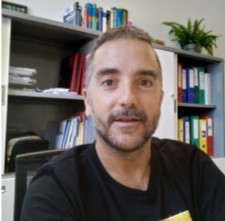
Javier Sotillo Gallego
Científico Titular
ORCID code: 0000-0002-1443-7233
En el año 2011 obtuve mi título de doctor “cum laude” por la Universidad de Valencia. Durante mi etapa postdoctoral en la James Cook University en Australia (2012-2019) me especialicé en estudiar las interacciones parásito-hospedador usando diferentes técnicas ómicas. En 2019 volví España y comencé a trabajar en el Laboratorio de Helmintos del CNM (ISCIII) primero como Investigador Miguel Servet y más adelante como Investigador Ramón y Cajal. Actualmente soy Científico Titular en el mismo laboratorio.
-

Ana Hernández González
Laboral Fijo Doctor
ORCID code: 0000-0001-6762-8175
Licenciada en Biología y doctora en Enfermedades Tropicales por la Universidad de Salamanca. Puestos ocupados con anterioridad: investigadora predoctoral en el IRNASA-CSIC (contrato JAE predoc), investigadora postdoctoral en el CNM (contrato Sara Borrell) e investigadora contratada como técnico superior en el CNM (RICET). Actualmente, personal Laboral Fijo Doctor en el laboratorio de Helmintos del CNM.
-
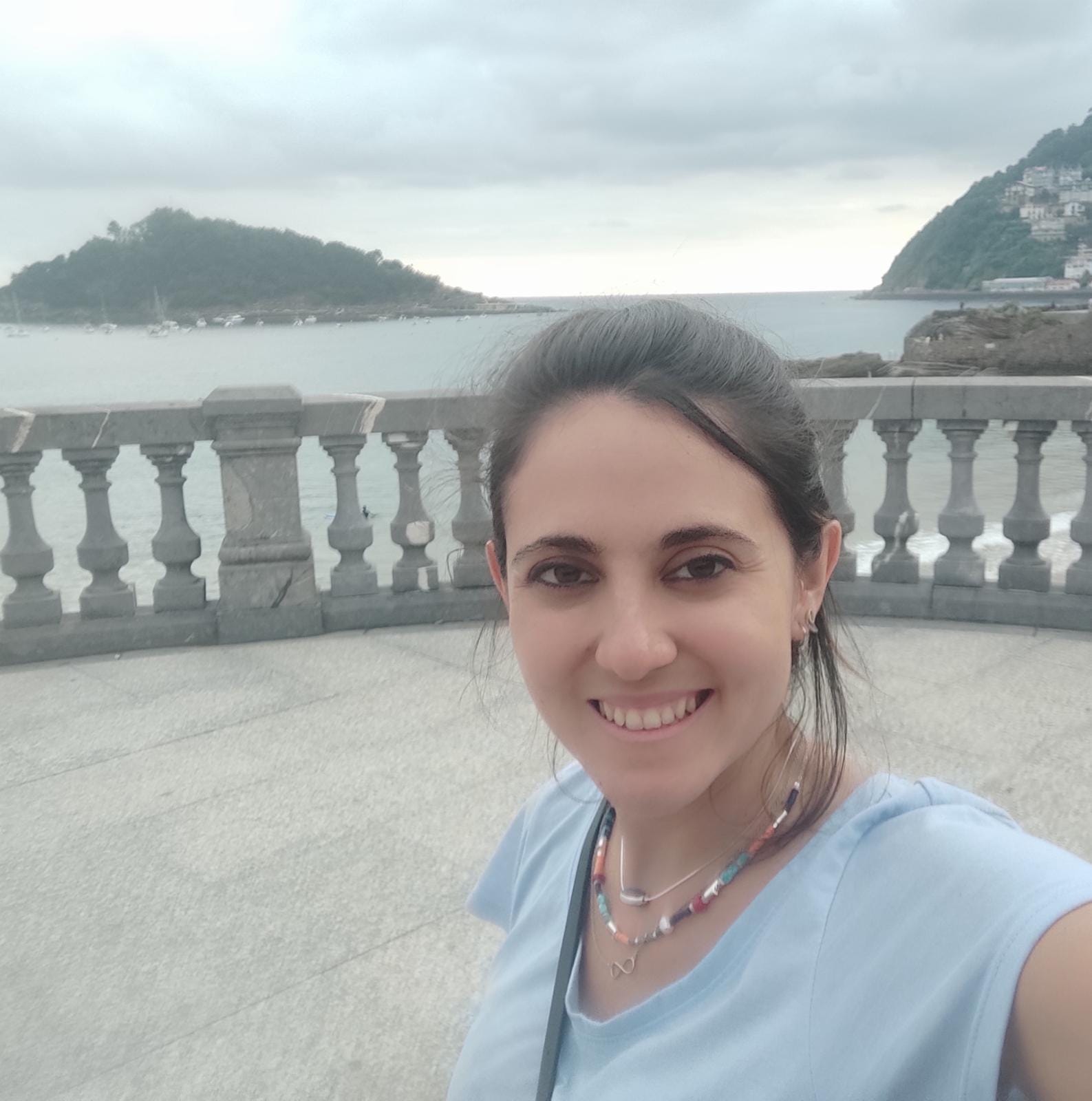
Esther Rodríguez Pérez
Técnico de Laboratorio
ORCID code: 0000-0002-3680-7733
Obtuve mi título como Graduada en Biología Sanitaria en el año 2015 y en el año 2019 obtuve el Grado Superior de Laboratorio de Diagnóstico Clínico. De 2019 a 2022 trabajé en el Museo Nacional de Ciencias Naturales (MNCN-CSIC), en el Departamento de Biogeoquímica y Ecología Microbiana. Actualmente trabajo como Técnico de Laboratorio en el Laboratorio de Helmintos del CNM (ISCIII).
-

Lourdes Castro Companioni
Ayudante de Investigación
ORCID code: 0009-0003-2746-4067
Bióloga sanitaria graduada en la Universidad de Alcalá de Henares (UAH), con master de Microbiología y Salud pública en la UAH en colaboración con el ISCIII.


List of staff
Additional Information
The research group that makes up the Helminth Reference and Research Laboratory (RIHE) of the CNM-ISCIII works on different aspects of helminth immunobiology, taking advantage of recombinant DNA approaches, omics sciences, bioinformatics tools and biochemical assays. The research is basically oriented towards:
- The biochemical and molecular characterization of parasitic antigens of interest.
- The analysis of the immune response produced in the host against these antigens and the molecular mechanisms of these diseases.
- To the development and improvement of diagnostic systems.
- The definition of helminth allergenic candidates.
- The design of possible vaccines and participation in helminthosis control and surveillance strategies.
- Search for antiparasitic drugs.
- Research into new therapeutic alternatives for autoimmune diseases using helminth molecules.
The group works on helminthosis projects caused by species of Taenia spp., Fasciola spp., Trichinella spp., Filarias, O. volvulus, Anisakis spp., Ancylostoma spp., Opisthorchis spp., Schistosoma spp. and with experimental models such as Nippostrongylus brasiliensis and Trichuris muris, among others.
The research group that makes up the Helminth Reference and Research Laboratory (RIHE) of the CNM-ISCIII works on different aspects of helminth immunobiology, taking advantage of recombinant DNA approaches, omics sciences, bioinformatics tools and biochemical assays. The research is basically oriented towards:
- The biochemical and molecular characterization of parasitic antigens of interest.
- The analysis of the immune response produced in the host against these antigens and the molecular mechanisms of these diseases.
- To the development and improvement of diagnostic systems.
- The definition of helminth allergenic candidates.
- The design of possible vaccines and participation in helminthosis control and surveillance strategies.
- Search for antiparasitic drugs.
- Research into new therapeutic alternatives for autoimmune diseases using helminth molecules.
The group works on helminthosis projects caused by species of Taenia spp., Fasciola spp., Trichinella spp., Filarias, O. volvulus, Anisakis spp., Ancylostoma spp., Opisthorchis spp., Schistosoma spp. and with experimental models such as Nippostrongylus brasiliensis and Trichuris muris, among others.