



We protect your health through science
Investigation
Immune Presentation and Regulation
Research Lines
Content with Investigacion .
The Immunobiology group has been working for years on the following lines of research:
1) The mechanisms of haematopoietic cell generation throughout ontogeny and the influence that the first haematopoietic cells exert on the innate and adaptive immune system present in the adults. We have identified and characterised a new population of B lymphocytes called B1-Rel (B220lo), which produce high levels of natural IgG/IgA antibodies. We sought to understand their role in the immune response in animal models of infection, analysing their impact on immune cell populations and on the production of soluble mediators (cytokines and immunoglobulins). In this regard, we have evaluated the generation of embryonic megakaryocytes (and their differentiation niches), their functionality and that of platelets, and their influence on haematopoietic development. For lymphoid populations, we have carried out extensive characterisation by flow cytometry and single cell RNA sequencing (scRNAseq) methodology. To carry out these cellomic studies, we have designed complex panels for use in multiparametric phenotypic analysis, and single cell cytometry and RNAseq omics technologies on purified cell populations.

In parallel, we are interested in understanding local immune responses in respiratory infections at times of particular susceptibility due to the fragility of the immune system (childhood and old age), both in mouse animal models, which allow their manipulation, and in humans.
2) Mouse models studied during neonatal life, in which we evaluated the effect of antibiotic (AB) treatment and addressed the role of TLR receptors in innate, pseudo-innate and adaptive immune cell populations. In these models, we observed that AB administration was able to modulate B-lymphoid populations, as well as their ability to secrete proinflammatory cytokines in culture and their differentiation into plasma cells, with differentiated immunoglobulin repertoires. Furthermore. These effects were mediated through the Toll-like receptor-2 (TLR2).

3) Mouse models with accelerated senescence (SAMP8) and senescent animals (over 20 months of age) to map lymphoid populations and soluble mediators of the immune response (immunoglobulins and cytokines). In these models, the B lymphoid populations (B1Rel and marginal zone B lymphocytes) are observed to be altered, accompanied by an increase in IgG1 with great restriction of their VDJ repertoires.

4) Role of the B1Rel population in animal models of local or systemic infection. We analysed the response to Streptoccoccus pneumoniae (SPN) locally in the lung and systemically in the spleen, as well as the role of TLR4 in these responses.

5) In humans, we are studying immune responses in children with respiratory syncytial virus (RSV) viral primo-infection. In this case we studied the immune response that occurs locally in the nasal mucosa (by analysis of nasal washings, NW) in a cohort of infected children versus healthy controls, stratified by age. We found that lymphomyeloid cells accumulate in these nasal washings in patients with diverse lymphocyte populations, as well as cytokines and immunoglobulins.

6) Analysis and characterisation of extracellular vesicles produced during respiratory infection both in lung supernatants from models of SPN infection and in LN in the case of children with RSV infection.

7) In parallel, we carry out studies of the genetic rearrangements of immunoglobulins and their use in the generation of chimeric receptors for possible use in immunotherapy.
Research projects
Content with Investigacion .
-Project “Induction, differentiation and modulation of resident B lymphocytes in the lung in response to pneumococcus (NEUBLUNG)”. Ministry of Science and Innovation, PID2022-141754OB-I00 Call 2022 "Knowledge Generation Projects". 09/01/2023-08/31/2026. Financed by MICIU/AEI /10.13039/501100011033 and by ERDF, EU. PI: Belén by Andrés Muguruza. CoPI: María Luisa Gaspar Alonso-Vega.

-Project." Immune response of the nasal mucosa in childhood bronchiolitis” Instituto de Salud Carlos III-AESI. AESI-PI22CIII/00030 PI: Belén by Andrés Muguruza. CoPI Maria Luisa Gaspar Alonso-Vega. 01/01/2023-12/31/2025..
-Project. BenBedPhar. CA20121, European Union. Antonio Cuadrado. (CNM-ISCIII).10/19/2021-10/18/2025.
-Spanish Association Against Cancer Project “Novel comprehensive immunotherapy to specifically target the malignant clone in Sézary syndrome, an ultra-rare cancer of mature T lymphocytes”, number PROYE20084REGU. PI: José Ramón Regueiro, PI group Maria Luisa Gaspar. 01/01/2021-12/31/2023.
Project “The pulmonary immune system in homeostasis and infection: characterization and function of immature and pseudoinnate lymphoid populations.” MINECO-RETOS RTI2018-099114-B-100. PI: Maria Luisa Gaspar, CoPI: Belén de Andrés 01/01/2019-12/31/2022. Financed by MICIU/AEI /10.13039/501100011033/ and by FEDER A way of making Europe.

-Project “New B lymphoid populations: B1-rel pseudoinnate cells, homeostatic maintenance and their response under infection conditions.” MINECO-RETOS SAF2015-70880-R. PI: Maria Luisa Gaspar. 01/01/2016-12/31/2019.

-Project “Role of CD19+CD45R lymphocytes- in perinatal immune responses. Implications related to respiratory diseases in neonates. AESI PI14CIII/00049; PI Belén de Andrés. 2015-2018.
-Project “Study of the pseudo-innate population of CD19+CD45R- B lymphocytes in TLR-dependent infection models”. AESI PI11/01733FIS. PI Belén de Andrés. 2012-2015.
-Project." Cellular interactions in the establishment of B lymphoid differentiation niches: role of megakaryocytes and their implications in pathology. MINECO; SAF2012-33916. Maria Luisa Gaspar. 01/01/2013-12/31/2015.
-ISCIII Platforms Project to support R&D&I in Biomedicine and Health Sciences. PT23CIII/00006. 2023. Participating researcher: Isabel Cortegano.
-Research contracts between the Carlos III Health Institute and Inmunotek S.L. for the development of the Bactek-mv130 and Uromune-MV140 study in protection against S. pneumoniae infections. Immunotek. IP: Belen de Andrés 2019-2021.
-Research contract between the Carlos III Health Institute and Inmunotek S.L. “MV130 as a vaccine model based on trained immunity against respiratory infections due to pneumococcus and respiratory syncytial virus”, CAM Call. Industrial Doctorates. IND2023/BMD-27071. PI: Belén by Andrés Muguruza. 12/01/2023-11/30/2026.
Publications
Mycobacterium mageritense meningitis in an immunocompetent patient with an intrathecal catheter.
9. Muñoz-Sanz A, Rodríguez Vidigal FF, Vera-Tome A, Jimenez MS. Mycobacterium mageritense meningitis in an immunocompetent patient with an intrathecal catheter. Enfer Infecc Microbiol Clin. 2013; 31:59-6
PUBMED DOIMeasles virus genotype D4 strains with non-standard length M-F non-coding region circulated during the major outbreaks of 2011-2012 in Spain.
2. Gil H, Fernández-García A*, Mosquera MM, Hübschen JM, Castellanos AM, de Ory F, Masa-Calles J, Echevarría JE.Measles virus genotype D4 strains with non-standard length M-F non-coding region circulated during the major outbreaks of 2011-2012 in Spain. PLoS One. 2018 Jul. 16;13(7):e0199975. * Corresponding author.
PUBMED DOIIsolation, antigenicity and immunogenicity of Lleida Bat Lyssavirus
3. Banyard AC, Selden D, Wu G; Thorne L, Jennings D, Marston D, Finke S, Freuling CM, Mueller T, Echevarria JE, Fooks AR. Isolation, antigenicity and immunogenicity of Lleida Bat Lyssavirus. Journal of General Virology, 2018. 99(12):1590-1599
PUBMED DOIShift within age-groups of mumps incidence, hospitalizations and severe complications in a highly vaccinated population
6. López-Perea N, Masa-Callesa J, Torres de Miera MV, Fernández-García A, Echevarría JE, de Ory F, Martínez de Aragón MV. Shift within age-groups of mumps incidence, hospitalizations and severe complications in a highly vaccinated population. Spain, 1998–2014. Vaccine, 2017, 35(34): 4339-4345.
PUBMED DOIThe Complexity of Antibody Responses Elicited against the Respiratory Syncytial Virus Glycoproteins in Hospitalized Children Younger than 2 Years
2. Trento A, Rodriguez-Fernandez R, Gonzalez-Sanchez MI, Gonzalez-Martinez F, Mas V, Vazquez M, et al. The Complexity of Antibody Responses Elicited against the Respiratory Syncytial Virus Glycoproteins in Hospitalized Children Younger than 2 Years. Front Microbiol. 2017;8:2301.
PUBMED DOIPotent single-domain antibodies that arrest respiratory syncytial virus fusion protein in its prefusion state.
3. Rossey I, Gilman MS, Kabeche SC, Sedeyn K, Wrapp D, Kanekiyo M, et al. Potent single-domain antibodies that arrest respiratory syncytial virus fusion protein in its prefusion state. Nat Commun. 2017;8:14158.
PUBMED DOIRapid profiling of RSV antibody repertoires from the memory B cells of naturally infected adult donors
6. Gilman MS, Castellanos CA, Chen M, Ngwuta JO, Goodwin E, Moin SM, et al. Rapid profiling of RSV antibody repertoires from the memory B cells of naturally infected adult donors. Sci Immunol. 2016;1(6).
PUBMED DOICharacterization of a Prefusion-Specific Antibody That Recognizes a Quaternary, Cleavage-Dependent Epitope on the RSV Fusion Glycoprotein.
8. Gilman MS, Moin SM, Mas V, Chen M, Patel NK, Kramer K, et al. Characterization of a Prefusion-Specific Antibody That Recognizes a Quaternary, Cleavage-Dependent Epitope on the RSV Fusion Glycoprotein. PLoS Pathog. 2015;11(7):e1005035.
PUBMED DOIPolyclonal and monoclonal antibodies specific for the six-helix bundle of the human respiratory syncytial virus fusion glycoprotein as probes of the protein post-fusion conformation.
9. Palomo C, Mas V, Vazquez M, Cano O, Luque D, Terron MC, et al. Polyclonal and monoclonal antibodies specific for the six-helix bundle of the human respiratory syncytial virus fusion glycoprotein as probes of the protein post-fusion conformation. Virology. 2014;460-461:119-27.
PUBMED DOIBiophysical properties of single rotavirus particles account for the functions of protein shells in a multilayered virus
Jiménez-Zaragoza M., Yubero M.L., Martín-Forero E., Castón J.R., Reguera D., Luque D.*, de Pablo P.J., Rodríguez J.M. 2018. Biophysical properties of single rotavirus particles account for the functions of protein shells in a multilayered virus. eLife 7: e37295. *Corresponding author.
PUBMED DOIAcquisition of functions on the outer capsid surface during evolution of double-stranded RNA fungal viruses
Mata C.P., Luque D., Gómez-Blanco J., Rodríguez J.M., González J.M., Suzuki N., Ghabrial S.A., Carrascosa J.L., Trus B.L., Castón J.R. 2017. Acquisition of functions on the outer capsid surface during evolution of double-stranded RNA fungal viruses. PLoS Pathog. 13(12):e1006755.
PUBMED DOIStructural Insights into the Assembly and Regulation of Distinct Viral Capsid Complexes
Sarker S., C. Terrón M., Khandokar Y., Aragão D., Hardy J.M., Radjainia M., Jiménez-Zaragoza M., de Pablo P.J., Coulibaly F., Luque D., Raidal D.R., Forwood J.K. 2016. Structural Insights into the Assembly and Regulation of Distinct Viral Capsid Complexes. Nat. Commun. 7:13014. IF: 12.124; D1.
PUBMED DOIHeterodimers as the structural unit of the T=1 capsid of the fungal dsRNA Rosellinia necatrix quadrivirus 1
Luque D., Mata C.P., González-Camacho F., González J.M., Gómez-Blanco J., Alfonso C., Rivas G., Havens W.M., Kanematsu S., Suzuki N., Ghabrial S.A., Trus B.L., Castón J.R. 2016. Heterodimers as the structural unit of the T=1 capsid of the fungal dsRNA Rosellinia necatrix quadrivirus 1. J Virol. 90(24):11220-11230. IF: 4.666, Q1.
PUBMED DOISelf-assembly and characterization of small and monodisperse dye nanospheres in a protein cage
Luque D., de la Escosura A., Snijder J., Brasch M., Burnley R.J, Koay M.S.T., Carrascosa J.L., Wuite G.J.L., Roos W.H., Heck A.J.R., J.J.L.M Cornelissen, Torres T., Castón J.R. 2014. Self-assembly and characterization of small and monodisperse dye nanospheres in a protein cage. Chem. Sci.,5, 575-581. IF: 9.211, D1.
DOICryo-EM near-atomic structure of a dsRNA fungal virus shows ancient structural motifs preserved in the dsRNA viral lineage.
Luque D., Gómez-Blanco J., Garriga D., Brilot A.F., González J.M., Havens W.M., Carrascosa J.L., Trus B.L., Verdaguer N., Ghabrial S.A., Castón J.R. 2014. Cryo-EM near-atomic structure of a dsRNA fungal virus shows ancient structural motifs preserved in the dsRNA viral lineage. Proc Natl Acad Sci U S A 111(21):7641-7646. IF: 9.674, D1
PUBMED DOINew insights into rotavirus entry machinery: stabilization of rotavirus spike conformation is independent of trypsin cleavage
Rodríguez J.M., Chichón F.J., Martín-Forero E., González-Camacho F., Carrascosa J.L., Castón J.R., Luque D*. 2014. New insights into rotavirus entry machinery: stabilization of rotavirus spike conformation is independent of trypsin cleavage. PLoS Pathog. 10(5):e1004157. IF: 7.562, D1. * Corresponding autor.
PUBMED DOIContent with Investigacion .
-
Carmen Marcos Moreno
Ayudante de Investigación de OPIs
-
Federico Román Alonso
Científico Titular de OPIs
-

Verónica Casquero García
Técnico Superior Especializado de OPIs
ORCID code: 0000-0002-2365-394X
Verónica Casquero García es Licenciada en Bioquímica y en Biología, con amplia experiencia en técnicas de biología molecular, incluyendo aislamiento de ADN y ARN, PCR, RT- y qPCR, clonaje, mutagénesis dirigida, silenciamiento génico mediante shRNA y edición génica con CRISPR-Cas9. Posee experiencia en cultivo y manipulación de células madre embrionarias de ratón, células primarias de ratón y humano y líneas celulares, así como en técnicas de bioquímica de proteínas y en microscopía. Su trayectoria investigadora abarca varios centros incluyendo CSIC, CNIC y CNIO. Desde su incorporación al CNM en el Laboratorio de Referencia e Investigación en Resistencia a Antibióticos e IRAS ha sido clave en la actualización y desarrollo de técnicas moleculares y pruebas diagnósticas del Programa de Vigilancia en Infecciones Estafilocócicas. Domina la extracción de ADN/ARN bacteriano de distintos tipos de muestras y la preparación de librerías para secuenciación genómica, metagenómica y metatranscriptómica.

List of staff
Additional Information
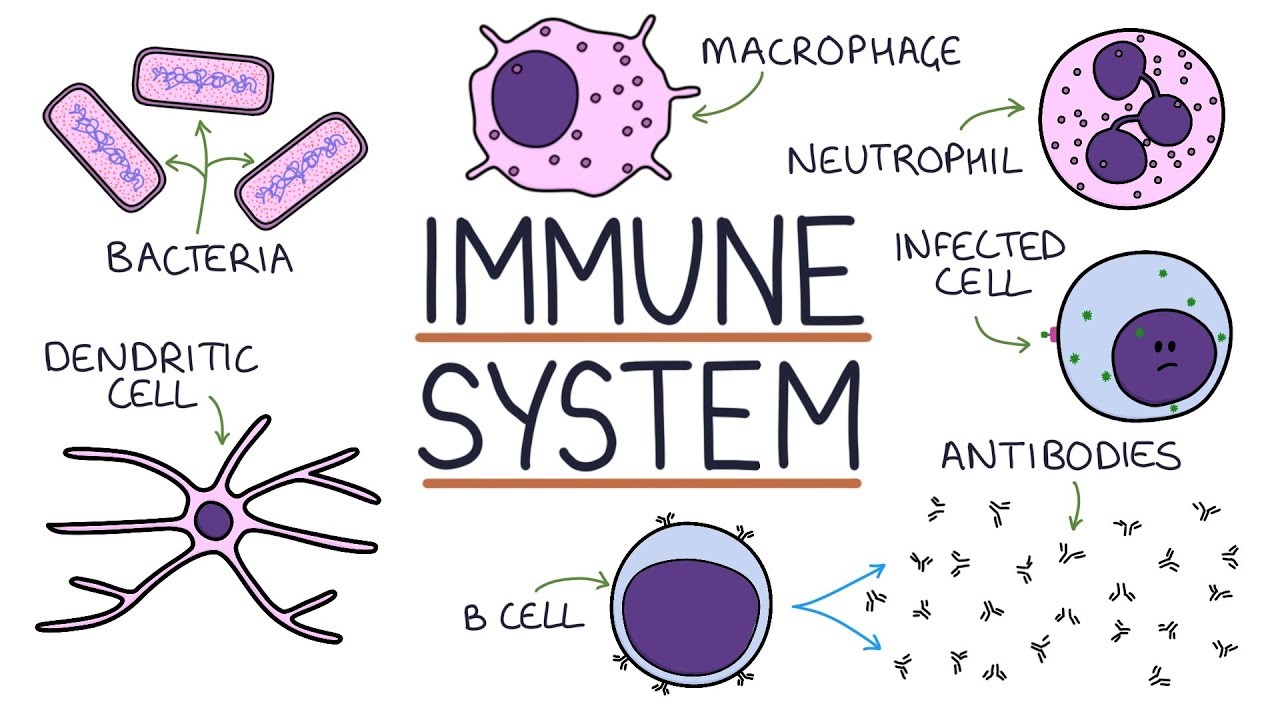
The group is interested in the study of the immune response from a multidisciplinary perspective that includes genomic, biochemical, proteomic, in vivo and biotechnological models aimed at the design of therapeutic strategies against various chronic, infectious and rare diseases that have a clear immunological component in their etiology.
The current specific objectives focus on:
- Antigenic presentation: Identification of antigenic presentation rules for their application in the design of therapeutic treatments including vaccines.
- Study of CD69 function and its regulation; its use as a therapeutic target in the mobilization of hematopoietic precursors and in the potentiation of the immune response mediated by CD69 with the potentiation of vaccines using the vaccinia virus as a vector.
The group is interested in the study of the immune response from a multidisciplinary perspective that includes genomic, biochemical, proteomic, in vivo and biotechnological models aimed at the design of therapeutic strategies against various chronic, infectious and rare diseases that have a clear immunological component in their etiology.
The current specific objectives focus on:
- Antigenic presentation: Identification of antigenic presentation rules for their application in the design of therapeutic treatments including vaccines.
- Study of CD69 function and its regulation; its use as a therapeutic target in the mobilization of hematopoietic precursors and in the potentiation of the immune response mediated by CD69 with the potentiation of vaccines using the vaccinia virus as a vector.