



We protect your health through science
Investigation
Immune Presentation and Regulation
Research projects
Content with Investigacion .
PROYECTOS VIGENTES
Título del proyecto: "Vesículas extracelulares y otras moléculas de parásitos para el tratamiento de la enfermedad inflamatoria intestinal: PARATREAT-IBD"
Referencia: Proyecto PID2022-137661OB-I00 (MPY 341/23) financiado por MCIN/AEI /10.13039/501100011033/ y por FEDER Una manera de hacer Europa
Fecha Inicio: 01/12/2023
Fecha Fin: 31/08/2026
Financiación: 162.500 Euros
Investigador principal: Javier Sotillo
Agencia Financiadora: Agencia Estatal de Investigación. MICINN.

Título del proyecto: "Desarrollo de nuevos métodos diagnósticos y de seguimiento de la infección por schistosoma haematobium"
Referencia: PI23CIII00034 / MPY 386/23
Fecha Inicio: 01/01/2024
Fecha Fin: 31/12/2026
Financiación: 131.500 Euros
Investigador principal: Javier Sotillo
Agencia Financiadora: Instituto de Salud Carlos III (ISCIII/AESI)

Título del proyecto: "Desarrollo de herramientas para el control de la teniosis / cisticercosis en zonas endémicas y vigilancia de las helmintosis humanas emergentes en España"
Referencia: PI22CIII/00010
Fecha Inicio: 01/01/2023
Fecha Fin: 31/12/2025
Financiación: 80.000 Euros
Investigador principal: María Jesús Perteguer
Agencia Financiadora: Instituto de Salud Carlos III (ISCIII/AESI)
PROYECTOS PASADOS
Título del proyecto: "PERITAS: Molecular epidemiological studies on pathways of transmission and longlasting capacity building to prevent cystic echinococcosis infection."
Coordinador: Adriano Casulli. IP of ISCIII: Maria J. Perteguer.
Entidad financiadora: EULAC Health JOINT CALL on Research and Innovation 016-2017
Periodo: 01/03/2019-31/12/2022.
Cuantía total: 1.083.580 €.
Título del proyecto: "Producción de antígenos y controles positivos recombinantes para el desarrollo y la estandarización de nuevos ensayos serológicos aplicados al diagnóstico y control de helmintosis olvidadas. "
Investigador principal: María Jesús Perteguer.
Entidad financiadora: ISCIII-AESI. Instituto de Salud Carlos III
Periodo: 02/11/2018 - 31/06/2022.
Cuantía total: 78.050 €.
Título del proyecto: "Diagnóstico serológico diferencial de helmintiasis asociadas a eosinofilia: desarrollo de ensayos multianalito (xMAP) con antígenos recombinantes de especies de interés clínico"
Investigador principal: María Jesús Perteguer.
Entidad financiadora: ISCIII-AESI. Instituto de Salud Carlos III
Periodo: 01/01/2015 - 31/12/2018 .
Cuantía total: 91.000 €.
Publications
Low anti-SARS-CoV-2 S antibody levels predict increased mortality and dissemination of viral components in the blood of critical COVID-19 patients
4. Martin-Vicente M, Almansa R, Martínez I, Tedim AP, Bustamante E, Tamayo L, Aldecoa C, Gómez JM, Renedo G, Berezo JA, Cedeño JA, Mamolar N, García Olivares P, Herrán-Monge R, Cicuendez R, Enríquez P, Ortega A, Jorge N, Doncel C, Fuente A, Bustamante-Munguira J, Muñoz-Gómez MJ, González-Rivera M, Puertas C, Más V, Vázquez M, Pérez-García F, Rico-Feijoo J, Martín S, Motos A, Fernandez-Barat L, Eiros JM, Domínguez-Gil M, Ferrer R, Barbé F, Trapiello W, Kelvin DJ (¥), Bermejo-Martin JF (* ¥), Resino S (¥), Torres A (* ¥). Low anti-SARS-CoV-2 S antibody levels predict increased mortality and dissemination of viral components in the blood of critical COVID-19 patients. J Intern Med. 2022, 291(2):232–240. (A; FI= 13.07; D1, Medicine, General & Internal; JCR 2021). PMID: 34611927. DOI: 10.1111/joim.13386.
PUBMEDPrevalence and factors associated with SARS-CoV-2 seropositivity in the Spanish HIV Research Network Cohort
5. Berenguer J (*), Díez C, Martín-Vicente M, Mican R, Pérez-Elías MJ, García-Fraile LJ, Vidal F, Suárez-García I, Podzamcer D, Del Romero J, Pulido F, Iribarren JA, Gutiérrez F, Poveda E, Galera C, Izquierdo R, Asensi V, Portilla J, López JC, Arribas JR, Moreno S, González-García J, Resino S (‡), Jarrín I (‡). Prevalence and factors associated with SARS-CoV-2 seropositivity in the Spanish HIV Research Network Cohort. Clin Microbiol Infect. 2021, 27(11):1678-1684. (A; FI= 13.31; D1, Microbiology; JCR 2021). PMID: 34186209 DOI: 10.1016/j.cmi.2021.06.023.
PUBMEDEnvironmental factors linked to hospital admissions in young children due to acute viral lower respiratory infections: A bidirectional case-crossover study
6. Álvaro-Meca A, Goez MC, Resino R, Matías V, Sepúlveda-Crespo D; Martínez I, Resino S (*). Environmental factors linked to hospital admissions in young children due to acute viral lower respiratory infections: a bidirectional case-crossover study. Environ Res. 2022. 212(Pt B), 113319. (A; FI= 8.43; D1, Public, Environmental & Occupational Health; JCR 2021). PMID: 35447151. DOI: 10.1016/j.envres.2022.113319.
PUBMEDDetection of active hepatitis C in a single visit and linkage to care among marginalized people using a mobile unit in Madrid, Spain
7. Ryan P, Valencia J, Cuevas G, Torres-Macho J, Troya J, Pueyo A, Muñoz-Gómez MJ, Muñoz-Rivas N, Vázquez-Morón S, Martínez, I, Lazarus JV, Resino S (*). Detection of active hepatitis C in a single visit and link-to-care among excluded people using a mobile unit in Madrid, Spain. Int J Drug Policy. 2021, 96:103424. (A; FI= 5.93; Q1, Substance Abuse; JCR 2021). PMID: 34429222 DOI: 10.1016/j.drugpo.2021.103424.
PUBMED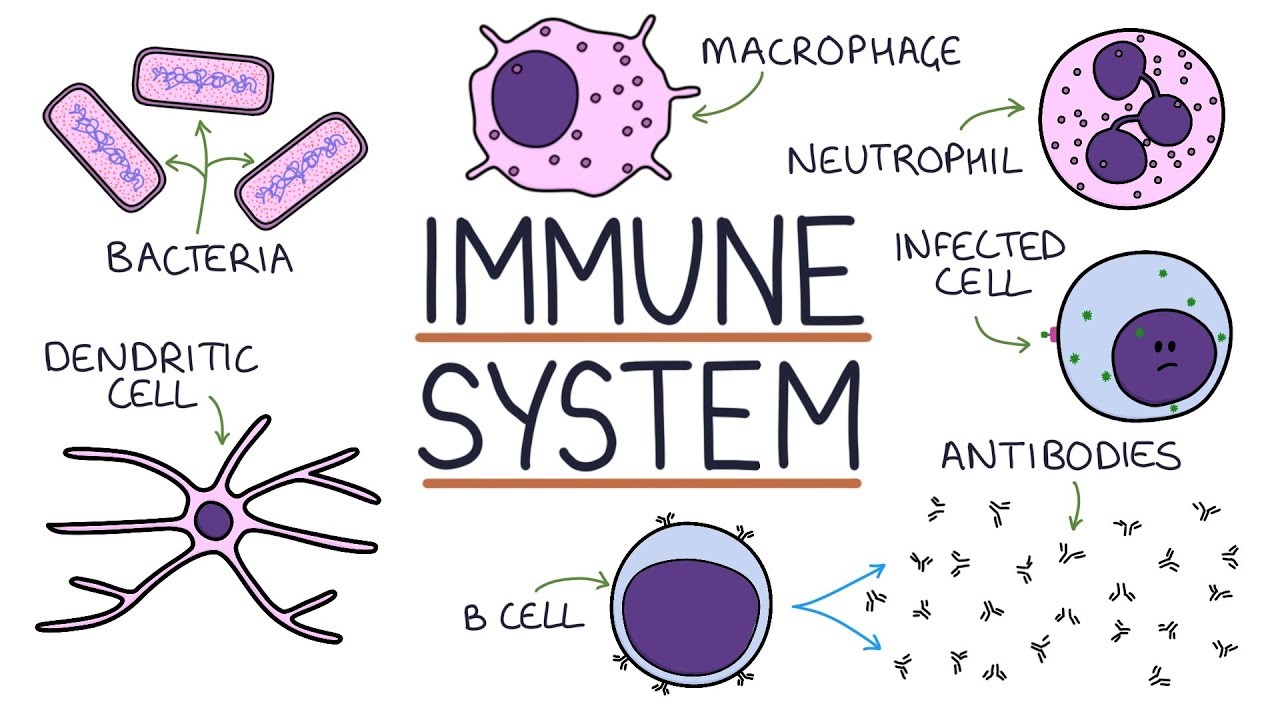
Additional Information
The group is interested in the study of the immune response from a multidisciplinary perspective that includes genomic, biochemical, proteomic, in vivo and biotechnological models aimed at the design of therapeutic strategies against various chronic, infectious and rare diseases that have a clear immunological component in their etiology.
The current specific objectives focus on:
- Antigenic presentation: Identification of antigenic presentation rules for their application in the design of therapeutic treatments including vaccines.
- Study of CD69 function and its regulation; its use as a therapeutic target in the mobilization of hematopoietic precursors and in the potentiation of the immune response mediated by CD69 with the potentiation of vaccines using the vaccinia virus as a vector.
The group is interested in the study of the immune response from a multidisciplinary perspective that includes genomic, biochemical, proteomic, in vivo and biotechnological models aimed at the design of therapeutic strategies against various chronic, infectious and rare diseases that have a clear immunological component in their etiology.
The current specific objectives focus on:
- Antigenic presentation: Identification of antigenic presentation rules for their application in the design of therapeutic treatments including vaccines.
- Study of CD69 function and its regulation; its use as a therapeutic target in the mobilization of hematopoietic precursors and in the potentiation of the immune response mediated by CD69 with the potentiation of vaccines using the vaccinia virus as a vector.