



We protect your health through science
Investigation
Immune Presentation and Regulation
Research projects
Content with Investigacion .
- Título: Desvelando la genómica de las bacterias anaerobias procedentes de bacteriemias
Referencia Proyecto: PID202-1127477OB-I00-MPY 302/22.
Entidad financiador: Agencia Estatal de Investigación.
Fechas de ejecución: 2023-2026
Financiación 108.900 €.
Investigadora principal: Sylvia Valdezate

- Título: Plataformas MALDI-TOF/CMI SENSITITRETM Personal Técnico Apoyo
Referencia: PTA2019-016623-I.
Entidad Financiadora: Agencia Estatal de Investigación.
Fechas ejecución 12/2020-11/2023
Investigadora principal: Sylvia Valdezate
- Título: Elementos genéticos móviles protagonistas en la evolución de los serotipos pandémicos M1 y M89 de Streptococcus pyogenes en el síndrome del shock tóxico y otras infecciones invasivas
Referencia: (MPY 377/18).
Entidad financiadora: Instituto de Salud Carlos III. Agencia Estatal de Investigación en Salud Intramural (AESI).
Fechas de ejecución: 11/2018-12/2022.
Financiación: 40.000 €.
Investigadoras principales: Pilar Villalón. Co-IP Sylvia Valdezate.
- Título: Plataformas genéticas y su influencia en la resistencia a co-trimoxazol, macrólidos y tetraciclina en Nocardia spp.
Referencia: MPY 1278/15
Entidad financiadora: Instituto de Salud Carlos III. Agencia Estatal de Investigación en Salud Intramural (AESI).
Fechas de ejecución: 2015-2017.
Financiación: 88.141,8 €.
Investigadora principal: Sylvia Valdezate
- Título: Filogenia y caracterización de mecanismos moleculares de resistencia en Nocardia spp.
Referencia: MPY 1446/11
Entidad financiadora: Instituto de Salud Carlos III. Fondo de Investigación Sanitaria (AES). ()
Fechas de ejecución: 04/2012-10/2015
Financiación: 115.457 €.
Investigadora principal: Sylvia Valdezate.
- Título: Iberian network of laboratories of biological alert. Accreditation of methods for detection highly pathogenic agents (IB-BIOALERTNET).
Entidad financiadora: COMISIÓN EUROPEA HOME/2012/ISEC/AG/CBRN/4000003810. (Instituto de Salud Carlos III (VISAVET, IVIA, INSA, INIAV))
Referencia: SAFI 1132/13-7.
Fecha de ejecución: 2013-2015.
Financiación: 699.175 €.
Tipo de participación: Miembro del equipo investigador.
- Título: EQUATOX Project Establishment of Quality Assurances for theDetection of Biological Toxins of potential Bioterrorism risk.
Entidad financiadora y convocatoria: Seven Framework Programme for Research FP7-SECURITY. (Robert Koch-Institut Berlin Alemania).
Referencia: SEC-2011.5.4-1.
Fechas de ejecución: 2012-2014.
Publications
Curso de Gestión de Calidad y Buenas Prácticas de Laboratorio. Ed. 3
Grammatico JP, Cuevas L (Edits.) y Grupo de expertos de la Organización Panamericana de la Salud OPS/OMS. Curso de Gestión de Calidad y Buenas Prácticas de Laboratorio. Ed. 3. OPS/OMS;. Washington, D.C., 2016. Disponible en: “http://iris.paho.org/xmlui/handle/123456789/31168”. ISBN: 978-92-75-11906-8
Gestión de la Calidad para laboratorios de ensayo. 1ª ed.
Grammatico JP, Cuevas L (Edits.). Gestión de la Calidad para laboratorios de ensayo. 1ª ed. Conicet-Madri+d; Buenos Aires, 2011. Disponible en: “http://www.madrimasd.org/Laboratorios/Documentos/Red-Laboratorios/documentos/Gest_Calidad_Ensayo.pdf”. ISBN: 978-950-692-095-1
Curso de Gestión de Calidad y Buenas Prácticas de Laboratorio.
Grupo de expertos de la Organización Panamericana de la Salud OPS/OMS. Curso de Gestión de Calidad y Buenas Prácticas de Laboratorio. OPS; Documentos Técnicos THR/HT 2009/001. Washington, D.C., 2009. ISBN: 978-92-75-32977-1
Guía Latinoamericana para la implementación de Código de Ética en los laboratorios de salud.
Grupo de expertos de la Organización Panamericana de la Salud (OPS/OMS). Guía Latinoamericana para la implementación de Código de Ética en los laboratorios de salud. Organización Panamericana de la Salud. Documentos Técnicos. Políticas y Regulación. THS/EV-2007/001; 2007. ISBN: 92-7-532702-5
Identification of HIV-1 circulating BF1 recombinant form (CRF75_BF1) of Brazilian origin that also circulates in Southwestern Europe
Bacqué J, Delgado E, Gil H, Ibarra S, Benito S, García-Arata I, Moreno-Lorenzo M, Sáez de Arana E, Gómez-González C, Sánchez M, Montero V and Thomson MM. Front Microbiol. 2023. 14: 1301374
PUBMED DOIFactors associated with HIV-1 resistance to integrase strand transfer inhibitors in Spain: Implications for dolutegravir-containing regimens.
Gil H, Delgado E, Benito S, Moreno-Lorenzo M, Thomson MM and Spanish Group for the study of antirretroviral drug Resistance. Front Microbiol. 2022. 13:1051096
PUBMED DOITransmission clusters, predominantly associated with men who have sex with men, play a main role in the propagation of HIV-1 in Northern Spain (2013-2018).
Gil H, Delgado E, Benito S, Georgalis L, Montero V, Sánchez M, Cañada-García JE, García-Bodas E, Diaz A, Thomson MM and Spanish group of the study of new HIV diagnoses. Front Microbiol. 2022. 13:782609
PUBMED DOIContent with Investigacion .
-
Mónica Valiente Novillo
Técnico de laboratorio. Convocatoria empleo juvenial (PEJ-2021-TL_BMD-21100)
-
-
-
-
-
Noelia Castrillo Garrido
Técnico de Laboratorio. Contratada de Proyecto PID2021-127477OB-I00 (AEI)
ORCID code: 0000-0003-1676-9693
List of staff
Additional Information
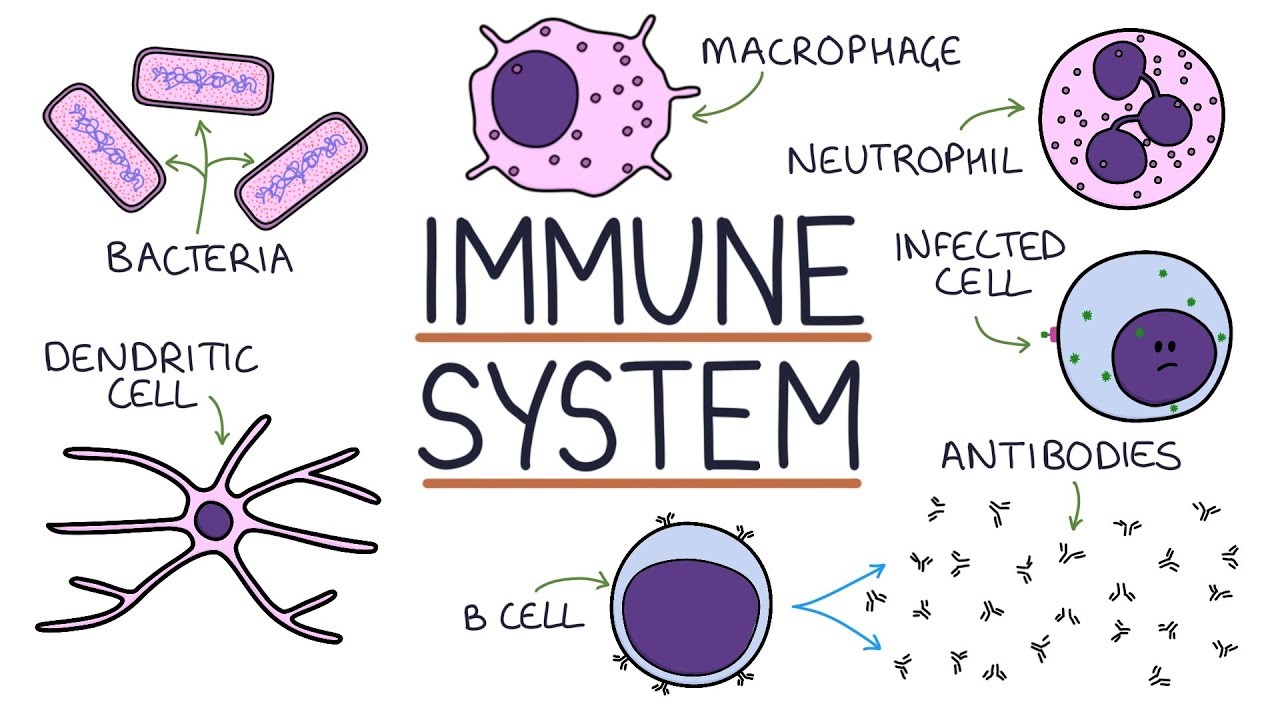
The group is interested in the study of the immune response from a multidisciplinary perspective that includes genomic, biochemical, proteomic, in vivo and biotechnological models aimed at the design of therapeutic strategies against various chronic, infectious and rare diseases that have a clear immunological component in their etiology.
The current specific objectives focus on:
- Antigenic presentation: Identification of antigenic presentation rules for their application in the design of therapeutic treatments including vaccines.
- Study of CD69 function and its regulation; its use as a therapeutic target in the mobilization of hematopoietic precursors and in the potentiation of the immune response mediated by CD69 with the potentiation of vaccines using the vaccinia virus as a vector.
The group is interested in the study of the immune response from a multidisciplinary perspective that includes genomic, biochemical, proteomic, in vivo and biotechnological models aimed at the design of therapeutic strategies against various chronic, infectious and rare diseases that have a clear immunological component in their etiology.
The current specific objectives focus on:
- Antigenic presentation: Identification of antigenic presentation rules for their application in the design of therapeutic treatments including vaccines.
- Study of CD69 function and its regulation; its use as a therapeutic target in the mobilization of hematopoietic precursors and in the potentiation of the immune response mediated by CD69 with the potentiation of vaccines using the vaccinia virus as a vector.