



We protect your health through science
Investigation
Immune Presentation and Regulation
Research projects
Content with Investigacion .
- Título: Desvelando la genómica de las bacterias anaerobias procedentes de bacteriemias
Referencia Proyecto: PID202-1127477OB-I00-MPY 302/22.
Entidad financiador: Agencia Estatal de Investigación.
Fechas de ejecución: 2023-2026
Financiación 108.900 €.
Investigadora principal: Sylvia Valdezate

- Título: Plataformas MALDI-TOF/CMI SENSITITRETM Personal Técnico Apoyo
Referencia: PTA2019-016623-I.
Entidad Financiadora: Agencia Estatal de Investigación.
Fechas ejecución 12/2020-11/2023
Investigadora principal: Sylvia Valdezate
- Título: Elementos genéticos móviles protagonistas en la evolución de los serotipos pandémicos M1 y M89 de Streptococcus pyogenes en el síndrome del shock tóxico y otras infecciones invasivas
Referencia: (MPY 377/18).
Entidad financiadora: Instituto de Salud Carlos III. Agencia Estatal de Investigación en Salud Intramural (AESI).
Fechas de ejecución: 11/2018-12/2022.
Financiación: 40.000 €.
Investigadoras principales: Pilar Villalón. Co-IP Sylvia Valdezate.
- Título: Plataformas genéticas y su influencia en la resistencia a co-trimoxazol, macrólidos y tetraciclina en Nocardia spp.
Referencia: MPY 1278/15
Entidad financiadora: Instituto de Salud Carlos III. Agencia Estatal de Investigación en Salud Intramural (AESI).
Fechas de ejecución: 2015-2017.
Financiación: 88.141,8 €.
Investigadora principal: Sylvia Valdezate
- Título: Filogenia y caracterización de mecanismos moleculares de resistencia en Nocardia spp.
Referencia: MPY 1446/11
Entidad financiadora: Instituto de Salud Carlos III. Fondo de Investigación Sanitaria (AES). ()
Fechas de ejecución: 04/2012-10/2015
Financiación: 115.457 €.
Investigadora principal: Sylvia Valdezate.
- Título: Iberian network of laboratories of biological alert. Accreditation of methods for detection highly pathogenic agents (IB-BIOALERTNET).
Entidad financiadora: COMISIÓN EUROPEA HOME/2012/ISEC/AG/CBRN/4000003810. (Instituto de Salud Carlos III (VISAVET, IVIA, INSA, INIAV))
Referencia: SAFI 1132/13-7.
Fecha de ejecución: 2013-2015.
Financiación: 699.175 €.
Tipo de participación: Miembro del equipo investigador.
- Título: EQUATOX Project Establishment of Quality Assurances for theDetection of Biological Toxins of potential Bioterrorism risk.
Entidad financiadora y convocatoria: Seven Framework Programme for Research FP7-SECURITY. (Robert Koch-Institut Berlin Alemania).
Referencia: SEC-2011.5.4-1.
Fechas de ejecución: 2012-2014.
Publications
Antigenicity of Leishmania-Activated C-Kinase Antigen (LACK) in Human Peripheral Blood Mononuclear Cells, and Protective Effect of Prime-Boost Vaccination With pCI-neo-LACK Plus Attenuated LACK-Expressing Vaccinia Viruses in Hamsters
2. Fernández L, Carrillo E, Sánchez-Sampedro L, Sánchez C, Ibarra-Meneses AV, Jimenez MA, Almeida VDA, Esteban M, Moreno J. Antigenicity of Leishmania-Activated C-Kinase Antigen (LACK) in Human Peripheral Blood Mononuclear Cells, and Protective Effect of Prime-Boost Vaccination With pCI-neo-LACK Plus Attenuated LACK-Expressing Vaccinia Viruses in Hamsters. Front Immunol. 2018 Apr 23;9:843.
PUBMED DOIInterleukin-2 as a marker for detecting asymptomatic individuals in areas where Leishmania infantum is endemic.
5. Ibarra-Meneses AV, Carrillo E, Sánchez C, García-Martínez J, López Lacomba D, San Martin JV, Alves F, Alvar J, Moreno J. Interleukin-2 as a marker for detecting asymptomatic individuals in areas where Leishmania infantum is endemic. Clin Microbiol Infect. 2016 Aug;22(8):739.e1-4.
PUBMED DOIProtein malnutrition impairs the immune response and influences the severity of infection in a hamster model of chronic visceral leishmaniasis.
7. Carrillo E, Jimenez MA, Sanchez C, Cunha J, Martins CM, da Paixão Sevá A, Moreno J. Protein malnutrition impairs the immune response and influences the severity of infection in a hamster model of chronic visceral leishmaniasis. PLoS One. 2014 Feb 25;9(2):e89412.
PUBMED DOIMolecular typing of Leishmania infantum isolates from a leishmaniasis outbreak in Madrid, Spain, 2009 to 2012
9. Chicharro C, Llanes-Acevedo IP, García E, Nieto J, Moreno J, Cruz I. Molecular typing of Leishmania infantum isolates from a leishmaniasis outbreak in Madrid, Spain, 2009 to 2012. Euro Surveill. 2013 Jul 25;18(30):20545.
PUBMED DOIHigh levels of anti-Phlebotomus perniciosus saliva antibodies in different reservoirs from the re-emerging leishmaniasis focus in Madrid, Spain.
2. Martín-Martín I, Molina R, Rohoušová I, Drahota J., Volf P, Jiménez M. High levels of anti-Phlebotomus perniciosus saliva antibodies in different reservoirs from the re-emerging leishmaniasis focus in Madrid, Spain. Vet Parasitol 2014, 202: 207–216.
PUBMED DOICould wild rabbits (Oryctolagus cuniculus) be reservoirs for Leishmania infantum in the focus of Madrid, Spain?
3. Jiménez M, González E, Martín-Martín I, Hernández S, Molina R. Could wild rabbits (Oryctolagus cuniculus) be reservoirs for Leishmania infantum in the focus of Madrid, Spain?. Vet Parasitol 2014, 202: 296–300.
PUBMED DOIReview of ten-years presence of Aedes albopictus in Spain 2004–2014: known distribution and public health concerns.
5. Collantes F, Delacour S, Alarcón-Elbal PM, Ruiz-Arrondo I, Delgado JA, Torrell-Sorio A, Bengoa M, Eritja R, Miranda MA, Molina R, Lucientes J. Review of ten-years presence of Aedes albopictus in Spain 2004–2014: known distribution and public health concerns. Parasit Vectors. 2015 Dec 23;8:655.
PUBMED DOIPhleboviruses detection in Phlebotomus perniciosus from a human leishmaniasis focus in South-West Madrid region, Spain.
6. Remoli ME, Jiménez M, Fortuna C, Benedetti E, Marchi A, Genovese D, Gramiccia M, Molina R, Ciufolini MG. Phleboviruses detection in Phlebotomus perniciosus from a human leishmaniasis focus in South-West Madrid region, Spain. Parasit Vectors 2016, 9:205.
PUBMED DOIContent with Investigacion .
-
Mónica Valiente Novillo
Técnico de laboratorio. Convocatoria empleo juvenial (PEJ-2021-TL_BMD-21100)
-
-
-
-
-
Noelia Castrillo Garrido
Técnico de Laboratorio. Contratada de Proyecto PID2021-127477OB-I00 (AEI)
ORCID code: 0000-0003-1676-9693
List of staff
Additional Information
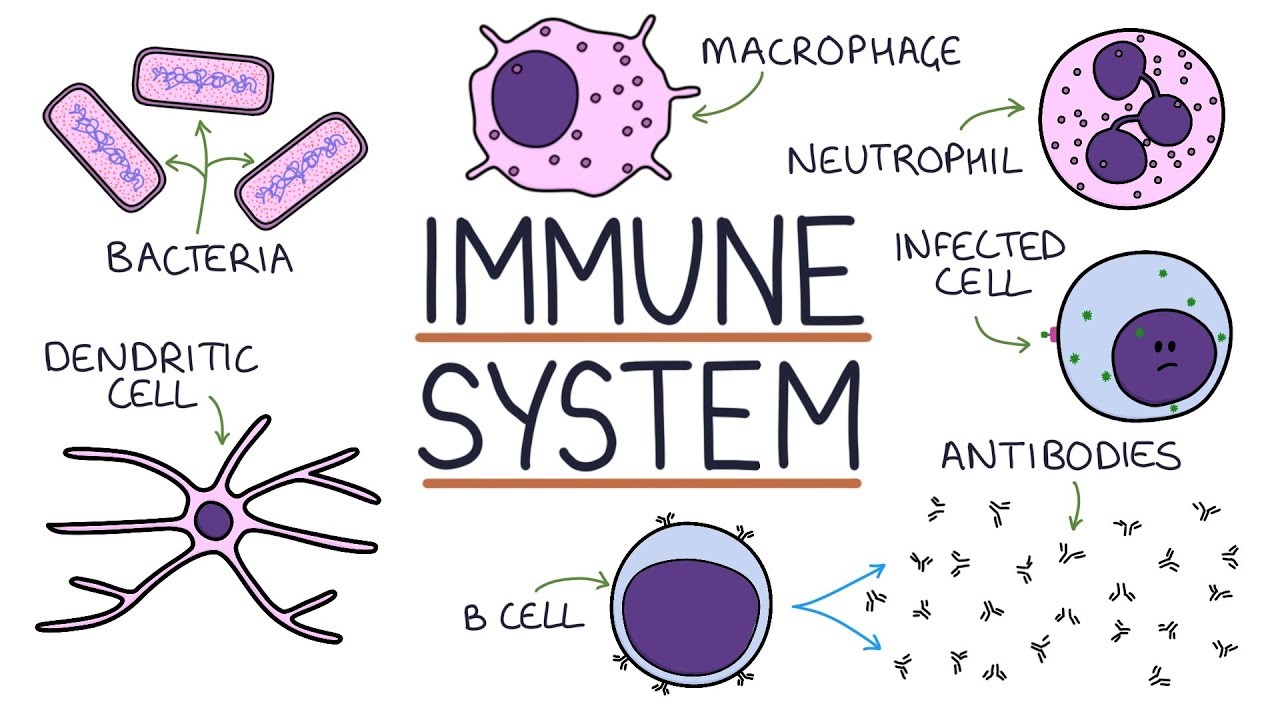
The group is interested in the study of the immune response from a multidisciplinary perspective that includes genomic, biochemical, proteomic, in vivo and biotechnological models aimed at the design of therapeutic strategies against various chronic, infectious and rare diseases that have a clear immunological component in their etiology.
The current specific objectives focus on:
- Antigenic presentation: Identification of antigenic presentation rules for their application in the design of therapeutic treatments including vaccines.
- Study of CD69 function and its regulation; its use as a therapeutic target in the mobilization of hematopoietic precursors and in the potentiation of the immune response mediated by CD69 with the potentiation of vaccines using the vaccinia virus as a vector.
The group is interested in the study of the immune response from a multidisciplinary perspective that includes genomic, biochemical, proteomic, in vivo and biotechnological models aimed at the design of therapeutic strategies against various chronic, infectious and rare diseases that have a clear immunological component in their etiology.
The current specific objectives focus on:
- Antigenic presentation: Identification of antigenic presentation rules for their application in the design of therapeutic treatments including vaccines.
- Study of CD69 function and its regulation; its use as a therapeutic target in the mobilization of hematopoietic precursors and in the potentiation of the immune response mediated by CD69 with the potentiation of vaccines using the vaccinia virus as a vector.