



We protect your health through science
Investigation
Immune Presentation and Regulation
Research projects
Content with Investigacion .
- Título: Desvelando la genómica de las bacterias anaerobias procedentes de bacteriemias
Referencia Proyecto: PID202-1127477OB-I00-MPY 302/22.
Entidad financiador: Agencia Estatal de Investigación.
Fechas de ejecución: 2023-2026
Financiación 108.900 €.
Investigadora principal: Sylvia Valdezate

- Título: Plataformas MALDI-TOF/CMI SENSITITRETM Personal Técnico Apoyo
Referencia: PTA2019-016623-I.
Entidad Financiadora: Agencia Estatal de Investigación.
Fechas ejecución 12/2020-11/2023
Investigadora principal: Sylvia Valdezate
- Título: Elementos genéticos móviles protagonistas en la evolución de los serotipos pandémicos M1 y M89 de Streptococcus pyogenes en el síndrome del shock tóxico y otras infecciones invasivas
Referencia: (MPY 377/18).
Entidad financiadora: Instituto de Salud Carlos III. Agencia Estatal de Investigación en Salud Intramural (AESI).
Fechas de ejecución: 11/2018-12/2022.
Financiación: 40.000 €.
Investigadoras principales: Pilar Villalón. Co-IP Sylvia Valdezate.
- Título: Plataformas genéticas y su influencia en la resistencia a co-trimoxazol, macrólidos y tetraciclina en Nocardia spp.
Referencia: MPY 1278/15
Entidad financiadora: Instituto de Salud Carlos III. Agencia Estatal de Investigación en Salud Intramural (AESI).
Fechas de ejecución: 2015-2017.
Financiación: 88.141,8 €.
Investigadora principal: Sylvia Valdezate
- Título: Filogenia y caracterización de mecanismos moleculares de resistencia en Nocardia spp.
Referencia: MPY 1446/11
Entidad financiadora: Instituto de Salud Carlos III. Fondo de Investigación Sanitaria (AES). ()
Fechas de ejecución: 04/2012-10/2015
Financiación: 115.457 €.
Investigadora principal: Sylvia Valdezate.
- Título: Iberian network of laboratories of biological alert. Accreditation of methods for detection highly pathogenic agents (IB-BIOALERTNET).
Entidad financiadora: COMISIÓN EUROPEA HOME/2012/ISEC/AG/CBRN/4000003810. (Instituto de Salud Carlos III (VISAVET, IVIA, INSA, INIAV))
Referencia: SAFI 1132/13-7.
Fecha de ejecución: 2013-2015.
Financiación: 699.175 €.
Tipo de participación: Miembro del equipo investigador.
- Título: EQUATOX Project Establishment of Quality Assurances for theDetection of Biological Toxins of potential Bioterrorism risk.
Entidad financiadora y convocatoria: Seven Framework Programme for Research FP7-SECURITY. (Robert Koch-Institut Berlin Alemania).
Referencia: SEC-2011.5.4-1.
Fechas de ejecución: 2012-2014.
Publications
Cytotoxic cell populations developed during treatment with tyrosine kinase inhibitors protect autologous CD4+ T cells from HIV-1 infection
Cytotoxic cell populations developed during treatment with tyrosine kinase inhibitors protect autologous CD4+ T cells from HIV-1 infection. Vigón L, Rodríguez-Mora S, Luna A, Sandonís V, Mateos E, Bautista G, Steegmann JL, Climent N, Plana M, Pérez-Romero P, de Ory F, Alcamí J, García-Gutierrez V, Planelles V, López-Huertas MR, Coiras M (AC). Biochem Pharmacol. 2020 Dec;182:114203. doi: 10.1016/j.bcp.2020.114203. PMID: 32828803.
PUBMED DOITyrosine Kinase Inhibition: a New Perspective in the Fight against HIV
Tyrosine Kinase Inhibition: a New Perspective in the Fight against HIV. Rodríguez-Mora S, Spivak AM, Szaniawski MA, López-Huertas MR, Alcamí J, Planelles V, Coiras M (AC). Curr HIV/AIDS Rep. 2019 Oct;16(5):414-422. doi: 10.1007/s11904-019-00462-5. PMID: 31506864. Review.
PUBMED DOIDasatinib protects humanized mice from acute HIV-1 infection
Dasatinib protects humanized mice from acute HIV-1 infection. Salgado M, Martinez-Picado J, Gálvez C, Rodríguez-Mora S, Rivaya B, Urrea V, Mateos E, Alcamí J, Coiras M (AC). Biochem Pharmacol. 2020 Apr;174:113625. doi: 10.1016/j.bcp.2019.113625. PMID: 31476293.
PUBMED DOIEvaluation of resistance to HIV-1 infection ex vivo of PBMCs isolated from patients with chronic myeloid leukemia treated with different tyrosine kinase inhibitors.
Evaluation of resistance to HIV-1 infection ex vivo of PBMCs isolated from patients with chronic myeloid leukemia treated with different tyrosine kinase inhibitors. Bermejo M, Ambrosioni J, Bautista G, Climent N, Mateos E, Rovira C, Rodríguez-Mora S, López-Huertas MR, García-Gutiérrez V, Steegmann JL, Duarte R, Cervantes F, Plana M, Miró JM, Alcamí J, Coiras M (AC). Biochem Pharmacol. 2018 Oct;156:248-264. doi: 10.1016/j.bcp.2018.08.031. PMID: 30142322.
PUBMED DOIStaphylococcus aureus Nasal Colonization in Spanish Children. The COSACO Nationwide Surveillance Study.
Staphylococcus aureus Nasal Colonization in Spanish Children. The COSACO Nationwide Surveillance Study. Del Rosal T, Méndez-Echevarría A, Garcia-Vera C, Escosa-Garcia L, Agud M, Chaves F, Román F, Gutierrez-Fernandez J, Ruiz de Gopegui E, Ruiz-Carrascoso G, Ruiz-Gallego MDC, Bernet A, Quevedo SM, Fernández-Verdugo AM, Díez-Sebastian J, Calvo C; COSACO Study Group.
PUBMEDAntimicrobial Resistance and Distribution of Staphylococcus spp. Pulsotypes Isolated from Goat and Sheep Bulk Tank Milk in Southern Spain
Antimicrobial Resistance and Distribution of Staphylococcus spp. Pulsotypes Isolated from Goat and Sheep Bulk Tank Milk in Southern Spain. Barrero-Domínguez B, Luque I, Galán-Relaño Á, Vega-Pla JL, Huerta B, Román F, Astorga RJ. Foodborne Pathog Dis. 2019 Oct;16(10):723-730. doi: 10.1089/fpd.2018.2593. Epub 2019 Jun 3.Foodborne Pathog Dis. 2019. PMID: 31157980
PUBMEDPrevalence of pSCFS7-like vectors among cfr-positive staphylococcal population in Spain
Prevalence of pSCFS7-like vectors among cfr-positive staphylococcal population in Spain. Nguyen LTT*, Román F*, Morikawa K, Trincado P, Marcos C, Rojo-Martín MD, Cafini F. Int J Antimicrob Agents. 2018 Aug;52(2):305-306.
PUBMEDMethodology for the Study of Horizontal Gene Transfer in Staphylococcus aureus.
Methodology for the Study of Horizontal Gene Transfer in Staphylococcus aureus. Cafini F, Thi Le Thuy N, Román F, Prieto J, Dubrac S, Msadek T, Morikawa K. J Vis Exp. 2017 Mar 10;(121).
PUBMEDContent with Investigacion .
-
Mónica Valiente Novillo
Técnico de laboratorio. Convocatoria empleo juvenial (PEJ-2021-TL_BMD-21100)
-
-
-
-
-
Noelia Castrillo Garrido
Técnico de Laboratorio. Contratada de Proyecto PID2021-127477OB-I00 (AEI)
ORCID code: 0000-0003-1676-9693
List of staff
Additional Information
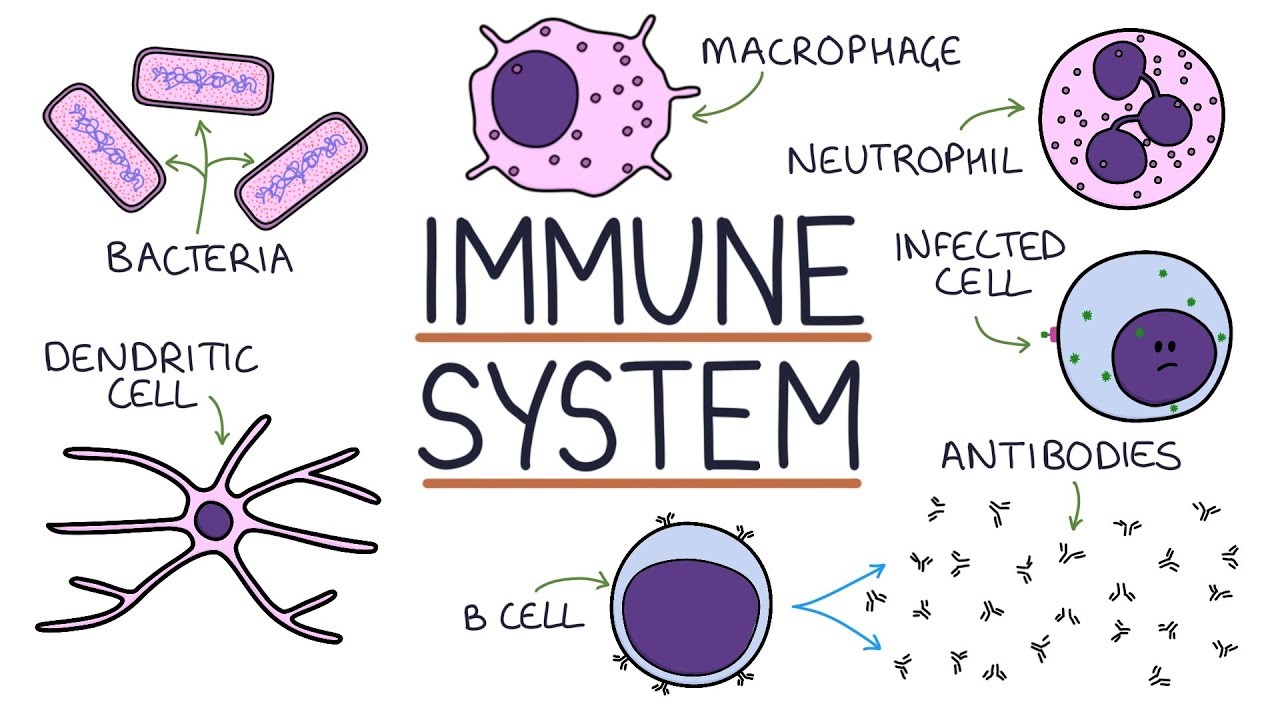
The group is interested in the study of the immune response from a multidisciplinary perspective that includes genomic, biochemical, proteomic, in vivo and biotechnological models aimed at the design of therapeutic strategies against various chronic, infectious and rare diseases that have a clear immunological component in their etiology.
The current specific objectives focus on:
- Antigenic presentation: Identification of antigenic presentation rules for their application in the design of therapeutic treatments including vaccines.
- Study of CD69 function and its regulation; its use as a therapeutic target in the mobilization of hematopoietic precursors and in the potentiation of the immune response mediated by CD69 with the potentiation of vaccines using the vaccinia virus as a vector.
The group is interested in the study of the immune response from a multidisciplinary perspective that includes genomic, biochemical, proteomic, in vivo and biotechnological models aimed at the design of therapeutic strategies against various chronic, infectious and rare diseases that have a clear immunological component in their etiology.
The current specific objectives focus on:
- Antigenic presentation: Identification of antigenic presentation rules for their application in the design of therapeutic treatments including vaccines.
- Study of CD69 function and its regulation; its use as a therapeutic target in the mobilization of hematopoietic precursors and in the potentiation of the immune response mediated by CD69 with the potentiation of vaccines using the vaccinia virus as a vector.