



We protect your health through science
Investigation
Immune Presentation and Regulation
Research projects
Content with Investigacion .
- Título: Desvelando la genómica de las bacterias anaerobias procedentes de bacteriemias
Referencia Proyecto: PID202-1127477OB-I00-MPY 302/22.
Entidad financiador: Agencia Estatal de Investigación.
Fechas de ejecución: 2023-2026
Financiación 108.900 €.
Investigadora principal: Sylvia Valdezate

- Título: Plataformas MALDI-TOF/CMI SENSITITRETM Personal Técnico Apoyo
Referencia: PTA2019-016623-I.
Entidad Financiadora: Agencia Estatal de Investigación.
Fechas ejecución 12/2020-11/2023
Investigadora principal: Sylvia Valdezate
- Título: Elementos genéticos móviles protagonistas en la evolución de los serotipos pandémicos M1 y M89 de Streptococcus pyogenes en el síndrome del shock tóxico y otras infecciones invasivas
Referencia: (MPY 377/18).
Entidad financiadora: Instituto de Salud Carlos III. Agencia Estatal de Investigación en Salud Intramural (AESI).
Fechas de ejecución: 11/2018-12/2022.
Financiación: 40.000 €.
Investigadoras principales: Pilar Villalón. Co-IP Sylvia Valdezate.
- Título: Plataformas genéticas y su influencia en la resistencia a co-trimoxazol, macrólidos y tetraciclina en Nocardia spp.
Referencia: MPY 1278/15
Entidad financiadora: Instituto de Salud Carlos III. Agencia Estatal de Investigación en Salud Intramural (AESI).
Fechas de ejecución: 2015-2017.
Financiación: 88.141,8 €.
Investigadora principal: Sylvia Valdezate
- Título: Filogenia y caracterización de mecanismos moleculares de resistencia en Nocardia spp.
Referencia: MPY 1446/11
Entidad financiadora: Instituto de Salud Carlos III. Fondo de Investigación Sanitaria (AES). ()
Fechas de ejecución: 04/2012-10/2015
Financiación: 115.457 €.
Investigadora principal: Sylvia Valdezate.
- Título: Iberian network of laboratories of biological alert. Accreditation of methods for detection highly pathogenic agents (IB-BIOALERTNET).
Entidad financiadora: COMISIÓN EUROPEA HOME/2012/ISEC/AG/CBRN/4000003810. (Instituto de Salud Carlos III (VISAVET, IVIA, INSA, INIAV))
Referencia: SAFI 1132/13-7.
Fecha de ejecución: 2013-2015.
Financiación: 699.175 €.
Tipo de participación: Miembro del equipo investigador.
- Título: EQUATOX Project Establishment of Quality Assurances for theDetection of Biological Toxins of potential Bioterrorism risk.
Entidad financiadora y convocatoria: Seven Framework Programme for Research FP7-SECURITY. (Robert Koch-Institut Berlin Alemania).
Referencia: SEC-2011.5.4-1.
Fechas de ejecución: 2012-2014.
Publications
Lorente, E., A. Barriga, E. Barnea, C. Palomo, J. Garcia-Arriaza, C. Mir, M. Esteban, A. Admon, and D. López. 2019. Immunoproteomic analysis of a Chikungunya poxvirus-based vaccine reveals high HLA class II immunoprevalence. PLoS.Negl.Trop.Dis. 13:e0007547.
Lorente, E., A. Barriga, E. Barnea, C. Palomo, J. Garcia-Arriaza, C. Mir, M. Esteban, A. Admon, and D. López. 2019. Immunoproteomic analysis of a Chikungunya poxvirus-based vaccine reveals high HLA class II immunoprevalence. PLoS.Negl.Trop.Dis. 13:e0007547.
PUBMED DOILópez, D., A. Barriga, E. Lorente, and C. Mir. 2019. Immunoproteomic Lessons for Human Respiratory Syncytial Virus Vaccine Design. J.Clin.Med. 8.
López, D., A. Barriga, E. Lorente, and C. Mir. 2019. Immunoproteomic Lessons for Human Respiratory Syncytial Virus Vaccine Design. J.Clin.Med. 8.
PUBMED DOIBrait, V. H., F. Miro-Mur, I. Perez-de-Puig, L. Notario, B. Hurtado, J. Pedragosa, M. Gallizioli, F. Jimenez-Altayo, M. Arbaizar-Rovirosa, A. Otxoa-de-Amezaga, J. Monteagudo, M. Ferrer-Ferrer, l. R. de, X, E. Bonfill-Teixidor, A. Salas-Perdomo, A. Hernandez-Vidal, P. Garcia-de-Frutos, P. Lauzurica, and A. M. Planas. 2019. CD69 Plays a Beneficial Role in Ischemic Stroke by Dampening Endothelial Activation. Circ.Res. 124:279-291.
Brait, V. H., F. Miro-Mur, I. Perez-de-Puig, L. Notario, B. Hurtado, J. Pedragosa, M. Gallizioli, F. Jimenez-Altayo, M. Arbaizar-Rovirosa, A. Otxoa-de-Amezaga, J. Monteagudo, M. Ferrer-Ferrer, l. R. de, X, E. Bonfill-Teixidor, A. Salas-Perdomo, A. Hernandez-Vidal, P. Garcia-de-Frutos, P. Lauzurica, and A. M. Planas. 2019. CD69 Plays a Beneficial Role in Ischemic Stroke by Dampening Endothelial Activation. Circ.Res. 124:279-291.
DOILorente, E., J. Redondo-Anton, A. Martín-Esteban, P. Guasp, E. Barnea, P. Lauzurica, A. Admon, and J. A. López de Castro. 2019. Substantial Influence of ERAP2 on the HLA-B*40:02 Peptidome: Implications for HLA-B*27-Negative Ankylosing Spondylitis. Mol.Cell Proteomics. 18:2298-2309.
Lorente, E., J. Redondo-Anton, A. Martín-Esteban, P. Guasp, E. Barnea, P. Lauzurica, A. Admon, and J. A. López de Castro. 2019. Substantial Influence of ERAP2 on the HLA-B*40:02 Peptidome: Implications for HLA-B*27-Negative Ankylosing Spondylitis. Mol.Cell Proteomics. 18:2298-2309.
PUBMED DOILorente, E., C. Palomo, E. Barnea, C. Mir, V. M. Del, A. Admon, and D. López. 2019a. Natural Spleen Cell Ligandome in Transporter Antigen Processing-Deficient Mice. J.Proteome.Res. 18:3512-3520.
Lorente, E., C. Palomo, E. Barnea, C. Mir, V. M. Del, A. Admon, and D. López. 2019a. Natural Spleen Cell Ligandome in Transporter Antigen Processing-Deficient Mice. J.Proteome.Res. 18:3512-3520.
PUBMEDLorente, E., M. G. Fontela, E. Barnea, A. J. Martín-Galiano, C. Mir, B. Galocha, A. Admon, P. Lauzurica, and D. López. 2020. Modulation of Natural HLA-B*27:05 Ligandome by Ankylosing Spondylitis-associated Endoplasmic Reticulum Aminopeptidase 2 (ERAP2). Mol.Cell Proteomics. 19:994-1004.
Lorente, E., M. G. Fontela, E. Barnea, A. J. Martín-Galiano, C. Mir, B. Galocha, A. Admon, P. Lauzurica, and D. López. 2020. Modulation of Natural HLA-B*27:05 Ligandome by Ankylosing Spondylitis-associated Endoplasmic Reticulum Aminopeptidase 2 (ERAP2). Mol.Cell Proteomics. 19:994-1004.
PUBMED DOIRedondo-Anton, J., M. G. Fontela, L. Notario, R. Torres-Ruiz, S. Rodriguez-Perales, E. Lorente, and P. Lauzurica. 2020. Functional Characterization of a Dual Enhancer/Promoter Regulatory Element Leading Human CD69 Expression. Front Genet. 11:552949.
Redondo-Anton, J., M. G. Fontela, L. Notario, R. Torres-Ruiz, S. Rodriguez-Perales, E. Lorente, and P. Lauzurica. 2020. Functional Characterization of a Dual Enhancer/Promoter Regulatory Element Leading Human CD69 Expression. Front Genet. 11:552949.
PUBMED DOIFontela, M. G., L. Notario, E. Alari-Pahissa, E. Lorente, and P. Lauzurica. 2019
Fontela, M. G., L. Notario, E. Alari-Pahissa, E. Lorente, and P. Lauzurica. 2019. The Conserved Non-Coding Sequence 2 (CNS2) Enhances CD69 Transcription through Cooperation between the Transcription Factors Oct1 and RUNX1. Genes (Basel) 10.
PUBMED DOIContent with Investigacion .
-
Mónica Valiente Novillo
Técnico de laboratorio. Convocatoria empleo juvenial (PEJ-2021-TL_BMD-21100)
-
-
-
-
-
Noelia Castrillo Garrido
Técnico de Laboratorio. Contratada de Proyecto PID2021-127477OB-I00 (AEI)
ORCID code: 0000-0003-1676-9693
List of staff
Additional Information
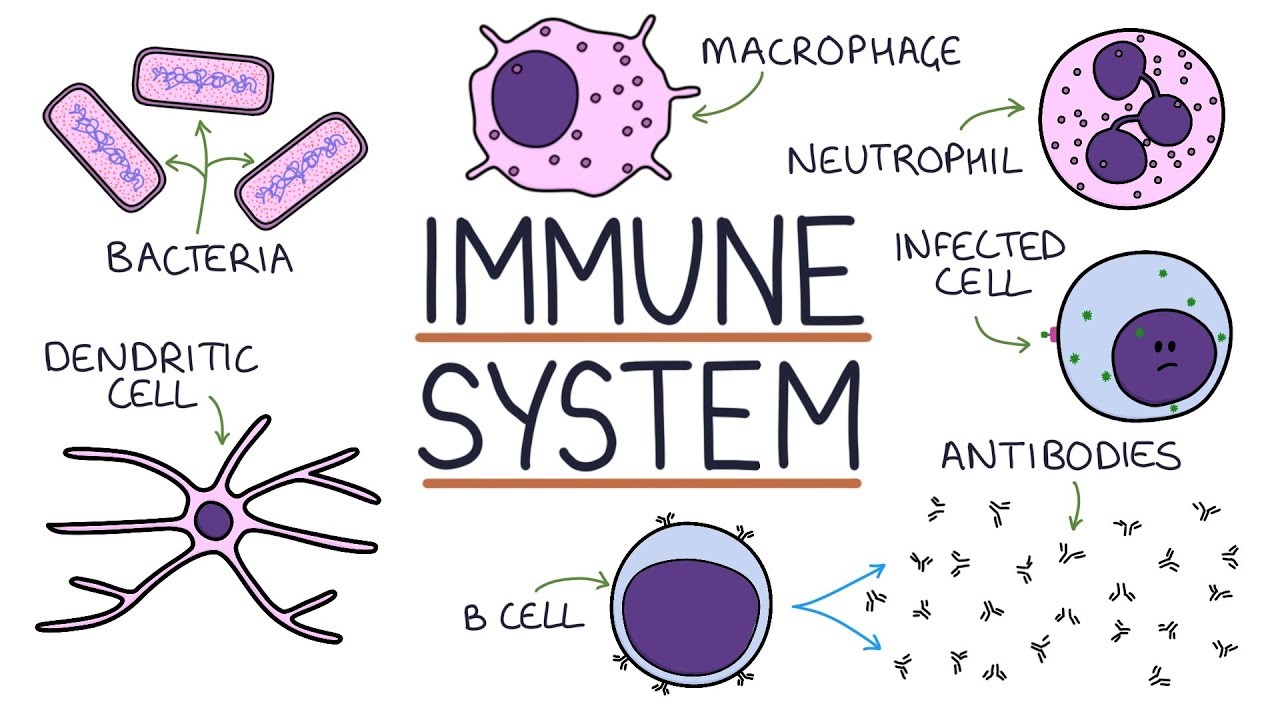
The group is interested in the study of the immune response from a multidisciplinary perspective that includes genomic, biochemical, proteomic, in vivo and biotechnological models aimed at the design of therapeutic strategies against various chronic, infectious and rare diseases that have a clear immunological component in their etiology.
The current specific objectives focus on:
- Antigenic presentation: Identification of antigenic presentation rules for their application in the design of therapeutic treatments including vaccines.
- Study of CD69 function and its regulation; its use as a therapeutic target in the mobilization of hematopoietic precursors and in the potentiation of the immune response mediated by CD69 with the potentiation of vaccines using the vaccinia virus as a vector.
The group is interested in the study of the immune response from a multidisciplinary perspective that includes genomic, biochemical, proteomic, in vivo and biotechnological models aimed at the design of therapeutic strategies against various chronic, infectious and rare diseases that have a clear immunological component in their etiology.
The current specific objectives focus on:
- Antigenic presentation: Identification of antigenic presentation rules for their application in the design of therapeutic treatments including vaccines.
- Study of CD69 function and its regulation; its use as a therapeutic target in the mobilization of hematopoietic precursors and in the potentiation of the immune response mediated by CD69 with the potentiation of vaccines using the vaccinia virus as a vector.