



We protect your health through science
Investigation
Immune Presentation and Regulation
Research Lines
Content with Investigacion .
Hepatitis
- Diseño de métodos diagnósticos para el estudio de los virus de las hepatitis (VH) A, B, C, D, E: Diseñamos sistemas de PCR para su detección y caracterización.
- Evaluación de métodos diagnósticos de los VH. Colaboramos con empresas para estudios de sensibilidad y especificidad de equipos diagnósticos.
- Estudios de Seroprevalencia de los virus de las hepatitis.
- Epidemiología genómica de genomas completos de VHA, VHB, VHC, VHD y VHE en colaboración con el ECDC. Estudios de trazabilidad del VHE.
- Caracterización molecular de virus de las hepatitis mediante secuenciación masiva: a) VHB: mutantes de escape HBsAg (prevalencia y efectos en la detección del HBsAg). Estudio de mutaciones en epítopos de estimulación inmune y mutaciones asociadas a evolución clínica desfavorable.
- b) VHC: resistencias a los antivirales de acción directa. Análisis molecular de subtipos poco frecuentes.
c) Estudios filogenéticos del VHD.
d) Análisis genómico del VHE.
e) Investigación etiológica de hepatitis no filiadas mediante estudios de metagenómica.
- b) VHC: resistencias a los antivirales de acción directa. Análisis molecular de subtipos poco frecuentes.
Research projects
Content with Investigacion .
1. Proyecto CIBEREPS 2022. Microbiological and genomic investigation of hepatitis in children by metagenomic approach in case and control subjects (IP: Ana Avellón).
2023-2024. En colaboración con el Hospital San Joan de Deu de Barcelona.
2. MPY 501-19: Tracking hepatitis E virus infection by means of epidemiological research and whole genome sequencing. Project TrazHE. (IP: Ana Avellón). 2020-2024.
3. Proyecto CIBEREPS 2021 Metagenomic sequencing to identify viral aetiologies in undiagnosed paediatric cases of meningitis and encephalitis (IP: D. Tarragó). 2021-2022.
4. MPY 383/19 (PEJ2018-004446-A). Ayudas para la promoción de empleo joven e implantación de la garantía juvenil en I+D+I. análisis de la complejidad de secuencias de los virus de la hepatitis A, B, C; D y E (VHA, VHB, VHC, VHD y VHE) mediante técnicas de secuenciación masiva. (IP: Ana Avellón). 2020-2021.
5. MPY 1285/16 Movilidad "Salvador de Madariaga" programa estatal de promoción de talento y su empleabilidad. (IP: Ana Avellón). 2016.
Publications
Efficacy of DNA amplification in tissue biopsy samples to improve the detection of invasive fungal disease
Buitrago MJ, Aguado JM, Ballen A, Bernal-Martinez L, Prieto M, Garcia-Reyne A, Garcia-Rodriguez J, Rodriguez-Tudela JL, Cuenca-Estrella M. Efficacy of DNA amplification in tissue biopsy samples to improve the detection of invasive fungal disease. Clin Microbiol Infect. 2013 Jun;19(6):E271-7. doi: 10.1111/1469-0691.12110. Epub 2013 Mar 7. PMID: 23464751.
PUBMED DOIPotent Induction of Envelope-Specific Antibody Responses by Virus-Like Particle Immunogens Based on HIV-1 Envelopes from Patients with Early Broadly Neutralizing Responses
Beltran-Pavez C, Bontjer I, Gonzalez N, Pernas M, Merino-Mansilla A, Olvera A, Miro JM, Brander C, Alcami J, Sanders RW, Sanchez-Merino V, Yuste E. J Virol. 2022 Jan 12, 96(1): e0134321
PUBMED DOIHIV-1 envelope glycoproteins isolated from Viremic Non-Progressor individuals are fully functional and cytopathic
Cabrera-Rodríguez R, Hebmann V, Marfil S, Pernas M, Marrero-Hernández S, Cabrera C, Urrea V, Casado C, Olivares I, Márquez-Arce D, Pérez-Yanes S, Estévez-Herrera J, Clotet B, Espert L, López-Galíndez C, Biard-Piechaczyk M, Valenzuela-Fernández A, Blanco J. Sci Rep. 2019 Apr 3,9(1):5544
PUBMED DOIViral Characteristics Associated with the Clinical Nonprogressor Phenotype Are Inherited by Viruses from a Cluster of HIV-1 Elite Controllers
Casado C, Marrero-Hernández S, Márquez-Arce D, Pernas M, Marfil S, Borràs-Grañana F, Olivares I, Cabrera-Rodríguez R, Valera MS, de Armas-Rillo L, Lemey P, Blanco J, Valenzuela-Fernández A, Lopez-Galíndez C. mBio. 2018 Apr 10,9(2): e02338-17
PUBMED DOIViral and Cellular Factors Leading to the Loss of CD4 Homeostasis in HIV-1 Viremic Nonprogressors.
Colomer-Lluch M, Kilpelainen A, Pernas M, Peña R, Ouchi D, Jimenez-Moyano E, Dalmau J, Casado C, López-Galíndez C, Clotet B, Martinez-Picado J, Prado JG. J Virol. 2022 Jan 12, 96(1): e0149921. doi: 10.1128/JVI.01499-21. Epub 2021 Oct 20.
PUBMED DOIContribution of the HIV-1 Envelope Glycoprotein to AIDS Pathogenesis and Clinical Progression
Valenzuela-Fernández A, Cabrera-Rodríguez R, Casado C, Pérez-Yanes S, Pernas M, García-Luis J, Marfil S, Olivares I, Estévez-Herrera J, Trujillo-González R, Blanco J, Lopez-Galindez C. Biomedicines. 2022 Sep 2,10(9):2172.
PUBMED DOIPrevalence of HIV-1 dual infection in LTNP-Elite Controllers
María Pernas, Concepción Casado, Virginia Sandonis, Carolina Arcones, Carmen Rodríguez , Ezequiel Ruiz-Mateos , Eva Ramírez de Arellano , Norma Rallón , Margarita Del Val , Eulalia Grau, Mariola López-Vazquez , Manuel Leal , Jorge del Romero , Cecilio López Galíndez . (2013). J.of AIDS. 64, 3, 225-231. IF 4.262
PUBMED DOIA Genome-to-Genome Analysis of Associations between Human Genetic Variation, HIV-1 Sequence Diversity, and Retroviral Control.
Istvan Bartha Jonathan M Carlson, Chanson J Brumme, Paul J McLaren, Zabrina L Brumme, Mina John, David W Haas, Javier Martinez-Picado, Cecilio López Galíndez, Andri Rauch, Huldrych F Günthard, Enos Bernasconi, Pietro Vernazza, Thomas Klimkait, Sabine Yerly, Jennifer Listgarten, Nico Pfeifer, Zoltan Kutalik, Todd M Allen, Viktor Müller, P Richard Harrigan, David Heckerman, Amalio Telenti, and Jacques Fellay, for the HIV Genome-to-Genome Study and the Swiss HIV Cohort Study. (2013). Elife. 2013;2:e01123
PUBMED DOIFactors Leading to the Loss of Natural Elite Control of HIV-1 Infection
Pernas M, Tarancón-Diez L, Rodríguez-Gallego E, Gómez J, Prado JG, Casado C, Dominguez-Molina B, Olivares I, Coiras M, León A, Rodriguez C, Benito JM, Rallón N, Plana M, Martinez-Madrid O, Dapena M, Iribarren JA, Del Romero J, García F, Alcamí J, Muñoz-Fernández M, Vidal F, Leal M, Lopez-Galindez C, Ruiz-Mateos E. J Virol. 2018 Feb 12,92(5): e01805-17
PUBMED DOIViruses from a cluster of HIV-1 Elite controllers inherit viral characteristics associated with the clinical non-progressor phenotype
Casado C, Marrero-Hernández S, Márquez-Arce D, Pernas M, Marfil S, Borràs-Grañana F, Olivares I, Cabrera-Rodríguez R, Valera M-S, de Armas-Rillo L, Lemey P, Blanco J, Valenzuela-Fernández A, Lopez-Galíndez C. 2018. mBio 9:e02338-17.
PUBMED DOIPermanent control of HIV-1 pathogenesis in exceptional elite controllers: a model of spontaneous cure
Casado C, Galvez C, Pernas M, Tarancon-Diez L, Rodriguez C, Sanchez-Merino V, Vera M, Olivares I, De Pablo-Bernal R, Merino-Mansilla A, Del Romero J, Lorenzo-Redondo R, Ruiz-Mateos E, Salgado M, Martinez-Picado J, Lopez-Galindez C. Sci Rep. 2020 Feb 5,10(1):1902
PUBMED DOIHigh-Risk Sexual Practices Contribute to HIV-1 Double Infection Among Men Who Have Sex with Men in Madrid
Casado C, Pernas M, Rava M, Ayerdi O, Vera M, Alenda R, Jiménez P, Docando F, Olivares I, Zaballos A, Vicario JL, Rodríguez C, Del Romero J, Lopez-Galindez C. AIDS Res Hum Retroviruses. 2020 Nov, 36(11):896-904
PUBMED DOIIdentification of a Spanish HIV-1 Long Term Non-Progressor cluster infected with a low replicating virus
Concepción Casado, Maria Pernas, Virginia Sandonis, Tamara Alvaro-Cifuentes, Isabel Olivares, Rosa Fuentes, Lorena Martínez Prats, Eulalia Grau, Lidia Ruiz, Rafael Delgado, Carmen Rodríguez, Jorge del Romero, and Cecilio López-Galíndez. (2013). PLoS One. 8 (10):e77663.
PUBMED DOI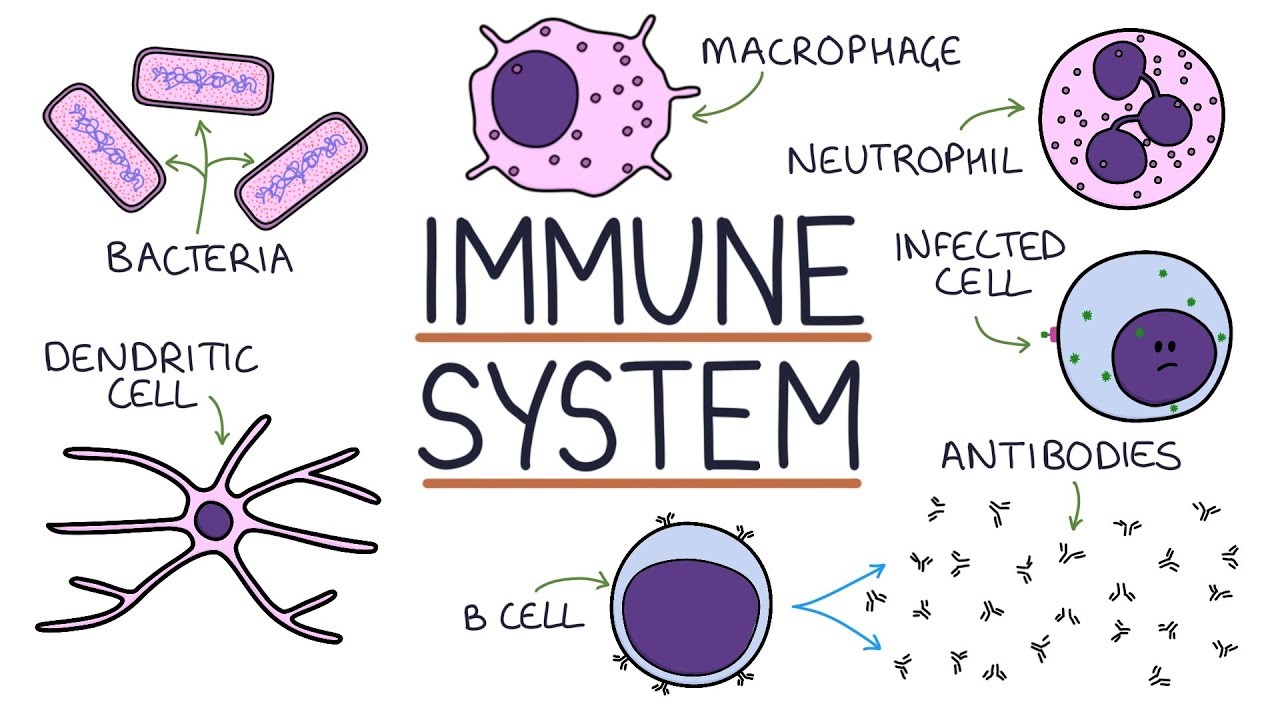
Additional Information
The group is interested in the study of the immune response from a multidisciplinary perspective that includes genomic, biochemical, proteomic, in vivo and biotechnological models aimed at the design of therapeutic strategies against various chronic, infectious and rare diseases that have a clear immunological component in their etiology.
The current specific objectives focus on:
- Antigenic presentation: Identification of antigenic presentation rules for their application in the design of therapeutic treatments including vaccines.
- Study of CD69 function and its regulation; its use as a therapeutic target in the mobilization of hematopoietic precursors and in the potentiation of the immune response mediated by CD69 with the potentiation of vaccines using the vaccinia virus as a vector.
The group is interested in the study of the immune response from a multidisciplinary perspective that includes genomic, biochemical, proteomic, in vivo and biotechnological models aimed at the design of therapeutic strategies against various chronic, infectious and rare diseases that have a clear immunological component in their etiology.
The current specific objectives focus on:
- Antigenic presentation: Identification of antigenic presentation rules for their application in the design of therapeutic treatments including vaccines.
- Study of CD69 function and its regulation; its use as a therapeutic target in the mobilization of hematopoietic precursors and in the potentiation of the immune response mediated by CD69 with the potentiation of vaccines using the vaccinia virus as a vector.