
We protect your health through science

Investigation

Immune Presentation and Regulation

Research Lines

Content with Investigacion Biología y Variabilidad del VIH .

Biología y Variabilidad del VIH

null

Research projects

Content with Investigacion Biología y Variabilidad del VIH .

Publications

Sort
Category

Vaccination with LytA, LytC, or Pce of Streptococcus pneumoniae Protects against Sepsis by Inducing IgGs That Activate the Complement System

Corsini B, Aguinagalde L, Ruiz S, Domenech M, Yuste J. Vaccination with LytA, LytC, or Pce of Streptococcus pneumoniae Protects against Sepsis by Inducing IgGs That Activate the Complement System. Vaccines. 2021 Feb 23;9(2):186.

PUBMED DOI

Physiologic and transcriptomic effects triggered by overexpression of wild type and mutant DNA topoisomerase I in Streptococcus pneumoniae

García-López M, Hernández P, Megias D, Ferrándiz MJ, de la Campa AG. Int J Mol Sci. 2023; 24:15800.

PUBMED DOI

StaR Is a positive regulator of topoisomerase I activity involved in supercoiling maintenance in Streptococcus pneumoniae

de Vasconcelos Junior AA, Tirado-Vélez JM, Martín-Galiano AJ, Megias D, Ferrándiz MJ, Hernández P, Amblar M, de la Campa AG. Int J Mol Sci. 2023; 24:5973.

PUBMED DOI

Role of PatAB transporter in efflux of levofloxacin in Streptococcus pneumoniae

Amblar M, Zaballos A, de la Campa AG. Antibiotics. 2022; 17:1837.

PUBMED DOI

Seconeolitsine, the novel inhibitor of DNA topoisomerase I, protects against invasive pneumococcal disease caused by fluoroquinolone-resistant strains.

Tirado-Vélez JM, Carreño D, Sevillano D, Alou L, Yuste J, de la Campa AG. Antibiotics 2021; 10:573.

PUBMED DOI

Genome-wide proximity between RNA polymerase and DNA topoisomerase I supports transcription in Streptococcus pneumoniae

Ferrándiz M-J, Hernández P, de la Campa AG. PLoS Genet. 2021; 17:e1009542.

PUBMED DOI

A Small Non-Coding RNA Modulates Expression of Pilus-1 Type in Streptococcus pneumoniae

Acebo P, Herranz C, Bernal-Espenberger L, Gómez-Sanz A, Terron MC, Luque D and Amblar M. Microorganisms. 2021; 9:1883.

PUBMED DOI

Reactive oxygen species production is a major factor directing the post-antibiotic effect of fluoroquinolones in Streptococcus pneumoniae

García MT, Valenzuela MV, Ferrándiz MJ, de la Campa AG. Antimicrob Agents Chemother. 2019; 63:e00737-19.

PUBMED DOI

HU of Streptococcus pneumoniae is essential for the preservation of DNA supercoiling

Ferrándiz MJ, Carreño D, Ayora S, de la Campa AG. Front Microbiol. 9:493 (2018).

PUBMED DOI

Boldine-derived alkaloids inhibit the activity of DNA topoisomerase I and growth of Mycobacterium tuberculosis.

García MT, Carreño D, Tirado-Vélez JM, Ferrándiz MJ, Rodrigues L, Gracia B, Amblar M, Ainsa JA*, de la Campa AG. Front Microbiol. 9:493 (2018).

PUBMED DOI

Absence of tmRNA has a protective effect against fluoroquinolones in Streptococcus pneumoniae

Brito L, Wilton J, Ferrándiz MJ, Gómez-Sanz A, de la Campa AG, Amblar M. Front. Microbiol. 7:2164 (2017).

PUBMED DOI

Bridging chromosomal architecture and pathophysiology of Streptococcus pneumoniae

Martín-Galiano AJ, Ferrándiz MJ, de la Campa AG. Genome Biol Evol. 2017; 9:350-361.

PUBMED DOI

Upregulation of the PatAB transporter confers fluoroquinolone resistance to Streptococcus pseudopneumoniae

Alvarado M, Martín-Galiano AJ, Ferrándiz MJ, Zaballos A, de la Campa AG. Front Microbiol. 8:2074 (2017).

PUBMED DOI

A novel typing method for Streptococcus pneumoniae using selected surface proteins

Domenech A, Moreno J, Ardanuy C, Liñares J, de la Campa AG, Martin-Galiano AJ. Front Microbiol. 2016; 31;7:420.

PUBMED DOI

An increase in negative supercoiling in bacteria reveals topology-reacting gene clusters and a homeostatic response mediated by the DNA topoisomerase I gene

Ferrándiz MJ, Martín-Galiano AJ, Arnanz C, Camacho-Soguero I, Tirado-Vélez JM, de la Campa AG. 2016. Nucl Acids Res. 44:7292-7303 (2016).

PUBMED DOI

Reactive oxygen species contribute to the bactericidal effects of the fluoroquinolone moxifloxacin in Streptococcus pneumoniae

Ferrándiz MJ, Martín-Galiano AJ, Arnanz C, Zimmerman T, de la Campa AG. Antimicrob Agents Chemother. 60:409-417 (2016).

PUBMED DOI

The fluoroquinolone levofloxacin triggers the transcriptional activation of iron transport genes that contribute to cell death in Streptococcus pneumoniae.

Ferrándiz MJ, de la Campa AG. Antimicrob Agents Chemother. 58:247-257 (2014)

PUBMED DOI

Fluoroquinolone-resistant pneumococci: dynamics of serotypes and clones in Spain in 2012 compared with those from 2002 and 2006

Domenech A, Tirado-Vélez JM, Fenoll A, Ardanuy C, Yuste J, Liñares J, de la Campa AG. Antimicrob Agents Chemother. 58:2393-2399 (2014).

PUBMED DOI

The balance between gyrase and topoisomerase I activities determines levels of supercoiling, nucleoid compaction, and viability in bacteria

García-López M, Megias D, Ferrándiz MJ, de la Campa AG. Front Microbiol. 2023; 11;1094692.

PUBMED DOI

Tyrosine kinase 2 modulates splenic B cells through type I IFN and TLR7 signaling.

Bodega-Mayor I, Delgado-Wicke P, Arrabal A, Alegría-Carrasco E, Nicolao-Gómez A, Jaén-Castaño M, Espadas C, Dopazo A, Martín-Gayo E, Gaspar ML, de Andrés B, Fernández-Ruiz E. Cell Mol Life Sci. 2024 Apr 29;81(1):199.

PUBMED DOI
Content with Investigacion Biología y Variabilidad del VIH .

List of staff

Additional Information

El grupo está interesado en el estudio de la respuesta inmune desde una perspectiva multidisciplinar que incluye aproximaciones genómicas, bioquímicas, proteómicas, modelos in vivo y biotecnológicas encaminadas al diseño de estrategias terapéuticas frente a diversas enfermedades crónicas, infecciosas y raras que poseen un claro componente inmunológico en su etiología. Los objetivos concretos actuales se centran en: Presentación antigénica: Identificación de las reglas de presentación antigénica para su aplicación en el diseño tratamientos terapéuticos incluyendo vacunas. Estudio de la función CD69 y su regulación; su uso como diana terapéutica en la movilización de precursores hematopoyéticos y en la potenciación de la respuesta inmune mediada por CD69 con en la potenciación de vacunas utilizando como vector el virus vaccinia.

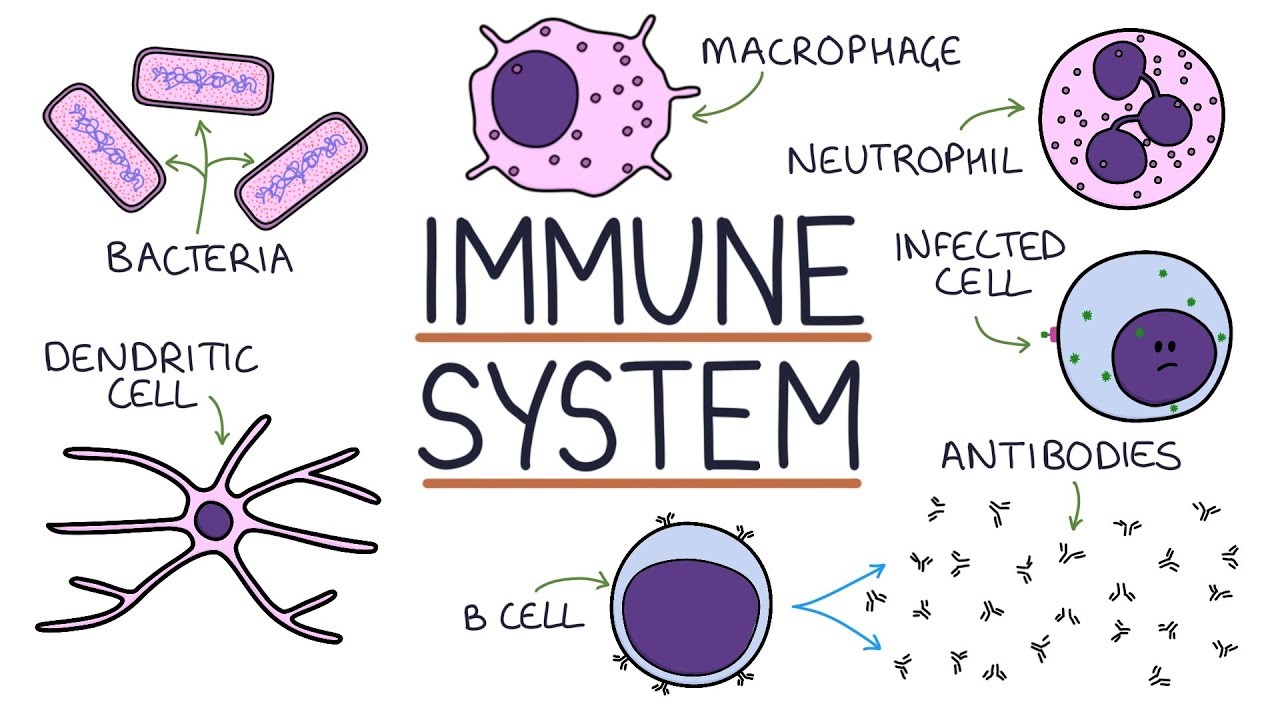
The group is interested in the study of the immune response from a multidisciplinary perspective that includes genomic, biochemical, proteomic, in vivo and biotechnological models aimed at the design of therapeutic strategies against various chronic, infectious and rare diseases that have a clear immunological component in their etiology.


The current specific objectives focus on:


  • Antigenic presentation: Identification of antigenic presentation rules for their application in the design of therapeutic treatments including vaccines.
  • Study of CD69 function and its regulation; its use as a therapeutic target in the mobilization of hematopoietic precursors and in the potentiation of the immune response mediated by CD69 with the potentiation of vaccines using the vaccinia virus as a vector.

The group is interested in the study of the immune response from a multidisciplinary perspective that includes genomic, biochemical, proteomic, in vivo and biotechnological models aimed at the design of therapeutic strategies against various chronic, infectious and rare diseases that have a clear immunological component in their etiology.


The current specific objectives focus on:


  • Antigenic presentation: Identification of antigenic presentation rules for their application in the design of therapeutic treatments including vaccines.
  • Study of CD69 function and its regulation; its use as a therapeutic target in the mobilization of hematopoietic precursors and in the potentiation of the immune response mediated by CD69 with the potentiation of vaccines using the vaccinia virus as a vector.

Content with Investigacion Biología y Variabilidad del VIH .