



We protect your health through science

Investigación
Mycobacteria
Líneas de investigación
Content with Investigacion .
Bacterial Genetics

Our group has been studying for more than 30 years the mechanisms of antibiotic resistance in Streptococcus pneumoniae (Spn). Our objectives are to understand the molecular basis of antimicrobial action, to search for new targets of action and new compounds. Seconeolitsine (SCN) is one of these new compounds targeting topoisomerase I (Topo I). As for the search for new targets, our research has focused in recent years on the factors that organize the topology of the chromosome, allowing optimal compaction (about 1000-fold) to harmonize its replication, chromosome segregation and gene expression. This compaction is mediated both by the level of DNA supercoiling (Sc) and by association with nucleoid-binding proteins (NAPs). The level of Sc depends mainly on the enzymatic activities of their DNA topoisomerases, reaching a homeostatic equilibrium by the opposite activities of the topoisomerases that relax DNA (Topo I and Topo IV), and of gyrase, which introduces negative Sc. Our group has characterized the three Spn topoisomerases and two NAPs: HU and SatR. In addition, the availability of antimicrobials that inhibit each of the Spn topoisomerases has allowed us to analyze their transcriptome under conditions of local or global change of the Sc level and to define gene domains of coordinated transcription and similar functions. Fluoroquinolones, which inhibit Topo IV and gyrase, produce local changes in Sc that induce alterations in 6% of the transcriptome, altering metabolic pathways that originate an increase in reactive oxygen species (ROS) that contribute to lethality, in accordance with the general mechanism of bactericidal antibiotics. On the other hand, the induction of global changes in Sc by novobiocin (NOV, gyrase inhibitor), or by SCN (Topo I inhibitor), has allowed us to define topological domains. Global changes in Sc include the regulation of topoisomerase genes: its decrease activates the transcription of gyrase genes (gyrA, gyrB) and inhibits those of Topo IV (parEC) and Topo I (topA); the increase in Sc regulates the expression of topA. Decreased Sc affects 37% of the genome, with >68% of genes clustered in 15 domains. Increased Sc affects 10% of the genome, with 25% of the genes clustered in 12 domains. The AT content in the genome correlates with the domains, being higher in UP domains than in DOWN domains. The genes in the different domains have common functional characteristics, indicating that they have been subjected to topological selective pressure to determine the location of genes involved in metabolism, virulence and competition.
The current objectives of the group are:
1. Identification of factors that stabilize chromosome topology: NAPs, ncRNAs, intra-chromosomal interactions.
2. Regulation of transcription in response to topological stress: in vivo localization of DNA topoisomerases, RNA polymerase and NAPs.
3. Topo I as a new antimicrobial target and action of SCN.
4. Design of antisense RNAs and use of the CRISPR system as new antibacterial agents.
Publicaciones destacadas
Curso de Gestión de Calidad y Buenas Prácticas de Laboratorio. Ed. 3
Grammatico JP, Cuevas L (Edits.) y Grupo de expertos de la Organización Panamericana de la Salud OPS/OMS. Curso de Gestión de Calidad y Buenas Prácticas de Laboratorio. Ed. 3. OPS/OMS;. Washington, D.C., 2016. Disponible en: “http://iris.paho.org/xmlui/handle/123456789/31168”. ISBN: 978-92-75-11906-8
Gestión de la Calidad para laboratorios de ensayo. 1ª ed.
Grammatico JP, Cuevas L (Edits.). Gestión de la Calidad para laboratorios de ensayo. 1ª ed. Conicet-Madri+d; Buenos Aires, 2011. Disponible en: “http://www.madrimasd.org/Laboratorios/Documentos/Red-Laboratorios/documentos/Gest_Calidad_Ensayo.pdf”. ISBN: 978-950-692-095-1
Curso de Gestión de Calidad y Buenas Prácticas de Laboratorio.
Grupo de expertos de la Organización Panamericana de la Salud OPS/OMS. Curso de Gestión de Calidad y Buenas Prácticas de Laboratorio. OPS; Documentos Técnicos THR/HT 2009/001. Washington, D.C., 2009. ISBN: 978-92-75-32977-1
Guía Latinoamericana para la implementación de Código de Ética en los laboratorios de salud.
Grupo de expertos de la Organización Panamericana de la Salud (OPS/OMS). Guía Latinoamericana para la implementación de Código de Ética en los laboratorios de salud. Organización Panamericana de la Salud. Documentos Técnicos. Políticas y Regulación. THS/EV-2007/001; 2007. ISBN: 92-7-532702-5
Identification of HIV-1 circulating BF1 recombinant form (CRF75_BF1) of Brazilian origin that also circulates in Southwestern Europe
Bacqué J, Delgado E, Gil H, Ibarra S, Benito S, García-Arata I, Moreno-Lorenzo M, Sáez de Arana E, Gómez-González C, Sánchez M, Montero V and Thomson MM. Front Microbiol. 2023. 14: 1301374
PUBMED DOIFactors associated with HIV-1 resistance to integrase strand transfer inhibitors in Spain: Implications for dolutegravir-containing regimens.
Gil H, Delgado E, Benito S, Moreno-Lorenzo M, Thomson MM and Spanish Group for the study of antirretroviral drug Resistance. Front Microbiol. 2022. 13:1051096
PUBMED DOITransmission clusters, predominantly associated with men who have sex with men, play a main role in the propagation of HIV-1 in Northern Spain (2013-2018).
Gil H, Delgado E, Benito S, Georgalis L, Montero V, Sánchez M, Cañada-García JE, García-Bodas E, Diaz A, Thomson MM and Spanish group of the study of new HIV diagnoses. Front Microbiol. 2022. 13:782609
PUBMED DOIContent with Investigacion .
-

Laura Alfonso Alarcón
PhD student
ORCID code: 0000-0003-1560-1100
Degree in Biochemistry in 2020 from National University of Asunción (Paraguay). Master in Microbiology and Health in 2024 from Pais Vasco University (Spain). Stays in Paraguay in Instituto de Investigaciones en Ciencias de la Salud; Facultad de Ciencias Químicas and Hospital Nacional de Itaugua. She is actually a predoctoral student of the Microbiología y Parasitología program of Complutense University of Madrid, with a “Don Carlos Antonio López” (BECAL) fellowship from Paraguay Goverment.
-
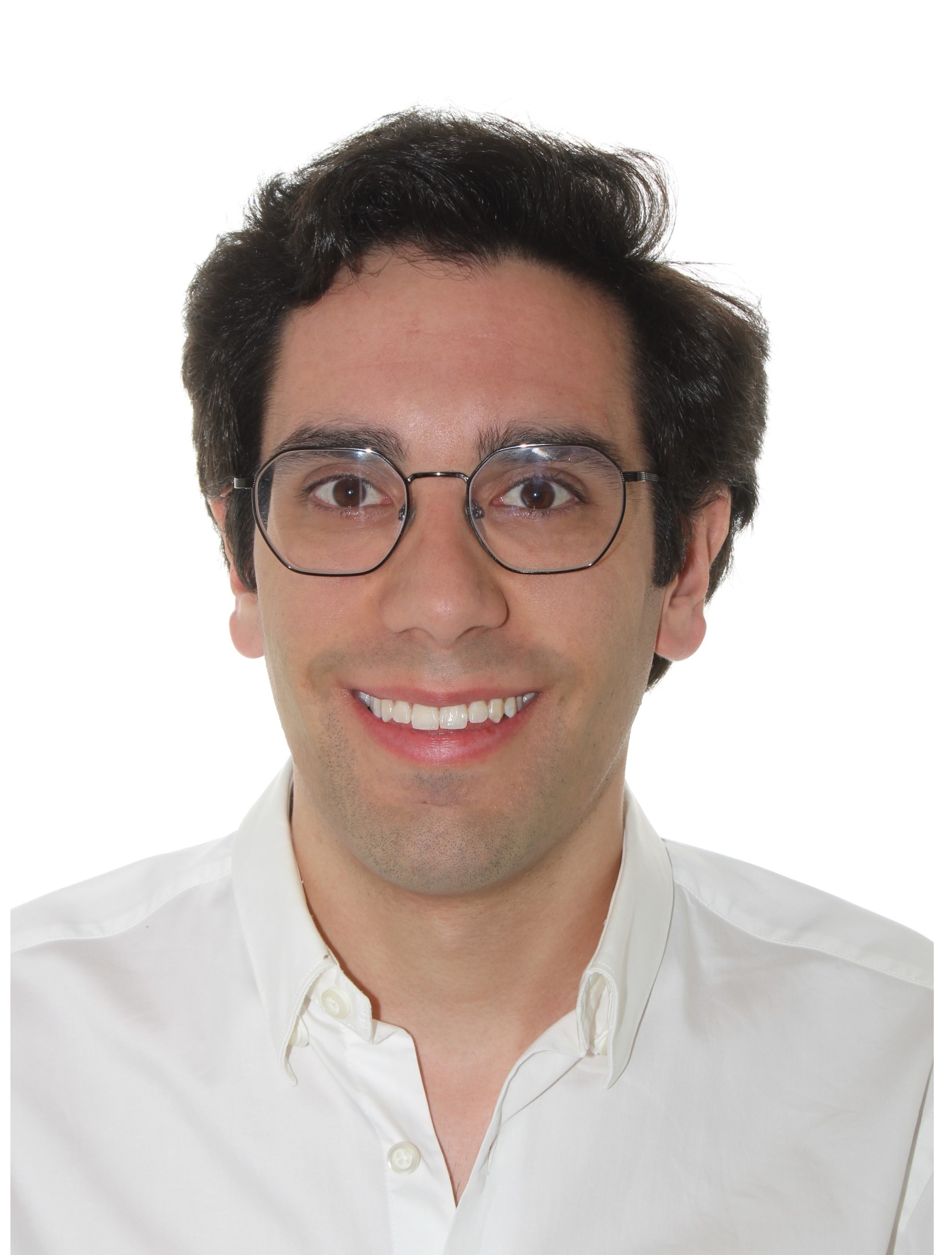
Pablo Herrera Marcelino
Research Assistant
ORCID code: 0009-0003-5137-3712
Graduated in Biochemistry in 2022 from the University of Malaga, and in Master's degrees in Microbiology and Parasitology (2024) and Virology (2025) from the Complutense University of Madrid. He also holds degrees in Clinical Laboratory Science (2023) from the same university and in Biotechnology Applied to Health (2023) from the UNED. He currently has a research assistant contract focusing on the study of pneumococcal proteins involved in RNA interaction.
-
Mónica Amblar Esteban
Research Scientist
ORCID code: 0000-0003-3530-615X
Dr. Mónica Amblar obtained her degree in Biology in 1993 and her PhD in 2000 from the Complutense University of Madrid. She did her doctoral thesis in the laboratory of Dr. Paloma López at the Centro de Investigaciones Biológicas of CSIC. Subsequently, she worked for 5 and half years at the Instituto de Tecnología Química e Biológica/Universidade Nova de Lisboa, Oeiras (Portugal) in the laboratory of Prof. Cecilia M. Arraiano. After this postdoctoral stage he rejoined the Centro de Investigaciones Biológicas del CSIC where he worked for 2 years as a Postdoctoral Researcher in the laboratory of Dr. Paloma López. Subsequently, he joined the National Microbiology Center of the ISCIII with a Ramón y Cajal contract and in 2010 he obtained a position as a Full Scientist at the same center.
-

María José Ferrándiz Avellano
Research Scientist
ORCID code: 0000-0003-1428-9506
Dr. María José Ferrández obtained her degree in Biology in 1990 and her PhD in 1997 from the Complutense University of Madrid. She completed her doctoral thesis at the Centro de Investigaciones Biológicas of CSIC in the laboratory of Dr. Miguel Vicente. She completed her postdoctoral training at the Centro Nacional de Microbiología of Instituto de Salud Carlos III (1998-2001 and 2003-2006) and at the Institute of Infection and Immunity (University of Nottingham) from 2001- 2003. From 2007 to 2015, she participated as a researcher of the CIBER of Respiratory Diseases (CIBERES). Since 2006, she is a Full Scientist at the National Microbiology Center of the ISCIII.
-
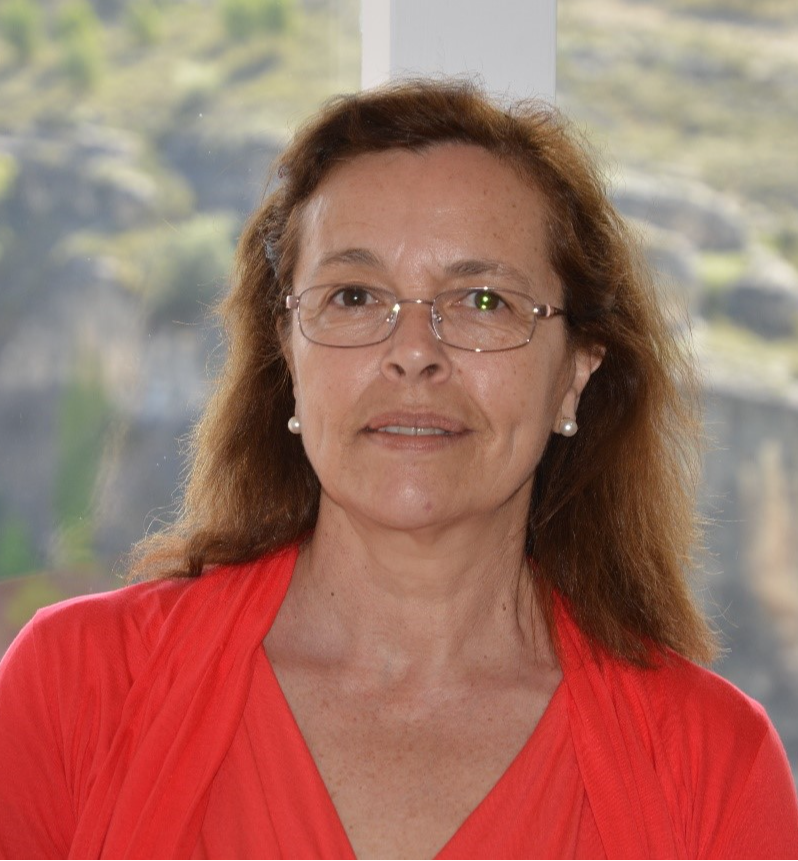
Adela González de la Campa
Scientific Investigator
ORCID code: 0000-0002-3598-2548
Dr. Adela González de la Campa obtained her degree in Biology in 1981 and her PhD in 1985 from the Complutense University of Madrid. She did her doctoral thesis in the laboratory of Dr. Miguel Vicente at the Centro de Investigaciones Biológicas of CSIC. Subsequently she worked for 2 years at Brookhaven National Laboratory, Upton, New York, USA in the laboratory of Sandford Lacks. After this postdoctoral stage in the USA, she worked for 3 years as a Reincorporation Fellow at the Centro de Investigaciones Biológicas of CSIC in the laboratory of Dr. Manuel Espinosa. He is a CSIC Senior Scientist since 1990 and Research Scientist since 2007. He participated as group leader of the CIBER of Respiratory Diseases (CIBERES) from 2007 to 2015. Since 1990, she has been the principal investigator of the Bacterial Genetics Unit at the National Centre for Microbiology.


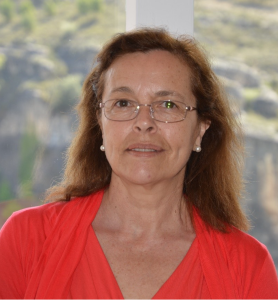
List of staff
Información adicional
• Taxonomic study. Objective: Association of already described species to new clinical processes. Description of new bacterial species.
• Sensitivity studies against new antituberculous drugs: Objective: To evaluate the antimicrobial activity of new compounds for human use in clinical strains of Mycobacterium tuberculosis and in other species of non-tuberculous mycobacteria, for subsequent application in the treatment of these infections.
• Molecular epidemiology of tuberculosis. Objectives: Molecular characterization of the members of the M. tuberculosis complex. Transmission studies with special surveillance of MDR/XDR tuberculosis.
• Development of new methods of identification and detection of resistance in mycobacteria. Objectives: Optimization and development of molecular techniques for the diagnosis and detection of resistance.