



We protect your health through science

Investigación
Malaria and Emerging Parasitosis
Líneas de investigación
Content with Investigacion .

B) Study of the distribution and dynamics of HPV infections in risk groups. There are some particularly vulnerable groups, some of them difficult to access (sex workers, transgender groups, etc.), in which HPV infections deserve special attention. The prevalence of HPV infection is especially high in people living with HIV and/or among men who have sex with men. Knowledge of the distribution and dynamics of infections is especially interesting in these groups, as they may help to improve current algorithms for the prevention of anogenital cancer.
C) Study of infection by HPV genotypes and their relationship with progression to neoplastic processes. The oncogenic capacity of some HPV genotypes and their involvement in the production of anogenital cancer is well known. In addition, there are other oncological processes, such as non-melanoma skin cancer, in which HPV could be implicated. Thus, members of the gamma-24 HPV species have recently been associated with skin cancer. It is to be hoped that the appearance of new genotypes and the performance of more extensive studies may lead to the identification of new associations between HPV and neoplastic processes.
D) Study of co-infections by different HPV genotypes. The presence of co-infections of different HPV genotypes is a very frequent finding, both in skin samples and in different mucous membranes. The great genetic diversity of HPV limits the ability of classical molecular methods to perform a comprehensive detection and study of the genotypes present. However, the use of massive sequencing makes it possible to eliminate some of these biases and to obtain more detailed information on the existing HPV populations, as well as to analyze interactions between the different genotypes.
E) Description of new HPV genotypes/variants. Currently at the International HPV Reference Center (Karolinska Institute, Sweden) more than 220 HPV genotypes are described, distributed in 5 different genera. However, improved molecular detection techniques, as well as the use of massive sequencing, are allowing this number to increase rapidly. The study of new genotypes and variants is essential for the validation and quality control of available diagnostic methods. Similarly, their characterization and the study of possible associations of HPV with pathologies other than those already known is a field of great interest for research.
Publicaciones destacadas
HCV eradication with IFN-based therapy does not completely restore gene expression in PBMCs from HIV/HCV-coinfected patients
Brochado-Kith; Martínez I; Berenguer J; et al; Fernández-Rodríguez A (AC); Resino S. (11/12). 2021. HCV eradication with IFN-based therapy does not completely restore gene expression in PBMCs from HIV/HCV-coinfected patients. Journal of Biomedical Sciences. Springer Nature. 28-1.
DOIOLFM4 polymorphisms predict septic shock survival after major surgery. Eur J Clin Invest.
Pérez-García F; Resino S; Gómez-Sánchez E; et al; Jiménez-Sousa MÁ (10/10). OLFM4 polymorphisms predict septic shock survival after major surgery. Eur J Clin Invest. 2021. 51(4):e13416. doi: 10.1111/eci.13416.
Alcazar-Fuoli L, Mellado E, Garcia-Effron G, Buitrago MJ, Lopez JF, Grimalt JO, Cuenca-Estrella JM, Rodriguez-Tudela JL. Aspergillus fumigatus C-5 sterol desaturases Erg3A and Erg3B: role in sterol biosynthesis and antifungal drug susceptibility. Antimicrob Agents Chemother. 2006 Feb
Alcazar-Fuoli L, Mellado E, Garcia-Effron G, Buitrago MJ, Lopez JF, Grimalt JO, Cuenca-Estrella JM, Rodriguez-Tudela JL. Aspergillus fumigatus C-5 sterol desaturases Erg3A and Erg3B: role in sterol biosynthesis and antifungal drug susceptibility. Antimicrob Agents Chemother. 2006 Feb;50(2):453-60. doi: 10.1128/AAC.50.2.453-460.2006. PMID: 16436696; PMCID: PMC1366924.
PUBMED14. Alcazar-Fuoli L, Mellado E, Alastruey-Izquierdo A, Cuenca-Estrella M, Rodriguez-Tudela JL. Aspergillus section Fumigati: antifungal susceptibility patterns and sequence-based identification. Antimicrob Agents Chemother. 2008 Apr
Alcazar-Fuoli L, Mellado E, Alastruey-Izquierdo A, Cuenca-Estrella M, Rodriguez-Tudela JL. Aspergillus section Fumigati: antifungal susceptibility patterns and sequence-based identification. Antimicrob Agents Chemother. 2008 Apr;52(4):1244-51. doi: 10.1128/AAC.00942-07. Epub 2008 Jan 22. PMID: 18212093; PMCID: PMC2292508.
PUBMED DOIAlcazar-Fuoli L, Mellado E, Alastruey-Izquierdo A, Cuenca-Estrella M, Rodriguez-Tudela JL. Species identification and antifungal susceptibility patterns of species belonging to Aspergillus section Nigri. Antimicrob Agents Chemother. 2009 Oct
Alcazar-Fuoli L, Mellado E, Alastruey-Izquierdo A, Cuenca-Estrella M, Rodriguez-Tudela JL. Species identification and antifungal susceptibility patterns of species belonging to Aspergillus section Nigri. Antimicrob Agents Chemother. 2009 Oct;53(10):4514-7. doi: 10.1128/AAC.00585-09. Epub 2009 Jul 27. PMID: 19635955; PMCID: PMC2764190.
PUBMED DOIAlcazar-Fuoli L, Mellado E, Cuenca-Estrella M, Sanglard D. Probing the role of point mutations in the cyp51A gene from Aspergillus fumigatus in the model yeast Saccharomyces cerevisiae. Med Mycol. 2011 Apr
Alcazar-Fuoli L, Mellado E, Cuenca-Estrella M, Sanglard D. Probing the role of point mutations in the cyp51A gene from Aspergillus fumigatus in the model yeast Saccharomyces cerevisiae. Med Mycol. 2011 Apr;49(3):276-84. doi: 10.3109/13693786.2010.512926. Epub 2010 Sep 10. PMID: 20831364.
PUBMED DOIAlcazar-Fuoli L, Cuesta I, Rodriguez-Tudela JL, Cuenca-Estrella M, Sanglard D, Mellado E. Three-dimensional models of 14α-sterol demethylase (Cyp51A) from Aspergillus lentulus and Aspergillus fumigatus: an insight into differences in voriconazole interaction. Int J Antimicrob Agents. 2011 Nov
Alcazar-Fuoli L, Cuesta I, Rodriguez-Tudela JL, Cuenca-Estrella M, Sanglard D, Mellado E. Three-dimensional models of 14α-sterol demethylase (Cyp51A) from Aspergillus lentulus and Aspergillus fumigatus: an insight into differences in voriconazole interaction. Int J Antimicrob Agents. 2011 Nov;38(5):426-34. doi: 10.1016/j.ijantimicag.2011.06.005. Epub 2011 Aug 25. PMID: 21871783.
PUBMED DOIAlcazar-Fuoli L, Mellado E. Ergosterol biosynthesis in Aspergillus fumigatus: its relevance as an antifungal target and role in antifungal drug resistance.
Alcazar-Fuoli L, Mellado E. Ergosterol biosynthesis in Aspergillus fumigatus: its relevance as an antifungal target and role in antifungal drug resistance. Front Microbiol. 2013 Jan 10;3:439. doi: 10.3389/fmicb.2012.00439. PMID: 23335918; PMCID: PMC3541703.
PUBMED DOIBernal-Martínez L, Alcazar Fuoli L, Miguel-Revilla B, Carvalho A, Cuétara Garcia MS, Garcia-Rodriguez J, Cunha C, Gómez-García de la Pedrosa E, Gomez-Lopez A. High-Resolution Melting Assay for Genotyping Variants of the CYP2C19 Enzyme and Predicting Voriconazole Effectiveness. Antimicrob Agents Chemother. 2019 May 24
Bernal-Martínez L, Alcazar Fuoli L, Miguel-Revilla B, Carvalho A, Cuétara Garcia MS, Garcia-Rodriguez J, Cunha C, Gómez-García de la Pedrosa E, Gomez-Lopez A. High-Resolution Melting Assay for Genotyping Variants of the CYP2C19 Enzyme and Predicting Voriconazole Effectiveness. Antimicrob Agents Chemother. 2019 May 24;63(6):e02399-18. doi: 10.1128/AAC.02399-18. PMID: 30910893; PMCID:PMC6535561.
PUBMED DOILupiañez CB, Martínez-Bueno M, Sánchez-Maldonado JM, Badiola J, Cunha C, Springer J, Lackner M, Segura-Catena J, Canet LM, Alcazar-Fuoli L, López-Nevot MA, Fianchi L, Aguado JM, Pagano L, López-Fernández E, Alarcón-Riquelme M, Potenza L, Gonçalves SM, Luppi M, Moratalla L, Solano C, Sampedro A, González-Sierra P, Cuenca-Estrella M, Lagrou K, Maertens JA, Lass-Flörl C, Einsele H, Vazquez L; PCRAGA Study Group, Loeffler J, Ríos-Tamayo R, Carvalho A, Jurado M, Sainz J. Polymorphisms within the ARNT2 and CX3CR1 Genes Are Associated with the Risk of Developing Invasive Aspergillosis. Infect Immun. 2020 Mar 23
Lupiañez CB, Martínez-Bueno M, Sánchez-Maldonado JM, Badiola J, Cunha C, Springer J, Lackner M, Segura-Catena J, Canet LM, Alcazar-Fuoli L, López-Nevot MA, Fianchi L, Aguado JM, Pagano L, López-Fernández E, Alarcón-Riquelme M, Potenza L, Gonçalves SM, Luppi M, Moratalla L, Solano C, Sampedro A, González-Sierra P, Cuenca-Estrella M, Lagrou K, Maertens JA, Lass-Flörl C, Einsele H, Vazquez L; PCRAGA Study Group, Loeffler J, Ríos-Tamayo R, Carvalho A, Jurado M, Sainz J. Polymorphisms within the ARNT2 and CX3CR1 Genes Are Associated with the Risk of Developing Invasive Aspergillosis. Infect Immun. 2020 Mar 23;88(4):e00882-19. doi: 10.1128/IAI.00882-19. PMID: 31964743; PMCID: PMC7093133.
PUBMED DOIAre Reduced Levels of Coagulation Proteins Upon Admission Linked to COVID-19 Severity and Mortality? Front Med (Laussane).
Ceballos FC; Ryan P; Blancas R; et al; Jiménez-Sousa MÁ (20/20). Are Reduced Levels of Coagulation Proteins Upon Admission Linked to COVID-19 Severity and Mortality? Front Med (Laussane). 2021; 8:718053. PMID: 34660629. doi: 10.3389/fmed.2021.718053.
T allele was linked to non-AIDS progression in ART-naïve HIV-infected patients: a retrospective study.
Jiménez-Sousa MA; Jiménez JL; Bellón JM; et al (1/10). CYP27B1 rs10877012 T allele was linked to non-AIDS progression in ART-naïve HIV-infected patients: a retrospective study. J Acquir Immune Defic Syndr 2020 ;85(5):659-664. doi: 10.1097/QAI.0000000000002485.
PBMCs gene expression signature of advanced cirrhosis with high risk for clinically significant portal hypertension in HIV/HCV coinfected patients
Salguero, Sergio; Brochado-Kith, Oscar; Verdices, Ana Virseda; et al; Jiménez-Sousa María A (‡, AC); Resino, Salvador (‡, AC). (12/12). 2023. PBMCs gene expression signature of advanced cirrhosis with high risk for clinically significant portal hypertension in HIV/HCV coinfected patients: A cross-control study. Biomedicine & pharmacotherapy. 159, pp.114220. ISSN 1950-6007.
Relative telomere length impact on mortality of COVID-19: Sex differences.Journal of medical virology.
Virseda-Berdices, Ana; Concostrina-Martinez, Leyre; Martinez-Gonzalez, Oscar; et al; Fernandez-Rodriguez, Amanda (‡), Jiménez-Sousa María A (‡). (14/14). 2023. Relative telomere length impact on mortality of COVID-19: Sex differences.Journal of medical virology. 95-1, pp.e28368. ISSN 1096-9071.
Plasma miRNA profile at COVID-19 onset predicts severity status and mortality.
Fernandez-Pato, Asier; Virseda-Berdices, Ana; Resino, Salvador; et al; Jiménez-Sousa María A (‡, AC); Fernandez-Rodriguez, Amanda (‡). (20/20). 2022. Plasma miRNA profile at COVID-19 onset predicts severity status and mortality. EMERGING MICROBES & INFECTIONS. 11(1):676-688. doi: 10.1080/22221751.2022.2038021.
Blood microbiome is associated with changes in portal hypertension after successful direct-acting antiviral therapy in patients with HCV-related cirrhosis.The Journal of antimicrobial chemotherapy.
Virseda-Berdices, Ana; Brochado-Kith, Oscar; Diez, Cristina; et al; Jimenez-Sousa, Maria Angeles. (16/16). 2021. Blood microbiome is associated with changes in portal hypertension after successful direct-acting antiviral therapy in patients with HCV-related cirrhosis.The Journal of antimicrobial chemotherapy. 77(3):719-726. doi: 10.1093/jac/dkab444. ISSN 1460-2091.
Chronic pulmonary aspergillosis update: A year in review. Med Mycol. 2019 Apr 1
Barac A, Kosmidis C, Alastruey-Izquierdo A, Salzer HJF; CPAnet. Chronic pulmonary aspergillosis update: A year in review. Med Mycol. 2019 Apr 1;57(Supplement_2):S104-S109. doi: 10.1093/mmy/myy070. PMID: 30816975.
PUBMED DOILaursen CB, Davidsen JR, Van Acker L, Salzer HJF, Seidel D, Cornely OA, Hoenigl M, Alastruey-Izquierdo A, Hennequin C, Godet C, Barac A, Flick H, Munteanu O, Van Braeckel E. CPAnet Registry-An International Chronic Pulmonary Aspergillosis Registry. J Fungi (Basel). 2020 Jun
Laursen CB, Davidsen JR, Van Acker L, Salzer HJF, Seidel D, Cornely OA, Hoenigl M, Alastruey-Izquierdo A, Hennequin C, Godet C, Barac A, Flick H, Munteanu O, Van Braeckel E. CPAnet Registry-An International Chronic Pulmonary Aspergillosis Registry. J Fungi (Basel). 2020 Jun 29;6(3):E96. doi: 10.3390/jof6030096. PMID: 32610566.
PUBMED DOIProject from GEMICOMED (SEIMC) and REIPI. Molecular identification and susceptibility testing of molds isolated in a Prospective Surveillance of Triazole Resistance in Spain (FILPOP2 study). Antimicrob Agents Chemother. 2018 Jun
Alastruey-Izquierdo A*, Alcazar-Fuoli L, Rivero-Menéndez O, Ayats J, Castro C, García-Rodríguez J, Goterris-Bonet L, Ibáñez-Martínez E, Linares-Sicilia MJ, Martin-Gomez MT, Martín-Mazuelos E, Pelaez T, Peman J, Rezusta A, Rojo S, Tejero R, Vicente Anza D, Viñuelas J, Zapico MS, Cuenca-Estrella M; members of the FILPOP2 Project from GEMICOMED (SEIMC) and REIPI. Molecular identification and susceptibility testing of molds isolated in a Prospective Surveillance of Triazole Resistance in Spain (FILPOP2 study). Antimicrob Agents Chemother. 2018 Jun 25. doi: 10.1128/AAC.00358-18. PMID: 29941643.
PUBMED DOIIn vitro activity of APX001A against rare moulds using EUCAST and CLSI methodologies. J Antimicrob Chemother. 2019 May 1
Rivero-Menendez O, Cuenca-Estrella M, Alastruey-Izquierdo A.* In vitro activity of APX001A against rare moulds using EUCAST and CLSI methodologies. J Antimicrob Chemother. 2019 May 1;74(5):1295-1299. doi: 10.1093/jac/dkz022. PMID: 30753499.
PUBMED DOIContent with Investigacion .
-
Horacio Gil Gil
Research Scientist
ORCID code: 0000-0002-7114-6686
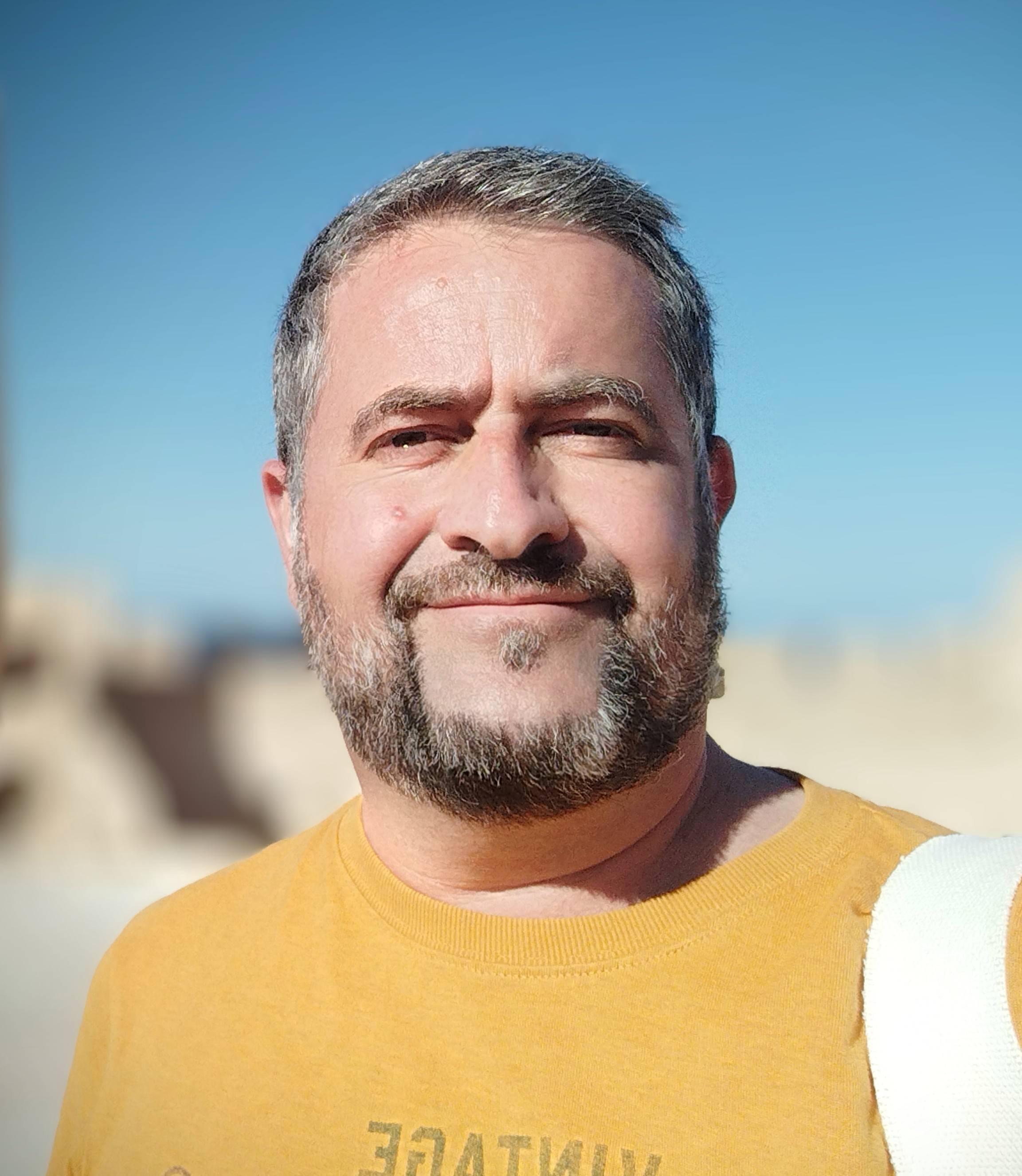
Degree in Veterinary Medicine in 1995 and PhD in Veterinary Medicine in 2002 from the University of Zaragoza. He did his PhD thesis at NEIKER Tecknalia (Derio, Vizcaya) and the National Center for Microbiology of Instituto de Salud Carlos III (CNM-ISCIII, Majadahonda, Madrid) on the biological cycle of Lyme disease in the Basque Country. After that, he developed his postdoctoral training in different aspects of the pathogenesis of tularemia at the Center for Infectious Diseases, Stony Brook University, New York (USA) for 3 years. In December 2005, he joined the Reference and Research Laboratory in Special Pathogens of the CNM-ISCIII where he developed diagnostic, reference and research activities, in Bartonella, Leptospira and pathogens of interest in bioterrorism. Between 2014-2016 he participated in the European Program for the Training of Microbiologists in Public Health (EUPHEM), organized by the European Centre for Disease Prevention and Control. During this program, he participated in an international mission for the investigation of a cholera outbreak in Ghana, proposed by the Bernhard Nocht Institute for Tropical Diseases in Hamburg (Germany). In December 2016, he worked as a laboratory consultant for the World Health Organization at their office in Phnom Penh (Cambodia). Subsequently, he worked one year with Médecins Sans Frontières as director and quality manager of the TB laboratory in Nukus (Uzbekistan).
In 2019, he joined the HIV Variability and Biology Unit at CNM-ISCIII, where he developed different reference and research activities, including his contribution to the molecular epidemiological surveillance of HIV-1 in Spain and the study of HIV-1 antiretroviral resistance. Since September 2022 he has been leading the Human Papillomavirus Unit at the CNM-ISCIII. -

Manuela Rodríguez Vargas
Técnico de Laboratorio
-
Alicia Inés García Señán
Predoctoral Student UNED
Degree in Pharmacy in 2013 from the Complutense University of Madrid. She completed specialized health training in Microbiology and Parasitology at the Complejo Asistencial Universitario de Salamanca (2014-2018). During this period he studied a master's degree in Tropical Diseases at the University of Salamanca (2016). She has developed her professional activity as a clinical microbiologist at the Hospital de Santa Bárbara (Soria) (2018), Hospital Universitario Vall d'Hebrón (Barcelona) (2019-2022), and Hospital Central de la Defensa (Gómez Ulla) C.S.V.E, since 2022. In September 2024 she has started PhD studies at the Human Papillomavirus Unit of the CNM-ISCIII.


List of staff
Información adicional
Despite progress, parasitic diseases remain a major challenge for humans. Its rapid and accurate detection, as well as the identification of specific genes related to virulence and/or resistance to treatments, is a necessity for management and planning control strategies.
The main objective of the group is to carry out quality, competitive and innovative research, to acquire, disseminate and apply in clinical parasitology with the ultimate goal of improving and innovating in the diagnoses, therapies and control of parasitic diseases. This general objective is implemented through external projects and collaborations with different funding sources:
- Characterization of submicroscopic malaria. National Hospital Network. (FIS-ISCIII).
- Design, optimization and validation of advanced diagnostic methods for the detection of blood parasites (Retos-MICINN).
- Control of onchocerciasis in Equatorial Guinea. CNMTrop-ISCIII (Task Force, USA).
- Characterization and control of Mansonellosis and Onchocerciasis in the Amazon region in Brazil. FIOCRUZ from Amazonas, Brazil. (Cpnqt-Brazil).
- Plasmodium knowlesi and its implication as the fifth species of human malaria. MRC, Malaysia.
- Intestinal parasitosis in Egypt from Cryptosporidium (protozoan) to Capillaria (Nematode). Cairo University and Al-Azhar University, Egypt. (MHESR, AECID).