



We protect your health through science
Investigation
AIDS Immunopathology
Research Lines
Content with Investigacion .
Virus entéricos
1. Vigilancia microbiológica y epidemiológica a nivel nacional de las infecciones causadas por enterovirus y parechovirus y de los casos de parálisis flácida aguda en menores de 15 años. Caracterización, asociación clínica y epidemiología molecular.
2. Investigación de los enterovirus y parechovirus que causan infecciones neurológicas y sistémicas severas en población pediátrica. Estudio de los factores virológicos implicados en la patogenicidad.
3. Estudio virológico de muestras ambientales (aguas residuales y tratadas para consumo) de la CAM.
4. Estudio virológico (diagnóstico y caracterización) de las infecciones gastrointestinales causadas por virus (norovirus, rotavirus y otros). Epidemiología molecular y caracterización de brotes.
Investigación y vigilancia de los poliovirus y la poliomielitis
El Laboratorio de Enterovirus (actualmente de Virus Entéricos) del CNM fue designado Laboratorio Nacional de Poliovirus en 1998 y desde entonces es certificado anualmente por la OMS, como parte del Plan Global de Erradicación de la Poliomielitis. Es responsable, junto a 3 laboratorios primarios en 3 CCAA, de la vigilancia de la poliomielitis a nivel nacional, estudiando e investigando (clínica, epidemiológica y virológicamente) todos los casos compatibles, incluidos los de parálisis flácida aguda en menores de 15 años (enfermedad de notificación obligatoria) para descartar la presencia y circulación de poliovirus en España.
Además, desde 1999 (y gracias a un convenio con el CYII) posee toda la infraestructura y metodología necesaria para realizar vigilancia medioambiental en aguas, tanto para medir la calidad de las aguas potables de ETAP, como para monitorizar la excreción de virus por parte de la población con el estudio de la presencia de poliovirus y otros enterovirus en aguas residuales de EDAR. Esto ha permitido que, a partir de marzo de este año, se estén realizando, además, ensayos de presencia de SARS-CoV-2 en las muestras procedentes de diferentes EDAR situadas en la CAM.
Investigación y referencia en infecciones por enterovirus y parechovirus
El Laboratorio también es Laboratorio de Referencia para las infecciones por Enterovirus y Parechovirus realizando: 1) el diagnostico virológico en muestras clínicas; 2) la caracterización de todos los enterovirus y parechovirus detectados (Programa de Vigilancia Microbiológica del CNM); 3) el desarrollo, mantenimiento y transferencia de métodos de diagnóstico y tipado, tanto moleculares como de cultivo viral; y 4) la investigación para profundizar en el conocimiento de aquellos virus implicados en casos de excepcional importancia clínica o epidemiológica. La larga experiencia del grupo en la propagación de cultivos virales de enterovirus y en técnicas celulares y moleculares de caracterización, ha permitido que el CNM posea una amplia colección de cepas, muy valiosa para la investigación de estos virus.
Investigación y referencia en infecciones gastrointestinales causadas por virus
Desde 2016, el laboratorio realiza: 1) el diagnostico virológico de Norovirus, Rotavirus, Adenovirus 40/41, Astrovirus y otros virus productores de gastroenteritis aguda en muestras clínicas; 2) el genotipado de los virus detectados y la caracterización de brotes; 3) el desarrollo y mantenimiento de métodos de diagnóstico y genotipado; y 4) la investigación básica y epidemiológica de aquellos virus de mayor importancia clínica.
Research projects
Content with Investigacion .
Proyectos de investigación financiados en los últimos 5 años
- Investigación de las infecciones neurológicas graves en niños causadas por enterovirus emergentes en España: EV-A71 y EV-D68 (PI18CIII/00017). Financiación: ISCIII. 2019-2021. IP: M. Cabrerizo
- Metagenomic sequencing to identify viral etiologies in undiagnosed cases of meningitis and encephalitis (PI20CIII/00005). Financiación: ISCIII. 2021-2023. IP: M.D. Fernández-García
- Investigación en infecciones por enterovirus y parechovirus que causan patologías neurológicas y sistémicas graves en población infantil (PI15CIII/00020). Financiación: ISCIII. 2016-2019. IP: M. Cabrerizo
- Aplicación de la secuenciación masiva para el diagnóstico de infecciones neurológicas de origen vírico no filiadas (PI-0216-2019). Financiación: Junta de Andalucía, Consejería de Salud y Familias. 2019-2021. IP: M.D. Fernández-García (2019)/ Ana Belen Pérez-Jiménez (2020-21)
- Epidemiología y patogenia molecular de los enterovirus y parechovirus asociados a sepsis e infecciones neurológicas en población infantil en España (PI12/00904). Financiación: ISCIII. 2013-2016. IP: M. Cabrerizo
Otros proyectos de investigación relevantes en los que ha colaborado o colabora el grupo
- Dinámica de colonización e infección por E. coli enteroagregativo en poblaciones pediátricas y su asociación con la composición de la microbiota intestinal mediante análisis metagenómico (PI18CIII/00043). Financiación: ISCIII. 2019-2021. IP: S. Sánchez
- Paving the way for implementing a syndromic diagnostic scheme at the CNM for the diagnosis of diarrhoea-causing pathogens in stool samples based on molecular and metagenomics methods (PI19CIII/00029). Financiación: ISCIII. 2020-2022. IP: D. Carmena
- Engineering lactobacilli for intranasal immunization against the emerging enterovirus D68 (EV-D68) infections and prevention of acute flaccid myelitis. Financiación: ESCMID. 2019-2020. IP: M.C. Póvoa-Cabral
- Análisis epidemiológico y virológico de los agentes virales incluidos en la vacuna triple vírica: nuevos retos (PI15CIII/00023). Financiación: ISCIII. 2016-2019. IP: F. de Ory/A. Fernández
- Epidemiología general y molecular de la hepatitis E en España: ¿una zoonosis emergente? (PI080865). Financiación: ISCIII. 2009-2012. IP: M. Fogeda
- Etiología de las meningitis y encefalitis víricas en España (PI07/90154). Financiación: ISCIII. 2008-2010. IP: F. de Ory
- Investigation of the dynamics and geography of the spread of recombinant forms of human enteroviruses (WT081173MA). Financiación: Wellcome Trust. 2007-2010. IP: P. Simmonds.
Convenios
- Servicios para la realización de estudios virológicos previstos en el agua procedentes para Canal de Isabel II-Gestión (MVP-207/18). Financiación: Canal de Isabel II. 2018-2021. IP: M. Cabrerizo
- Análisis virológico en muestras de aguas procedentes del Canal de Isabel II (MVI-1005/99). Financiación: Canal de Isabel II. 2016-2017. IP: M. Cabrerizo
Publications
Toll-like receptor signaling-deficient cells enhance antitumor activity of cell-based immunotherapy by increasing tumor homing
A. Morales-Molina, M.A. Rodríguez-Milla, S,. Gambera, T. Cejalvo, B. de Andrés M.L. Gaspar, J. Garcia-Castro. Cancer Res Commun 2023 Mar 1;3(3):347-360. eCollection 2023 Mar
PUBMED DOIImmune stress suppresses innate immune signaling in preleukemic precursor B-cells to provoke leukemia in predisposed mice
Isidro-Hernández M, Casado-García A, Oak N, Alemán-Arteaga S, Ruiz-Corzo B, Martínez-Cano J, Mayado A, G. Sánchez E, Blanco O, Gaspar ML, Orfao A, Alonso-López D, De las Rivas J, Riesco S, Prieto-Matos P, González-Murilo A, García Criado FJ, García Cenador MB, Ramírez-Orellana M, De Andrés B, Vicente-Dueñas C, Cobaleda C, Nichols KE, Sánchez-García I. Nat Commun 2023 Aug 24;14(1):5159.
PUBMED DOIRole of Toll-like receptor 4 in intravascular hemolisis-mediated injury
Vázquez-Carballo C, Herencia C, Guerrero-Hue M, García-Caballero C, Rayego-Mateos S, Morgado-Pascual JL, Opazo-Rios L, González-Guerrero C, Vallejo-Mudarra M, Cortegano I, Gaspar ML, de Andrés B, Egido J, Moreno JA. J Pathol. 2022 Nov; 258(3): 236–249.
PUBMED DOIAge-dependent nasal immune responses in non-hospitalized bronchiolitis children
Cortegano I, Rodríguez M, Hernángómez S, Arrabal A, Garcia-Vao C, Rodríguez J, Sandra Fernández S, Díaz J, de la Rosa B, Solís B, Arribas C, Garrido F, Zaballos A, Roa S, López V, Gaspar ML, de Andrés B. Front Immunol 2022 Dec 6:13:1011607.
PUBMED DOIToll-like receptors in acute kidney injury
Vázquez-Carballo C, Guerrero-Hue M, García Caballero C, Rayego-Mateos S, Opazo-Rios L, Morgado-Pascual JL, Herencia-Bellido C, Vallejo-Mudarra M, Cortegano I, Gaspar ML, de Andrés B, Egido J, Moreno-Gutiérrez JA. Int J Mol Sci. 2021 Jan; 22(2): 816.
PUBMED DOIThe TLR4-MyD88 Signaling Regulates Lung Monocyte Differentiation Pathways in Response to Streptococcus pneumoniae
Sánchez-Tarjuelo R, Cortegano I, Manosalva J, Rodríguez M, Ruiz C, Alía M, Prado MC, Cano EM, Ferrándiz MJ, de la Campa A, Gaspar ML, de Andrés B. Front Immunol 2020 Sep 16:11:2120.
PUBMED DOINrf2 plays a protective role against intravascular hemolysis-mediated acute kidney injury.
Rubio-Navarro A, Vázquez-Carballo C, Guerrero-Hue M, García-Caballero C, Herencia C, Gutierrez E, Yuste C, Sevillano A, Praga M, Egea J, Cannata P, Cortegano I, de Andrés B, Gaspar ML, Cadenas S, Michalska P, León R, Ortiz, A, Egido J, Moreno JA. Front Pharmacol. 2019; 10: 740.
PUBMED DOIPodocytes as new cellular targets of hemoglobin toxicity in massive intravascular hemolysis.
Rubio-Navarro A, Sanchez-Niño MD, Guerrero-Hue M, García-Caballero C, Gutiérrez E, Yuste C, Sevillano A, Praga M, Egea J, Román E, Cannata P, Ortega R, Cortegano I, de Andrés B, Gaspar ML, Cadenas S, Ortiz A, Egido J, Moreno JA. Podocytes as new cellular targets of hemoglobin toxicity in massive intravascular hemolysis. 2018. J.Pathol. 244(3):296-310.
PUBMED DOISpatially-restricted JAG1-Notch signaling in the human thymus provides permissive microenvironments for dendritic cell development.
Martín Gayo, E., González-García, S., García-León, M., Murcia-Ceballos, A., Alcain, J., García-Peydró, M., Allende, L., de Andrés, B., Gaspar, ML. and Toribio, ML. J.Exp.Med. (2017) 214:3361-3379
PUBMED DOIThe formation of titan cells in Cryptococcus neoformans depends on the mouse strain and correlates with induction of Th2-type responses
García-Barbazán, I., Trevijano-Contador, N., Rueda, C., de Andrés, B., Pérez-Tavárez, R., Herrero-Fernández, I., Gaspar ML., and Zaragoza, O. Cellular Microbiology (2015) 18:111-124
PUBMED DOIRoles of the multiplex real-time PCR assay and β-D-glucan in a high-risk population for intra-abdominal candidiasis (IAC)
Fortún J, Buitrago MJ, Gioia F, Gómez-Gª de la Pedrosa E, Alvarez ME, Martín-Dávila P, Pintado V, Cobeta P, Martinez-Castro N, Soriano C, Moreno I, Corral S, Muñoz P, Moreno-Jimenez G, Cuenca-Estrella M, Moreno-Guillen S. Med Mycol. 2020 Aug 1;58(6):789-796.
PUBMED DOIEuropean collaborative evaluation of the Enzygnost HBsAg 6.0 assay: performance on hepatitis B virus surface antigen variants
• Avellón A, Echevarría JM, Weber B, Weik M, Schobel U, Willems WR, Gerlich WH. European collaborative evaluation of the Enzygnost HBsAg 6.0 assay: performance on hepatitis B virus surface antigen variants. J Med Virol. 2011 Jan;83(1):95-100.
PUBMED DOIPrevalence of pSCFS7-like vectors among cfr-positive staphylococcal population in Spain.
Prevalence of pSCFS7-like vectors among cfr-positive staphylococcal population in Spain. Nguyen LTT*, Román F*, Morikawa K, Trincado P, Marcos C, Rojo-Martín MD, Cafini F. Int J Antimicrob Agents. 2018 Aug;52(2):305-306.
PUBMED DOIZoonotic pathogens in fluctuating common vole (Microtus arvalis) populations: occurrence and dynamics
Rodriguez-Pastor, Ruth; Escudero, Raquel; Lambin, Xavier; Vidal, M Dolors; Gil, Horacio; Jado, Isabel; Rodriguez-Vargas, Manuela; Luque-Larena, Juan Jose; Mougeot, Francois. Zoonotic pathogens in fluctuating common vole (Microtus arvalis) populations: occurrence and dynamics. Parasitology. pp. 1 - 10. 24/09/2018.
PUBMED DOILong-range dispersal moved Francisella tularensis into Western Europe from the East
Dwibedi, Chinmay; Birdsell, Dawn; Larkeryd, Adrian; Myrtennas, Kerstin; Ohrman, Caroline; Nilsson, Elin; Karlsson, Edvin; Hochhalter, Christian; Rivera, Andrew; Maltinsky, Sara; Bayer, Brittany; Keim, Paul; Scholz, Holger C; Tomaso, Herbert; Wittwer, Matthias; Beuret, Christian; Schuerch, Nadia; Pilo, Paola; Hernandez Perez, Marta; Rodriguez-Lazaro, David; Escudero, Raquel; Anda, Pedro; Forsman, Mats; Wagner, David M; Larsson, Par; Johansson, Anders. Long-range dispersal moved Francisella tularensis into Western Europe from the East. Microbial genomics. 2 - 12, pp. e000100. 01/01/2016.
PUBMED DOIFrancisella species in ticks and animals, Iberian Peninsula
Lopes de Carvalho, I.; Toledo, A.; Carvalho, C. L.; Barandika, J. F.; Respicio-Kingry, L. B.; Garcia-Amil, C.; Garcia-Perez, A. L.; Olmeda, A. S.; Ze-Ze, L.; Petersen, J. M.; Anda, P.; Nuncio, M. S.; Escudero, R. Francisella species in ticks and animals, Iberian Peninsula. Ticks and Tick-Borne Diseases. 7 - 1, pp. 159 - 165. Elsevier GMBH, Urban & Fischer Verlag, 01/01/2016.
PUBMED DOIStable levels of Coxiella burnetii prevalence in dairy sheep flocks but changes in genotype distribution after a 10-year period in northern Spain
Álvarez-Alonso R, Barandika JF, Ruiz-Fons F, Ortega-Araiztegi I, Jado I, Hurtado A, García-Pérez AL. Stable levels of Coxiella burnetii prevalence in dairy sheep flocks but changes in genotype distribution after a 10-year period in northern Spain. Acta Vet Scand. 2018 Nov 20;60(1):75.
PUBMED DOIEvidence for Suppression of Onchocerciasis Transmission in Bioko Island, Equatorial Guinea
Moya L, Herrador Z, Ta-Tang TH, Rubio JM, Perteguer MJ, Hernandez-González A, García B, Nguema R, Nguema J, Ncog P, Garate T, Benito A, Sima A and Aparicio P. Evidence for Suppression of Onchocerciasis Transmission in Bioko Island, Equatorial Guinea.PLoS Negl Trop Dis, 2016; 10(7): e0004829.
PUBMED DOILAMP kit for diagnosis of non-falciparum malaria in Plasmodium ovale infected patients
Cuadros J, Martin Ramírez A, González IJ, Ding XC, Perez Tanoira R, Rojo-Marcos G, Gómez-Herruz P, Rubio JM. LAMP kit for diagnosis of non-falciparum malaria in Plasmodium ovale infected patients. Malar J. 2017 Jan 7;16(1):20.
PUBMED DOIPlasmodium species differentiation by non-expert on-line volunteers for remote malaria field diagnosis
Ortiz-Ruiz A, Postigo M, Gil-Casanova S, Cuadrado D, Bautista JM, Rubio JM, Luengo-Oroz M, Linares M. Plasmodium species differentiation by non-expert on-line volunteers for remote malaria field diagnosis. Malar J. 2018 Jan 30;17(1):54.
PUBMED DOIStudy of the diagnostic accuracy of microbiological techniques in the diagnosis of malaria in the immigrant population in Madrid
Martín-Díaz A, Rubio JM, Herrero-Martínez JM, Lizasoain M, Ruiz-Giardin JM, Jaqueti J, Cuadros J, Rojo-Marcos G, Martín-Rabadán P, Calderón M, Campelo C, Velasco M, Pérez-Ayala A. Study of the diagnostic accuracy of microbiological techniques in the diagnosis of malaria in the immigrant population in Madrid. Malar J. 2018 Aug 29;17(1):314.
PUBMED DOIpective comparative multi-centre study on imported Plasmodium ovale wallikeri and Plasmodium ovale curtisi infections.
Rojo-Marcos G, Rubio-Muñoz JM, Angheben A, Jaureguiberry S, García-Bujalance S, Tomasoni LR, Rodríguez-Valero N, Ruiz-Giardín JM, Salas-Coronas J, Cuadros-González J, García-Rodríguez M, Molina-Romero I, López-Vélez R, Gobbi F, Calderón-Moreno M, Martin-Echevarría E, Elía-López M, Llovo-Taboada J; TropNet Plasmodium ovale investigator group. Prospective comparative multi-centre study on imported Plasmodium ovale wallikeri and Plasmodium ovale curtisi infections. Malar J. 2018 Oct 30;17(1):399.
PUBMED DOIImported and autochthonous malaria in West Saudi Arabia: results from a reference hospital
Soliman RH, Garcia-Aranda P, Elzagawy SM, Hussein BE, Mayah WW, Martin Ramirez A, Ta-Tang TH, Rubio JM. Imported and autochthonous malaria in West Saudi Arabia: results from a reference hospital. Malar J. 2018 Aug 7;17(1):286.
PUBMED DOICryptosporidium hominis genotypes involved in increased incidence and clusters of cases, Navarra, Spain, 2012.
Fuentes, I., Martín, C., Beristain, X; Mazón,A, Saugar, JM, Blanco, A; García M, Cenoz, Valle-Cristia, Ezpeleta, C., Castilla, J. 2015. Cryptosporidium hominis genotypes involved in increased incidence and clusters of cases, Navarra, Spain, 2012. Epidemiology and Infection; 143:1033-6
PUBMED DOIMolecular genotyping of Giardia duodenalis isolates from symptomatic individuals attending two major public hospitals in Madrid, Spain.
Lucio A, Martínez-Ruiz R, Merino FJ, Bailo B, Aguilera M, Fuentes I, Carmena D. 2015. Molecular genotyping of Giardia duodenalis isolates from symptomatic individuals attending two major public hospitals in Madrid, Spain. PLoS One. 10 (12): e0143981.
PUBMED DOIOccurrence and subtype distribution of Blastocystis sp. in humans, dogs, and cats sharing household in northern Spain and assessment of zoonotic transmission risk.
Paulos S, Köster PC, de Lucio A, Hernández-de-Mingo M, Cardona GA, Fernández-Crespo JC, Stensvold RC, Carmena D. 2018. Occurrence and subtype distribution of Blastocystis sp. in humans, dogs, and cats sharing household in northern Spain and assessment of zoonotic transmission risk. Zoonoses and Public Health, 65:993-1002.
PUBMED DOIPhlebotomine sand fly survey in the focus of leishmaniasis of Madrid, Spain (2012–2014): seasonal dynamics, Leishmania infantum infection rates and blood meal preferences.
González E, Jiménez M, Hernández S, Martín-Martín I, Molina R. Phlebotomine sand fly survey in the focus of leishmaniasis of Madrid, Spain (2012–2014): seasonal dynamics, Leishmania infantum infection rates and blood meal preferences. Parasit Vectors 2017, 10:368.
PUBMED DOIMethods in Sand Fly Research
Molina R, Jiménez M, Alvar J, González E, Hernández-Taberna S, Martín-Martín Inés. 2017. Methods in Sand Fly Research (R. Molina, M. Jiménez & J. Alvar, edits.). Servicio de Publicaciones Universidad de Alcalá de Henares. ISBN: 978-84-16978-28-1
Factors associated with Leishmania asymptomatic infection: results from a cross-sectional survey in highland northern Ethiopia
Custodio E, Gadisa E, Sordo L, Cruz I, Moreno J, Nieto J, Chicharro C, Aseffa A, Abraham Z, Hailu T, Cañavate C. Factors associated with Leishmania asymptomatic infection: results from a cross-sectional survey in highland northern Ethiopia. PLoS Negl Trop Dis. 2012;6(9):e1813.
PUBMED DOICytokine Release Assays as Tests for Exposure to Leishmania, and for Confirming Cure from Leishmaniasis, in Solid Organ Transplant Recipients.
Carrillo E, Carrasco-Antón N, López-Medrano F, Salto E, Fernández L, San Martín JV, Alvar J, Aguado JM, Moreno J. Cytokine Release Assays as Tests for Exposure to Leishmania, and for Confirming Cure from Leishmaniasis, in Solid Organ Transplant Recipients. PLoS Negl Trop Dis. 2015 Oct 23;9(10):e0004179.
PUBMED DOIChemotactic Protein 1 in Plasma from Soluble Leishmania Antigen-Stimulated Whole Blood as a Potential Biomarker of the Cellular Immune Response to Leishmania infantum
Ibarra-Meneses AV, Sanchez C, Alvar J, Moreno J, Carrillo E. Monocyte Chemotactic Protein 1 in Plasma from Soluble Leishmania Antigen-Stimulated Whole Blood as a Potential Biomarker of the Cellular Immune Response to Leishmania infantum. Front Immunol. 2017 Sep 29;8:1208.
PUBMED DOICytokines and chemokines measured in dried SLA-stimulated whole blood spots for asymptomatic Leishmania infantum and Leishmania donovani infection.
Ibarra-Meneses AV, Mondal D, Alvar J, Moreno J, Carrillo E. Cytokines and chemokines measured in dried SLA-stimulated whole blood spots for asymptomatic Leishmania infantum and Leishmania donovani infection. Sci Rep. 2017 Dec 8;7(1):17266.
PUBMED DOICellular Markers of Active Disease and Cure in Different Forms of Leishmania infantum-Induced Disease.
Botana L, Matía B, San Martin JV, Romero-Maté A, Castro A, Molina L, Fernandez L, Ibarra-Meneses A, Aguado M, Sánchez C, Horrillo L, Chicharro C, Nieto J, Ortega S, Ruiz-Giardin JM, Carrillo E, Moreno J. Cellular Markers of Active Disease and Cure in Different Forms of Leishmania infantum-Induced Disease. Front Cell Infect Microbiol. 2018 Nov 13;8:381.
PUBMED DOICarroll MW et al. Temporal and spatial analysis of the 2014-2015 Ebola virus outbreak in West Africa. Nature.
Carroll MW et al. Temporal and spatial analysis of the 2014-2015 Ebola virus outbreak in West Africa. Nature. 2015 Aug 6;524(7563):97-101. doi: 10.1038/nature14594. Epub 2015 Jun 17. PMID: 26083749.
Fernandez-Garcia MD, Meertens L, Chazal M, Hafirassou ML, Dejarnac O, Zamborlini A, Despres P, Sauvonnet N, Arenzana-Seisdedos F, Jouvenet N, Amara A. Vaccine and Wild-Type Strains of Yellow Fever Virus Engage Distinct Entry Mechanisms and Differentially Stimulate Antiviral Immune Responses.
Fernandez-Garcia MD, Meertens L, Chazal M, Hafirassou ML, Dejarnac O, Zamborlini A, Despres P, Sauvonnet N, Arenzana-Seisdedos F, Jouvenet N, Amara A. Vaccine and Wild-Type Strains of Yellow Fever Virus Engage Distinct Entry Mechanisms and Differentially Stimulate Antiviral Immune Responses. mBio. 2016 Feb 9;7(1):e01956-15. doi: 10.1128/mBio.01956-15. PMID: 26861019; PMCID:PMC4752603.
Identification and whole-genome characterization of a recombinant Enterovirus B69 isolated from a patient with Acute Flaccid Paralysis in Niger, 2015
Fernandez-Garcia MD, Majumdar M, Kebe O, Ndiaye K, Martin J. Identification and whole-genome characterization of a recombinant Enterovirus B69 isolated from a patient with Acute Flaccid Paralysis in Niger, 2015. Sci Rep. 2018 Feb 1;8(1):2181. doi: 10.1038/s41598-018-20346-9. PMID: 29391547; PMCID: PMC5795009.
Majumdar M, Sharif S, Klapsa D, Wilton T, Alam MM, Fernandez-Garcia MD, Rehman L, Mujtaba G, McAllister G, Harvala H, Templeton K, Mee ET, Asghar H, Ndiaye K, Minor PD, Martin J. Environmental Surveillance Reveals Complex Enterovirus Circulation Patterns in Human Populations. Open Forum Infect Dis. 2018
Majumdar M, Sharif S, Klapsa D, Wilton T, Alam MM, Fernandez-Garcia MD, Rehman L, Mujtaba G, McAllister G, Harvala H, Templeton K, Mee ET, Asghar H, Ndiaye K, Minor PD, Martin J. Environmental Surveillance Reveals Complex Enterovirus Circulation Patterns in Human Populations. Open Forum Infect Dis. 2018 Oct 1;5(10):ofy250. doi: 10.1093/ofid/ofy250. PMID: 30377626; PMCID: PMC6201154.
Fernandez-Garcia MD, Majumdar M, Kebe O, Fall AD, Kone M, Kande M, Dabo M, Sylla MS, Sompare D, Howard W, Faye O, Martin J, Ndiaye K. Emergence of Vaccine-Derived Polioviruses during Ebola Virus Disease Outbreak, Guinea, 2014-2015.
Fernandez-Garcia MD, Majumdar M, Kebe O, Fall AD, Kone M, Kande M, Dabo M, Sylla MS, Sompare D, Howard W, Faye O, Martin J, Ndiaye K. Emergence of Vaccine-Derived Polioviruses during Ebola Virus Disease Outbreak, Guinea, 2014-2015. Emerg Infect Dis. 2018 Jan;24(1):65-74. doi: 10.3201/eid2401.171174. PMID:29260690; PMCID: PMC5749474.
Tarragó, D.; Mateos, M.-L.; Avellón, A.; Pérez-Vázquez, M.-D.; Tenorio, A.2004
Tarragó, D.; Mateos, M.-L.; Avellón, A.; Pérez-Vázquez, M.-D.; Tenorio, A.2004. Quantitation of Cytomegalovirus DNA in Cerebrospinal Fluid and Serum Specimens from AIDS Patients Using a Novel Highly Sensitive Nested Competitive PCR and the Cobas Amplicor CMV Monitor™ Journal of Medical Virology. 72-2, pp.249-256. ISSN 01466615. 10. Tarragó, D.; Quereda, C.; Tenorio, A.2003. Different cytomegalovirus glycoprotein B genotype distribution in serum and cerebrospinal fluid specimens determined by a novel multiplex nested PCR Journal of Clinical Microbiology. 41-7, pp.2872-2877. ISSN 00951137.
Fernandez-Garcia, Maria Dolores (AC); Kebe, Ousmane; Fall, Aichatou D.; Dia, Hamet; Diop, Ousmane M.; Delpeyroux, Francis; Ndiaye, Kader. 2016.
Fernandez-Garcia, Maria Dolores (AC); Kebe, Ousmane; Fall, Aichatou D.; Dia, Hamet; Diop, Ousmane M.; Delpeyroux, Francis; Ndiaye, Kader. (1/ 7). 2016. Enterovirus A71 Genogroups C and E in Children with Acute Flaccid Paralysis, West Africa EMERGING INFECTIOUS DISEASES. 22-4, pp.753-755. ISSN 1080-6040.
Molecular epidemiology of coxsackievirus B3 infection in Spain, 2004-2015.
K Calderón, M Díaz-de Cerio, C Muñoz-Almagro, N Rabella, I Martínez-Rienda, A Moreno-Docón, G Trallero, M Cabrerizo*. Molecular epidemiology of coxsackievirus B3 infection in Spain, 2004-2015. Arch Virol 161: 1365-1370 (2016).
PUBMED DOIDevelopment and Evaluation of a Serological Assay for the Diagnosis of Tuberculosis in Alpacas and Llamas.
Development and Evaluation of a Serological Assay for the Diagnosis of Tuberculosis in Alpacas and Llamas. Infantes-Lorenzo, Jose A.; Whitehead, Claire E.; Moreno, Inmaculada; et ál..FRONTIERS IN VETERINARY SCIENCE Volumen: 5 Número de artículo: 189 Fecha de publicación: AUG 13 2018
PUBMED DOIInfluence of the Microenvironment in the Transcriptome of Leishmania infantum Promastigotes: Sand Fly versus Culture
Influence of the Microenvironment in the Transcriptome of Leishmania infantum Promastigotes: Sand Fly versus Culture. Alcolea, Pedro J.; Alonso, Ana; Dominguez, Mercedes; et ál..PLOS NEGLECTED TROPICAL DISEASES Volumen: 10 Número: 5 Número de artículo: e0004693 Fecha de publicación: MAY 2016
PUBMED DOIContent with Investigacion .
-
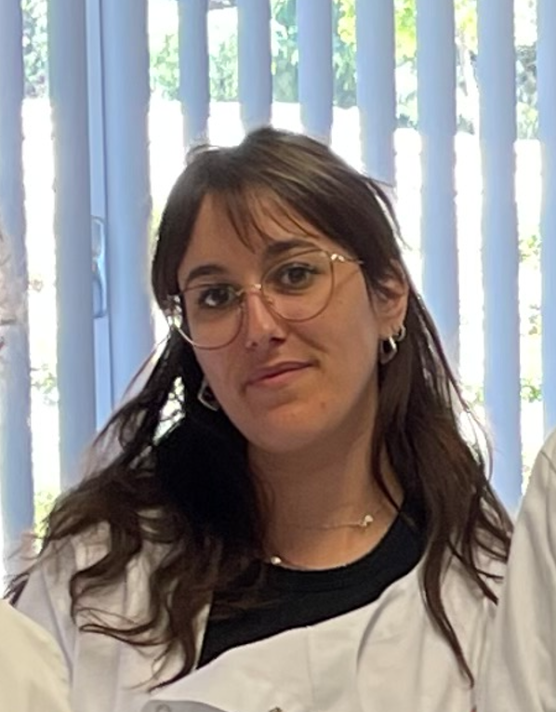
Aída Úbeda Trillo
Técnico de Laboratorio
Técnico superior en laboratorio de diagnóstico clínico en 2019. Lleva vinculada a la Unidad de Neumococos desde 2023 como técnico de laboratorio contratada. Anteriormente estuvo contratada en el Servicio de Microbiología y Urgencias del Hospital Infanta Sofía de Madrid.
-

José Enrique Yuste Lobo
Científico Titular
ORCID code: 0000-0001-7996-0837
Licenciado en Farmacia en 1998 y Doctor en 2002 por la Universidad Complutense de Madrid. Realizó su tesis doctoral en el laboratorio de neumococos del Centro Nacional de Microbiología del ISCIII. Posteriormente trabajó durante 5 años en Londres, primero como Investigador Asociado en el Centre for Molecular Microbiology and Infection Biology de Imperial College hasta 2003 y luego en el Centre for Respiratory Research de University College hasta 2007. Tras esta etapa posdoctoral en Reino Unido, trabajó durante 3 años como Investigador Senior en el Centro de Investigaciones Biológicas del CSIC hasta 2010. Desde entonces trabaja como Científico Titular en la Unidad de Neumococos del CNM-ISCIII, siendo el responsable científico del laboratorio desde el año 2016. Es investigador principal del grupo CIBER de Enfermedades Respiratorias (CIBERES) CB06/06/0003 (https://www.ciberes.org/grupos/grupo-de-investigacion?id=18143)
-

Mirian Domenech Luchas
Investigadora posdoctoral
ORCID code: 0000-0002-0942-8180
Licenciada en Ciencias Biológicas en 2005 y Doctora en 2012 por la Universidad Complutense de Madrid. Realizó su tesis doctoral en el Centro de Investigaciones Biológicas del CSIC bajo la dirección del Profesor Ernesto García y la Dra. Miriam Moscoso caracterizando el biofilm neumocócico y estudiando distintos antimicrobianos para prevenir y tratar las infecciones producidas por neumococo y otros patógenos. Posteriormente ha trabajado como investigadora junior para el CIBER de Enfermedades Respiratorias y para la empresa Investigación y Proyectos Microbiológicos realizando estudios sobre biofilms de patógenos respiratorios. A finales del 2018 se incorporó a la Unidad de Neumococos del Centro Nacional Microbiología del ISCIII, donde participa en las distintas labores de investigación y referencia de la Unidad y es profesora ayudante Doctor de la Facultad de Biología de la Universidad Complutense de Madrid.
-
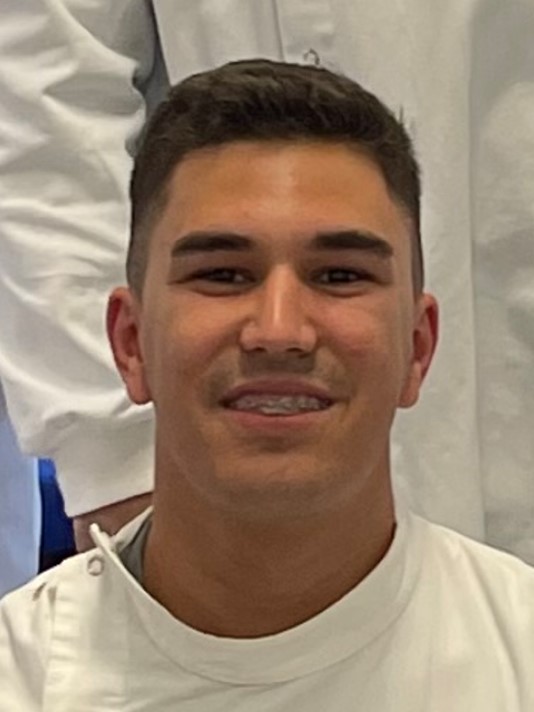
Julio Sempere García
Investigador Posdoctoral
ORCID code: 0000-0001-9340-6867
Graduado en Bioquímica por la Universidad Complutense de Madrid, donde posteriormente cursó estudios de Máster en Microbiología y Parasitología. Actualmente realiza el programa de doctorado en Microbiología y Parasitología. Lleva asociado a la Unidad de Neumococos desde 2017, donde realizó las prácticas extracurriculares de grado y posteriormente realizó su trabajo de fin de grado (2018) y trabajo de fin de máster (2019). En 2022 obtuvo el grado de Doctor y actualmente investiga biofilms de bacterias Gram positivas, la matriz de estos y cómo interaccionan con el sistema inmune. También trabaja en la interacción de diferentes cápsulas de Streptococcus pneumoniae con el sistema inmune y patogénesis de serotipos emergentes incluidos en las futuras vacunas antineumocócicas.
-
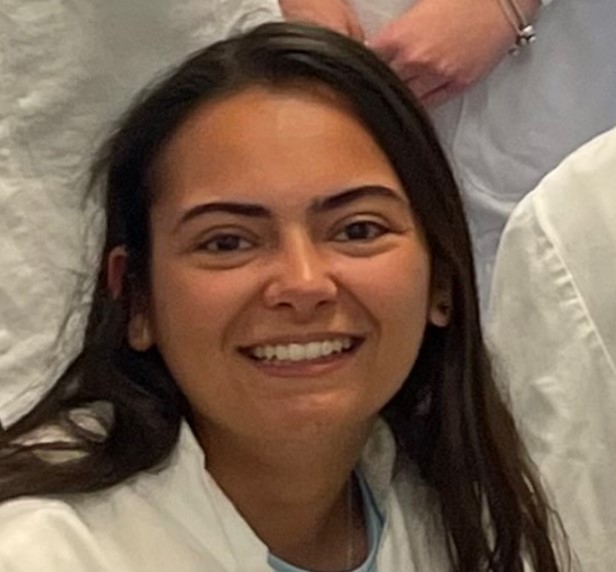
Covadonga Pérez García
Contratada predoctoral FPU
ORCID code: 0000-0002-5295-6480
Graduada en Biología por la Universidad Complutense de Madrid, donde posteriormente cursó estudios de Máster en Microbiología y Parasitología. Lleva vinculada a la Unidad de Neumococos desde 2019, donde realizó las prácticas extracurriculares de grado y posteriormente realizó su trabajo de fin de grado (2020) y trabajo de fin de máster (2021). En 2022 obtuvo beca predoctoral del programa FPU y actualmente investiga mecanismos de patogenicidad y protección de serotipos emergentes de neumococo.
-

Erick Joan Vidal Alcántara
Ayudante de Investigación
ORCID code: 0000-0001-8946-3754
Graduado en Biología por la Universidad Complutense de Madrid, y posteriormente cursó estudios de Máster en Microbiología aplicada a salud pública e investigación en enfermedades infecciosas por la Universidad de Alcalá de Henares. Lleva vinculado a la Unidad de Neumococos desde 2022 como ayudante de investigación y es personal de plantilla.
-
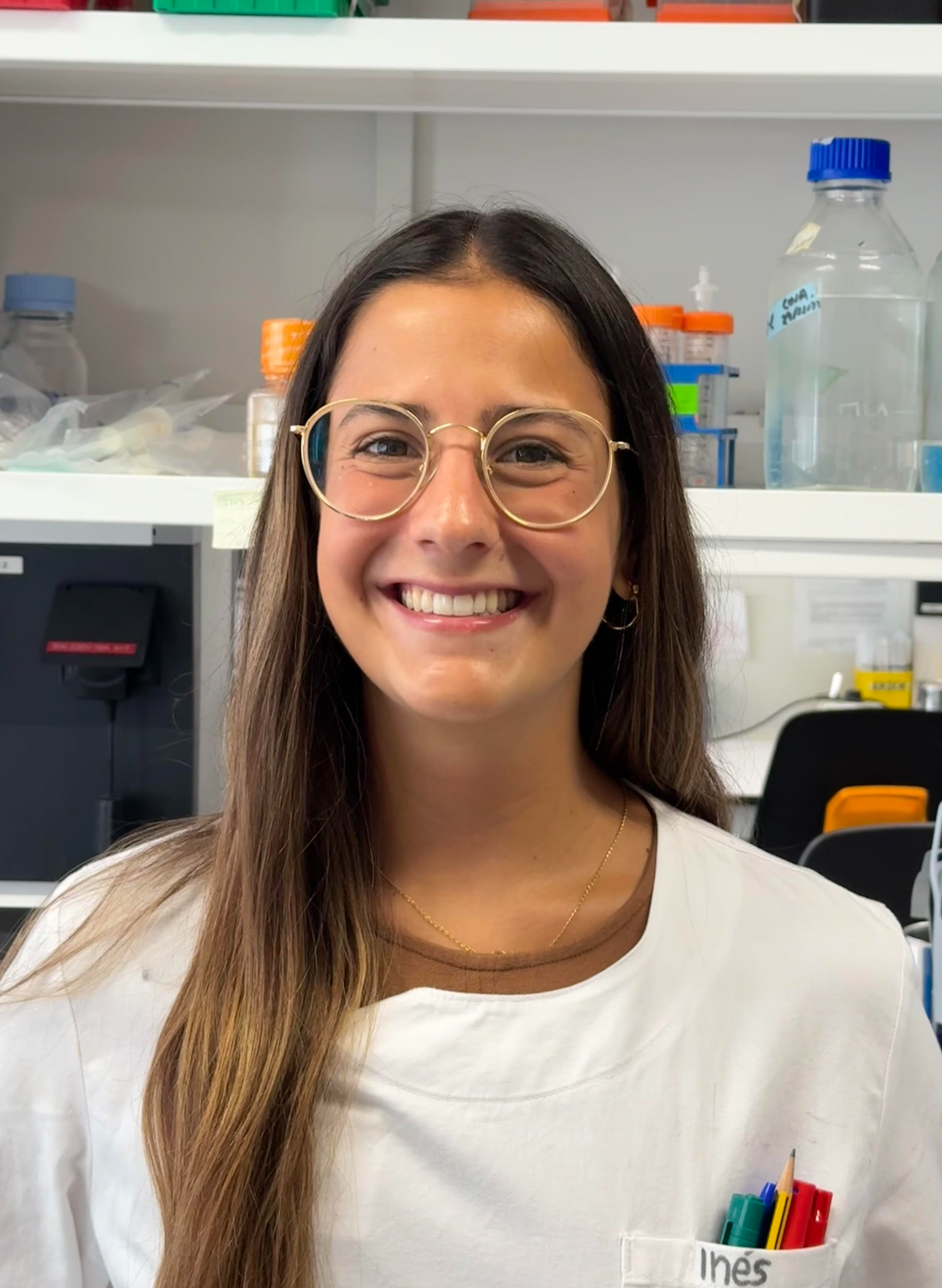
Inés Pareja Cerbán
Estudiante predoctoral CIBERES
ORCID code: 0009-0006-8015-7367
Graduada en Bioquímica por la Universidad de Málaga. Es contratada predoctoral del CIBER de Enfermedades Respiratorias (CIBERES) y en nuestro grupo está realizando su Tesis Doctoral en la caracterización de factores de virulencia de aislados prevalentes así como en el estudio y caracterización de nuevos antimicrobianos frente a bacterias respiratorias.
-

Mirella Llamosí Fornés
Contratada predoctoral
ORCID code: 0000-0002-4369-9558
Graduada en Biología por la Universidad Complutense de Madrid, donde posteriormente cursó estudios de Máster en Microbiología y Parasitología. Está realizando su Tesis Doctoral en el campo de la resistencia antibiótica así como en la búsqueda y caracterización de nuevos antimicrobianos con especial interés en lograr compuestos activos frente a infecciones producidas por biofilms.


List of staff
Additional Information
The AIDS Immunopathology Unit has been coordinated since 2000 by Dr. José Alcamí, bringing together during its history more than 20 independent researchers who collaboratively study different aspects of HIV infection. During this years, more than 30 visiting researchers and more than 50 national and international students have passed through the unit. From the beginning of the year 2025, Javier García Pérez and Francisco Díez Fuertes assumed the coordination of the AIDS Immunopathology Unit, with the aim of projecting its scientific competitiveness following multidisciplinary approaches and through the maintenance of the current close collaborations, as well as the promotion of participation in new national and international research networks.
Historically, the current members of the unit have focused on different lines of basic research that include the study of antibodies and the development of vaccines against HIV-1, the study of viral entry and tropism of the virus or the study of the host through the genomic characterization of populations with an extreme phenotype. Currently, the activity of our unit in the field of HIV-1 is focused on three main lines:
1. Mecanismos moleculares asociados a la protección de la infección por VIH-1 en pacientes con distrofia muscular de cinturas dominante D2 (LGMDD2).
2. Generación de anticuerpos neutralizantes de uso terapéutico basados en la respuesta neutralizante de amplio espectro frente a virus fundadores.
3. Cribado y caracterización de nuevos fármacos anti-latencia frente al VIH-1.
A partir del año 2020, nuestra unidad se vuelca con la investigación sobre COVID-19, participando y liderando diferentes proyectos de investigación aplicada y clínica. Fruto de esta fuerte implicación en el campo, en la actualidad se mantienen diferentes estudios sobre la caracterización de la respuesta inmune frente a SARS-CoV-2, integrando diferentes técnicas de virología molecular, estrategias de inteligencia epidemiológica y tecnologías de célula única.
We also participate in different research consortiums and networks, such as the Spanish AIDS Research Network or the Center for Biomedical Research in Infectious Diseases Network (CIBER-INFEC), in which we participate as researchers in different lines and work packages within the research programs “Global Health, emerging and re-emerging infections” as well as “HIV/AIDS and sexually transmitted infections”.
Supervised doctoral theses
1. GENOMIC AND FUNCTIONAL ANALYSIS OF HIV-1 PROTECTION PARAMETERS IN PATIENTS WITH SLOW PROGRESSION OF INFECTION.
Student: Erick de la Torre Tarazona.
Supervisors: José Alcamí and Francisco Díez Fuertes.
Academic entity: Universidad Autónoma de Madrid.
Defense date: July 14th, 2020.
2. ANALYSIS OF MIARN EXPRESSION PROFILES AND FUNCTIONAL CHARACTERIZATION IN HIV-POSITIVE INDIVIDUALS WITH DIFFERENT PROGRESSION TO AIDS.
Student: Rubén Ayala Suárez.
Supervisors: José Alcamí and Francisco Díez Fuertes.
Academic entity: Universidad de Alcalá.
Defense date: June 12nd, 2023.
The AIDS Immunopathology Unit has been coordinated since 2000 by Dr. José Alcamí, bringing together during its history more than 20 independent researchers who collaboratively study different aspects of HIV infection. During this years, more than 30 visiting researchers and more than 50 national and international students have passed through the unit. From the beginning of the year 2025, Javier García Pérez and Francisco Díez Fuertes assumed the coordination of the AIDS Immunopathology Unit, with the aim of projecting its scientific competitiveness following multidisciplinary approaches and through the maintenance of the current close collaborations, as well as the promotion of participation in new national and international research networks.
Historically, the current members of the unit have focused on different lines of basic research that include the study of antibodies and the development of vaccines against HIV-1, the study of viral entry and tropism of the virus or the study of the host through the genomic characterization of populations with an extreme phenotype. Currently, the activity of our unit in the field of HIV-1 is focused on three main lines:
1. Mecanismos moleculares asociados a la protección de la infección por VIH-1 en pacientes con distrofia muscular de cinturas dominante D2 (LGMDD2).
2. Generación de anticuerpos neutralizantes de uso terapéutico basados en la respuesta neutralizante de amplio espectro frente a virus fundadores.
3. Cribado y caracterización de nuevos fármacos anti-latencia frente al VIH-1.
A partir del año 2020, nuestra unidad se vuelca con la investigación sobre COVID-19, participando y liderando diferentes proyectos de investigación aplicada y clínica. Fruto de esta fuerte implicación en el campo, en la actualidad se mantienen diferentes estudios sobre la caracterización de la respuesta inmune frente a SARS-CoV-2, integrando diferentes técnicas de virología molecular, estrategias de inteligencia epidemiológica y tecnologías de célula única.
We also participate in different research consortiums and networks, such as the Spanish AIDS Research Network or the Center for Biomedical Research in Infectious Diseases Network (CIBER-INFEC), in which we participate as researchers in different lines and work packages within the research programs “Global Health, emerging and re-emerging infections” as well as “HIV/AIDS and sexually transmitted infections”.
Supervised doctoral theses
1. GENOMIC AND FUNCTIONAL ANALYSIS OF HIV-1 PROTECTION PARAMETERS IN PATIENTS WITH SLOW PROGRESSION OF INFECTION.
Student: Erick de la Torre Tarazona.
Supervisors: José Alcamí and Francisco Díez Fuertes.
Academic entity: Universidad Autónoma de Madrid.
Defense date: July 14th, 2020.
2. ANALYSIS OF MIARN EXPRESSION PROFILES AND FUNCTIONAL CHARACTERIZATION IN HIV-POSITIVE INDIVIDUALS WITH DIFFERENT PROGRESSION TO AIDS.
Student: Rubén Ayala Suárez.
Supervisors: José Alcamí and Francisco Díez Fuertes.
Academic entity: Universidad de Alcalá.
Defense date: June 12nd, 2023.