



We protect your health through science
Investigation
Bacterial Genetics
Research Lines
Content with Investigacion .
Inmunología Microbiana e Inmunogenética
1. Análisis de la respuesta innata de mamíferos en la infección por Leishmania.
2. Caracterización inmunoproteómica en :
a. Streptococcus suis
b. Lactococcus garviae
c. Mycobacterium spp
3. Desarrollo de inmunoensayos analíticos basados en anticuerpos monoclonales (AcM) para detectar y cuantificar antígenos de origen animal, vegetal y microbiano.
4. Desarrollo y caracterización de AcM frente a los componentes del sistema del Complemento. Aplicación diagnóstica.
5. Desarrollo de reactivos de referencia y diseño de inmunoensayos para la evaluación cualitativa y cuantitativa de toxinas clostridiales.
6. Oferta tecnológica de producción de AcM y policlonales frente a substancias de interés industrial y biomédico.
El grupo está interesado en el estudio de la respuesta inmune desde una perspectiva multidisciplinar que incluye aproximaciones bioquímicas, biotecnológicas, genómicas, inmunoinformáticas y proteómicas, que junto con el uso adicional de modelos in vivo se encaminan al diseño de estrategias terapéuticas frente a diversas enfermedades crónicas, infecciosas y raras que poseen un claro componente inmunológico en su etiología.
Las principales líneas de investigación que está desarrollando el grupo en la actualidad son:
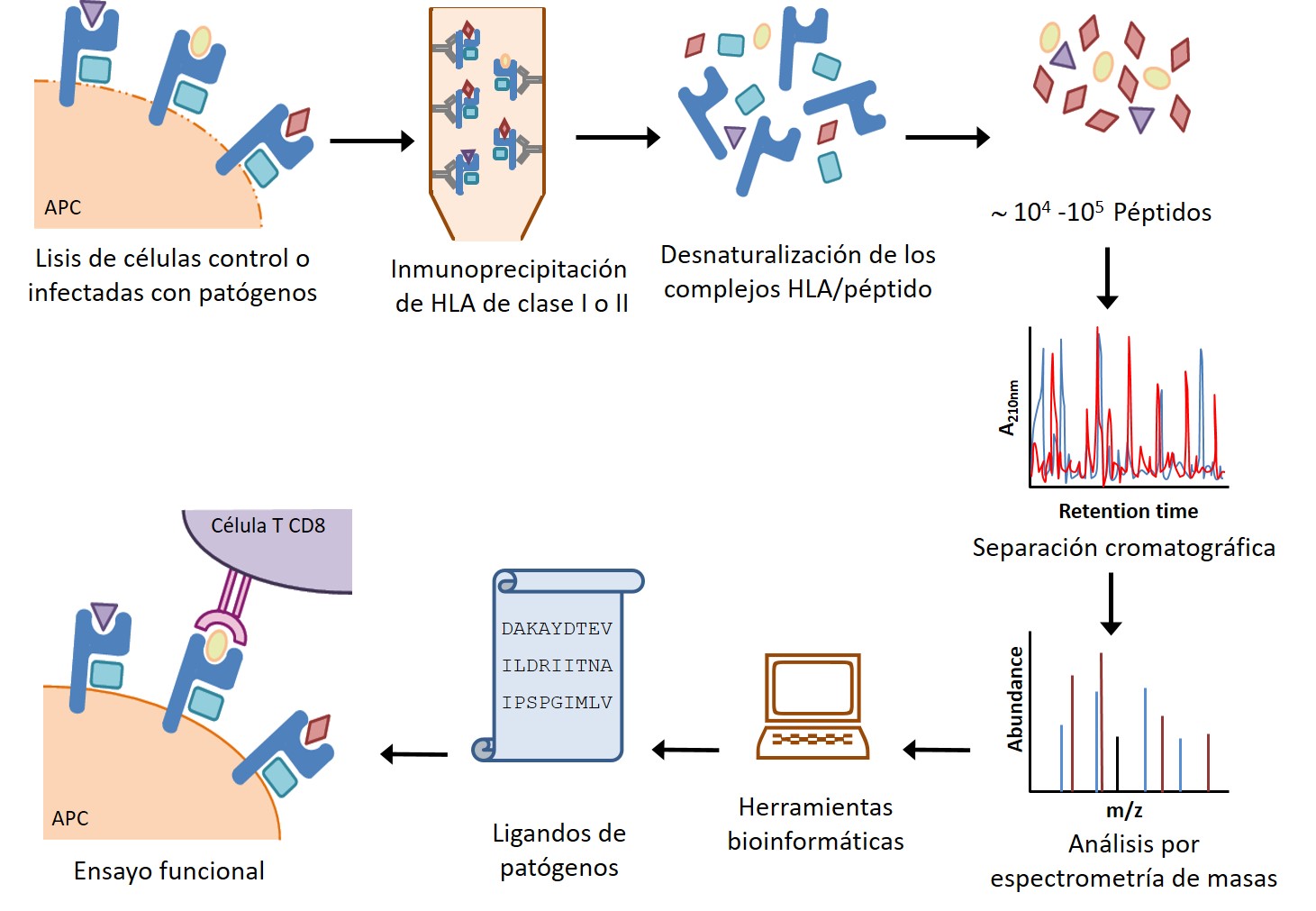
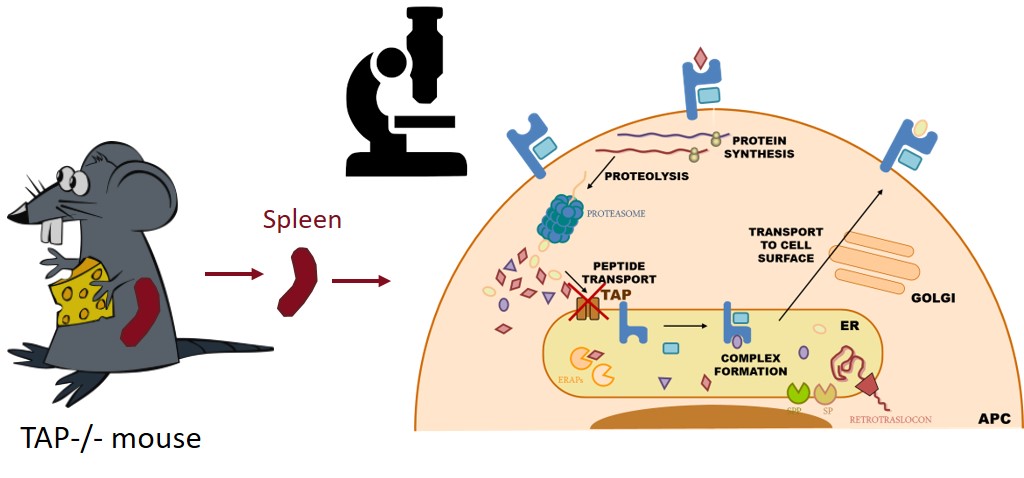
- * Análisis de las respuestas inmunes celulares frente a patógenos virales y bacterianos, mediante técnicas inmunoproteómicas, modelos in vivo con animales transgénicos y muestras humanas.
- * Caracterización de CD69: regulación génica, función reguladora inmune en homeostasis e infección y su uso como diana terapéutica, edición génica por CRISPR en modelos animales y celulares, etc.

* Desarrollo de herramientas inmunoinformáticas que permitan analizar la respuesta inmune celular frente a diversos virus de interés sanitario y determinar la eficacia de sus vacunas a nivel de población mundial.

* Estudio de las respuestas inmunes celulares frente a enfermedades raras (artritis reactiva y síndrome del linfocito desnudo) y crónicas (espondiloartropatías).
* Inclusión de componentes del sistema inmune en la fabricación de tejidos humanos, especialmente piel, para uso clínico, farmacéutico y cosmético.
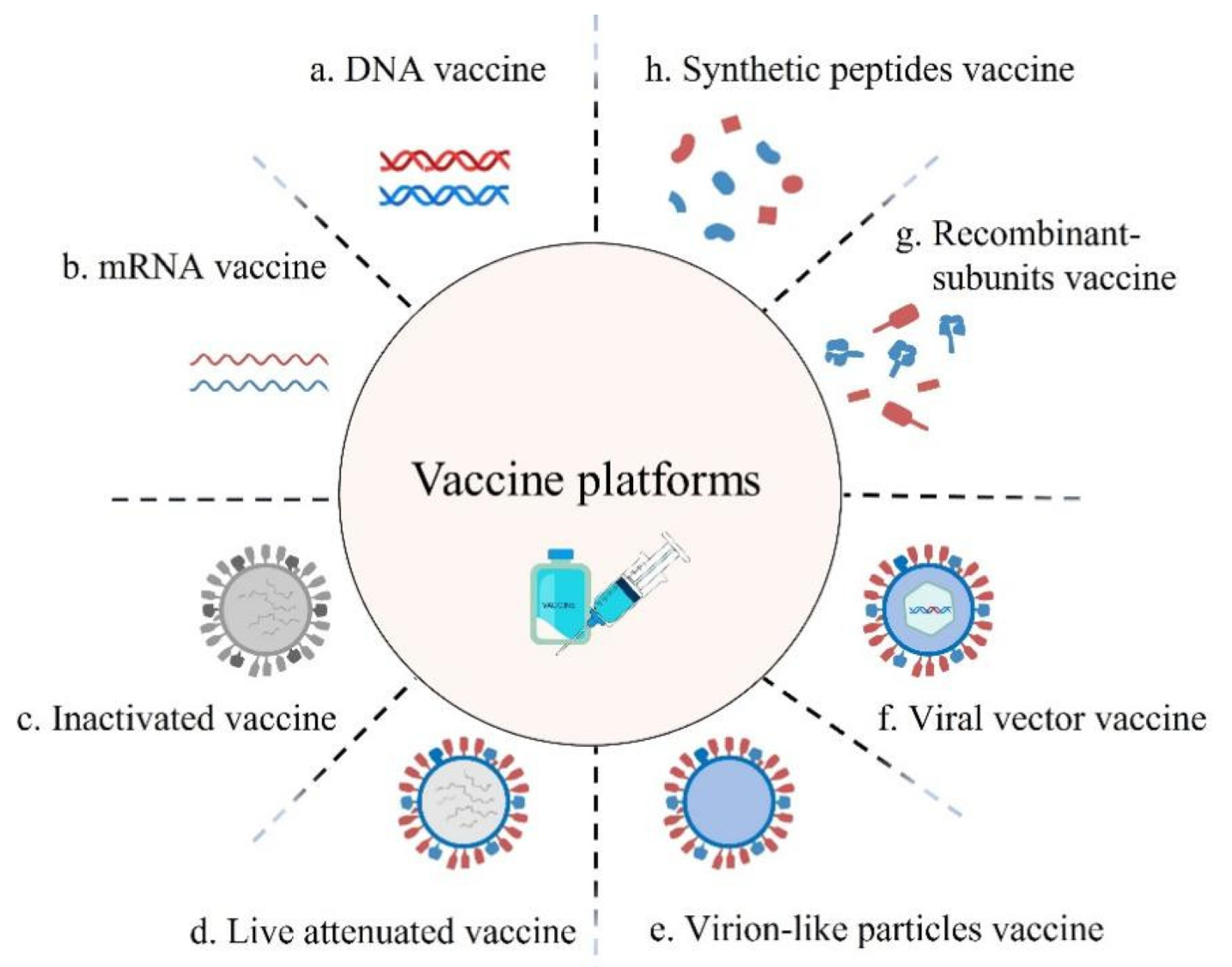
- * Generación de virus recombinantes como vectores vacunales.
Research projects
Content with Investigacion .
Los proyectos del grupo de los últimos años son los siguientes:
Proyecto “La interrelación de CD69 y el procesamiento antigénico en enfermedades infecciosas y autoinmunes" financiado por la Acción Estratégica en Salud del Ministerio de Ciencia, Innovación y Universidades. Año: 2023-2025.
Proyecto “Interacciones génicas y proteicas de CD69 y sus regiones génicas reguladoras con moléculas" financiado por la AEI. Año: 2022-2024.

Proyecto “Nuevas tecnologías de fabricación y optimización de tejidos: la piel como sistema modelo” financiado por el Programa de Actividades de I+D entre grupos de investigación de la Comunidad de Madrid en tecnologías 2018. Año: 2020-2023. Proyecto Coordinado por el Dr. Pablo Acedo de la Universidad Carlos III.
Proyecto “Estudio de CD69 como diana para mejorar el tratamiento de la leucopania y la movilización de células T de memoria de médula ósea" financiado por la Acción Estratégica en Salud del Ministerio de Ciencia, Innovación y Universidades. Año:2020-2024.
Proyecto “Diseño racional de una vacuna contra el virus respiratorio sincitial humano” financiado por la Acción Estratégica en Salud del Ministerio de Ciencia, Innovación y Universidades. Año: 2019-2022
Proyecto “Función de CD69 y sus elementos reguladores" financiado por la Acción Estratégica en Salud del Ministerio de Ciencia, Innovación y Universidades. Año: 2017-2022.
Proyecto “Diseño de vacunas recombinantes poliepitópicas para generar respuestas CD8+ contra virus emergentes” financiado por el Plan Nacional de I+D+i del Ministerio de Economía y Competitividad. Año: 2015-2017.
Proyecto “Análisis de los efectos de CD69 dependientes de S1P1 en modelos de infección e inflamación y estudio de su regulación” financiado por el FIS. Año: 2014-2017.
Proyecto “ADELVAC: Adenovirus con delecciones epitópicas para vacunación” financiado por el programa INNPACTO del Ministerio de Economía y Competitividad. Centro Nacional de Microbiología, Instituto de Salud Carlos III. Año: 2012-2014. Proyecto Coordinado por el Dr. Manel Cascallo de VCN BIOSCIENCES SL.
Proyecto “Diseño de vacunas multiepitópicas recombinantes para aumentar la respuesta inmune celular contra el VRSH” financiado por el Plan Nacional de I+D+i del Ministerio de Ciencia e Innovación. Año: 2012-2014.
Publications
Low anti-SARS-CoV-2 S antibody levels predict increased mortality and dissemination of viral components in the blood of critical COVID-19 patients.
12. Martin-Vicente M#, Almansa R#, Martínez I#, Tedim AP, Bustamante E, Tamayo L, Aldecoa C, Gómez JM, Renedo G, Berezo JÁ, Cedeño JA, Mamolar N, García Olivares P, Herrán-Monge R, Cicuendez R, Enríquez P, Ortega A, Jorge N, Doncel C, de la Fuente A, Bustamante-Munguira J, Muñoz-Gómez MJ, González-Rivera M, Puertas C, Más V, Vázquez M, Pérez-García F, Rico-Feijoo J, Martín S, Motos A, Fernandez-Barat L, Eiros JM, Dominguez-Gil M, Ferrer R, Barbé F, Trapiello W, Kelvin DJ, Bermejo-Martin JF, Resino S, Torres A. Low anti-SARS-CoV-2 S antibody levels predict increased mortality and dissemination of viral components in the blood of critical COVID-19 patients. J Intern Med. 2022 Feb; 291(2):232-240. doi: 10.1111/joim.13386. PMID: 34611927 (A; FI= 13.068; D1 Medicine, General & Internal; JCR 2021).
PUBMEDStrategies Targeting the Innate Immune Response for the Treatment of Hepatitis C Virus-Associated Liver Fibrosis.
13. Sepulveda-Crespo D, Resino S*, Martinez I*. Strategies Targeting the Innate Immune Response for the Treatment of Hepatitis C Virus-Associated Liver Fibrosis. Drugs. 2021 Drugs. 2021 Mar; 81(4):419-443. doi: 10.1007/s40265-020-01458-x. PMID: 33400242. (R; FI= 11.431; D1 Pharmacology & Pharmacy; JCR 2021).
PUBMEDMetabolic Profiling at COVID-19 Onset Shows Disease Severity and Sex-Specific Dysregulation FRONTIERS IN IMMUNOLOGY.
3 Ceballos, Francisco C.; Virseda-Berdices, Ana; Resino, Salvador; et al; Jimenez-Sousa, Maria Angeles. (19/19). 2022. Metabolic Profiling at COVID-19 Onset Shows Disease Severity and Sex-Specific Dysregulation FRONTIERS IN IMMUNOLOGY. ISSN 1664-3224.
Metabolomic changes after DAAs therapy are related to the improvement of cirrhosis and inflammation in HIV/HCV-coinfected patients.
4 Virseda-Berdices, Ana; Rojo, David; Martinez, Isidoro; et al; Jimenez-Sousa, Maria Angeles. (14/14). 2022. Metabolomic changes after DAAs therapy are related to the improvement of cirrhosis and inflammation in HIV/HCV-coinfected patients. BIOMEDICINE & PHARMACOTHERAPY. 147:112623. ISSN 1950-6007.
HCV Cure With Direct-Acting Antivirals Improves Liver and Immunological Markers in HIV/HCV-Coinfected Patients FRONTIERS IN IMMUNOLOGY.
7 Brochado-Kith, Oscar; Martinez, Isidoro; Berenguer, Juan; et al; Jiménez-Sousa, Maria Angeles (‡, AC); Resino, Salvador (‡, AC). (13/13). 2021. HCV Cure With Direct-Acting Antivirals Improves Liver and Immunological Markers in HIV/HCV-Coinfected Patients FRONTIERS IN IMMUNOLOGY. 12:723196. ISSN 1664-3224.
Plasma miRNA profile at COVID-19 onset predicts severity status and mortality
3. Fernández-Pato A; Virseda-Berdices A; Resino S; et al; Fernández-Rodríguez A (AC). (20/20). 2022. Plasma miRNA profile at COVID-19 onset predicts severity status and mortality Emerging Microbes and Infections. Taylor & Francis Online. ISSN 2222-1751.
DOIDiagnostic Performance of the HCV Core Antigen Test To Identify Hepatitis C in HIV-Infected Patients: a Systematic Review and Meta-Analysis
4. Sepúlveda-Crespo D; Treviño-Nakoura A; Bellon JM; Jiménez-Sousa MA; Ryan P; Martínez I; Fernández-Rodríguez A (AC); Resino S. (7/8). 2022. Diagnostic Performance of the HCV Core Antigen Test To Identify Hepatitis C in HIV-Infected Patients: a Systematic Review and Meta-Analysis.Journal of clinical microbiology. pp.e0133122. ISSN 0095-1137.
DOIMetabolic Profiling at COVID-19 Onset Shows Disease Severity and Sex-Specific Dysregulation
6. Ceballos FC; Virseda-Berdices A; Resino S; et al; Jiménez-Sousa MÁ (AC). (19/19). 2022. Metabolic Profiling at COVID-19 Onset Shows Disease Severity and Sex-Specific Dysregulation.Frontiers in immunology. 13, pp.925558. WOS (78)
DOINovel genes and sex differences in COVID-19 severity
7. Cruz R; Almeida SD; Heredia ML; et al; Fernández-Rodríguez A; Carracedo Á. (51/168). 2022. Novel genes and sex differences in COVID-19 severity. Human molecular genetics. ISSN 0964-6906.
DOIDifferent HCV Exposure Drives Specific miRNA Profile in PBMCs of HIV Patients
8. Valle-Millares D; Brochado-Kith O; Martín-Carbonero L; et al; Fernández-Rodríguez A (AC). (22/22). 2021. Different HCV exposure drives specific miRNA profile in PBMCs of HIV patients Biomedicines. MDPI. 9-11, pp.1627.
DOIAre Reduced Levels of Coagulation Proteins Upon Admission Linked to COVID-19 Severity and Mortality?
9. Ceballos F; Ryan P; Blancas R; et al; Fernández-Rodríguez A (AC); Jiménez-Sousa MA. (19/20). 2021. Are Reduced Levels of Coagulation Proteins Upon Admission Linked to COVID-19 Severity and Mortality? Frontiers in Medicine. Frontiers. 8-718053.
DOITelomere Length Increase in HIV/HCV-Coinfected Patients with Cirrhosis after HCV Eradication with Direct-Acting Antivirals
12 . Molina-Carrión S; Brochado-Kith, Oscar; González-García J; et al; Angeles Jimenez-Sousa, Maria. (16/16). 2020. Telomere length increase in HIV/HCV-coinfected patients with cirrhosis after HCV eradication with direct acting antivirals. JOURNAL OF CLINICAL MEDICINE. MDPI. ISSN 2077-0383.
DOIMicroRNA Profile of HCV Spontaneous Clarified Individuals, Denotes Previous HCV Infection
15. Brochado-Kith, Oscar; Gomez-Sanz, Alicia; Real LM; et al; Fernandez-Rodriguez, Amanda (AC). (16/16). 2019. MicroRNA Profile of HCV Spontaneous Clarified Individuals, Denotes Previous HCV Infection JOURNAL OF CLINICAL MEDICINE. MDPI. 7. ISSN 2077-0383.
DOIPersistent Immunity against SARS-CoV-2 in Individuals with Oncohematological Diseases Who Underwent Autologous or Allogeneic Stem Cell Transplantation after Vaccination
Persistent Immunity against SARS-CoV-2 in Individuals with Oncohematological Diseases Who Underwent Autologous or Allogeneic Stem Cell Transplantation after Vaccination. Rodríguez-Mora S, Pérez-Lamas L, Solera Sainero M, Torres M, Sánchez-Menéndez C, Corona M, Mateos E, Casado-Fernández G, Alcamí J, García-Pérez J, Pérez-Olmeda M, Murciano-Antón A, López-Jiménez J, García-Gutiérrez V, Coiras M (AC). Cancers 2023, 15(8), 2344. doi: 10.3390/cancers15082344. PMID: 37190272.
PUBMED DOISustained Cytotoxic Response of Peripheral Blood Mononuclear Cells from Unvaccinated Individuals Admitted to the ICU Due to Critical COVID-19 Is Essential to Avoid a Fatal Outcome
Sustained Cytotoxic Response of Peripheral Blood Mononuclear Cells from Unvaccinated Individuals Admitted to the ICU Due to Critical COVID-19 Is Essential to Avoid a Fatal Outcome. Casado-Fernández G, Corona M, Torres M, Saez AJ, Ramos-Martín F, Manzanares M, Vigón L, Mateos E, Pozo F, Casas I, García-Gutierrez V, Rodríguez-Mora S, Coiras M (AC). Int J Environ Res Public Health. 2023 Jan20;20(3):1947. doi: 10.3390/ijerph20031947. PMID: 36767310.
PUBMED DOIDasatinib: effects on the macrophage phospho proteome with a focus on SAMHD1 and HIV-1 infection
Dasatinib: effects on the macrophage phospho proteome with a focus on SAMHD1 and HIV-1 infection. Williams ESCP, Szaniawski MA, Martins LJ, Innis EA, Alcamí J, Hanley TM, Spivak AM, Coiras M, Planelles V. Clin Res HIV AIDS.2022;8(1):1053. https://pubmed.ncbi.nlm.nih.gov/36589263/. PMID: 36589263.
PUBMEDEarly Cellular and Humoral Responses Developed in Oncohematological Patients after Vaccination with One Dose against COVID-19
Early Cellular and Humoral Responses Developed in Oncohematological Patients after Vaccination with One Dose against COVID-19. Rodríguez-Mora S, Corona M, Torres M, Casado-Fernández G, García-Pérez J, Ramos-Martín F, Vigón L, Manzanares M, Mateos E, Martín-Moro F, Zurdo-Castronuño A, Murciano-Antón MA, Alcamí J, Pérez-Olmeda M, López-Jiménez J, García-Gutiérrez V, Coiras M (AC). J Clin Med. 2022 May 16;11(10):2803. doi: 10.3390/jcm11102803. PMID: 35628927.
PUBMED DOIChanges in the immune response against SARS-CoV-2 in individuals with severe COVID-19 treated with high dose of vitamin D
Changes in the immune response against SARS-CoV-2 in individuals with severe COVID-19 treated with high dose of vitamin D. Torres M, Casado G, Vigón L, Rodríguez-Mora S, Mateos E, Ramos-Martín F, López-Wolf D, Sanz-Moreno J, Ryan-Murua P, Taboada-Martínez ML, López-Huertas MR, Cervero M, Coiras M (AC). Biomed Pharmacother. 2022 Apr 14;150:112965. doi: 10.1016/j.biopha.2022.112965. PMID: 35468580.
PUBMED DOIStrong Cellular Immune Response, but Not Humoral, against SARS-CoV-2 in Oncohematological Patients with Autologous Stem Cell Transplantation after Natural Infection.
Strong Cellular Immune Response, but Not Humoral, against SARS-CoV-2 in Oncohematological Patients with Autologous Stem Cell Transplantation after Natural Infection. Vigón L, Sánchez-Tornero A, Rodríguez-Mora S, García-Pérez J, Corona de Lapuerta M, Pérez-Lamas L, Casado-Fernández G, Moreno G, Torres M, Mateos E, Murciano-Antón MA, Alcamí J, Pérez-Olmeda M, López-Jiménez J, García-Gutiérrez V, Coiras M (AC). J Clin Med. 2022 Apr 11;11(8):2137. doi: 10.3390/jcm11082137. PMID: 35456230.
PUBMED DOIPersistent overactive cytotoxic immune response in a Spanish cohort of individuals with Long-COVID: Identification of diagnostic biomarkers
Persistent overactive cytotoxic immune response in a Spanish cohort of individuals with Long-COVID: Identification of diagnostic biomarkers. Galán M, Vigón L, Fuertes D, Murciano-Antón MA, Casado-Fernández G, Domínguez-Mateos S, Mateos E, Ramos-Martín F, Planelles V, Torres M, Rodríguez-Mora S, López-Huertas MR, Coiras M (CA). Front Immunol. 2022 Mar 25;13:848886. doi: 10.3389/fimmu.2022.848886. PMID: 35401523
PUBMED DOIAdditional Information
Streptococcus pneumoniae is a human pathogen that, despite the development of vaccines, continues to be an important cause of mortality and morbidity. We investigate the mechanisms of antibiotic resistance in this bacterium. On the one hand by identifying new therapeutic targets and on the other hand by investigating the molecular basis of the action of antibiotics already used in clinical practice (the fluoroquinolones levofloxacin and moxifloxacin) or not yet used (seconeolitsine). For this purpose, we used a multidisciplinary analysis involving genomics, transcriptomics and proteomics to understand the organization of the S. pneumoniae chromosome and the identification of the factors that stabilize this organization, including ncRNAs. Changes in the level of global supercoiling, either by inhibition of gyrase (decrease) or by inhibition of topoisomerase I (increase) alter the transcriptome. The modulated genes are located in domains, whose genes show specific functional characteristics. The aim is to identify new factors essential for S. pneumoniae physiology and to characterize transcriptional regulation in response to topological stress. In addition, RNA interference technology and CRISPR systems will be used as novel antibacterials. These studies will establish the bases for translational research aimed at the development of new therapeutic targets for the treatment of pneumococcal diseases.
Streptococcus pneumoniae is a human pathogen that, despite the development of vaccines, continues to be an important cause of mortality and morbidity. We investigate the mechanisms of antibiotic resistance in this bacterium. On the one hand by identifying new therapeutic targets and on the other hand by investigating the molecular basis of the action of antibiotics already used in clinical practice (the fluoroquinolones levofloxacin and moxifloxacin) or not yet used (seconeolitsine). For this purpose, we used a multidisciplinary analysis involving genomics, transcriptomics and proteomics to understand the organization of the S. pneumoniae chromosome and the identification of the factors that stabilize this organization, including ncRNAs. Changes in the level of global supercoiling, either by inhibition of gyrase (decrease) or by inhibition of topoisomerase I (increase) alter the transcriptome. The modulated genes are located in domains, whose genes show specific functional characteristics. The aim is to identify new factors essential for S. pneumoniae physiology and to characterize transcriptional regulation in response to topological stress. In addition, RNA interference technology and CRISPR systems will be used as novel antibacterials. These studies will establish the bases for translational research aimed at the development of new therapeutic targets for the treatment of pneumococcal diseases.