



We protect your health through science
Investigation
Medical Entomology
Research Lines
Content with Investigacion .
The Immunobiology group has been working for years on the following lines of research:
1) The mechanisms of haematopoietic cell generation throughout ontogeny and the influence that the first haematopoietic cells exert on the innate and adaptive immune system present in the adults. We have identified and characterised a new population of B lymphocytes called B1-Rel (B220lo), which produce high levels of natural IgG/IgA antibodies. We sought to understand their role in the immune response in animal models of infection, analysing their impact on immune cell populations and on the production of soluble mediators (cytokines and immunoglobulins). In this regard, we have evaluated the generation of embryonic megakaryocytes (and their differentiation niches), their functionality and that of platelets, and their influence on haematopoietic development. For lymphoid populations, we have carried out extensive characterisation by flow cytometry and single cell RNA sequencing (scRNAseq) methodology. To carry out these cellomic studies, we have designed complex panels for use in multiparametric phenotypic analysis, and single cell cytometry and RNAseq omics technologies on purified cell populations.

In parallel, we are interested in understanding local immune responses in respiratory infections at times of particular susceptibility due to the fragility of the immune system (childhood and old age), both in mouse animal models, which allow their manipulation, and in humans.
2) Mouse models studied during neonatal life, in which we evaluated the effect of antibiotic (AB) treatment and addressed the role of TLR receptors in innate, pseudo-innate and adaptive immune cell populations. In these models, we observed that AB administration was able to modulate B-lymphoid populations, as well as their ability to secrete proinflammatory cytokines in culture and their differentiation into plasma cells, with differentiated immunoglobulin repertoires. Furthermore. These effects were mediated through the Toll-like receptor-2 (TLR2).

3) Mouse models with accelerated senescence (SAMP8) and senescent animals (over 20 months of age) to map lymphoid populations and soluble mediators of the immune response (immunoglobulins and cytokines). In these models, the B lymphoid populations (B1Rel and marginal zone B lymphocytes) are observed to be altered, accompanied by an increase in IgG1 with great restriction of their VDJ repertoires.

4) Role of the B1Rel population in animal models of local or systemic infection. We analysed the response to Streptoccoccus pneumoniae (SPN) locally in the lung and systemically in the spleen, as well as the role of TLR4 in these responses.

5) In humans, we are studying immune responses in children with respiratory syncytial virus (RSV) viral primo-infection. In this case we studied the immune response that occurs locally in the nasal mucosa (by analysis of nasal washings, NW) in a cohort of infected children versus healthy controls, stratified by age. We found that lymphomyeloid cells accumulate in these nasal washings in patients with diverse lymphocyte populations, as well as cytokines and immunoglobulins.

6) Analysis and characterisation of extracellular vesicles produced during respiratory infection both in lung supernatants from models of SPN infection and in LN in the case of children with RSV infection.

7) In parallel, we carry out studies of the genetic rearrangements of immunoglobulins and their use in the generation of chimeric receptors for possible use in immunotherapy.
Research projects
Content with Investigacion .
-Project “Induction, differentiation and modulation of resident B lymphocytes in the lung in response to pneumococcus (NEUBLUNG)”. Ministry of Science and Innovation, PID2022-141754OB-I00 Call 2022 "Knowledge Generation Projects". 09/01/2023-08/31/2026. Financed by MICIU/AEI /10.13039/501100011033 and by ERDF, EU. PI: Belén by Andrés Muguruza. CoPI: María Luisa Gaspar Alonso-Vega.

-Project." Immune response of the nasal mucosa in childhood bronchiolitis” Instituto de Salud Carlos III-AESI. AESI-PI22CIII/00030 PI: Belén by Andrés Muguruza. CoPI Maria Luisa Gaspar Alonso-Vega. 01/01/2023-12/31/2025..
-Project. BenBedPhar. CA20121, European Union. Antonio Cuadrado. (CNM-ISCIII).10/19/2021-10/18/2025.
-Spanish Association Against Cancer Project “Novel comprehensive immunotherapy to specifically target the malignant clone in Sézary syndrome, an ultra-rare cancer of mature T lymphocytes”, number PROYE20084REGU. PI: José Ramón Regueiro, PI group Maria Luisa Gaspar. 01/01/2021-12/31/2023.
Project “The pulmonary immune system in homeostasis and infection: characterization and function of immature and pseudoinnate lymphoid populations.” MINECO-RETOS RTI2018-099114-B-100. PI: Maria Luisa Gaspar, CoPI: Belén de Andrés 01/01/2019-12/31/2022. Financed by MICIU/AEI /10.13039/501100011033/ and by FEDER A way of making Europe.

-Project “New B lymphoid populations: B1-rel pseudoinnate cells, homeostatic maintenance and their response under infection conditions.” MINECO-RETOS SAF2015-70880-R. PI: Maria Luisa Gaspar. 01/01/2016-12/31/2019.

-Project “Role of CD19+CD45R lymphocytes- in perinatal immune responses. Implications related to respiratory diseases in neonates. AESI PI14CIII/00049; PI Belén de Andrés. 2015-2018.
-Project “Study of the pseudo-innate population of CD19+CD45R- B lymphocytes in TLR-dependent infection models”. AESI PI11/01733FIS. PI Belén de Andrés. 2012-2015.
-Project." Cellular interactions in the establishment of B lymphoid differentiation niches: role of megakaryocytes and their implications in pathology. MINECO; SAF2012-33916. Maria Luisa Gaspar. 01/01/2013-12/31/2015.
-ISCIII Platforms Project to support R&D&I in Biomedicine and Health Sciences. PT23CIII/00006. 2023. Participating researcher: Isabel Cortegano.
-Research contracts between the Carlos III Health Institute and Inmunotek S.L. for the development of the Bactek-mv130 and Uromune-MV140 study in protection against S. pneumoniae infections. Immunotek. IP: Belen de Andrés 2019-2021.
-Research contract between the Carlos III Health Institute and Inmunotek S.L. “MV130 as a vaccine model based on trained immunity against respiratory infections due to pneumococcus and respiratory syncytial virus”, CAM Call. Industrial Doctorates. IND2023/BMD-27071. PI: Belén by Andrés Muguruza. 12/01/2023-11/30/2026.
Publications
Telomere Length Increase in HIV/HCV-Coinfected Patients with Cirrhosis after HCV Eradication with Direct-Acting Antivirals JOURNAL OF CLINICAL MEDICINE.
Molina-Carrion, Silvia; Brochado-Kith, Oscar; Gonzalez-Garcia, Juan; et al; Jimenez-Sousa, Maria Angeles. (12/12). 2020. Telomere Length Increase in HIV/HCV-Coinfected Patients with Cirrhosis after HCV Eradication with Direct-Acting Antivirals JOURNAL OF CLINICAL MEDICINE. 9. ISSN 2077-0383. https://doi.org/10.3390/jcm9082407.
Treatment of Chronic Pulmonary Aspergillosis: Current Standards and Future Perspectives. Respiration. 2018 Jul
Alastruey-Izquierdo A, Cadranel J, Flick H, Godet C, Hennequin C, Hoenigl M, Kosmidis C, Lange C, Munteanu O, Page I, Salzer HJF; on behalf of CPAnet. Treatment of Chronic Pulmonary Aspergillosis: Current Standards and Future Perspectives. Respiration. 2018 Jul 6:1-12. doi: 10.1159/000489474. [Epub ahead of print] Review. PMID: 29982245.
PUBMED DOIThe Diagnostic Laboratory Hub: A New Health Care System Reveals the Incidence and Mortality of Tuberculosis, Histoplasmosis, and Cryptococcosis of PWH in Guatemala. Open Forum Infect Dis. 2019 Dec
Samayoa B, Aguirre L, Bonilla O, Medina N, Lau-Bonilla D, Mercado D, Moller A, Perez JC, Alastruey-Izquierdo A, Arathoon E, Denning DW, Rodríguez-Tudela JL; “Fungired”. The Diagnostic Laboratory Hub: A New Health Care System Reveals the Incidence and Mortality of Tuberculosis, Histoplasmosis, and Cryptococcosis of PWH in Guatemala. Open Forum Infect Dis. 2019 Dec 15;7(1):ofz534. doi: 10.1093/ofid/ofz534. PMID: 31915715.
PUBMED DOIFungired. Comparative performance of the laboratory assays used by a Diagnostic Laboratory Hub for opportunistic infections in people living with HIV. AIDS. 2020 Sep 1
Medina N, Alastruey-Izquierdo A, Mercado D, Bonilla O, Pérez JC, Aguirre L, Samayoa B, Arathoon E, Denning DW, Rodriguez-Tudela JL; Fungired. Comparative performance of the laboratory assays used by a Diagnostic Laboratory Hub for opportunistic infections in people living with HIV. AIDS. 2020 Sep 1;34(11):1625-1632. doi: 10.1097/QAD.0000000000002631. PMID: 32694415.
PUBMED DOIPopulation-Based Program of filamentous fungi and Antifungal Resistance in Spain (FILPOP STUDY). Antimicrob Agents Chemother. 2013 Jul
Ana Alastruey-Izquierdo*, Emilia Mellado, Teresa Pelaez, Javier Pemán, Soledad Zapico, María Álvarez, Juan L Rodriguez-Tudela, Manuel Cuenca-Estrella Population-Based Program of filamentous fungi and Antifungal Resistance in Spain (FILPOP STUDY). Antimicrob Agents Chemother. 2013 Jul;57(7):3380-7. doi: 10.1128/AAC.01287-13. PMID: 28319466
PUBMED DOIThe global problem of antifungal resistance: prevalence, mechanisms, and management. Lancet Infect Dis. 2017 Dec
Perlin DS, Rautemaa-Richardson R, Alastruey-Izquierdo A. The global problem of antifungal resistance: prevalence, mechanisms, and management. Lancet Infect Dis. 2017 Dec;17(12. doi: 10.1016/S1473-3099(17)30316-X. PMID: 28774698.
PUBMED DOISequence Analysis of In Vivo-Expressed HIV-1 Spliced RNAs Reveals the Usage of New and Unusual Splice Sites by Viruses of Different Subtypes.
Vega Y, Delgado E, de la Barrera J, Carrera C, Zaballos Á, Cuesta I, Mariño A, Ocampo A, Miralles C, Pérez-Castro S, Álvarez H, López-Miragaya I, García-Bodas E, Díez-Fuertes F, Thomson MM. Sequence Analysis of In Vivo-Expressed HIV-1 Spliced RNAs Reveals the Usage of New and Unusual Splice Sites by Viruses of Different Subtypes. PLoS One. 2016 Jun 29;11(6):e0158525.
PUBMED DOIY155H amino acid substitution in influenza A(H1N1)pdm09 viruses does not confer a phenotype of reduced susceptibility to neuraminidase inhibitors
Perez-Sautu U, Pozo F, Cuesta I, Monzon S, Calderon A, Gonzalez M, Molinero M, Lopez-Miragaya I, Rey S, Cañizares A, Rodriguez G, Gonzalez-Velasco C, Lackenby A, Casas I. Y155H amino acid substitution in influenza A(H1N1)pdm09 viruses does not confer a phenotype of reduced susceptibility to neuraminidase inhibitors. Euro Surveill. 2014 Jul 10;19(27):14-20.
PUBMED DOIComparison of two highly discriminatory typing methods to analyze Aspergillus fumigatus azole resistance
Garcia-Rubio R, Escribano P, Gomez A, Guinea J, and Mellado E. Comparison of two highly discriminatory typing methods to analyze Aspergillus fumigatus azole resistance. Frontiers in Microbiology 2018. Jul 20;9:1626.
PUBMED DOIEvaluation of the possible influence of trailing and paradoxical effects on the clinical outcome of patients with candidemia.
Rueda C, Puig-Asensio M, Guinea J, Almirante B, Cuenca-Estrella M, Zaragoza O. Evaluation of the possible influence of trailing and paradoxical effects on the clinical outcome of patients with candidemia. CANDIPOP Project from GEIH-GEMICOMED (SEIMC) and REIPI. Clin Microbiol Infect. 2017 Jan; 23(1):49.e1-49.e8.
PUBMED DOIDevelopment and Validation of a High-Resolution Melting Assay To Detect Azole Resistance in Aspergillus fumigatus.
Bernal-Martínez L, Gil H, Rivero-Menéndez O, Gago S, Cuenca-Estrella M, Mellado E, Alastruey-Izquierdo A. Development and Validation of a High-Resolution Melting Assay To Detect Azole Resistance in Aspergillus fumigatus. Antimicrob Agents Chemother. 2017 Nov 22;61(12). pii: e01083-17.
PUBMED DOICervicofacial lymphadenitis due Mycobacterium mantenii: rapid and reliable identification by MALDI-TOF MS.
Nebreda T, Andres AG, Fuentes S, Calleja R, Jimenez MS. Cervicofacial lymphadenitis due Mycobacterium mantenii: rapid and reliable identification by MALDI-TOF MS. New Microbes and New Infections .2018. March 22:1-3.
PUBMED DOIIn-depth analysis of the genome sequence of a clinical, extensively drug-resistant Mycobacterium bovis strain.
Sagasta S, Millan-Lou MI, Jiménez MS, Martin C, Samper S. In-depth analysis of the genome sequence of a clinical, extensively drug-resistant Mycobacterium bovis strain. Tuberculosis. 2016. Sep. 100:46-52.
PUBMED DOIGeneration and Characterization of ALX-0171, a Potent Novel Therapeutic Nanobody for the Treatment of Respiratory Syncytial Virus Infection
Detalle L, Stohr T, Palomo C, Piedra PA, Gilbert BE, Mas V, et al. Generation and Characterization of ALX-0171, a Potent Novel Therapeutic Nanobody for the Treatment of Respiratory Syncytial Virus Infection. Antimicrob Agents Chemother. 2016;60(1):6-13.
PUBMED DOICharacterization of an enhanced antigenic change in the pandemic 2009 H1N1 influenza virus haemagglutinin
Garcia-Barreno B, Delgado T, Benito S, Casas I, Pozo F, Cuevas MT, et al. Characterization of an enhanced antigenic change in the pandemic 2009 H1N1 influenza virus haemagglutinin. J Gen Virol. 2014;95(Pt 5):1033-42.
PUBMED DOIEpidemic history of hepatitis C virus genotypes and subtypes in Portugal.
Palladino C, Ezeonwumelu IJ, Marcelino R, Briz V, Moranguinho I, Serejo F, Velosa JF, Tato Marinho R, Borrego P, Taveira N. 2018. Epidemic history of hepatitis C virus genotypes and subtypes in Portugal. Sci Rep. 2018; 8:12266. (A; FI= 4.12; Q1 Multidisciplinary Sciences; DOI:10.1038/s41598-018-30528-0).
PUBMED DOILow frequency of NS5A relevant resistance-associated substitutions to Elbasvir among hepatitis C virus genotype 1a in Spain: a cross-sectional study.
Palladino C, Sanchez-Carrillo M, Mate-Cano I, Vazquez-Morón S, Jiménez-Sousa MA, Gutiérrez-Rivas M, Resino S, Briz V. Low frequency of NS5A relevant resistance-associated substitutions to Elbasvir among hepatitis C virus genotype 1a in Spain: a cross-sectional study. Sci Rep. 2017; 7(1):2892. (A; FI= 4.12; Q1 Multidisciplinary Sciences).
PUBMED DOIPlasma miRNA profile at COVID-19 onset predicts severity status and mortality.
Fernández-Pato A; Virseda-Berdices A, Ryan P; Martínez-González O, Peréz-García F, Resino S, Martin-Vicente M, Valle-Millares D, Brochado-Kith O; Blancas R; Ceballos FC; Bartolome-Sánchez S; Vidal-Alcántara EJ; Alonso-Menchén D, Blanca-López N; Ramirez Martinez-Acitores I, Rava M, Jiménez-Sousa MA (‡ *), Amanda Fernández-Rodríguez (‡ *). Plasma miRNA profile at COVID-19 onset predicts severity status and mortality. Emerg Microbes Infect 2022; 11(1):676-688 (A; FI= 19.57; D1, Infectious Diseases; JCR 2021).
PUBMED DOIMild profile improvement of immune biomarkers in HIV/HCV-coinfected patients who removed hepatitis C after HCV treatment: a prospective study.
García-Broncano P, Medrano LM, Berenguer J, Brochado O, González-García J, Jiménez-Sousa MA, Quereda C, Sanz J, Téllez MJ, Díaz L, Jiménez JL, Muñoz-Fernández MA, Resino S (*). Mild profile improvement of immune biomarkers in HIV/HCV-coinfected patients who removed hepatitis C after HCV treatment: a prospective study. J Infect 2020; 80(1):99-110. (A; FI= 6.07; Q1, Infectious Diseases; JCR 2020).
PUBMED DOIEfficacy of DNA amplification in tissue biopsy samples to improve the detection of invasive fungal disease
Buitrago MJ, Aguado JM, Ballen A, Bernal-Martinez L, Prieto M, Garcia-Reyne A, Garcia-Rodriguez J, Rodriguez-Tudela JL, Cuenca-Estrella M. Efficacy of DNA amplification in tissue biopsy samples to improve the detection of invasive fungal disease. Clin Microbiol Infect. 2013 Jun;19(6):E271-7. doi: 10.1111/1469-0691.12110. Epub 2013 Mar 7. PMID: 23464751.
PUBMED DOIPotent Induction of Envelope-Specific Antibody Responses by Virus-Like Particle Immunogens Based on HIV-1 Envelopes from Patients with Early Broadly Neutralizing Responses
Beltran-Pavez C, Bontjer I, Gonzalez N, Pernas M, Merino-Mansilla A, Olvera A, Miro JM, Brander C, Alcami J, Sanders RW, Sanchez-Merino V, Yuste E. J Virol. 2022 Jan 12, 96(1): e0134321
PUBMED DOIHIV-1 envelope glycoproteins isolated from Viremic Non-Progressor individuals are fully functional and cytopathic
Cabrera-Rodríguez R, Hebmann V, Marfil S, Pernas M, Marrero-Hernández S, Cabrera C, Urrea V, Casado C, Olivares I, Márquez-Arce D, Pérez-Yanes S, Estévez-Herrera J, Clotet B, Espert L, López-Galíndez C, Biard-Piechaczyk M, Valenzuela-Fernández A, Blanco J. Sci Rep. 2019 Apr 3,9(1):5544
PUBMED DOIViral Characteristics Associated with the Clinical Nonprogressor Phenotype Are Inherited by Viruses from a Cluster of HIV-1 Elite Controllers
Casado C, Marrero-Hernández S, Márquez-Arce D, Pernas M, Marfil S, Borràs-Grañana F, Olivares I, Cabrera-Rodríguez R, Valera MS, de Armas-Rillo L, Lemey P, Blanco J, Valenzuela-Fernández A, Lopez-Galíndez C. mBio. 2018 Apr 10,9(2): e02338-17
PUBMED DOIViral and Cellular Factors Leading to the Loss of CD4 Homeostasis in HIV-1 Viremic Nonprogressors.
Colomer-Lluch M, Kilpelainen A, Pernas M, Peña R, Ouchi D, Jimenez-Moyano E, Dalmau J, Casado C, López-Galíndez C, Clotet B, Martinez-Picado J, Prado JG. J Virol. 2022 Jan 12, 96(1): e0149921. doi: 10.1128/JVI.01499-21. Epub 2021 Oct 20.
PUBMED DOIContribution of the HIV-1 Envelope Glycoprotein to AIDS Pathogenesis and Clinical Progression
Valenzuela-Fernández A, Cabrera-Rodríguez R, Casado C, Pérez-Yanes S, Pernas M, García-Luis J, Marfil S, Olivares I, Estévez-Herrera J, Trujillo-González R, Blanco J, Lopez-Galindez C. Biomedicines. 2022 Sep 2,10(9):2172.
PUBMED DOIPrevalence of HIV-1 dual infection in LTNP-Elite Controllers
María Pernas, Concepción Casado, Virginia Sandonis, Carolina Arcones, Carmen Rodríguez , Ezequiel Ruiz-Mateos , Eva Ramírez de Arellano , Norma Rallón , Margarita Del Val , Eulalia Grau, Mariola López-Vazquez , Manuel Leal , Jorge del Romero , Cecilio López Galíndez . (2013). J.of AIDS. 64, 3, 225-231. IF 4.262
PUBMED DOIA Genome-to-Genome Analysis of Associations between Human Genetic Variation, HIV-1 Sequence Diversity, and Retroviral Control.
Istvan Bartha Jonathan M Carlson, Chanson J Brumme, Paul J McLaren, Zabrina L Brumme, Mina John, David W Haas, Javier Martinez-Picado, Cecilio López Galíndez, Andri Rauch, Huldrych F Günthard, Enos Bernasconi, Pietro Vernazza, Thomas Klimkait, Sabine Yerly, Jennifer Listgarten, Nico Pfeifer, Zoltan Kutalik, Todd M Allen, Viktor Müller, P Richard Harrigan, David Heckerman, Amalio Telenti, and Jacques Fellay, for the HIV Genome-to-Genome Study and the Swiss HIV Cohort Study. (2013). Elife. 2013;2:e01123
PUBMED DOIFactors Leading to the Loss of Natural Elite Control of HIV-1 Infection
Pernas M, Tarancón-Diez L, Rodríguez-Gallego E, Gómez J, Prado JG, Casado C, Dominguez-Molina B, Olivares I, Coiras M, León A, Rodriguez C, Benito JM, Rallón N, Plana M, Martinez-Madrid O, Dapena M, Iribarren JA, Del Romero J, García F, Alcamí J, Muñoz-Fernández M, Vidal F, Leal M, Lopez-Galindez C, Ruiz-Mateos E. J Virol. 2018 Feb 12,92(5): e01805-17
PUBMED DOIViruses from a cluster of HIV-1 Elite controllers inherit viral characteristics associated with the clinical non-progressor phenotype
Casado C, Marrero-Hernández S, Márquez-Arce D, Pernas M, Marfil S, Borràs-Grañana F, Olivares I, Cabrera-Rodríguez R, Valera M-S, de Armas-Rillo L, Lemey P, Blanco J, Valenzuela-Fernández A, Lopez-Galíndez C. 2018. mBio 9:e02338-17.
PUBMED DOIPermanent control of HIV-1 pathogenesis in exceptional elite controllers: a model of spontaneous cure
Casado C, Galvez C, Pernas M, Tarancon-Diez L, Rodriguez C, Sanchez-Merino V, Vera M, Olivares I, De Pablo-Bernal R, Merino-Mansilla A, Del Romero J, Lorenzo-Redondo R, Ruiz-Mateos E, Salgado M, Martinez-Picado J, Lopez-Galindez C. Sci Rep. 2020 Feb 5,10(1):1902
PUBMED DOIHigh-Risk Sexual Practices Contribute to HIV-1 Double Infection Among Men Who Have Sex with Men in Madrid
Casado C, Pernas M, Rava M, Ayerdi O, Vera M, Alenda R, Jiménez P, Docando F, Olivares I, Zaballos A, Vicario JL, Rodríguez C, Del Romero J, Lopez-Galindez C. AIDS Res Hum Retroviruses. 2020 Nov, 36(11):896-904
PUBMED DOIIdentification of a Spanish HIV-1 Long Term Non-Progressor cluster infected with a low replicating virus
Concepción Casado, Maria Pernas, Virginia Sandonis, Tamara Alvaro-Cifuentes, Isabel Olivares, Rosa Fuentes, Lorena Martínez Prats, Eulalia Grau, Lidia Ruiz, Rafael Delgado, Carmen Rodríguez, Jorge del Romero, and Cecilio López-Galíndez. (2013). PLoS One. 8 (10):e77663.
PUBMED DOIContent with Investigacion .
-
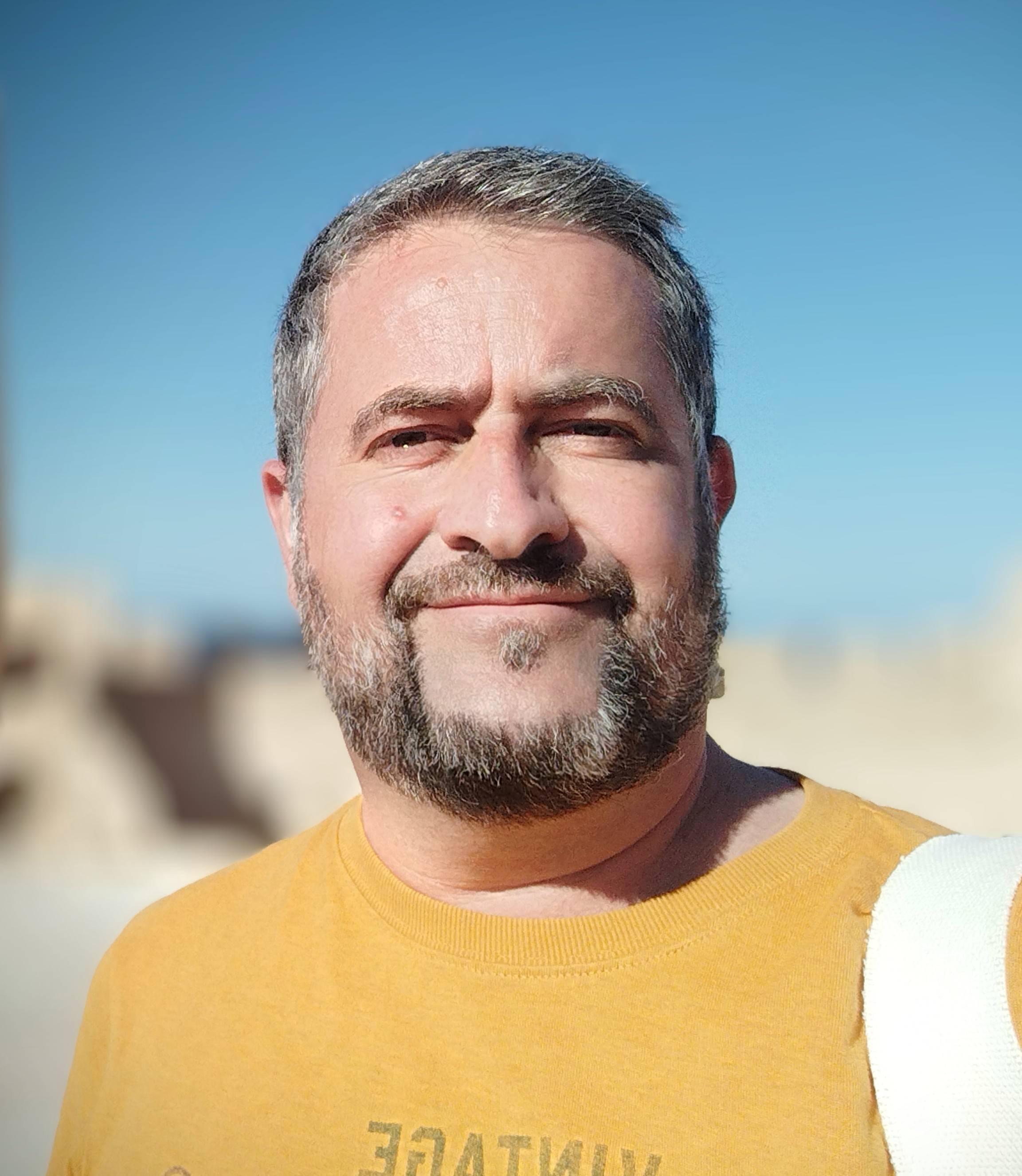
Horacio Gil Gil
Research Scientist
ORCID code: 0000-0002-7114-6686
Degree in Veterinary Medicine in 1995 and PhD in Veterinary Medicine in 2002 from the University of Zaragoza. He did his PhD thesis at NEIKER Tecknalia (Derio, Vizcaya) and the National Center for Microbiology of Instituto de Salud Carlos III (CNM-ISCIII, Majadahonda, Madrid) on the biological cycle of Lyme disease in the Basque Country. After that, he developed his postdoctoral training in different aspects of the pathogenesis of tularemia at the Center for Infectious Diseases, Stony Brook University, New York (USA) for 3 years. In December 2005, he joined the Reference and Research Laboratory in Special Pathogens of the CNM-ISCIII where he developed diagnostic, reference and research activities, in Bartonella, Leptospira and pathogens of interest in bioterrorism. Between 2014-2016 he participated in the European Program for the Training of Microbiologists in Public Health (EUPHEM), organized by the European Centre for Disease Prevention and Control. During this program, he participated in an international mission for the investigation of a cholera outbreak in Ghana, proposed by the Bernhard Nocht Institute for Tropical Diseases in Hamburg (Germany). In December 2016, he worked as a laboratory consultant for the World Health Organization at their office in Phnom Penh (Cambodia). Subsequently, he worked one year with Médecins Sans Frontières as director and quality manager of the TB laboratory in Nukus (Uzbekistan).
In 2019, he joined the HIV Variability and Biology Unit at CNM-ISCIII, where he developed different reference and research activities, including his contribution to the molecular epidemiological surveillance of HIV-1 in Spain and the study of HIV-1 antiretroviral resistance. Since September 2022 he has been leading the Human Papillomavirus Unit at the CNM-ISCIII. -
Alicia Inés García Señán
Predoctoral Student UNED
Degree in Pharmacy in 2013 from the Complutense University of Madrid. She completed specialized health training in Microbiology and Parasitology at the Complejo Asistencial Universitario de Salamanca (2014-2018). During this period he studied a master's degree in Tropical Diseases at the University of Salamanca (2016). She has developed her professional activity as a clinical microbiologist at the Hospital de Santa Bárbara (Soria) (2018), Hospital Universitario Vall d'Hebrón (Barcelona) (2019-2022), and Hospital Central de la Defensa (Gómez Ulla) C.S.V.E, since 2022. In September 2024 she has started PhD studies at the Human Papillomavirus Unit of the CNM-ISCIII.
-

Manuela Rodríguez Vargas
Técnico de Laboratorio

List of staff
Additional Information
The Medical Entomology Laboratory has accumulated extensive experience in this field, especially in entomological field studies, biology of arthropods of medical interest, vector competence and vector control. Also, in the molecular detection of Leishmania infantum promastigotes in naturally parasitized phlebotomine sand flies, in the molecular identification of blood ingested by hematophagous arthropods and in the study of the immunomodulatory properties of proteins present in the saliva of phlebotomine sand flies and mosquitoes. Our laboratory is currently co-leading the studies of vectors and wild reservoirs of leishmaniasis in the leishmaniasis focus of Fuenlabrada, Madrid. In this sense, we have studied the role of asymptomatic individuals as reservoirs in the outbreak by xenodiagnosis. On the other hand, we have participated since 2007 in the Entomological Surveillance Program in Airports and Ports against Potential Vectors of Exotic Infectious Diseases, a program that is allowing to develop the expansion map in Spain of Aedes albopictus. In 2016-2017, we carried out surveillance of Ae. albopictus in the Community of Castilla-La Mancha. On the other hand, we conducted studies on the role of patients with post-kala-azar dermal leishmaniasis (PKDL) in the transmission of the parasite in Bangladesh and Sudan. In addition, we participate in research studying ticks transmitting Crimean-Congo hemorrhagic fever in Spain.
Currently, it maintains confidentiality agreements with several companies participating in the evaluation of molecules with activity against pathogens in vectors (GSK), in the development of vector traps using artificial intelligence algorithms (Irideon, Spain), and in the evaluation of repellents against phlebotomine sand flies (IRSEA, France).
The laboratory actively participates in outreach activities such as the Science Week or the European Researchers' Night, among others, making medical entomology science available to the general population.
The Medical Entomology Laboratory has accumulated extensive experience in this field, especially in entomological field studies, biology of arthropods of medical interest, vector competence and vector control. Also, in the molecular detection of Leishmania infantum promastigotes in naturally parasitized phlebotomine sand flies, in the molecular identification of blood ingested by hematophagous arthropods and in the study of the immunomodulatory properties of proteins present in the saliva of phlebotomine sand flies and mosquitoes. Our laboratory is currently co-leading the studies of vectors and wild reservoirs of leishmaniasis in the leishmaniasis focus of Fuenlabrada, Madrid. In this sense, we have studied the role of asymptomatic individuals as reservoirs in the outbreak by xenodiagnosis. On the other hand, we have participated since 2007 in the Entomological Surveillance Program in Airports and Ports against Potential Vectors of Exotic Infectious Diseases, a program that is allowing to develop the expansion map in Spain of Aedes albopictus. In 2016-2017, we carried out surveillance of Ae. albopictus in the Community of Castilla-La Mancha. On the other hand, we conducted studies on the role of patients with post-kala-azar dermal leishmaniasis (PKDL) in the transmission of the parasite in Bangladesh and Sudan. In addition, we participate in research studying ticks transmitting Crimean-Congo hemorrhagic fever in Spain.
Currently, it maintains confidentiality agreements with several companies participating in the evaluation of molecules with activity against pathogens in vectors (GSK), in the development of vector traps using artificial intelligence algorithms (Irideon, Spain), and in the evaluation of repellents against phlebotomine sand flies (IRSEA, France).
The laboratory actively participates in outreach activities such as the Science Week or the European Researchers' Night, among others, making medical entomology science available to the general population.