



We protect your health through science
Investigation
Medical Entomology
Research Lines
Content with Investigacion .
The Laboratory of Medical Entomology (LME) develops an intense reference and research activity, focused on the field of disease vectors of interest in Public Health. The LME has an insectary where biological cycles of insect vectors are currently maintained, allowing the performance, among others, of vector competence and xenodiagnostic studies. The LME supports the national health system by offering techniques available in the portfolio of services for the taxonomic identification of arthropods of health interest. In addition, it performs entomological surveillance of outbreaks, supporting Surveillance Plans. In particular, the LME plays a leading role in the Entomological Surveillance Plan for Leishmaniasis in the Community of Madrid. On the other hand, the LME offers scientific advice to the CCAES (Centro de Coordinación de Alertas y Emergencias Sanitarias, Ministerio de Sanidad, Consumo y Bienestar Social), and participates in the elaboration of reports and rapid risk assessments.

The main research lines of the Laboratory of Medical Entomology are:
1. Maintenance of insect vector colonies: phlebotomine sand flies (Phlebotomus perniciosus, Phlebotomus papatasi and Phlebotomus argentipes, vectors of Leishmania infantum, Leishmania major and Leishmania donovani, respectively), Culex and Aedes mosquitoes (vectors of various arboviruses) and Rhodnius prolixus (vector of Trypanosoma cruzi).
2. Biology of disease vectors of public health interest: biology, vector competence, experimental infections. The CNM has a BSL3 safety laboratory to carry out vector competence studies with culicidae and phlebotomine sand flies.
3. Entomological sampling, infectivity of potential reservoirs of leishmaniasis.
4. Insecticides and repellents: evaluation of their efficacy.
5. Characterization of saliva proteins of hematophagous Diptera: genomics, proteomics, biochemistry and gene editing. Study of salivary proteins as markers of bite exposure, virulence factors and/or vaccines.
6. Xenodiagnosis of leishmaniasis.
7. Molecular biology and taxonomy of phlebotomine sand flies. Molecular detection of Leishmania infantum in phlebotomine sand flies and characterization of Leishmania spp. Molecular identification of blood ingested by vectors.
Research projects
Content with Investigacion .
CURRENT PROJECTS
Project title: "Biochemical and functional characterisation of salivary proteins of Phlebotomus perniciosus and their role in infection by Leishmania infantum (PERNIPROT)"Reference: Project PID2023-147773NA-I00 funded by MICIU/AEI/10.13039/501100011033 and by FEDER, EU.
Start date: 01/09/2024
End date: 31/08/2028
Funding: €175,000
Principal investigator: Inés Elena Martín Martín.
Funding agency: Agencia Estatal de Investigación (Proyecto de Generación del Conocimiento 2023).

Project title: "Surveillance of leishmaniasis in the Community of Madrid from a “One Health” perspective: study of the infectious capacity of patients with visceral leishmaniasis and their role as reservoirs"
Reference: PI24CIII/00026
Start date: 01/01/2025
End date: 31/12/2027
Funding: €60,000.00
Principal investigator: Inés Elena Martín Martín.
Co-principal investigator: Maribel Jiménez Alonso
Funding agency: Instituto de Salud Carlos III (Strategic Action in Intramural Health, AESI).
Service Contract: "Analysis for the surveillance of the vector and wild reservoirs that transmit leishmaniasis in the Community of Madrid"
Reference: file no. 17/2024 (A/SER-008455/2024).
Start date: 26/06/2024
End date: 10/12/25, extendable to 2026
Total funding: €171,084
Principal Investigator: Maribel Jiménez Alonso
Funding agency: Service Contract between the Instituto de Salud Carlos III and the Directorate-General for Public Health, Regional Ministry of Health of the Community of Madrid
Project Title: CIBERINFEC Research Group (CB21/13/00110)
Start date: 2021
End date: currently active
Principal Investigator: Dr. Mª Paz Sánchez-Seco, Arbovirus and Imported Viral Diseases Unit.
Researchers from the Medical Entomology Laboratory: Maribel Jiménez (member), Inés Martín Martín (collaborator).
Funding: €108,134. File number: CB21/13/00110.
Funding agency: Consortium Centre for Biomedical Research in NETWORK (CIBER)
PAST PROJECTS
Service Contract: "Evaluation of the anti-leishmania effect of the bacteria Tc1 and its derivatives in the intravectorial cycle"
Reference: ISCIII-06896
Start date: 15/12/2022
End date: 15/04/2025
Funding: €71,265.67
Principal Investigator: Inés Elena Martín Martín
Funding agency: Service Contract between the company GlaxoSmithKline R&D (GSK) and the Instituto de Salud Carlos III
Service Contract: "Analysis for the surveillance of the vector and wild reservoirs that transmit leishmaniasis in the Community of Madrid"
Reference: 59/2020 (A/SER-040739/2020)
Start date: 10/12/2021
End date: 10/12/2023.
Funding: €42,612.17 per year Total 2021-2023: €127,836.51
Principal Investigators: Ricardo Molina /Maribel Jiménez Alonso
Funding agency: Service contract between the Instituto de Salud Carlos III (ISCIII) and the Directorate-General for Public Health, Regional Ministry of Health of the Community of Madrid
Project title: "Research and Integrated Surveillance of Emerging Arboviruses West Nile, Toscana and Dengue in some areas of Spain"
Reference: PI19CIII/00014
Start date: 2020
End date: 2022
Principal Investigator: Ana Vázquez González
Co-Principal Investigator: Ricardo Molina
Funding: €60,000.00
Funding agency: Instituto de Salud Carlos III (Strategic Action in Intramural Health, AESI).
Project title: "Characterisation of the concept of ‘asymptomatic carrier’ in leishmaniasis: implications for treatment".
Start date: 01/01/2015
End date: 31/12/2017
Principal investigators: Javier Moreno and Javier García
Funding: €159,940
Funding agency: Study Agreement between Drugs for Neglected Diseases Initiative (DNDi), the Spanish Foundation for International Cooperation, Health and Social Policy (FCSAI) and Fuenlabrada Hospital. Subcontractor: ISCIII Medical Entomology Unit (Maribel Jiménez and Ricardo Molina).
Project title: "Biology and control of vector-borne infections in Europe (EDENext Collaborative Project): Sandfly-borne diseases".
Reference: Subproject (PBD) (EU, FP7-HEALTH-2010-single-stage, contract No. 261504).
Start date: 2011
End date: 2014
Principal investigator: Ricardo Molina General coordinator: Petr Volf
Funding: €140,000
Funding agency: EU-FP7
Project Title: "Phlebotomus perniciosus saliva as a source in the search for potential targets for the development of vaccines against Leishmania infantum"
Reference: AGL2008-01592/GAN (MICINN)
Start date: 2009
End date: 2011
Principal investigator: Ricardo Molina
Funding: €70,180
Funding agency: Ministry of Science and Innovation
Publications
Hypervirulent Klebsiella pneumoniae: Epidemiology outside Asian countries, antibiotic resistance association, methods of detection and clinical management
12. Hypervirulent Klebsiella pneumoniae: Epidemiology outside Asian countries, antibiotic resistance association, methods of detection and clinical management. Autores: García-Cobos S, Oteo-Iglesias J, Pérez-Vázquez M. Revista: Enferm Infecc Microbiol Clin (Engl Ed). 2025 Feb;43(2):102-109.
PUBMED DOIRapid cross-border emergence of NDM-5-producing Escherichia coli in the European Union/European Economic Area, 2012 to June 2022
15. Rapid cross-border emergence of NDM-5-producing Escherichia coli in the European Union/European Economic Area, 2012 to June 2022. Autores: Linkevicius M, Bonnin RA, Alm E, Svartström O, Apfalter P, Hartl R, Hasman H, Roer L, Räisänen K, Dortet L, Pfennigwerth N, Hans JB, Tóth Á, Buzgó L, Cormican M, Delappe N, Monaco M, Giufrè M, Hendrickx AP, Samuelsen Ø, Pöntinen AK, Caniça M, Manageiro V, Oteo-Iglesias J, Pérez-Vázquez M, Westmo K, Mäkitalo B, Palm D, Monnet DL, Kohlenberg A. Revista: Euro Surveill. 2023 May;28(19):2300209.
PUBMED DOICharacterization of Carbapenemase-Producing Klebsiella oxytoca in Spain, 2016-2017.
18. Characterization of Carbapenemase-Producing Klebsiella oxytoca in Spain, 2016-2017. Autores: Pérez-Vazquez M, Oteo-Iglesias J, Sola-Campoy PJ, Carrizo-Manzoni H, Bautista V, Lara N, Aracil B, Alhambra A, Martínez-Martínez L, Campos J; Spanish Antibiotic Resistance Surveillance Program Collaborating Group. Revista: Antimicrob Agents Chemother. 2019 May 24;63(6): e02529-18.
PUBMED DOICarbapenemase-Producing Klebsiella pneumoniae From Transplanted Patients in Brazil: Phylogeny, Resistome, Virulome and Mobile Genetic Elements Harboring blaKPC-2 or blaNDM-1.
16. Carbapenemase-Producing Klebsiella pneumoniae From Transplanted Patients in Brazil: Phylogeny, Resistome, Virulome and Mobile Genetic Elements Harboring blaKPC-2 or blaNDM-1. Autores: Raro OHF, da Silva RMC, Filho EMR, Sukiennik TCT, Stadnik C, Dias CAG, Oteo Iglesias J, Pérez-Vázquez M. Revista: Front Microbiol. 2020 Jul 15;11:1563.
PUBMED DOIDissemination of extensively drug-resistant NDM-producing Providencia stuartii in Europe linked to patients transferred from Ukraine, March 2022 to March 2023
17. Dissemination of extensively drug-resistant NDM-producing Providencia stuartii in Europe linked to patients transferred from Ukraine, March 2022 to March 2023. Autores: Witteveen S, Hans JB, Izdebski R, Hasman H, Samuelsen Ø, Dortet L, Pfeifer Y, Delappe N, Oteo-Iglesias J, Żabicka D, Cormican M, Sandfort M, Reichert F, Pöntinen AK, Fischer MA, Verkaik N, Pérez-Vazquez M, Pfennigwerth N, Hammerum AM, Hallstrøm S, Biedrzycka M, Räisänen K, Wielders CC, Urbanowicz P, de Haan A, Westmo K, Landman F, van der Heide HG, Lansu S, Zwittink RD, Notermans DW, Guzek A, Kondratiuk V, Salmanov A, Haller S, Linkevicius M, Gatermann S, Kohlenberg A, Gniadkowski M, Werner G, Hendrickx AP. Revista: Euro Surveill. 2024 Jun;29(23):2300616.
PUBMED DOISpread of the FAR-MRSA clone, a fusidic acid- and meticillin-resistant Staphylococcus aureus ST121, Europe, 2014 to 2024.
19. Spread of the FAR-MRSA clone, a fusidic acid- and meticillin-resistant Staphylococcus aureus ST121, Europe, 2014 to 2024. Autores: Roer L, Yin N, Denis O, Vendrik KE, Zwittink RD, Notermans DW, Perrin M, Khonyongwa K, Tristan A, Youenou B, Layer-Nicolaou F, Werner G, Enger H, Eikrem ECH, Darenberg J, Mäkitalo B, Paulsson M, Björkman J, Fang H, Hallbäck ET, Sundqvist M, Lindholm L, Moganeradj K, García-Cobos S, Cañada-García JE, Holzknecht BJ, Eriksen HB, Hoppe M, Bartels MD, Samaniego Castruita JA, Urth TR, Larsen AR, Petersen A. Revista: Euro Surveill. 2025 Jul;30(28):2500452.
DOICarbapenemase-producing Emergence of NDM-producing Klebsiella pneumoniae and Escherichia coli in Spain: phylogeny, resistome, virulence and plasmids encoding blaNDM-like genes as determined by WGS. aeruginosa in Spain: interregional dissemination of the high risk-clones ST175 and ST244 carrying blaVIM-2, blaVIM-1, blaIMP-8, blaVIM-20 and blaKPC-2
14. Emergence of NDM-producing Klebsiella pneumoniae and Escherichia coli in Spain: phylogeny, resistome, virulence and plasmids encoding blaNDM-like genes as determined by WGS. Autores: Pérez-Vázquez M, Sola Campoy PJ, Ortega A, Bautista V, Monzón S, Ruiz-Carrascoso G, Mingorance J, González-Barberá EM, Gimeno C, Aracil B, Sáez D, Lara N, Fernández S, González-López JJ, Campos J, Kingsley RA, Dougan G, Oteo-Iglesias J; Spanish NDM Study Group. Revista: J Antimicrob Chemother. 2019 Dec 1;74(12):3489-3496.
PUBMED DOIContent with Investigacion .
-
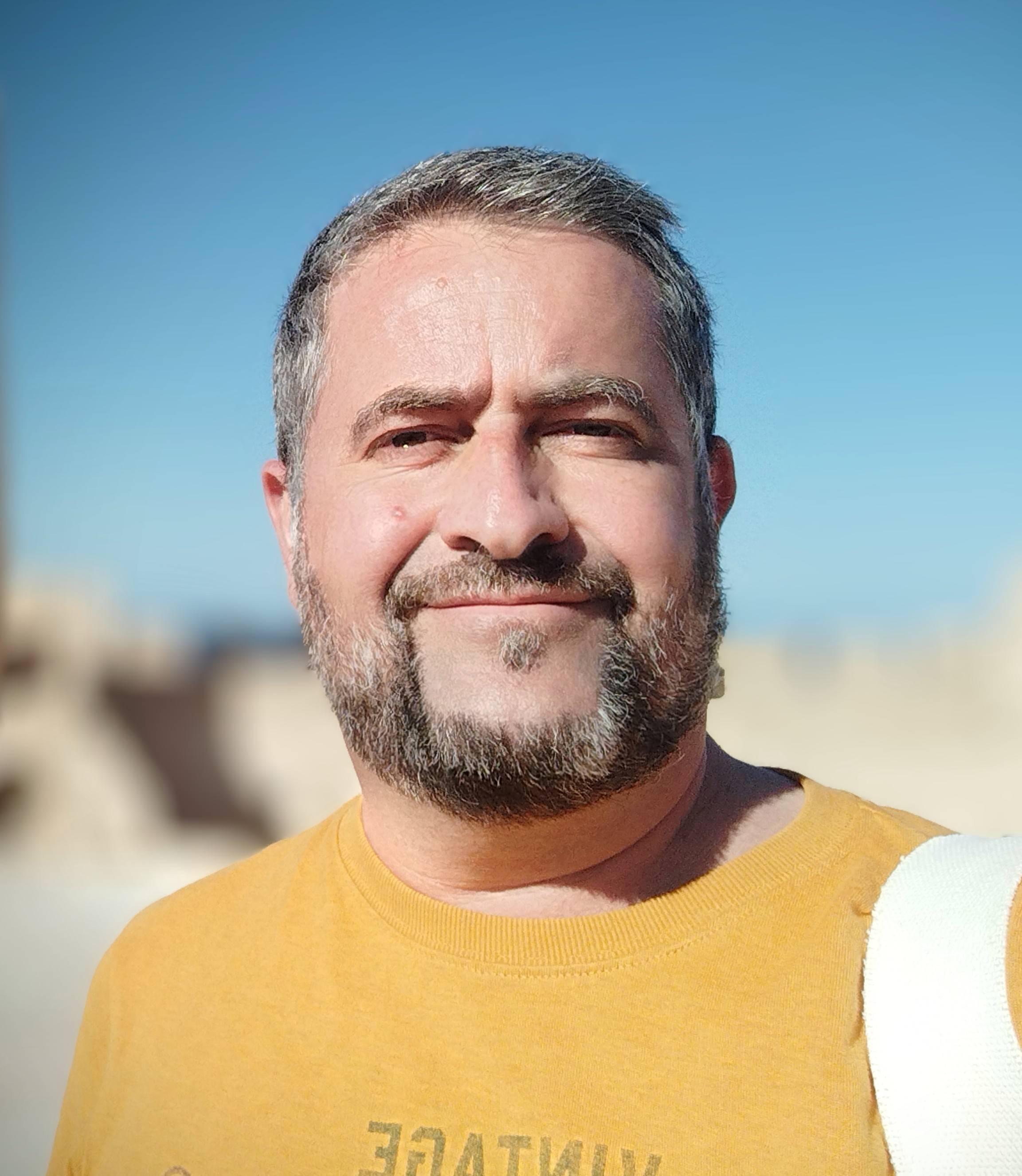
Horacio Gil Gil
Research Scientist
ORCID code: 0000-0002-7114-6686
Degree in Veterinary Medicine in 1995 and PhD in Veterinary Medicine in 2002 from the University of Zaragoza. He did his PhD thesis at NEIKER Tecknalia (Derio, Vizcaya) and the National Center for Microbiology of Instituto de Salud Carlos III (CNM-ISCIII, Majadahonda, Madrid) on the biological cycle of Lyme disease in the Basque Country. After that, he developed his postdoctoral training in different aspects of the pathogenesis of tularemia at the Center for Infectious Diseases, Stony Brook University, New York (USA) for 3 years. In December 2005, he joined the Reference and Research Laboratory in Special Pathogens of the CNM-ISCIII where he developed diagnostic, reference and research activities, in Bartonella, Leptospira and pathogens of interest in bioterrorism. Between 2014-2016 he participated in the European Program for the Training of Microbiologists in Public Health (EUPHEM), organized by the European Centre for Disease Prevention and Control. During this program, he participated in an international mission for the investigation of a cholera outbreak in Ghana, proposed by the Bernhard Nocht Institute for Tropical Diseases in Hamburg (Germany). In December 2016, he worked as a laboratory consultant for the World Health Organization at their office in Phnom Penh (Cambodia). Subsequently, he worked one year with Médecins Sans Frontières as director and quality manager of the TB laboratory in Nukus (Uzbekistan).
In 2019, he joined the HIV Variability and Biology Unit at CNM-ISCIII, where he developed different reference and research activities, including his contribution to the molecular epidemiological surveillance of HIV-1 in Spain and the study of HIV-1 antiretroviral resistance. Since September 2022 he has been leading the Human Papillomavirus Unit at the CNM-ISCIII. -
Alicia Inés García Señán
Predoctoral Student UNED
Degree in Pharmacy in 2013 from the Complutense University of Madrid. She completed specialized health training in Microbiology and Parasitology at the Complejo Asistencial Universitario de Salamanca (2014-2018). During this period he studied a master's degree in Tropical Diseases at the University of Salamanca (2016). She has developed her professional activity as a clinical microbiologist at the Hospital de Santa Bárbara (Soria) (2018), Hospital Universitario Vall d'Hebrón (Barcelona) (2019-2022), and Hospital Central de la Defensa (Gómez Ulla) C.S.V.E, since 2022. In September 2024 she has started PhD studies at the Human Papillomavirus Unit of the CNM-ISCIII.
-
Manuela Rodríguez Vargas
Técnico de Laboratorio


List of staff
Additional Information
The Medical Entomology Laboratory has accumulated extensive experience in this field, especially in entomological field studies, biology of arthropods of medical interest, vector competence and vector control. Also, in the molecular detection of Leishmania infantum promastigotes in naturally parasitized phlebotomine sand flies, in the molecular identification of blood ingested by hematophagous arthropods and in the study of the immunomodulatory properties of proteins present in the saliva of phlebotomine sand flies and mosquitoes. Our laboratory is currently co-leading the studies of vectors and wild reservoirs of leishmaniasis in the leishmaniasis focus of Fuenlabrada, Madrid. In this sense, we have studied the role of asymptomatic individuals as reservoirs in the outbreak by xenodiagnosis. On the other hand, we have participated since 2007 in the Entomological Surveillance Program in Airports and Ports against Potential Vectors of Exotic Infectious Diseases, a program that is allowing to develop the expansion map in Spain of Aedes albopictus. In 2016-2017, we carried out surveillance of Ae. albopictus in the Community of Castilla-La Mancha. On the other hand, we conducted studies on the role of patients with post-kala-azar dermal leishmaniasis (PKDL) in the transmission of the parasite in Bangladesh and Sudan. In addition, we participate in research studying ticks transmitting Crimean-Congo hemorrhagic fever in Spain.
Currently, it maintains confidentiality agreements with several companies participating in the evaluation of molecules with activity against pathogens in vectors (GSK), in the development of vector traps using artificial intelligence algorithms (Irideon, Spain), and in the evaluation of repellents against phlebotomine sand flies (IRSEA, France).
The laboratory actively participates in outreach activities such as the Science Week or the European Researchers' Night, among others, making medical entomology science available to the general population.
The Medical Entomology Laboratory has accumulated extensive experience in this field, especially in entomological field studies, biology of arthropods of medical interest, vector competence and vector control. Also, in the molecular detection of Leishmania infantum promastigotes in naturally parasitized phlebotomine sand flies, in the molecular identification of blood ingested by hematophagous arthropods and in the study of the immunomodulatory properties of proteins present in the saliva of phlebotomine sand flies and mosquitoes. Our laboratory is currently co-leading the studies of vectors and wild reservoirs of leishmaniasis in the leishmaniasis focus of Fuenlabrada, Madrid. In this sense, we have studied the role of asymptomatic individuals as reservoirs in the outbreak by xenodiagnosis. On the other hand, we have participated since 2007 in the Entomological Surveillance Program in Airports and Ports against Potential Vectors of Exotic Infectious Diseases, a program that is allowing to develop the expansion map in Spain of Aedes albopictus. In 2016-2017, we carried out surveillance of Ae. albopictus in the Community of Castilla-La Mancha. On the other hand, we conducted studies on the role of patients with post-kala-azar dermal leishmaniasis (PKDL) in the transmission of the parasite in Bangladesh and Sudan. In addition, we participate in research studying ticks transmitting Crimean-Congo hemorrhagic fever in Spain.
Currently, it maintains confidentiality agreements with several companies participating in the evaluation of molecules with activity against pathogens in vectors (GSK), in the development of vector traps using artificial intelligence algorithms (Irideon, Spain), and in the evaluation of repellents against phlebotomine sand flies (IRSEA, France).
The laboratory actively participates in outreach activities such as the Science Week or the European Researchers' Night, among others, making medical entomology science available to the general population.