



We protect your health through science
Investigation
Water-borne and Food-borne Bacterial Diseases
Research Lines
Content with Investigacion .
Classical viral vaccines rely on the induction of neutralizing antibodies. In the case of infection by the human immunodeficiency virus (HIV), the viral spike has evolved to evade recognition by these antibodies. Despite these obstacles, certain monoclonal antibodies capable of neutralizing the majority of primary HIV-1 isolates have been successfully isolated and have demonstrated efficacy both in controlling viremia and in providing protection against infection in animal models. These are known as broadly neutralizing antibodies (bNAbs).
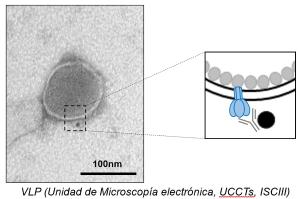
In order to identify the factors involved in the induction of these antibodies and to develop preventive strategies based on bNAb induction, we are pursuing the following research lines:
- Determination of factors associated with the induction of effective humoral responses in different scenarios: recent infection, chronic infection, co-infection with hepatitis C virus, reinfection, and pediatric infection, among others.
- Study of the effect of feminizing hormone therapy on the immune system of transgender women.
- Development of HIV-1 vaccine prototypes based on viral spike proteins incorporated into Virus-Like Particles (VLPs) from two sources:
a) Selected from a library of randomly mutated spikes to enhance the accessibility of epitopes recognized by bNAbs.
b) Derived from viruses present in individuals with broad neutralizing responses in recent infection. - Isolation and characterization of new bNAbs against HIV-1 from individual B cells of individuals with an efficient neutralizing response. These antibodies could be used in both preventive and therapeutic strategies.
- Isolation of new monoclonal antibodies against other human pathogenic viruses, adapting the technology developed for HIV-1 antibody isolation, in collaboration with researchers from the National Center for Microbiology.
- Use of gene therapy vectors (Recombinant Adeno-Associated Viruses; rAAVs) to incorporate bNAbs and apply them in prophylactic and therapeutic strategies.
Líneas de investigación prioritarias

1. Estudio de los procesos de latencia y reactivación del VIH-1: principales mecanismos homeostáticos responsables de la latencia proviral y la generación de los reservorios virales que imposibilitan la erradicación de la enfermedad.
2. Estudio de dianas terapéuticas para impedir la replicación viral activa durante la infección aguda o primaria y para interferir con la renovación del reservorio viral: análisis de fármacos inhibidores de las kinasas de linfocitos PKC o kinasas de la familia Src como p56Lck.
3. Análisis de los mecanismos de transactivación responsables de la replicación viral activa en linfocitos T CD4+: mecanismos virales implicados en reactivación del provirus.
4. Estudio de mecanismos que impidan la infección y replicación viral eficaz en células del reservorio viral secundario como son los monocitos/macrófagos.
5. Análisis de la resistencia a la infección por VIH-1 en linfocitos T CD4+ aislados de pacientes con distrofia muscular de cintura escapulohumeral/pélvica 1F (LGMD1F), que portan un defecto en el gen de la transportina-3 (tnpo3).
6. Estudio de la sinergia NF-B/Tat para la identificación de nuevas dianas terapéuticas.
7. Estudio de cambios de expresión en el transcriptoma y modificaciones postraduccionales en el proteoma de linfocitos T CD4+ que expresan Tat intracelular y su impacto sobre la estructura del citoesqueleto celular: mecanismo potencial de supervivencia de los reservorios virales.
8. Análisis de los mecanismos de degradación de p65/RelA (NF-B) y su importancia en la infección por VIH-1.
9. Estudio de las modificaciones en el metabolismo del RNA inducidas por la expresión intracelular de Tat y su papel en los mecanismos de supervivencia celular y aumento de la replicación viral.
Otras líneas de investigación
1. Estudio de la respuesta humoral y celular desarrollada en pacientes con Long COVID o COVID persistente.
2. Análisis de biomarcadores predictivos de gravedad en pacientes con distintas presentaciones de COVID-19.
3. Estudio de la respuesta inmune frente a la infección natural por SARS-CoV-2 o por la vacunación frente al COVID-19 desarrollada por pacientes con enfermedades oncohematológicas en estado de inmunodeficiencia.
4. Definición de biomarcadores predictivos de recaída en pacientes con leucemia mieloide crónica que hayan interrumpido el tratamiento con inhibidores de tirosina kinasas.
Research
The Molecular Virology group focuses its research on the study of HIV-1 genetic variation and viral evolution using both in vitro and ex vivo approaches, structured around the following research lines:
- Non-progressor patients. These patients maintain control of the disease in the absence of antiretroviral therapy and have therefore been proposed as a model of functional cure. Our objective is to study the contribution of viral factors to disease control through biological characterization and analysis of viral evolution in individuals with undetectable viral loads (elite controllers, EC), compared with individuals showing other patterns of viral control.
- Viral envelope. This viral protein is key in determining viral fitness. Therefore, its functionality significantly affects infection progression. In collaboration with Dr. Blanco and Dr. Valenzuela, we study which specific events (CD4 binding, fusogenicity, etc.) are associated with envelope functionality. To this end, we have analyzed envelopes from individuals with different patterns of disease progression. Some of these have been contributed to the AIDS Research Network envelope biobank for broader use.
- Dual infection. Infection with more than one viral variant (either through co-infection or superinfection) may have consequences for infection pathogenesis. Within our group, different aspects of DI have been analyzed, including its detection in non-progressor patients, its prevalence and incidence in Spain, and its influence on the neutralizing antibody response.
- Molecular Epidemiology. The group has analyzed viral evolution throughout the epidemic in Spain and in other countries (the Netherlands, Italy, Germany, Uruguay, Panama, Brazil, etc.).
- Role of amino acid residues in reverse transcriptase. We study the role of specific amino acid residues in HIV-1 reverse transcriptase in enzymatic function and replication capacity using an infectious molecular clone previously obtained by the group.
- “In vitro” variability. Serial passage studies have been used to detect the mechanisms responsible for the gain or loss of viral fitness.
- Antiviral studies. We have analyzed the selection of resistance mutations in vitro against different antivirals, as well as the effect of these mutations on viral fitness, and the activity of new antivirals such as ATR inhibitors.
Virological Diagnosis and Reference in HIV and HTLV Infections
The research group provides diagnostic and reference activities through the service portfolio of the National Center for Microbiology to the entire Spanish National Health System.
These services include:
-
Diagnosis and reference of HIV infection (types 1 and 2) through detection of specific antibodies and detection of proviral DNA by PCR.
-
Diagnosis and reference of HTLV-I/II infection through detection of specific antibodies and detection of proviral DNA by PCR. Quantification of HTLV-1 proviral load by real-time PCR.
European Union Reference Laboratory (EURL) in the field of in vitro diagnostic medical devices for microbiological diagnosis (IVD) of HIV and HTLV (Regulation 2023/2713 of December 5th, 2023). Our role is to confirm the reliability and effectiveness of devices for detecting these pathogens and to ensure their specific performance requirements through laboratory testing before they can be marketed within the European Union.
Research Lines:
1. Molecular mechanisms associated to the protection of HIV-1 infection in limb-girdle muscular dystrophy dominant D2 (LGMDD2) patients.
2. Generation of neutralizing antibodies for therapeutic use based on the broad-spectrum neutralizing response against founder viruses.
3. Characterization of the immune memory against SARS-CoV-2 in a population over 65 years of age.
4. Screening and characterization of new anti-latency drugs against HIV-1.
5. Study of viral entry and HIV tropism in viruses of special epidemiological relevance in Spain.
6. Genetic mechanisms of protection and control of HIV-1 infection in populations with extreme phenotypes.
Clinical studies:
1. Phase 1 clinical trial to evaluate the safety and immunogenicity of HIV-1 envelope-based 763SIP8/MPLA-5 vaccine as a preventive vaccine in healthy uninfected adults.
2. ENE-COVID-Senior: Prospective observational study in a cohort of elderly nursing home residents to establish their immune status after receiving a complete vaccination regimen.
Implementation of new technologies:
1. Identification of HIV-1 integration sites by deep sequencing.
2. Single cell transcriptomics with simultaneous TCR/BCR sequencing.
3. Epidemiological intelligence for prediction of SARS-CoV-2 variants likely to emerge in different vaccination settings.
Biología y Variabilidad del VIH
null
Research projects
Content with Investigacion .
- Towards a functional cure: Implications of early antiretroviral therapy and hormonal changes on the HIV reservoir in perinatally infected adolescents. Health Research Fund (FIS) – Carlos III Health Institute (01/01/2026 – 31/12/2028). €72,000. PI: María Pernas, Concepción Casado.
- Determination of factors associated with protection against Human Immunodeficiency Virus type 1 reinfection: Identification of correlates of protection. 9th Gilead Fellowship Program for Biomedical Research, Gilead Sciences, S.L. (01/07/2023 – 30/06/2025). €16,330. PI: María Pernas.
- Impact of the envelope on HIV viral replication: New avenues for vaccine development. Health Research Fund (FIS) – Carlos III Health Institute (01/01/2020 – 31/12/2023). €53,000. PI: María Pernas, Concepción Casado.
- Study of HIV-1 virulence in recently infected patients and its contribution, together with clinical and epidemiological factors, to disease progression. Ministry of Economy and Competitiveness. State Program for Scientific and Technical Research and Innovation (30/12/2016 – 30/06/2021). €145,000. PI: Concepción Casado, Cecilio López-Galíndez.
-Contribution of HIV-1 dual infection to virological and clinical evolution in homo/bisexual men. Health Research Fund (FIS) – Carlos III Health Institute (01/01/2014 – 31/01/2016). €74,410. PI: Cecilio López-Galíndez.
- Characterization of non-pathogenic HIV variants obtained “ex vivo” and “in vitro” for the study of disease pathogenesis. Ministry of Science and Innovation (01/01/2011 – 31/01/2014). €169,400. PI: Cecilio López-Galíndez.
- Spanish AIDS Research Network (RIS-RETIC). Carlos III Health Institute (02/01/2017 – 02/01/2022). €195,212. PI: Cecilio López-Galíndez, Concepción Casado.

Publications
Imported and autochthonous malaria in West Saudi Arabia: results from a reference hospital
Soliman RH, Garcia-Aranda P, Elzagawy SM, Hussein BE, Mayah WW, Martin Ramirez A, Ta-Tang TH, Rubio JM. Imported and autochthonous malaria in West Saudi Arabia: results from a reference hospital. Malar J. 2018 Aug 7;17(1):286.
PUBMED DOICryptosporidium hominis genotypes involved in increased incidence and clusters of cases, Navarra, Spain, 2012.
Fuentes, I., Martín, C., Beristain, X; Mazón,A, Saugar, JM, Blanco, A; García M, Cenoz, Valle-Cristia, Ezpeleta, C., Castilla, J. 2015. Cryptosporidium hominis genotypes involved in increased incidence and clusters of cases, Navarra, Spain, 2012. Epidemiology and Infection; 143:1033-6
PUBMED DOIMolecular genotyping of Giardia duodenalis isolates from symptomatic individuals attending two major public hospitals in Madrid, Spain.
Lucio A, Martínez-Ruiz R, Merino FJ, Bailo B, Aguilera M, Fuentes I, Carmena D. 2015. Molecular genotyping of Giardia duodenalis isolates from symptomatic individuals attending two major public hospitals in Madrid, Spain. PLoS One. 10 (12): e0143981.
PUBMED DOIOccurrence and subtype distribution of Blastocystis sp. in humans, dogs, and cats sharing household in northern Spain and assessment of zoonotic transmission risk.
Paulos S, Köster PC, de Lucio A, Hernández-de-Mingo M, Cardona GA, Fernández-Crespo JC, Stensvold RC, Carmena D. 2018. Occurrence and subtype distribution of Blastocystis sp. in humans, dogs, and cats sharing household in northern Spain and assessment of zoonotic transmission risk. Zoonoses and Public Health, 65:993-1002.
PUBMED DOIContent with Investigacion .
-
Concepción Casado Herrero
Tenure Scientist of Public Research Organizations (OPIs)
ORCID code: 0000-0003-3412-2877
-
María Pernas Escario
Senior Specialized Technician of Public Research Organizations (OPIs)
ORCID code: 0000-0003-2966-0160
-
Virginia Sandonís Martín
Senior Specialized Technician of Public Research Organizations (OPIs)
ORCID code: 0000-0001-5762-7531
-
Rosa Fuentes Fernández
Laboratory Technician
List of staff
Additional Information
The Reference and Research Laboratory for Water-borne an Food-borne Bacterial Diseases (LRIEBTAA) is recognized as a national reference laboratory for the zoonotic agents Salmonella, verotoxigenic Escherichia coli, Yersinia., Campylobacter. and Vibrio (RD 1940/2004 of September 27, Order APA/1808/2007 of June 13). In this sense, its main activity is to ensure adequate surveillance of these zoonoses, zoonotic agents and associated antibiotic resistance, as well as proper investigation of outbreaks caused by these microorganisms. In addition, the LRIEBTAA acts as a reference laboratory for Shigella, other diarrheagenic groups of E. coli, Legionella and toxigenic Corynebacterium species. Added to its reference activity is its applied research activity, among which those mentioned above stand out.
The members of the group carry out an important training activity. Every year, 3-5 students who develop their final Master's or Degree projects, laboratory technicians in training and rotating students of the specialty of Clinical Microbiology from different national origins are welcomed in the laboratory. In addition, it actively participates in the Public Health microbiologist training program funded by the ECDC through its supervision at the national level and coordination/supervision at the international level.
The Reference and Research Laboratory for Water-borne an Food-borne Bacterial Diseases (LRIEBTAA) is recognized as a national reference laboratory for the zoonotic agents Salmonella, verotoxigenic Escherichia coli, Yersinia., Campylobacter. and Vibrio (RD 1940/2004 of September 27, Order APA/1808/2007 of June 13). In this sense, its main activity is to ensure adequate surveillance of these zoonoses, zoonotic agents and associated antibiotic resistance, as well as proper investigation of outbreaks caused by these microorganisms. In addition, the LRIEBTAA acts as a reference laboratory for Shigella, other diarrheagenic groups of E. coli, Legionella and toxigenic Corynebacterium species. Added to its reference activity is its applied research activity, among which those mentioned above stand out.
The members of the group carry out an important training activity. Every year, 3-5 students who develop their final Master's or Degree projects, laboratory technicians in training and rotating students of the specialty of Clinical Microbiology from different national origins are welcomed in the laboratory. In addition, it actively participates in the Public Health microbiologist training program funded by the ECDC through its supervision at the national level and coordination/supervision at the international level.