



We protect your health through science
Investigation
Arbovirus and imported viral diseases
Research Lines
Content with Investigacion .

B) Study of the distribution and dynamics of HPV infections in risk groups. There are some particularly vulnerable groups, some of them difficult to access (sex workers, transgender groups, etc.), in which HPV infections deserve special attention. The prevalence of HPV infection is especially high in people living with HIV and/or among men who have sex with men. Knowledge of the distribution and dynamics of infections is especially interesting in these groups, as they may help to improve current algorithms for the prevention of anogenital cancer.
C) Study of infection by HPV genotypes and their relationship with progression to neoplastic processes. The oncogenic capacity of some HPV genotypes and their involvement in the production of anogenital cancer is well known. In addition, there are other oncological processes, such as non-melanoma skin cancer, in which HPV could be implicated. Thus, members of the gamma-24 HPV species have recently been associated with skin cancer. It is to be hoped that the appearance of new genotypes and the performance of more extensive studies may lead to the identification of new associations between HPV and neoplastic processes.
D) Study of co-infections by different HPV genotypes. The presence of co-infections of different HPV genotypes is a very frequent finding, both in skin samples and in different mucous membranes. The great genetic diversity of HPV limits the ability of classical molecular methods to perform a comprehensive detection and study of the genotypes present. However, the use of massive sequencing makes it possible to eliminate some of these biases and to obtain more detailed information on the existing HPV populations, as well as to analyze interactions between the different genotypes.
E) Description of new HPV genotypes/variants. Currently at the International HPV Reference Center (Karolinska Institute, Sweden) more than 220 HPV genotypes are described, distributed in 5 different genera. However, improved molecular detection techniques, as well as the use of massive sequencing, are allowing this number to increase rapidly. The study of new genotypes and variants is essential for the validation and quality control of available diagnostic methods. Similarly, their characterization and the study of possible associations of HPV with pathologies other than those already known is a field of great interest for research.
Research projects
Content with Investigacion .
Título: Impact of vaccination against Human Papillomavirus in Spain: Studye of the distribution of genotypes and its application in surveillance. Principal Investigator: Horacio Gil. Starting/End dates: 2024-2026. Funding Entity: Acción Estratégica de Salud Intramural (AESI) del Instituto de Salud Carlos III. Project Reference: PI23CIII/00006.
Título: Effect of feminizing therapy on immune response in transgender women. Principal Investigator: Victor Manuel Sánchez Merino. Collaborating Investigator: Horacio Gil. Starting/End dates:2025-2027. Funding Entity: Acción Estratégica de Salud Intramural (AESI) del Instituto de Salud Carlos III. Project Reference: PI24CIII/00031.
Publications
Viruses from a cluster of HIV-1 Elite controllers inherit viral characteristics associated with the clinical non-progressor phenotype
Casado C, Marrero-Hernández S, Márquez-Arce D, Pernas M, Marfil S, Borràs-Grañana F, Olivares I, Cabrera-Rodríguez R, Valera M-S, de Armas-Rillo L, Lemey P, Blanco J, Valenzuela-Fernández A, Lopez-Galíndez C. 2018. mBio 9:e02338-17.
PUBMED DOIPermanent control of HIV-1 pathogenesis in exceptional elite controllers: a model of spontaneous cure
Casado C, Galvez C, Pernas M, Tarancon-Diez L, Rodriguez C, Sanchez-Merino V, Vera M, Olivares I, De Pablo-Bernal R, Merino-Mansilla A, Del Romero J, Lorenzo-Redondo R, Ruiz-Mateos E, Salgado M, Martinez-Picado J, Lopez-Galindez C. Sci Rep. 2020 Feb 5,10(1):1902
PUBMED DOIHigh-Risk Sexual Practices Contribute to HIV-1 Double Infection Among Men Who Have Sex with Men in Madrid
Casado C, Pernas M, Rava M, Ayerdi O, Vera M, Alenda R, Jiménez P, Docando F, Olivares I, Zaballos A, Vicario JL, Rodríguez C, Del Romero J, Lopez-Galindez C. AIDS Res Hum Retroviruses. 2020 Nov, 36(11):896-904
PUBMED DOIIdentification of a Spanish HIV-1 Long Term Non-Progressor cluster infected with a low replicating virus
Concepción Casado, Maria Pernas, Virginia Sandonis, Tamara Alvaro-Cifuentes, Isabel Olivares, Rosa Fuentes, Lorena Martínez Prats, Eulalia Grau, Lidia Ruiz, Rafael Delgado, Carmen Rodríguez, Jorge del Romero, and Cecilio López-Galíndez. (2013). PLoS One. 8 (10):e77663.
PUBMED DOIImmunoescape of HIV-1 in Env-EL9 CD8 + T cell response restricted by HLA-B*14:02 in a Non progressor who lost twenty-seven years of HIV-1 control
Moyano A, Blanch-Lombarte O, Tarancon-Diez L, Pedreño-Lopez N, Arenas M, Alvaro T, Casado C, Olivares I, Vera M, Rodriguez C, Del Romero J, López-Galíndez C, Ruiz-Mateos E, Prado JG, Pernas M. Retrovirology. 2022 Mar 26,19(1):6
PUBMED DOIThe Characteristics of the HIV-1 Env Glycoprotein Are Linked with Viral Pathogenesis
Pérez-Yanes S, Pernas M, Marfil S, Cabrera-Rodríguez R, Ortiz R, Urrea V, Rovirosa C, Estévez-Herrera J, Olivares I, Casado C, Lopez-Galindez C, Blanco J, Valenzuela-Fernández A. Front Microbiol. 2022 Mar 24, 3:763039.
PUBMED DOIAnalysis of HIV-1 “in vitro” evolution through 3D real fitness landscapes constructed by Self Organizing Maps.
Ramón Lorenzo‐Redondo, Soledad Delgado, Federico Morán, and Cecilio Lopez‐Galindez. Analysis of HIV-1 “in vitro” evolution through 3D real fitness landscapes constructed by Self Organizing Maps. (2014) PLoS One. 9(2): e88579.
PUBMED DOIContent with Investigacion .
-

Maribel Jiménez Alonso
Tenured Scientist
ORCID code: 0000-0002-5615-3087
Doctor in Pharmacy from the Complutense University of Madrid (1994) and Extraordinary Doctorate Award. She started her research activity at ISCIII in 1990 in the field of leishmaniasis. Currently, she is the head of the LEM where she develops her scientific work in the field of entomological surveillance of phlebotomine sandflies in the CM and other studies in the field of molecular biology, mainly applied to the model of Leishmania infantum and its vector Phlebotomus perniciosus. Member of the team of experts of the ISCIII that participates in the elaboration of Rapid Risk Assessments and in the working groups in charge of the elaboration of National Plans of Prevention, Surveillance and Control of Vector-borne Diseases of the CCAES, Ministry of Health. She is currently “Operational Focal Point” for vector-borne diseases at national level for the One Health-Vectornet network (EFSA and ECDC) and coordinator of the VectorNet-Spain network since July 2024. In addition, she is a member of the expert committee of the Network of Surveillance and Control of Vectors with public health interest in the Community of Madrid. In addition, she is part of a research group from CIBER (CIBERINFEC; CB21/13/00110).
-

Inés Martín Martín
Tenured Scientist
ORCID code: 0000-0002-0956-7324
Within Medical Entomology, my work focuses on the study of phlebotomine sand flies and culicidae as vectors of leishmaniasis and arbovirosis, respectively. In 2014 I obtained my PhD degree “cum laude” with European mention from the Complutense University of Madrid. My PhD Thesis (developed at the Instituto de Salud Carlos III), focused on the study of phlebotomine sandfly saliva. Subsequently, during my postdoctoral period, I worked on insect gene editing, molecular, biochemical and functional characterization of insect saliva proteins and their role in the infection and transmission of pathogens. Most of my scientific career has been developed at the Laboratory of Malaria and Vector Research, National Institutes of Health (NIH), USA. Since 2021 I am a Senior Scientist at the Laboratory of Medical Entomology (ISCIII).
-
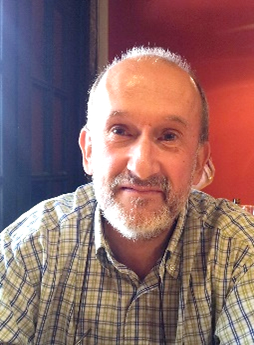
Ricardo Molina Moreno
Doctor Ad Honorem
ORCID code: 0000-0001-6662-173X
Doctor in Biological Sciences from the Complutense University of Madrid (1994). In 1979 he began his professional career at the Instituto de Salud Carlos III (ISCIII), where he became a researcher in 1985. He was in charge of the Medical Entomology Laboratory from that year until his retirement in 2023. He is currently a doctor linked “Ad Honorem”. He has extensive experience in medical entomology, advising the Ministry of Health (CCAES) and Health Departments of Autonomous Communities, on surveillance and control of arthropods transmitting vector-borne diseases. In recent years he has been involved in surveillance programs in Spain for leishmaniasis vectors, especially in the Fuenlabrada outbreak, and for viruses causing Crimean-Congo hemorrhagic fever and dengue. Also in the surveillance of invasive exotic mosquitoes, especially Aedes albopictus, in ports and airports. In his last stage he has been part of the research group within the CIBER (CIBERINFEC; CB21/13/00110).
-

Marcos López de Felipe Escudero
Predoctoral contract FPU
ORCID code: 0000-0002-2919-836X
Graduated in Biology from the Autonomous University of Madrid and Master in Tropical Parasitic Diseases from the University of Valencia. He started his professional career in 2019 in surveillance and management of hematophagous diptera of veterinary-medical interest, as well as other urban pests. In 2024 he began his work at the Instituto de Salud Carlos III (ISCIII) within the framework of the project “Evaluation of the anti-leishmanicidal effect of the bacterium Tc1 and its derivatives in the intravectorial cycle of the parasite” directed by Dr. Inés Martín Martín where he continues after the award of a FPU fellowship. He has extensive experience in medical entomology, especially in surveillance and vector control and taxonomic identification. Her career so far has focused mainly on the study of phlebotomine sand flies, simulids and culicidae, with special attention to citizen science.
-

Eva Pérez Martínez
Clinical and Biomedical Laboratory Technician
ORCID code: 0000-0002-6553-9969
Graduated in 2019 from the Advanced Vocational Training Program in Clinical and Biomedical Laboratory Sciences. I began my professional career in 2020 at Eurofins Megalab laboratories. In 2024, I started working as a freelance professional on an international project focused on the bioecology of phlebotomine sand flies in urban environments across the Mediterranean Basin, conducting fieldwork in Spain, Italy, Greece, and southern France within the framework of citizen science. Since 2025, I have been part of the Medical Entomology Laboratory at the Instituto de Salud Carlos III (ISCIII), where I work as a laboratory technician on the project “Biochemical and functional characterization of salivary proteins from Phlebotomus perniciosus and their role in Leishmania infantum infection (PERNIPROT)”, led by Dr. Inés Martín Martín.
-
-
José Miguel Rubio Muñoz
Científico Titular. Jefe de Grupo
-
Isabel de Fuentes Corripio
Jefa de Unidad, Investigador Titular OPIS
-
Francisco Javier Nieto Martínez
Científico titular
-
Carmen Chicharro Gonzalo
Técnico Superior Especializado de OPI
-
José Carlos Solana
Titulado Superior en prácticas
-
Laura Botana Veguilla
Titulado Superior en prácticas
-
Loren Bernardo Bernardo
Investigador predoctoral en formación
-
Emilia García Diez
Ayudante de investigación
-
Carmen Sánchez Herrero
Técnico superior contratado
-
Raquel Budejo Sancho
Técnico superior en prácticas
-
David Carmena Jiménez
Investigador Doctor distinguido
-
Aly Salimo Omar Muadica
Becario pre-doctoral
-
Marta Hernández de Mingo
Colaborador I+D+I
-
Begoña Bailo Cardoso
Técnico de Laboratorio



List of staff
Additional Information
Our objectives are research into well-established autochthonous viruses (Toscana, West Nile and Lymphocoriomeningitis), imported viruses with a vector in Spain (mainly Zika, Dengue and Chikungunya), and viruses that cause haemorrhagic fevers (such as Ebola, Lassa or Crimea Congo, which despite being autochthonous, we include in this category) without forgetting other viruses that, at any time, may become emerging viruses and cause public health alerts.
The group's main research objective is to identify and characterise the aforementioned viruses that cause disease and those circulating in our environment with pathogenic potential.
One of the cross-cutting objectives of the laboratory is to optimise methods for the detection of these viruses and their application to determine the incidence, prevalence and/or presence of the viruses in our environment.
However, in addition to methodological development, it is important to know the origin of the circulating viruses, their antigenic relationships with related viruses, the pathogenicity of the different isolates or the interactions of the agents with their host both in cell culture and in arthropod vectors when this is possible. The aim is to strengthen our role as a National Reference Laboratory for zoonoses through research.
Our objectives are research into well-established autochthonous viruses (Toscana, West Nile and Lymphocoriomeningitis), imported viruses with a vector in Spain (mainly Zika, Dengue and Chikungunya), and viruses that cause haemorrhagic fevers (such as Ebola, Lassa or Crimea Congo, which despite being autochthonous, we include in this category) without forgetting other viruses that, at any time, may become emerging viruses and cause public health alerts.
The group's main research objective is to identify and characterise the aforementioned viruses that cause disease and those circulating in our environment with pathogenic potential.
One of the cross-cutting objectives of the laboratory is to optimise methods for the detection of these viruses and their application to determine the incidence, prevalence and/or presence of the viruses in our environment.
However, in addition to methodological development, it is important to know the origin of the circulating viruses, their antigenic relationships with related viruses, the pathogenicity of the different isolates or the interactions of the agents with their host both in cell culture and in arthropod vectors when this is possible. The aim is to strengthen our role as a National Reference Laboratory for zoonoses through research.