



Protegemos tu salud a través de la Ciencia
Investigación
Inmunopatología del SIDA
Líneas de investigación
Contenidos con Investigacion .
Líneas de investigación:
1. Mecanismos moleculares asociados a la protección de la infección por VIH-1 en pacientes con distrofia muscular de cinturas dominante D2 (LGMDD2).
2. Generación de anticuerpos neutralizantes de uso terapéutico basados en la respuesta neutralizante de amplio espectro frente a virus fundadores.
3. Caracterización de la memoria inmunitaria frente a SARS-CoV-2 en población mayor de 65 años.
4. Cribado y caracterización de nuevos fármacos anti-latencia frente al VIH-1.
5. Estudio de la entrada viral y el tropismo del VIH en virus de especial relevancia epidemiológica en España.
6. Mecanismos genéticos de protección y control de la infección del VIH-1 en poblaciones con fenotipos extremos.
Estudios clínicos:
1. Ensayo clínico de fase 1 para evaluar la seguridad e inmunogenicidad de la vacuna 763SIP8/MPLA-5 basada en la envoltura del VIH-1 como vacuna preventiva en adultos sanos no infectados.
2. ENE-COVID-Senior: Estudio observacional prospectivo en una cohorte de personas residentes en residencias de mayores para establecer su estado inmunológico después de recibir una pauta completa de vacunación.
Implementación de nuevas tecnologías:
1. Identificación de sitios de integración del VIH-1 mediante secuenciación masiva
2. Transcriptómica de célula única con secuenciación simultánea del TCR/BCR
3. Inteligencia epidemiológica para la predicción de variantes de SARS-CoV-2 con probabilidad de emerger en diferentes contextos de vacunación.
Proyectos de investigación
Contenidos con Investigacion .
1. Respuesta inmune frente a la infección por SARS-CoV-2: Efecto en vacunados naive y en seropositivos frente a las variantes más transmisibles y relevancia de la genética del hospedador.
Investigador principal: Javier García Pérez.
Organismo financiador: Acción Estratégica en Salud Intramural 2021(ISCIII)
Financiación: 135.000 €
Duración: 2022-2025.
Nº de Expediente: PI21CIII/00025.
2. Diseño y generación de stocks virales de las nuevas variantes de SARS-CoV-2 (subvariantes ómicron) y análisis de su susceptibilidad a la neutralización por anticuerpos.
Investigador principal: Javier García Pérez.
Organismo financiador: Hipra Scientific S.L.U.
Financiación: 103.771 €
Duración: 2023-2025.
Nº de Expediente: MVP 198/23.
3. Caracterización de una mutación en transportina 3 que protege de la infección por VIH: mecanismos moleculares y descubrimiento de nuevos fármacos.
Investigadores principales: José Alcamí y Javier García Pérez.
Organismo financiador: Proyectos de I+D+I, Generación de Conocimiento y Retos Investigación de la Agencia Estatal de Investigación.
Financiación: 240.000 €
Duración: 2022-2026.
Nº de Expediente: Proyecto PID2021-125978OB-C21financiado por MICIU/AEI/10.13039/501100011033 y por FEDER, UE
4. Generación de inmunógenos basados en envueltas de VIH-1 procedentes de individuos con infección aguda y respuesta neutralizante amplia frente a virus fundadores.
Investigador principal: Nuria González Fernández.
Organismo financiador: Acción Estratégica en Salud Intramural 2023 (ISCIII)
Financiación: 82.000 €
Duración: 2024-2026.
Nº de Expediente: PI23CIII/00039.
5. Ensayo clínico de fase 1 para evaluar la seguridad e inmunogenicidad de la vacuna 763SIP8/MPLA-5 basada en la envoltura del VIH-1.
Investigador principal: Josep Mallolas Masferrer.
Organismo financiador: Proyectos de Investigación Clínica Independiente, Acción Estratégica en Salud 2021-2023 (ISCIII).
Financiación: 173.200 €
Duración: 2024-2026.
Nº de Expediente: ICI23/00025.
6. Servicio de determinaciones inmunológicas del protocolo ENE-COVID SENIOR II.
Investigador principal: Mayte Pérez Olmeda y Javier García Pérez.
Organismo financiador: fundación para la investigación biomédica del Hospital Universitario La Paz
Financiación: 185.037 €
Duración: 2024-2025.
Nº de Expediente: MOTR 219/24.
7. Caracterización de la memoria inmunitaria frente a SARS-CoV-2 en población mayor de 65 años mediante transcriptómica de célula única. Investigador principal: Javier García Pérez y Francisco Díez Fuertes.
Organismo financiador: Acción Estratégica en Salud Intramural 2021(ISCIII)
Financiación: 152.000 €
Duración: 2025-2027.
Nº de Expediente: PI24CIII/00058<
8. Evaluación de rimonabant y análogos de cannbinooides en la infección por VIH y la latencia viral. Investigador principal: Luis Miguel Bedoya del Olmo.
Organismo financiador: Universidad Complutense de Madrid
Financiación: 12.000 €
Duración: 2024-2025.
Nº de Expediente: PR12/24-31553.
9. Descubrimiento de nuevos inhibidores de la biogénesis del ARN del VIH-1 basados en el bloqueo de la ribonucleoproteína RRE-Rev.
Investigador principal: José Gallego Sala. Investigador Asociado: Luis Miguel Bedoya del Olmo
Organismo financiador: Consellería de Innnovación, Universidades, Ciencia y Sociedad Digital. Generalitat Valenciana.
Financiación: 543.683,84 €
Duración: 2025-2027.
Nº de Expediente: PROMETEO/2021/036.

Publicaciones destacadas
HCV eradication with IFN-based therapy does not completely restore gene expression in PBMCs from HIV/HCV-coinfected patients
Brochado-Kith; Martínez I; Berenguer J; et al; Fernández-Rodríguez A (AC); Resino S. (11/12). 2021. HCV eradication with IFN-based therapy does not completely restore gene expression in PBMCs from HIV/HCV-coinfected patients. Journal of Biomedical Sciences. Springer Nature. 28-1.
DOIOLFM4 polymorphisms predict septic shock survival after major surgery. Eur J Clin Invest.
Pérez-García F; Resino S; Gómez-Sánchez E; et al; Jiménez-Sousa MÁ (10/10). OLFM4 polymorphisms predict septic shock survival after major surgery. Eur J Clin Invest. 2021. 51(4):e13416. doi: 10.1111/eci.13416.
Alcazar-Fuoli L, Mellado E, Garcia-Effron G, Buitrago MJ, Lopez JF, Grimalt JO, Cuenca-Estrella JM, Rodriguez-Tudela JL. Aspergillus fumigatus C-5 sterol desaturases Erg3A and Erg3B: role in sterol biosynthesis and antifungal drug susceptibility. Antimicrob Agents Chemother. 2006 Feb
Alcazar-Fuoli L, Mellado E, Garcia-Effron G, Buitrago MJ, Lopez JF, Grimalt JO, Cuenca-Estrella JM, Rodriguez-Tudela JL. Aspergillus fumigatus C-5 sterol desaturases Erg3A and Erg3B: role in sterol biosynthesis and antifungal drug susceptibility. Antimicrob Agents Chemother. 2006 Feb;50(2):453-60. doi: 10.1128/AAC.50.2.453-460.2006. PMID: 16436696; PMCID: PMC1366924.
PUBMED14. Alcazar-Fuoli L, Mellado E, Alastruey-Izquierdo A, Cuenca-Estrella M, Rodriguez-Tudela JL. Aspergillus section Fumigati: antifungal susceptibility patterns and sequence-based identification. Antimicrob Agents Chemother. 2008 Apr
Alcazar-Fuoli L, Mellado E, Alastruey-Izquierdo A, Cuenca-Estrella M, Rodriguez-Tudela JL. Aspergillus section Fumigati: antifungal susceptibility patterns and sequence-based identification. Antimicrob Agents Chemother. 2008 Apr;52(4):1244-51. doi: 10.1128/AAC.00942-07. Epub 2008 Jan 22. PMID: 18212093; PMCID: PMC2292508.
PUBMED DOIAlcazar-Fuoli L, Mellado E, Alastruey-Izquierdo A, Cuenca-Estrella M, Rodriguez-Tudela JL. Species identification and antifungal susceptibility patterns of species belonging to Aspergillus section Nigri. Antimicrob Agents Chemother. 2009 Oct
Alcazar-Fuoli L, Mellado E, Alastruey-Izquierdo A, Cuenca-Estrella M, Rodriguez-Tudela JL. Species identification and antifungal susceptibility patterns of species belonging to Aspergillus section Nigri. Antimicrob Agents Chemother. 2009 Oct;53(10):4514-7. doi: 10.1128/AAC.00585-09. Epub 2009 Jul 27. PMID: 19635955; PMCID: PMC2764190.
PUBMED DOIAlcazar-Fuoli L, Mellado E, Cuenca-Estrella M, Sanglard D. Probing the role of point mutations in the cyp51A gene from Aspergillus fumigatus in the model yeast Saccharomyces cerevisiae. Med Mycol. 2011 Apr
Alcazar-Fuoli L, Mellado E, Cuenca-Estrella M, Sanglard D. Probing the role of point mutations in the cyp51A gene from Aspergillus fumigatus in the model yeast Saccharomyces cerevisiae. Med Mycol. 2011 Apr;49(3):276-84. doi: 10.3109/13693786.2010.512926. Epub 2010 Sep 10. PMID: 20831364.
PUBMED DOIAlcazar-Fuoli L, Cuesta I, Rodriguez-Tudela JL, Cuenca-Estrella M, Sanglard D, Mellado E. Three-dimensional models of 14α-sterol demethylase (Cyp51A) from Aspergillus lentulus and Aspergillus fumigatus: an insight into differences in voriconazole interaction. Int J Antimicrob Agents. 2011 Nov
Alcazar-Fuoli L, Cuesta I, Rodriguez-Tudela JL, Cuenca-Estrella M, Sanglard D, Mellado E. Three-dimensional models of 14α-sterol demethylase (Cyp51A) from Aspergillus lentulus and Aspergillus fumigatus: an insight into differences in voriconazole interaction. Int J Antimicrob Agents. 2011 Nov;38(5):426-34. doi: 10.1016/j.ijantimicag.2011.06.005. Epub 2011 Aug 25. PMID: 21871783.
PUBMED DOIAlcazar-Fuoli L, Mellado E. Ergosterol biosynthesis in Aspergillus fumigatus: its relevance as an antifungal target and role in antifungal drug resistance.
Alcazar-Fuoli L, Mellado E. Ergosterol biosynthesis in Aspergillus fumigatus: its relevance as an antifungal target and role in antifungal drug resistance. Front Microbiol. 2013 Jan 10;3:439. doi: 10.3389/fmicb.2012.00439. PMID: 23335918; PMCID: PMC3541703.
PUBMED DOIBernal-Martínez L, Alcazar Fuoli L, Miguel-Revilla B, Carvalho A, Cuétara Garcia MS, Garcia-Rodriguez J, Cunha C, Gómez-García de la Pedrosa E, Gomez-Lopez A. High-Resolution Melting Assay for Genotyping Variants of the CYP2C19 Enzyme and Predicting Voriconazole Effectiveness. Antimicrob Agents Chemother. 2019 May 24
Bernal-Martínez L, Alcazar Fuoli L, Miguel-Revilla B, Carvalho A, Cuétara Garcia MS, Garcia-Rodriguez J, Cunha C, Gómez-García de la Pedrosa E, Gomez-Lopez A. High-Resolution Melting Assay for Genotyping Variants of the CYP2C19 Enzyme and Predicting Voriconazole Effectiveness. Antimicrob Agents Chemother. 2019 May 24;63(6):e02399-18. doi: 10.1128/AAC.02399-18. PMID: 30910893; PMCID:PMC6535561.
PUBMED DOILupiañez CB, Martínez-Bueno M, Sánchez-Maldonado JM, Badiola J, Cunha C, Springer J, Lackner M, Segura-Catena J, Canet LM, Alcazar-Fuoli L, López-Nevot MA, Fianchi L, Aguado JM, Pagano L, López-Fernández E, Alarcón-Riquelme M, Potenza L, Gonçalves SM, Luppi M, Moratalla L, Solano C, Sampedro A, González-Sierra P, Cuenca-Estrella M, Lagrou K, Maertens JA, Lass-Flörl C, Einsele H, Vazquez L; PCRAGA Study Group, Loeffler J, Ríos-Tamayo R, Carvalho A, Jurado M, Sainz J. Polymorphisms within the ARNT2 and CX3CR1 Genes Are Associated with the Risk of Developing Invasive Aspergillosis. Infect Immun. 2020 Mar 23
Lupiañez CB, Martínez-Bueno M, Sánchez-Maldonado JM, Badiola J, Cunha C, Springer J, Lackner M, Segura-Catena J, Canet LM, Alcazar-Fuoli L, López-Nevot MA, Fianchi L, Aguado JM, Pagano L, López-Fernández E, Alarcón-Riquelme M, Potenza L, Gonçalves SM, Luppi M, Moratalla L, Solano C, Sampedro A, González-Sierra P, Cuenca-Estrella M, Lagrou K, Maertens JA, Lass-Flörl C, Einsele H, Vazquez L; PCRAGA Study Group, Loeffler J, Ríos-Tamayo R, Carvalho A, Jurado M, Sainz J. Polymorphisms within the ARNT2 and CX3CR1 Genes Are Associated with the Risk of Developing Invasive Aspergillosis. Infect Immun. 2020 Mar 23;88(4):e00882-19. doi: 10.1128/IAI.00882-19. PMID: 31964743; PMCID: PMC7093133.
PUBMED DOIAre Reduced Levels of Coagulation Proteins Upon Admission Linked to COVID-19 Severity and Mortality? Front Med (Laussane).
Ceballos FC; Ryan P; Blancas R; et al; Jiménez-Sousa MÁ (20/20). Are Reduced Levels of Coagulation Proteins Upon Admission Linked to COVID-19 Severity and Mortality? Front Med (Laussane). 2021; 8:718053. PMID: 34660629. doi: 10.3389/fmed.2021.718053.
T allele was linked to non-AIDS progression in ART-naïve HIV-infected patients: a retrospective study.
Jiménez-Sousa MA; Jiménez JL; Bellón JM; et al (1/10). CYP27B1 rs10877012 T allele was linked to non-AIDS progression in ART-naïve HIV-infected patients: a retrospective study. J Acquir Immune Defic Syndr 2020 ;85(5):659-664. doi: 10.1097/QAI.0000000000002485.
PBMCs gene expression signature of advanced cirrhosis with high risk for clinically significant portal hypertension in HIV/HCV coinfected patients
Salguero, Sergio; Brochado-Kith, Oscar; Verdices, Ana Virseda; et al; Jiménez-Sousa María A (‡, AC); Resino, Salvador (‡, AC). (12/12). 2023. PBMCs gene expression signature of advanced cirrhosis with high risk for clinically significant portal hypertension in HIV/HCV coinfected patients: A cross-control study. Biomedicine & pharmacotherapy. 159, pp.114220. ISSN 1950-6007.
Relative telomere length impact on mortality of COVID-19: Sex differences.Journal of medical virology.
Virseda-Berdices, Ana; Concostrina-Martinez, Leyre; Martinez-Gonzalez, Oscar; et al; Fernandez-Rodriguez, Amanda (‡), Jiménez-Sousa María A (‡). (14/14). 2023. Relative telomere length impact on mortality of COVID-19: Sex differences.Journal of medical virology. 95-1, pp.e28368. ISSN 1096-9071.
Plasma miRNA profile at COVID-19 onset predicts severity status and mortality.
Fernandez-Pato, Asier; Virseda-Berdices, Ana; Resino, Salvador; et al; Jiménez-Sousa María A (‡, AC); Fernandez-Rodriguez, Amanda (‡). (20/20). 2022. Plasma miRNA profile at COVID-19 onset predicts severity status and mortality. EMERGING MICROBES & INFECTIONS. 11(1):676-688. doi: 10.1080/22221751.2022.2038021.
Blood microbiome is associated with changes in portal hypertension after successful direct-acting antiviral therapy in patients with HCV-related cirrhosis.The Journal of antimicrobial chemotherapy.
Virseda-Berdices, Ana; Brochado-Kith, Oscar; Diez, Cristina; et al; Jimenez-Sousa, Maria Angeles. (16/16). 2021. Blood microbiome is associated with changes in portal hypertension after successful direct-acting antiviral therapy in patients with HCV-related cirrhosis.The Journal of antimicrobial chemotherapy. 77(3):719-726. doi: 10.1093/jac/dkab444. ISSN 1460-2091.
Chronic pulmonary aspergillosis update: A year in review. Med Mycol. 2019 Apr 1
Barac A, Kosmidis C, Alastruey-Izquierdo A, Salzer HJF; CPAnet. Chronic pulmonary aspergillosis update: A year in review. Med Mycol. 2019 Apr 1;57(Supplement_2):S104-S109. doi: 10.1093/mmy/myy070. PMID: 30816975.
PUBMED DOILaursen CB, Davidsen JR, Van Acker L, Salzer HJF, Seidel D, Cornely OA, Hoenigl M, Alastruey-Izquierdo A, Hennequin C, Godet C, Barac A, Flick H, Munteanu O, Van Braeckel E. CPAnet Registry-An International Chronic Pulmonary Aspergillosis Registry. J Fungi (Basel). 2020 Jun
Laursen CB, Davidsen JR, Van Acker L, Salzer HJF, Seidel D, Cornely OA, Hoenigl M, Alastruey-Izquierdo A, Hennequin C, Godet C, Barac A, Flick H, Munteanu O, Van Braeckel E. CPAnet Registry-An International Chronic Pulmonary Aspergillosis Registry. J Fungi (Basel). 2020 Jun 29;6(3):E96. doi: 10.3390/jof6030096. PMID: 32610566.
PUBMED DOIProject from GEMICOMED (SEIMC) and REIPI. Molecular identification and susceptibility testing of molds isolated in a Prospective Surveillance of Triazole Resistance in Spain (FILPOP2 study). Antimicrob Agents Chemother. 2018 Jun
Alastruey-Izquierdo A*, Alcazar-Fuoli L, Rivero-Menéndez O, Ayats J, Castro C, García-Rodríguez J, Goterris-Bonet L, Ibáñez-Martínez E, Linares-Sicilia MJ, Martin-Gomez MT, Martín-Mazuelos E, Pelaez T, Peman J, Rezusta A, Rojo S, Tejero R, Vicente Anza D, Viñuelas J, Zapico MS, Cuenca-Estrella M; members of the FILPOP2 Project from GEMICOMED (SEIMC) and REIPI. Molecular identification and susceptibility testing of molds isolated in a Prospective Surveillance of Triazole Resistance in Spain (FILPOP2 study). Antimicrob Agents Chemother. 2018 Jun 25. doi: 10.1128/AAC.00358-18. PMID: 29941643.
PUBMED DOIIn vitro activity of APX001A against rare moulds using EUCAST and CLSI methodologies. J Antimicrob Chemother. 2019 May 1
Rivero-Menendez O, Cuenca-Estrella M, Alastruey-Izquierdo A.* In vitro activity of APX001A against rare moulds using EUCAST and CLSI methodologies. J Antimicrob Chemother. 2019 May 1;74(5):1295-1299. doi: 10.1093/jac/dkz022. PMID: 30753499.
PUBMED DOIIn vitro activity of olorofim (F901318) against clinical isolates of cryptic species of Aspergillus by EUCAST and CLSI methodologies. J Antimicrob Chemother. 2019 Jun 1
Rivero-Menendez O, Cuenca-Estrella M, Alastruey-Izquierdo A.* In vitro activity of olorofim (F901318) against clinical isolates of cryptic species of Aspergillus by EUCAST and CLSI methodologies. J Antimicrob Chemother. 2019 Jun 1;74(6):1586-1590. doi: 10.1093/jac/dkz078. PMID: 30891600.
PUBMED DOIMolecular Identification, Antifungal Susceptibility Testing, and Mechanisms of Azole Resistance in Aspergillus Species Received within a Surveillance Program on Antifungal Resistance in Spain. Antimicrob Agents Chemother. 2019 Aug 23
Rivero-Menendez O, Soto-Debran JC, Medina N, Lucio J, Mellado E, Alastruey-Izquierdo A*. Molecular Identification, Antifungal Susceptibility Testing, and Mechanisms of Azole Resistance in Aspergillus Species Received within a Surveillance Program on Antifungal Resistance in Spain. Antimicrob Agents Chemother. 2019 Aug 23;63(9). doi: 10.1128/AAC.00865-19. PMID: 31285229.
PUBMED DOIClinical and Laboratory Development of Echinocandin Resistance in Candida glabrata: Molecular Characterization. Front Microbiol. 2019 Jul 11
Rivero-Menendez O, Navarro-Rodriguez P, Bernal-Martinez L, Martin-Cano G, Lopez-Perez L, Sanchez-Romero I, Perez-Ayala A, Capilla J, Zaragoza O, Alastruey-Izquierdo A*. Clinical and Laboratory Development of Echinocandin Resistance in Candida glabrata: Molecular Characterization. Front Microbiol. 2019 Jul 11;10:1585. doi: 10.3389/fmicb.2019.01585. PMID: 31354675.
PUBMED DOIIn vitro activity of olorofim against clinical isolates of Scedosporium species and Lomentospora prolificans using EUCAST and CLSI methodologies. J Antimicrob Chemother. 2020 Aug 28
Rivero-Menendez O, Cuenca-Estrella M, Alastruey-Izquierdo A.* In vitro activity of olorofim against clinical isolates of Scedosporium species and Lomentospora prolificans using EUCAST and CLSI methodologies. J Antimicrob Chemother. 2020 Aug 28. doi: 10.1093/jac/dkaa351. PMID:32856079.
PUBMED DOIEarly innate immune response triggered by the human respiratory syncytial virus and its regulation by ubiquitination/deubiquitination processes.
Martín-Vicente M*, Resino S#, Martínez I#*. Early innate immune response triggered by the human respiratory syncytial virus and its regulation by ubiquitination/deubiquitination processes. J Biomed Sci. 2022 Feb 13;29(1):11. doi: 10.1186/s12929-022-00793-3. PMID: 35152905 (R; FI= 12.771; D1 Medicine, Research & Experimental; JCR 2021).
PUBMEDHigh SARS-CoV-2 viral load and low CCL5 expression levels in the upper respiratory tract are associated with COVID-19 severity.
Pérez-García F, Martin-Vicente M, Rojas-García RL, Castilla-García L, Muñoz-Gomez MJ, Hervás Fernández I, González Ventosa V, Vidal-Alcántara EJ, Cuadros-González J, Bermejo-Martin JF, Resino S#, Martínez I#. High SARS-CoV-2 viral load and low CCL5 expression levels in the upper respiratory tract are associated with COVID-19 severity. J Infect Dis. 2022 Mar 15;225(6):977-982. doi: 10.1093/infdis/jiab604. PMID: 34910814 (A; FI= 7.759; Q1 Microbiology; JCR 2021).
PUBMEDNeighborhood environmental factors linked to hospitalizations of older people for viral lower respiratory tract infections in Spain: a case-crossover study.
Álvaro-Meca A, Sepúlveda-Crespo D#, Resino R, Ryan P, Martínez I#, Resino S#. Neighborhood environmental factors linked to hospitalizations of older people for viral lower respiratory tract infections in Spain: a case-crossover study. Environ Health. 2022 Nov 8;21(1):107. doi: 10.1186/s12940-022-00928-x. PMID: 36348411.
PUBMEDDiagnostic Performance of the HCV Core Antigen Test To Identify Hepatitis C in HIV-Infected Patients: a Systematic Review and Meta-Analysis.
Sepúlveda-Crespo D, Treviño-Nakoura A, Bellon JM, Jiménez-Sousa MA, Ryan P, Martínez I#, Fernández-Rodríguez A#, Resino S#. Diagnostic Performance of the HCV Core Antigen Test To Identify Hepatitis C in HIV-Infected Patients: a Systematic Review and Meta-Analysis. J Clin Microbiol. 2023 Jan 26; 61(1):e0133122. doi: 10.1128/jcm.01331-22. PMID: 36537787.
PUBMEDHCV Cure With Direct-Acting Antivirals Improves Liver and Immunological Markers in HIV/HCV-Coinfected Patients.
Brochado-Kith Ó, Martínez I*, Berenguer J, González-García J, Salgüero S, Sepúlveda-Crespo D, Díez C, Hontañón V, Ibañez-Samaniego L, Pérez-Latorre L, Fernández-Rodríguez A, Ángeles Jiménez-Sousa M, Resino S*. HCV Cure With Direct-Acting Antivirals Improves Liver and Immunological Markers in HIV/HCV-Coinfected Patients. Front Immunol. 2021 Aug 23;12:723196. doi: 10.3389/fimmu.2021.723196. eCollection 2021.PMID: 34497613 (A; FI= 8.786; Q1 Immunology; JCR 2021).
PUBMEDHIV screening and retention in care in people who use drugs in Madrid, Spain: a prospective study
Ryan P, Valencia J, Cuevas G; Troya J; Torres-Macho J; Muñoz-Gómez MJ, Muñoz-Rivas N, Canorea I, Vázquez-Morón S (‡), Resino S (‡ *). HIV screening and retention in care in people who use drugs in Madrid, Spain: A prospective study. Infect Dis Poverty. 2021; 10(1): 111. (A; FI= 10.49; D1, Tropical Medicine; JCR 2021). PMID: 34412695. DOI: 10.1186/s40249-021-00894-5.
PUBMEDObesity-related SNPs and weight gain following first-line antiretroviral therapy.
Berenguer J (*), Jarrín I, Bellón JM, Díez C, Jiménez-Sousa MA, Roca C, González-García J, Dalmau D, Olalla J, Herrero C, Villarroya F, Domingo P, Resino S. Obesity-related SNPs and weight gain following first-line antiretroviral therapy. Clin Inf Dis. 2023; In press. (A; FI= 20.99; D1, Infectious Diseases; JCR 2021).
PUBMED DOIMild profile improvement of immune biomarkers in HIV/HCV-coinfected patients who removed hepatitis C after HCV treatment: a prospective study.
García-Broncano P, Medrano LM, Berenguer J, Brochado O, González-García J, Jiménez-Sousa MA, Quereda C, Sanz J, Téllez MJ, Díaz L, Jiménez JL, Muñoz-Fernández MA, Resino S (*). Mild profile improvement of immune biomarkers in HIV/HCV-coinfected patients who removed hepatitis C after HCV treatment: a prospective study. J Infect 2020; 80(1):99-110. (A; FI= 6.07; Q1, Infectious Diseases; JCR 2020). PMID: 31585189. DOI: 10.1016/j.jinf.2019.09.020.
PUBMEDEvaluation of the possible influence of trailing and paradoxical effects on the clinical outcome of patients with candidemia
Rueda C, Puig-Asensio M, Guinea J, Almirante B, Cuenca-Estrella M, Zaragoza O; CANDIPOP Project from GEIH-GEMICOMED (SEIMC) and REIPI. Evaluation of the possible influence of trailing and paradoxical effects on the clinical outcome of patients with candidemia. Clin Microbiol Infect. 2017 Jan;23(1):49.e1-49.e8.
PUBMED DOIIdentification of Off-Patent Drugs That Show Synergism with Amphotericin B or That Present Antifungal Action against Cryptococcus neoformans and Candida spp
Rossi SA, de Oliveira HC, Agreda-Mellon D, Lucio J, Mendes-Giannini MJS, García-Cambero JP, Zaragoza O. Identification of Off-Patent Drugs That Show Synergism with Amphotericin B or That Present Antifungal Action against Cryptococcus neoformans and Candida spp. Antimicrob Agents Chemother. 2020 Mar 24;64(4):e01921-19. PMCID: PMC7179310.
PUBMED DOIParadoxical Growth of Candida albicans in the Presence of Caspofungin Is Associated with Multiple Cell Wall Rearrangements and Decreased Virulence
Rueda C, Cuenca-Estrella M, Zaragoza O. Paradoxical growth of Candida albicans in the presence of caspofungin is associated with multiple cell wall rearrangements and decreased virulence. Antimicrob Agents Chemother. 2014;58(2):1071-83. PMCID: PMC3910852.
PUBMED DOIHCV cure with direct-acting antivirals improves liver and immunological markers in HIV/HCV-coinfected patients.
Brochado-Kith O, Martínez I, Berenguer J, González-García J, Salgüero S, Sepúlveda-Crespo D, Díez C, Hontañón V, Ibañez-Samaniego L, Pérez-Latorre L, Fernández-Rodríguez A (‡), Jiménez-Sousa MA (‡), Resino S (‡ *). HCV cure with direct-acting antivirals improves liver and immunological markers in HIV/HCV-coinfected patients. Front immunol. 2021; 12:723196. (A; FI= 8.79; Q1, Immunology; JCR 2021). PMID: 34497613. DOI: 10.3389/fimmu.2021.723196.
PUBMEDCryptococcus neoformans induces antimicrobial responses and behaves as a facultative intracellular pathogen in the non mammalian model Galleria mellonella
Trevijano-Contador N, Herrero-Fernández I, García-Barbazán I, Scorzoni L, Rueda C, Rossi SA, García-Rodas R, Zaragoza O. Cryptococcus neoformans induces antimicrobial responses and behaves as a facultative intracellular pathogen in the non mammalian model Galleria mellonella. Virulence. 2015;6(1):66-74. PMCID: PMC4603429.
PUBMED DOIThe formation of titan cells in Cryptococcus neoformans depends on the mouse strain and correlates with induction of Th2-type responses
García-Barbazán I, Trevijano-Contador N, Rueda C, de Andrés B, Pérez-Tavárez R, Herrero-Fernández I, Gaspar ML, Zaragoza O. The formation of titan cells in Cryptococcus neoformans depends on the mouse strain and correlates with induction of Th2-type responses. Cell Microbiol. 2016 Jan;18(1):111-24.
PUBMED DOIPrevalence and undiagnosed fraction of hepatitis C infection in 2018 in Spain: results from a national population-based survey.
• Estirado Gómez A, Justo-Gil S, Limia A, Avellón A, Arce-Arnáez A, González-Rubio R, Diaz A, Del Amo J; Prevalence and undiagnosed fraction of hepatitis C infection in 2018 in Spain: results from a national population-based survey. Sci Rep. 2018 Jan 30;8(1):1858.
PUBMED DOIComparative Analysis of Aspergillus fumigatus Strains: The Reference Genome as a Matter of Concern.
Buitrago MJ, Martín-Gómez T. Timely Diagnosis of Histoplasmosis in Non-endemic Countries: A Laboratory Challenge. Front Microbiol. 2020 Mar 24; 11:467. doi: 10.3389/fmicb.2020.00467. eCollection 2020. PMID: 32269555.
PUBMED DOIIdentification of Novel Short C-Terminal Transcripts of Human SERPINA1 Gene.
Matamala N, Aggarwal N, Iadarola P, Fumagalli M, Gomez-Mariano G, Lara B, Martinez MT, Cuesta I, Stolk J, Janciauskiene S, Martinez-Delgado B. Identification of Novel Short C-Terminal Transcripts of Human SERPINA1 Gene. PLoS One. 2017 Jan 20;12(1):e0170533.
PUBMED DOIA case of respiratory toxigenic diphtheria: Contact tracing results and considerations following a 30-year disease-free interval, Catalonia, Spain, 2015.
Jané, M., Vidal, M.J., Camps, N., Campins, M., Martínez, A., Balcells, J., Martin-Gomez, M.T., Bassets, G., Herrera-Leon, S., Foguet, A., Maresma, M., Follia, N., Uriona, S., Pumarola, T. A case of respiratory toxigenic diphtheria: Contact tracing results and considerations following a 30-year disease-free interval, Catalonia, Spain, 2015. (2018) Eurosurveillance, 23 (13).
PUBMED DOIDevelopment of three multiplex PCR assays targeting the 21 most clinically relevant serogroups associated with Shiga toxin-producing E. coli infection in humans
Sánchez, S., Llorente, M.T., Echeita, M.A., Herrera-León, S. Development of three multiplex PCR assays targeting the 21 most clinically relevant serogroups associated with Shiga toxin-producing E. coli infection in humans (2015) PLoS ONE, 10 (1).
PUBMED DOIShiga toxin-producing Escherichia coli and atypical enteropathogenic E. coli infection in a Spanish household
Sánchez, S., Cenoz, M.G., Martín, C., Beristain, X., Llorente, M.T., Herrera-León, S. Cluster investigation of mixed O76:H19 Shiga toxin-producing Escherichia coli and atypical enteropathogenic E. coli infection in a Spanish household (2014) Epidemiology and Infection, 142 (5), pp. 1029-1033.
PUBMED DOIOff-label use of maraviroc in HIV-1-infected paediatric patients in clinical practice.
Palladino C, Navarro Gomez ML, Soler-Palacin P, Gonzalez-Tome MI, Jiménez de Ory S, Espiau M, Pérez-Hoyos S, León-Leal JA, Méndez M, Moreno-Pérez D, Fortuny C, uer A, Pocheville I, Moreno S, Briz V, on behalf of the CoRISpe Working Group. Off-label use of maraviroc in HIV-1-infected paediatric patients in clinical practice. AIDS 2015; 29-16, pp.2155-2159. (A; FI= 4,407; Q1 Infectious Disease).
PUBMED DOIComparative sensitivity of commercial tests for hepatitis E genotype 3 virus antibody detection.
Comparative sensitivity of commercial tests for hepatitis E genotype 3 virus antibody detection. Avellon A, Morago L, Garcia-Galera del Carmen M, Munoz M, Echevarría JM. J Med Virol. 2015 Nov;87(11):1934-9. Epub 2015 May 29.
PUBMED DOIRelative telomere length impact on mortality of COVID-19: sex differences.
Virseda-Berdices A, Concostrina-Martinez L, Martínez-González O, Blancas R, Resino S, Ryan P, De Juan C, Moreira-Escriche P, Martin-Vicente M, Brochado-Kith O, Blanca-López N, Jiménez-Sousa MA (‡,*), Fernández-Rodríguez A (‡). Relative telomere length impact on mortality of COVID-19: sex differences. J Med Virol 2023; 98 (1): e28368 (A; FI= 20.96; D1, Virology; JCR 2021).
PUBMEDActivity of host antimicrobials against multidrug resistant Acinetobacter baumannii acquiring colistin resistance through loss of lipopolysaccharide
García-Quintanilla, M., Pulido, M. R., Moreno-Martínez, P., Martín-Peña, R., López-Rojas, R., Pachón, J. and McConnell, M.J.* Activity of host antimicrobials against multidrug resistant Acinetobacter baumannii acquiring colistin resistance through loss of lipopolysaccharide. Antimicrobial Agents and Chemotherapy 2014. May;58(5):2972-5.
PUBMED DOICharacterization of broadly neutralizing antibody responses to HIV-1 in a cohort of long term non-progressors
Characterization of broadly neutralizing antibody responses to HIV-1 in a cohort of long term non-progressors. González N, McKee K, Lynch RM, Georgiev IS, Jimenez L, Grau E, Yuste E, Kwong PD, Mascola JR, Alcamí J. PLoS One. 2018;13:e0193773.
PUBMED DOIDiverse large HIV-1 non-subtype B clusters are spreading among men who have sex with men in Spain
Delgado E, Benito S, Montero V, Cuevas MT, Fernández-García A, Sánchez-Martínez M, García-Bodas E, Díez-Fuertes F, Gil H, Cañada J, Carrera C, Martínez-López J, Sintes M, Pérez-Álvarez L, Thomson MM; Spanish Group for the Study of New HIV Diagnoses. Diverse large HIV-1 non-subtype B clusters are spreading among men who have sex with men in Spain. Front Microbiol. 2019; 3;10:655.
PUBMED DOIImprovement of HIV-1 coreceptor tropism prediction by employing selected nucleotide positions of the env gene in a Bayesian network classifier.
Díez-Fuertes F, Delgado E, Vega Y, Fernández-García A, Cuevas MT, Pinilla M, García V, Pérez-Álvarez L, Thomson MM. Improvement of HIV-1 coreceptor tropism prediction by employing selected nucleotide positions of the env gene in a Bayesian network classifier. J Antimicrob Chemother. 2013; 68:1471-1485.
PUBMED DOIPredominance of CXCR4 tropism in HIV-1 CRF14_BG strains from newly diagnosed infections.
Pérez-Álvarez L, Delgado E, Vega Y, Montero V, Cuevas T, Fernández-García A, García-Riart B, Pérez-Castro S, Rodríguez-Real R, López-Álvarez MJ, Fernández-Rodríguez R, Lezaun MJ, Ordóñez P, Ramos C, Bereciartua E, Calleja S, Sánchez-García AM, Thomson MM. Predominance of CXCR4 tropism in HIV-1 CRF14_BG strains from newly diagnosed infections. J Antimicrob Chemother. 2014; 69:246-253.
PUBMED DOIMolecular epidemiology, phylogeny, and phylodynamics of CRF63_02A1, a recently originated HIV-1 circulating recombinant form spreading in Siberia.
Shcherbakova NS, Shalamova LA, Delgado E, Fernández-García A, Vega Y, Karpenko LI, Ilyichev AA, Sokolov YV, Shcherbakov DN, Pérez-Álvarez L, Thomson MM. Molecular epidemiology, phylogeny, and phylodynamics of CRF63_02A1, a recently originated HIV-1 circulating recombinant form spreading in Siberia. AIDS Res Hum Retroviruses. 2014; 30:912-919.
PUBMED DOIEpidemiological surveillance of HIV-1 transmitted drug resistance in Spain in 2004-2012: relevance of transmission clusters in the propagation of resistance mutations.
Vega Y, Delgado E, Fernández-García A, Cuevas MT, Thomson MM, Montero V, Sánchez M, Sánchez AM, Pérez-Álvarez L; Spanish Group for the Study of New HIV-1 Diagnoses in Galicia and Basque Country. Epidemiological surveillance of HIV-1 transmitted drug resistance in Spain in 2004-2012: relevance of transmission clusters in the propagation of resistance mutations. PLoS One. 2015; 10:e0125699.
PUBMED DOIPhylogeny and phylogeography of a recent HIV-1 subtype F outbreak among men who have sex with men in Spain deriving from a cluster with a wide geographic circulation in Western Europe.
Delgado E, Cuevas MT, Domínguez F, Vega Y, Cabello M, Fernández-García A, Pérez-Losada M, Castro MÁ, Montero V, Sánchez M, Mariño A, Álvarez H, Ordóñez P, Ocampo A, Miralles C, Pérez-Castro S, López-Álvarez MJ, Rodríguez R, Trigo M, Diz-Arén J, Hinojosa C, Bachiller P, Hernáez-Crespo S, Cisterna R, Garduño E, Pérez-Álvarez L, Thomson MM. Phylogeny and phylogeography of a recent HIV-1 subtype F outbreak among men who have sex with men in Spain deriving from a cluster with a wide geographic circulation in Western Europe. PLoS One. 2015; 10:e0143325.
PUBMED DOIIdentification of an HIV-1 BG intersubtype recombinant form (CRF73_BG), partially related to CRF14_BG, which Is circulating in Portugal and Spain.
Fernández-García A, Delgado E, Cuevas MT, Vega Y, Montero V, Sánchez M, Carrera C, López-Álvarez MJ, Miralles C, Pérez-Castro S, Cilla G, Hinojosa C, Pérez-Álvarez L, Thomson MM. Identification of an HIV-1 BG intersubtype recombinant form (CRF73_BG), partially related to CRF14_BG, which Is circulating in Portugal and Spain. PLoS One. 2016; 11:e0148549.
PUBMED DOISequence analysis of in vivo-expressed HIV-1 spliced RNAs reveals the usage of new and unusual splice sites by viruses of different subtypes
Vega Y, Delgado E, de la Barrera J, Carrera C, Zaballos Á, Cuesta I, Mariño A, Ocampo A, Miralles C, Pérez-Castro S, Álvarez H, López-Miragaya I, García-Bodas E, Díez-Fuertes F, Thomson MM. Sequence analysis of in vivo-expressed HIV-1 spliced RNAs reveals the usage of new and unusual splice sites by viruses of different subtypes. PLoS One. 2016; 11:e0158525.
PUBMED DOIHIV-1 genetic diversity in recently diagnosed infections in Moscow: predominance of AFSU, frequent branching in clusters, and circulation of the Iberian subtype G variant.
Karamov E, Epremyan K, Siniavin A, Zhernov Y, Cuevas MT, Delgado E, Sánchez-Martínez M, Carrera C, Kornilaeva G, Turgiev A, Bacqué J, Pérez-Álvarez L, Thomson MM. HIV-1 genetic diversity in recently diagnosed infections in Moscow: predominance of AFSU, frequent branching in clusters, and circulation of the Iberian subtype G variant. AIDS Res Hum Retroviruses. 2018; 34:629-634.
PUBMED DOIBayesian phylogeographic analyses clarify the origin of the HIV-1 subtype A variant circulating in former Soviet Union's countries.
Díez-Fuertes F, Cabello M, Thomson MM. Bayesian phylogeographic analyses clarify the origin of the HIV-1 subtype A variant circulating in former Soviet Union's countries. Infect Genet Evol. 2015; 33:197-205.
PUBMED DOI-
-
-
-
María Cabrerizo Sanz
Científica titular OPI y responsable del grupo
Código ORCID: 0000-0001-7054-5696
Doctora en CC. Químicas, especialidad Bioquímica y Biología Molecular, por la Universidad Autónoma de Madrid (2000). Excepto un periodo posdoctoral de 2 años en el Hospital de La Princesa, en el que su investigación estuvo relacionada con las enfermedades onco-hematológicas, el resto de su carrera científica se ha centrado en el estudio de las enfermedades infecciosas causadas por virus y su vigilancia. Se incorporó al Instituto de Salud Carlos III en 2003, primero en el Laboratorio de Arbovirus y Enfermedades Víricas Importadas, después en el de Hepatitis Víricas y finalmente, en el de Enterovirus (que está acreditado como Laboratorio Nacional de Polio -LNP- para la OMS desde 1998). Obtiene la plaza de Científica Titular en 2016, al mismo tiempo que asume la responsabilidad del laboratorio, actualmente de Virus Entéricos: Poliovirus/Enterovirus, Parechovirus y Virus productores de Gastroenteritis, del CNM. Tiene 4 sexenios y 4 quinquenios reconocidos.
Ha sido y es IP de 4 proyectos de investigación consecutivos y 3 contratos de servicios, desde 2012 hasta la actualidad, participando, además, en otros 20 proyectos. Como responsable del LNP, forma parte del Grupo de Trabajo del Plan Nacional para la Erradicación de la Poliomielitis y de la WHO European Polio Laboratory Network. También es miembro de la European Non-Polio Enterovirus Network (ENPEN), y de las redes de cooperación nacionales CIBERESP y RITIP (IdiPAZ). Desde 2023 es Council Member from Spain de European Society of Clinical Virology.
En total ha publicado 98 artículos en revistas indexadas en WoS (23 Q1 y 22 D1), siendo primer autor, autor senior o de correspondencia en 43 de ellos (H=27). Ha dirigido 1 Tesis Doctoral (2017) y 12 TFM. Actualmente está supervisando otra tesis doctoral (IMIENS-UNED). Participa como docente en tres másteres universitarios (UCM, UAH y UV), siendo coordinadora de la asignatura H2 del Máster de Virología de la UCM.
-
-
-
-
-
-
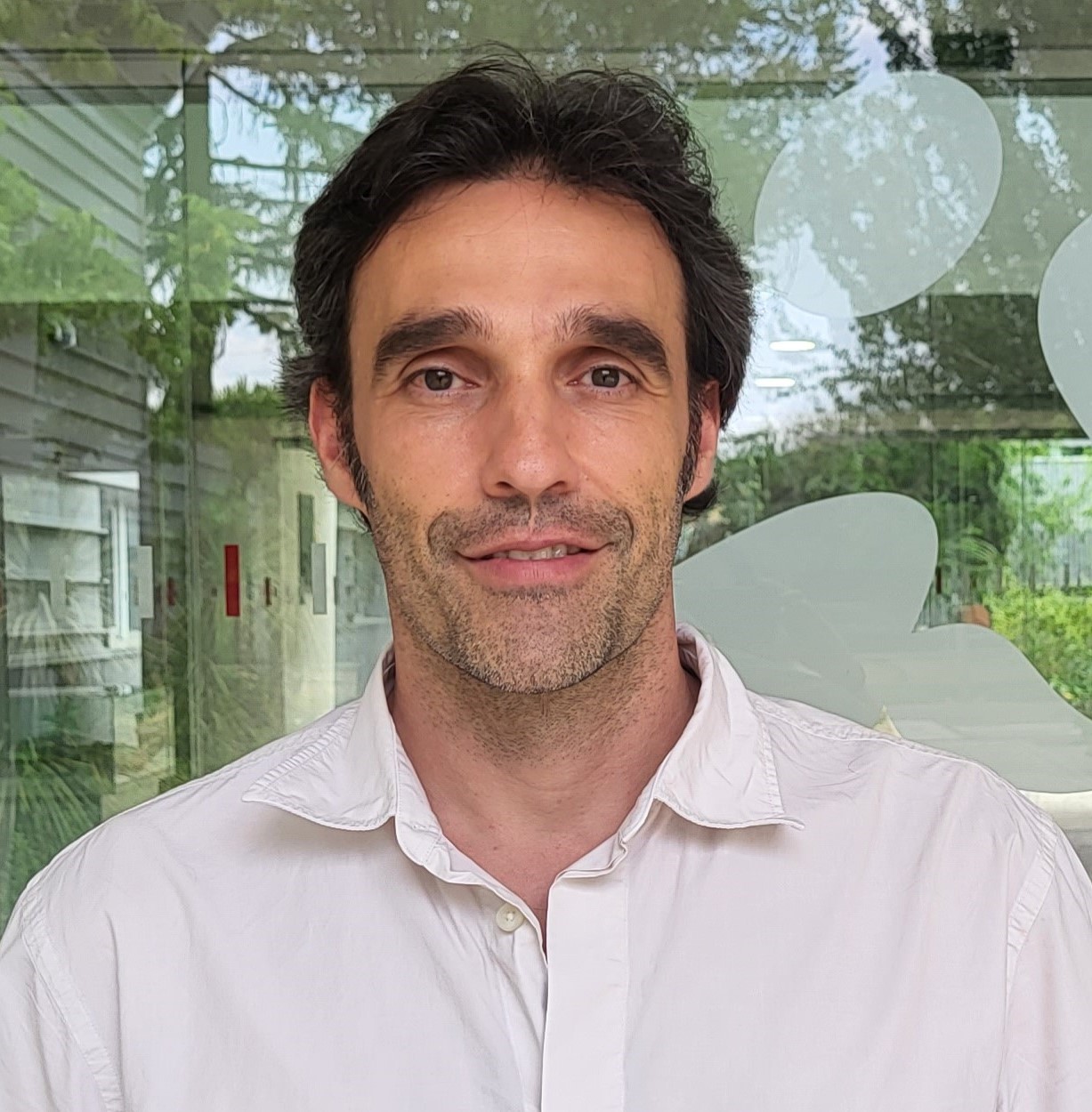
Javier García Pérez
Investigador Doctor
Código ORCID: 0000-0001-7551-7803
Licenciado en Bioquímica (1999) y Biología Molecular (2000) por la Universidad Autónoma de Madrid (UAM), consiguió una beca predoctoral “ISCIII” en el laboratorio de Inmunopatología del SIDA, donde desarrolló nuevas técnicas basadas en virus recombinantes. Su tesis doctoral se centró en la aplicación de este desarrollo tecnológico al estudio de la capacidad replicativa del VIH-1 y su resistencia a los fármacos antirretrovirales, obteniendo el grado de doctor en Ciencias por la UAM en 2007.
Gracias a un breve postdoc en 2008 y varias estancias entre 2009 y 2015 en la Unidad de Patogenia Viral del Instituto Pasteur de París amplió su formación en el estudio de la envoltura y el tropismo del VIH-1. Entre 2015 y 2019 se reincorpora a la unidad de Inmunopatología del SIDA del ISCIII, centrando su trabajo en el estudio de la capacidad funcional de virus fundadores, así como de variantes del virus con interés en Salud Pública por su reciente expansión en nuestro país. Actualmente lidera un proyecto sobre el estudio de una mutación en transportina 3 observada en pacientes con una distrofia muscular muy rara (LGMDD2) y que confiere protección frente a la infección por el VIH-1.
Durante los últimos 5 años compagina esta actividad en VIH-1 con la participación y liderazgo de diferentes estudios y ensayos clínicos que investigan la inmunidad generada en personas vacunadas contra la infección por SARS-CoV-2.
Desde 2024 es Investigador Doctor fuera de convenio en el Centro Nacional de Microbiología y actualmente coordina junto al Dr. Francisco Díez Fuertes la unidad de Inmunopatología del SIDA.
-

María Luisa Gaspar Alonso-Vega
Profesorado de Investigación de OPIs
Código ORCID: 0000-0001-9858-3862
Licenciada (1980) y Doctora (1985) en Medicina y Cirugía por la Universidad Autónoma de Madrid. Realizó la especialidad de Inmunología (1981-1985), y su tesis doctoral bajo la dirección de la Dra. Carmen Gutierrez, en el laboratorio de Inmunología de la Clínica Puerta de Hierro dirigido por el Dr. Miguel Kreisler. Realizó una estancia predoctoral en el Laboratorio de citogenética, del National Institute of Autoimmune, Diabetes, Digestive and Kidney Diseases (NIDDK, NIH), bajo la supervisión del Dr. JH Tjio y la Dra. E. Raveché. Ingresó como Facultativo-Especialista en el Servicio de Inmunología del Centro Nacional de Microbiología, Virología e Inmunología Sanitarias (CNMVIS, AISNA y luego ISCIII) en 1986, en el Laboratorio de Inmunología dirigido por el Dr. Alfredo Toraño. Realizó una estancia postdoctoral (1989-1991) en la Unidad de Inmunogenética del Instituto Pasteur (París) dirigido por el Dr. T. Meo. Desde 1991 hasta 2006 fue Jefa de Sección de Inmunología sucesivamente en el CNMVIS, en el Centro Nacional de Biología Fundamental (CNBF-ISCIII) y en el Centro Nacional de Microbiología (CNM-ISCIII). Desde 2006 a 2016 ha sido Investigadora Titular y Científica Titular de OPIs, en el laboratorio de Inmunobiología del CNM-ISCIII. Desde 2016 a 2018 fue Investigadora Científica de OPIs y desde 2018, es Profesora de Investigación de OPIs en el CNM.
-

Horacio Gil Gil
Científico Titular de los OPIs
Código ORCID: 0000-0002-7114-6686
Licenciado en Veterinaria en 1995 y Doctor en Veterinaria en 2002 por la Universidad de Zaragoza. Realizó su tesis doctoral en NEIKER Tecknalia (Derio, Vizcaya) y el Centro Nacional de Microbiología del Instituto de Salud Carlos III (CNM-ISCIII, Majadahonda, Madrid) sobre el ciclo biológico de la enfermedad de Lyme en el País Vasco. Posteriormente, desarrolló su formación postdoctoral en diferentes aspectos de la patogenia de la tularemia en el Center for Infectious Diseases de la Universidad de Stony Brook, Nueva York (EEUU) durante 3 años. En diciembre 2005, se incorporó al Laboratorio de Referencia e Investigación en Patógenos Especiales del CNM-ISCIII donde desarrolló actividades de diagnóstico, referencia e investigación, en Bartonella, Leptospira y en patógenos de interés en bioterrorismo. Entre 2014-2016 participó en el Programa Europeo de formación de microbiólogos en Salud Pública (EUPHEM), organizado por el Centro Europeo para la Prevención y el Control de Enfermedades. Durante este programa, participó en una misión internacional para la investigación de un brote de cólera en Ghana, propuesto por el Instituto Bernhard Nocht de Enfermedades Tropicales de Hamburgo (Alemania). En diciembre 2016 trabajó como consultor de laboratorio para la Organización Mundial de la Salud en su oficina de Phnom Penh (Camboya). Posteriormente, trabajó un año con Médicos Sin Fronteras como director y jefe de calidad del laboratorio de tuberculosis en Nukus (Uzbekistán).
En 2019, se incorporó a la Unidad de Variabilidad y Biología de VIH en el CNM-ISCIII, donde desarrolló diferentes actividades de referencia e investigación, entre las que cabe destacar su aportación a la vigilancia epidemiológica molecular del VIH-1 en España y al estudio de las resistencias frente a antirretrovirales del VIH-1. Desde septiembre de 2022 dirige la Unidad del Virus del Papiloma Humano en el CNM-ISCIII.
-

Fernando González Camacho
Científico Titular
Código ORCID: 0000-0003-3175-9004
Licenciado en Ciencias Biológicas por la Universidad de Salamanca y Doctor por la Universidad Autónoma de Madrid. Actualmente, es Científico Titular de plantilla en el Centro Nacional de Microbiología (CNM) del Instituto de Salud Carlos III (ISCIII). Responsable de la Unidad de Legionella del Laboratorio de Referencia e Investigación en Enfermedades Bacterianas transmitidas por agua y alimentos.
A nivel europeo es sustituto (Alternate) al National Focal Point para la enfermedad del legionario en el ECDC y es OCP (Operational Contact Point) en microbiología para la legionelosis en la European Legionnaires' Disease Surveillance Network (ELDSNet).
Coordina las líneas de investigación del laboratorio que se desarrollan en tres perspectivas diferentes: en las instalaciones colonizadas, estudios sobre la resistencia a los tratamientos y su persistencia; en la clínica, sobre factores de virulencia y su interacción con el sistema inmune; y en la vigilancia microbiológica, sobre la mejorar de los métodos de caracterización del microorganismo.
Es Investigador Principal en el proyecto “Búsqueda de biomarcadores de patogenicidad en Legionella spp con interés predictivo de riesgo de infección".
Es miembro de distintas sociedades científicas como son la Sociedad Española de Salud Ambiental (SESA), Sociedad Española de Enfermedades Infecciosas y Microbiología Clínica (SEIMC) y la European Society of Clinical Microbiology and Infectious Diseases (ESCMID).
-

Adela González de la Campa
Investigador Científico
Código ORCID: 0000-0002-3598-2548
Licenciada en Biología en 1981 y Doctora en 1985 por la Universidad Complutense de Madrid. Realizó su tesis doctoral en el laboratorio del Dr. Miguel Vicente del Centro de Investigaciones Biológicas del CSIC. Posteriormente trabajó durante 2 años en el Brookhaven National Laboratory, Upton, New York, EEUU en el laboratorio de Sandord Lacks. Tras esta etapa posdoctoral en EEUU, trabajó durante 3 años como Becario de Reincorporación en el Centro de Investigaciones Biológicas del CSIC en el laboratorio del Dr. Manuel Espinosa. Es Científico titular del CSIC desde 1990 e Investigador Científico desde 2007. Participó como jefe de grupo del CIBER de Enfermedades Respiratorias (CIBERES) desde 2007 a 2015.
-
-

Isabel Jado García
Científico Titular OPIS, Director laboratorio
-

Maribel Jiménez Alonso
Científico Titular OPIs
Código ORCID: 0000-0002-5615-3087
Doctora en Farmacia por la Universidad Complutense de Madrid (1994) y Premio extraordinario de Doctorado. Inició su actividad investigadora en el ISCIII en 1990 en el campo de la leishmaniasis. Actualmente, es la responsable del LEM donde desarrolla su labor científica en el campo de la vigilancia entomológica de flebotomos en la CM y otros estudios en el campo de la biología molecular, aplicados fundamentalmente al modelo de Leishmania infantum y su vector Phlebotomus perniciosus. Componente del equipo de expertos del ISCIII que participa en la elaboración de Evaluaciones Rápidas de Riesgo y en los grupos de trabajo encargados de la elaboración de Planes Nacionales de Prevención, Vigilancia y Control de Enfermedades Transmitidas por Vectores del CCAES, Ministerio de Sanidad. En la actualidad es “Operational Focal Point” para enfermedades transmitidas por vectores a nivel nacional para la red One Health-Vectornet (EFSA y el ECDC) y coordinadora de la red VectorNet- España desde julio de 2024. Por otro lado, es integrante del comité de expertos de la Red de Vigilancia y Control de Vectores con interés en salud pública en la Comunidad de Madrid. Además, forma parte de un grupo de investigación dentro del CIBER (CIBERINFEC; CB21/13/00110).
-
Vicente Mas Lloret
Científico Titular de los OPIs
-
-

Jesús Oteo Iglesias
Investigador Científico OPI
Código ORCID: 0000-0003-3327-8263
Licenciado en Medicina y Cirugía en 1992 y Doctor en 2005 por la Universidad Complutense de Madrid. Realizó la especialidad en Microbiología y Parasitología en el Hospital de Móstoles (2000) y desde 2001 ha desarrollado su carrera profesional en el CNM del ISCIII, del cual fue Director entre 2019-2021 liderando el plan de acción del CNM-ISCIII frente a la pandemia de COVID-19. Es profesor de investigación de OPIs, director científico del CIBER de Enfermedades Infecciosas (CIBERINFEC), coordinador de la Red Nacional de Laboratorios para la Vigilancia de Microorganismos Resistentes (RedLabRA) y National Focal Point español en resistencia a antimicrobianos. Su actividad investigadora está centrada en el campo de la resistencia a antibióticos, ha publicado más de 200 artículos en revistas con índice de impacto y ha sido investigador principal de numerosos proyectos. Ha sido secretario científico de la Junta Directiva de la SEIMC, y presidente de su grupo para el estudio de los mecanismos de acción y resistencia a antibióticos (GEMARA).







Listado de personal
Información adicional
La Unidad de Inmunopatología del SIDA ha sido coordinada desde el año 2000 por el Dr. José Alcamí, agrupando durante toda su historia a más de 20 investigadores independientes que estudiamos de manera colaborativa distintos aspectos de la infección por el VIH. Durante esta etapa, han pasado por la unidad más de 30 investigadores visitantes y más de 50 estudiantes nacionales e internacionales. Desde principios del año 2025, Javier García Pérez y Francisco Díez Fuertes asumen la coordinación de la unidad de Inmunopatología del SIDA, con el objetivo de proyectar su competitividad científica siguiendo aproximaciones multidisciplinares y mediante el mantenimiento de las estrechas colaboraciones actuales, así como el fomento de la participación en nuevas redes nacionales e internacionales de investigación.
Históricamente, los actuales integrantes de la unidad nos hemos centrado en diferentes líneas de investigación básica que incluyen el estudio de anticuerpos y el desarrollo de vacunas frente al VIH-1, el estudio de la entrada viral y el tropismo del virus o al estudio del huésped mediante la caracterización genómica de poblaciones con un fenotipo extremo. Actualmente, la actividad de nuestra unidad en el campo del VIH-1 se centra en tres líneas principales:
1. Mecanismos moleculares asociados a la protección de la infección por VIH-1 en pacientes con distrofia muscular de cinturas dominante D2 (LGMDD2).
2. Generación de anticuerpos neutralizantes de uso terapéutico basados en la respuesta neutralizante de amplio espectro frente a virus fundadores.
3. Cribado y caracterización de nuevos fármacos anti-latencia frente al VIH-1.
A partir del año 2020, nuestra unidad se vuelca con la investigación sobre COVID-19, participando y liderando diferentes proyectos de investigación aplicada y clínica. Fruto de esta fuerte implicación en el campo, en la actualidad se mantienen diferentes estudios sobre la caracterización de la respuesta inmune frente a SARS-CoV-2, integrando diferentes técnicas de virología molecular, estrategias de inteligencia epidemiológica y tecnologías de célula única.
Asimismo, participamos en diferentes consorcios y redes rnacionales de investigación, como el Centro de Investigación Biomédica en Red de Enfermedades Infecciosas (CIBER-INFEC), en el que participamos como investigadores en diferentes líneas de trabajo y paquetes de trabajo dentro de los programas de investigación “Salud Global, infecciones emergentes y reemergentes” así como en “VIH/SIDA e infecciones de transmisión sexual”.
Tesis doctorales dirigidas
1. ANÁLISIS GENÓMICO Y FUNCIONAL DE PARÁMETROS DE PROTECCIÓN FRENTE AL VIH-1 EN PACIENTES CON PROGRESIÓN LENTA DE LA INFECCIÓN
Estudiante: Erick de la Torre Tarazona.
Directores: José Alcamí y Francisco Díez Fuertes.
Entidad académica: Universidad Autónoma de Madrid.
Fecha de defensa: 14 de julio de 2020.
2. ANÁLISIS DE LOS PERFILES DE EXPRESIÓN DE MIARN Y CARACTERIZACIÓN FUNCIONAL EN INDIVIDUOS VIH-POSITIVOS CON DISTINTA PROGRESIÓN A SIDA Estudiante: Rubén Ayala Suárez.
Directores: José Alcamí y Francisco Díez Fuertes.
Entidad Académica: Universidad de Alcalá.
Fecha de defensa: 12 de junio de 2023.
La Unidad de Inmunopatología del SIDA ha sido coordinada desde el año 2000 por el Dr. José Alcamí, agrupando durante toda su historia a más de 20 investigadores independientes que estudiamos de manera colaborativa distintos aspectos de la infección por el VIH. Durante esta etapa, han pasado por la unidad más de 30 investigadores visitantes y más de 50 estudiantes nacionales e internacionales. Desde principios del año 2025, Javier García Pérez y Francisco Díez Fuertes asumen la coordinación de la unidad de Inmunopatología del SIDA, con el objetivo de proyectar su competitividad científica siguiendo aproximaciones multidisciplinares y mediante el mantenimiento de las estrechas colaboraciones actuales, así como el fomento de la participación en nuevas redes nacionales e internacionales de investigación.
Históricamente, los actuales integrantes de la unidad nos hemos centrado en diferentes líneas de investigación básica que incluyen el estudio de anticuerpos y el desarrollo de vacunas frente al VIH-1, el estudio de la entrada viral y el tropismo del virus o al estudio del huésped mediante la caracterización genómica de poblaciones con un fenotipo extremo. Actualmente, la actividad de nuestra unidad en el campo del VIH-1 se centra en tres líneas principales:
1. Mecanismos moleculares asociados a la protección de la infección por VIH-1 en pacientes con distrofia muscular de cinturas dominante D2 (LGMDD2).
2. Generación de anticuerpos neutralizantes de uso terapéutico basados en la respuesta neutralizante de amplio espectro frente a virus fundadores.
3. Cribado y caracterización de nuevos fármacos anti-latencia frente al VIH-1.
A partir del año 2020, nuestra unidad se vuelca con la investigación sobre COVID-19, participando y liderando diferentes proyectos de investigación aplicada y clínica. Fruto de esta fuerte implicación en el campo, en la actualidad se mantienen diferentes estudios sobre la caracterización de la respuesta inmune frente a SARS-CoV-2, integrando diferentes técnicas de virología molecular, estrategias de inteligencia epidemiológica y tecnologías de célula única.
Asimismo, participamos en diferentes consorcios y redes rnacionales de investigación, como el Centro de Investigación Biomédica en Red de Enfermedades Infecciosas (CIBER-INFEC), en el que participamos como investigadores en diferentes líneas de trabajo y paquetes de trabajo dentro de los programas de investigación “Salud Global, infecciones emergentes y reemergentes” así como en “VIH/SIDA e infecciones de transmisión sexual”.
Tesis doctorales dirigidas
1. ANÁLISIS GENÓMICO Y FUNCIONAL DE PARÁMETROS DE PROTECCIÓN FRENTE AL VIH-1 EN PACIENTES CON PROGRESIÓN LENTA DE LA INFECCIÓN
Estudiante: Erick de la Torre Tarazona.
Directores: José Alcamí y Francisco Díez Fuertes.
Entidad académica: Universidad Autónoma de Madrid.
Fecha de defensa: 14 de julio de 2020.
2. ANÁLISIS DE LOS PERFILES DE EXPRESIÓN DE MIARN Y CARACTERIZACIÓN FUNCIONAL EN INDIVIDUOS VIH-POSITIVOS CON DISTINTA PROGRESIÓN A SIDA Estudiante: Rubén Ayala Suárez.
Directores: José Alcamí y Francisco Díez Fuertes.
Entidad Académica: Universidad de Alcalá.
Fecha de defensa: 12 de junio de 2023.