



Protegemos tu salud a través de la Ciencia
Investigación
Inmunopatología del SIDA
Líneas de investigación
Contenidos con Investigacion .
Líneas de investigación:
1. Mecanismos moleculares asociados a la protección de la infección por VIH-1 en pacientes con distrofia muscular de cinturas dominante D2 (LGMDD2).
2. Generación de anticuerpos neutralizantes de uso terapéutico basados en la respuesta neutralizante de amplio espectro frente a virus fundadores.
3. Caracterización de la memoria inmunitaria frente a SARS-CoV-2 en población mayor de 65 años.
4. Cribado y caracterización de nuevos fármacos anti-latencia frente al VIH-1.
5. Estudio de la entrada viral y el tropismo del VIH en virus de especial relevancia epidemiológica en España.
6. Mecanismos genéticos de protección y control de la infección del VIH-1 en poblaciones con fenotipos extremos.
Estudios clínicos:
1. Ensayo clínico de fase 1 para evaluar la seguridad e inmunogenicidad de la vacuna 763SIP8/MPLA-5 basada en la envoltura del VIH-1 como vacuna preventiva en adultos sanos no infectados.
2. ENE-COVID-Senior: Estudio observacional prospectivo en una cohorte de personas residentes en residencias de mayores para establecer su estado inmunológico después de recibir una pauta completa de vacunación.
Implementación de nuevas tecnologías:
1. Identificación de sitios de integración del VIH-1 mediante secuenciación masiva
2. Transcriptómica de célula única con secuenciación simultánea del TCR/BCR
3. Inteligencia epidemiológica para la predicción de variantes de SARS-CoV-2 con probabilidad de emerger en diferentes contextos de vacunación.
Proyectos de investigación
Contenidos con Investigacion .
1. Respuesta inmune frente a la infección por SARS-CoV-2: Efecto en vacunados naive y en seropositivos frente a las variantes más transmisibles y relevancia de la genética del hospedador.
Investigador principal: Javier García Pérez.
Organismo financiador: Acción Estratégica en Salud Intramural 2021(ISCIII)
Financiación: 135.000 €
Duración: 2022-2025.
Nº de Expediente: PI21CIII/00025.
2. Diseño y generación de stocks virales de las nuevas variantes de SARS-CoV-2 (subvariantes ómicron) y análisis de su susceptibilidad a la neutralización por anticuerpos.
Investigador principal: Javier García Pérez.
Organismo financiador: Hipra Scientific S.L.U.
Financiación: 103.771 €
Duración: 2023-2025.
Nº de Expediente: MVP 198/23.
3. Caracterización de una mutación en transportina 3 que protege de la infección por VIH: mecanismos moleculares y descubrimiento de nuevos fármacos.
Investigadores principales: José Alcamí y Javier García Pérez.
Organismo financiador: Proyectos de I+D+I, Generación de Conocimiento y Retos Investigación de la Agencia Estatal de Investigación.
Financiación: 240.000 €
Duración: 2022-2026.
Nº de Expediente: Proyecto PID2021-125978OB-C21financiado por MICIU/AEI/10.13039/501100011033 y por FEDER, UE
4. Generación de inmunógenos basados en envueltas de VIH-1 procedentes de individuos con infección aguda y respuesta neutralizante amplia frente a virus fundadores.
Investigador principal: Nuria González Fernández.
Organismo financiador: Acción Estratégica en Salud Intramural 2023 (ISCIII)
Financiación: 82.000 €
Duración: 2024-2026.
Nº de Expediente: PI23CIII/00039.
5. Ensayo clínico de fase 1 para evaluar la seguridad e inmunogenicidad de la vacuna 763SIP8/MPLA-5 basada en la envoltura del VIH-1.
Investigador principal: Josep Mallolas Masferrer.
Organismo financiador: Proyectos de Investigación Clínica Independiente, Acción Estratégica en Salud 2021-2023 (ISCIII).
Financiación: 173.200 €
Duración: 2024-2026.
Nº de Expediente: ICI23/00025.
6. Servicio de determinaciones inmunológicas del protocolo ENE-COVID SENIOR II.
Investigador principal: Mayte Pérez Olmeda y Javier García Pérez.
Organismo financiador: fundación para la investigación biomédica del Hospital Universitario La Paz
Financiación: 185.037 €
Duración: 2024-2025.
Nº de Expediente: MOTR 219/24.
7. Caracterización de la memoria inmunitaria frente a SARS-CoV-2 en población mayor de 65 años mediante transcriptómica de célula única. Investigador principal: Javier García Pérez y Francisco Díez Fuertes.
Organismo financiador: Acción Estratégica en Salud Intramural 2021(ISCIII)
Financiación: 152.000 €
Duración: 2025-2027.
Nº de Expediente: PI24CIII/00058<
8. Evaluación de rimonabant y análogos de cannbinooides en la infección por VIH y la latencia viral. Investigador principal: Luis Miguel Bedoya del Olmo.
Organismo financiador: Universidad Complutense de Madrid
Financiación: 12.000 €
Duración: 2024-2025.
Nº de Expediente: PR12/24-31553.
9. Descubrimiento de nuevos inhibidores de la biogénesis del ARN del VIH-1 basados en el bloqueo de la ribonucleoproteína RRE-Rev.
Investigador principal: José Gallego Sala. Investigador Asociado: Luis Miguel Bedoya del Olmo
Organismo financiador: Consellería de Innnovación, Universidades, Ciencia y Sociedad Digital. Generalitat Valenciana.
Financiación: 543.683,84 €
Duración: 2025-2027.
Nº de Expediente: PROMETEO/2021/036.

Publicaciones destacadas
Mycobacterium mageritense meningitis in an immunocompetent patient with an intrathecal catheter.
9. Muñoz-Sanz A, Rodríguez Vidigal FF, Vera-Tome A, Jimenez MS. Mycobacterium mageritense meningitis in an immunocompetent patient with an intrathecal catheter. Enfer Infecc Microbiol Clin. 2013; 31:59-6
PUBMED DOIMeasles virus genotype D4 strains with non-standard length M-F non-coding region circulated during the major outbreaks of 2011-2012 in Spain.
2. Gil H, Fernández-García A*, Mosquera MM, Hübschen JM, Castellanos AM, de Ory F, Masa-Calles J, Echevarría JE.Measles virus genotype D4 strains with non-standard length M-F non-coding region circulated during the major outbreaks of 2011-2012 in Spain. PLoS One. 2018 Jul. 16;13(7):e0199975. * Corresponding author.
PUBMED DOIIsolation, antigenicity and immunogenicity of Lleida Bat Lyssavirus
3. Banyard AC, Selden D, Wu G; Thorne L, Jennings D, Marston D, Finke S, Freuling CM, Mueller T, Echevarria JE, Fooks AR. Isolation, antigenicity and immunogenicity of Lleida Bat Lyssavirus. Journal of General Virology, 2018. 99(12):1590-1599
PUBMED DOIShift within age-groups of mumps incidence, hospitalizations and severe complications in a highly vaccinated population
6. López-Perea N, Masa-Callesa J, Torres de Miera MV, Fernández-García A, Echevarría JE, de Ory F, Martínez de Aragón MV. Shift within age-groups of mumps incidence, hospitalizations and severe complications in a highly vaccinated population. Spain, 1998–2014. Vaccine, 2017, 35(34): 4339-4345.
PUBMED DOIThe Complexity of Antibody Responses Elicited against the Respiratory Syncytial Virus Glycoproteins in Hospitalized Children Younger than 2 Years
2. Trento A, Rodriguez-Fernandez R, Gonzalez-Sanchez MI, Gonzalez-Martinez F, Mas V, Vazquez M, et al. The Complexity of Antibody Responses Elicited against the Respiratory Syncytial Virus Glycoproteins in Hospitalized Children Younger than 2 Years. Front Microbiol. 2017;8:2301.
PUBMED DOIPotent single-domain antibodies that arrest respiratory syncytial virus fusion protein in its prefusion state.
3. Rossey I, Gilman MS, Kabeche SC, Sedeyn K, Wrapp D, Kanekiyo M, et al. Potent single-domain antibodies that arrest respiratory syncytial virus fusion protein in its prefusion state. Nat Commun. 2017;8:14158.
PUBMED DOIRapid profiling of RSV antibody repertoires from the memory B cells of naturally infected adult donors
6. Gilman MS, Castellanos CA, Chen M, Ngwuta JO, Goodwin E, Moin SM, et al. Rapid profiling of RSV antibody repertoires from the memory B cells of naturally infected adult donors. Sci Immunol. 2016;1(6).
PUBMED DOICharacterization of a Prefusion-Specific Antibody That Recognizes a Quaternary, Cleavage-Dependent Epitope on the RSV Fusion Glycoprotein.
8. Gilman MS, Moin SM, Mas V, Chen M, Patel NK, Kramer K, et al. Characterization of a Prefusion-Specific Antibody That Recognizes a Quaternary, Cleavage-Dependent Epitope on the RSV Fusion Glycoprotein. PLoS Pathog. 2015;11(7):e1005035.
PUBMED DOIPolyclonal and monoclonal antibodies specific for the six-helix bundle of the human respiratory syncytial virus fusion glycoprotein as probes of the protein post-fusion conformation.
9. Palomo C, Mas V, Vazquez M, Cano O, Luque D, Terron MC, et al. Polyclonal and monoclonal antibodies specific for the six-helix bundle of the human respiratory syncytial virus fusion glycoprotein as probes of the protein post-fusion conformation. Virology. 2014;460-461:119-27.
PUBMED DOIBiophysical properties of single rotavirus particles account for the functions of protein shells in a multilayered virus
Jiménez-Zaragoza M., Yubero M.L., Martín-Forero E., Castón J.R., Reguera D., Luque D.*, de Pablo P.J., Rodríguez J.M. 2018. Biophysical properties of single rotavirus particles account for the functions of protein shells in a multilayered virus. eLife 7: e37295. *Corresponding author.
PUBMED DOIAcquisition of functions on the outer capsid surface during evolution of double-stranded RNA fungal viruses
Mata C.P., Luque D., Gómez-Blanco J., Rodríguez J.M., González J.M., Suzuki N., Ghabrial S.A., Carrascosa J.L., Trus B.L., Castón J.R. 2017. Acquisition of functions on the outer capsid surface during evolution of double-stranded RNA fungal viruses. PLoS Pathog. 13(12):e1006755.
PUBMED DOIStructural Insights into the Assembly and Regulation of Distinct Viral Capsid Complexes
Sarker S., C. Terrón M., Khandokar Y., Aragão D., Hardy J.M., Radjainia M., Jiménez-Zaragoza M., de Pablo P.J., Coulibaly F., Luque D., Raidal D.R., Forwood J.K. 2016. Structural Insights into the Assembly and Regulation of Distinct Viral Capsid Complexes. Nat. Commun. 7:13014. IF: 12.124; D1.
PUBMED DOIHeterodimers as the structural unit of the T=1 capsid of the fungal dsRNA Rosellinia necatrix quadrivirus 1
Luque D., Mata C.P., González-Camacho F., González J.M., Gómez-Blanco J., Alfonso C., Rivas G., Havens W.M., Kanematsu S., Suzuki N., Ghabrial S.A., Trus B.L., Castón J.R. 2016. Heterodimers as the structural unit of the T=1 capsid of the fungal dsRNA Rosellinia necatrix quadrivirus 1. J Virol. 90(24):11220-11230. IF: 4.666, Q1.
PUBMED DOISelf-assembly and characterization of small and monodisperse dye nanospheres in a protein cage
Luque D., de la Escosura A., Snijder J., Brasch M., Burnley R.J, Koay M.S.T., Carrascosa J.L., Wuite G.J.L., Roos W.H., Heck A.J.R., J.J.L.M Cornelissen, Torres T., Castón J.R. 2014. Self-assembly and characterization of small and monodisperse dye nanospheres in a protein cage. Chem. Sci.,5, 575-581. IF: 9.211, D1.
DOICryo-EM near-atomic structure of a dsRNA fungal virus shows ancient structural motifs preserved in the dsRNA viral lineage.
Luque D., Gómez-Blanco J., Garriga D., Brilot A.F., González J.M., Havens W.M., Carrascosa J.L., Trus B.L., Verdaguer N., Ghabrial S.A., Castón J.R. 2014. Cryo-EM near-atomic structure of a dsRNA fungal virus shows ancient structural motifs preserved in the dsRNA viral lineage. Proc Natl Acad Sci U S A 111(21):7641-7646. IF: 9.674, D1
PUBMED DOINew insights into rotavirus entry machinery: stabilization of rotavirus spike conformation is independent of trypsin cleavage
Rodríguez J.M., Chichón F.J., Martín-Forero E., González-Camacho F., Carrascosa J.L., Castón J.R., Luque D*. 2014. New insights into rotavirus entry machinery: stabilization of rotavirus spike conformation is independent of trypsin cleavage. PLoS Pathog. 10(5):e1004157. IF: 7.562, D1. * Corresponding autor.
PUBMED DOIEfficacy and safety assessment of a TRAF6-targeted nanoimmunotherapy in atherosclerotic mice and non-human primates.
3. Lameijer M, Binderup T, van Leent M, Senders M, Fay F. Seijkens T, Kroon J, Stroes E, Kjaer A, Ochando J, Reiner T, Pérez-Medina C, Calcagno C, Fischer E, Zhang B, Temel R, Swirski F, Nahrendorf M, Fayad Z, Lutgens E, Mulder W and Duivenvoorden R. Efficacy and safety assessment of a TRAF6-targeted nanoimmunotherapy in atherosclerotic mice and non-human primates. Nature Biomedical Engineering. 2018. 2: 279–292.
PUBMED DOINeutrophil derived CSF1 induces macrophage polarization and promotes transplantation tolerance.
4. Braza MS, Conde P, Garcia MR, Cortegano I, Brahmachary M, Pothula V, Fay F, Boros P, Werner SW, Ginhoux F, Mulder WJ, and Ochando J. Neutrophil derived CSF1 induces macrophage polarization and promotes transplantation tolerance. Am J Transplant. 2018.
PUBMED DOIDC-SIGN(+) Macrophages Control the Induction of Transplantation Tolerance
9. Conde P, Rodriguez M, van der Touw W, Jimenez A, Burns M, Miller J, Brahmachary M, Chen HM, Boros P, Rausell-Palamos F, Yun TJ, Riquelme P, Rastrojo A, Aguado B, Stein-Streilein J, Tanaka M, Zhou L, Zhang J, Lowary TL, Ginhoux F, Park CG, Cheong C, Brody J, Turley SJ, Lira SA, Bronte V, Gordon S, Heeger PS, Merad M, Hutchinson J, Chen SH, Ochando J. 2015. DC-SIGN(+) Macrophages Control the Induction of Transplantation Tolerance. Immunity. 16;42(6):1143-58.
PUBMED DOIProteomic characterisation of bovine and avian purified protein derivatives and identification of specific antigens for serodiagnosis of bovine tuberculosis
2.- Proteomic characterisation of bovine and avian purified protein derivatives and identification of specific antigens for serodiagnosis of bovine tuberculosis. Antonio Infantes-Lorenzo, Jose; Moreno, Inmaculada; Angeles Risalde, Maria; et ál. CLINICAL PROTEOMICS Volumen: 14 Número de artículo: 36 Fecha de publicación: NOV 2 2017
PUBMED DOIFunctional and structural characterization of four mouse monoclonal antibodies to complement C3 with potential therapeutic and diagnostic applications.
3.- Functional and structural characterization of four mouse monoclonal antibodies to complement C3 with potential therapeutic and diagnostic applications. Subias Hidalgo, Marta; Yebenes, Hugo; Rodriguez-Gallego, Cesar; et ál..EUROPEAN JOURNAL OF IMMUNOLOGY Volumen: 47 Número: 3 Páginas: 504-515 Fecha de publicación: MAR 2017
PUBMED DOIImmunoproteomic characterisation of Mycoplasma mycoides subspecies capri by mass spectrometry analysis of two- dimensional electrophoresis spots and western blot
5.- Immunoproteomic characterisation of Mycoplasma mycoides subspecies capri by mass spectrometry analysis of two- dimensional electrophoresis spots and western blot. Churchward, Colin P.; Rosales, Ruben S.; Gielbert, Adriana; et ál..JOURNAL OF PHARMACY AND PHARMACOLOGY Volumen: 67 Número: 3 Número especial: SI Páginas: 364-371 Fecha de publicación: MAR 2015
PUBMED DOIEfficacy of low doses of amphotericin B plus allicin against experimental visceral leishmaniasis.
6.- Efficacy of low doses of amphotericin B plus allicin against experimental visceral leishmaniasis. Corral, M. Jesus; Serrano, Dolores R.; Moreno, Inmaculada; et ál..JOURNAL OF ANTIMICROBIAL CHEMOTHERAPY Volumen: 69 Número: 12 Páginas: 3268-3274 Fecha de publicación: DEC 2014
PUBMED DOIA Novel Antibody against Human Factor B that Blocks Formation of the C3bB Proconvertase and Inhibits Complement Activation in Disease Models
7.- A Novel Antibody against Human Factor B that Blocks Formation of the C3bB Proconvertase and Inhibits Complement Activation in Disease Models. Subias, Marta; Tortajada, Agustin; Gastoldi, Sara; et ál..JOURNAL OF IMMUNOLOGY Volumen: 193 Número: 11 Páginas: 5567-5575 Fecha de publicación: DEC 2014
PUBMED DOIDetection of anti-Leishmania infantum antibodies in sylvatic lagomorphs from an epidemic area of Madrid using the indirect immunofluorescence antibody test
8.- Detection of anti-Leishmania infantum antibodies in sylvatic lagomorphs from an epidemic area of Madrid using the indirect immunofluorescence antibody test. Moreno, Inmaculada; Alvarez, Julio; Garcia, Nerea; et ál..VETERINARY PARASITOLOGY Volumen: 199 Número: 3-4 Páginas: 264-267 Fecha de publicación: 2014
PUBMED DOIEvidence of Leishmania infantum Infection in Rabbits (Oryctolagus cuniculus) in a Natural Area in Madrid, Spain.
9.- Evidence of Leishmania infantum Infection in Rabbits (Oryctolagus cuniculus) in a Natural Area in Madrid, Spain. Garcia, Nerea; Moreno, Inmaculada; Alvarez, Julio; et ál..BIOMED RESEARCH INTERNATIONAL Número de artículo: 318254 Fecha de publicación: 2014
PUBMED DOIMucus-Activatable Shiga Toxin Genotype stx2d in Escherichia coli O157:H7
2. Sánchez, S., Llorente, M.T., Herrera-León, L., Ramiro, R., Nebreda, S., Remacha, M.A., Herrera-León, S. Mucus-activatable shiga toxin genotype stx2d in Escherichia coli O157:H7. (2017) Emerging Infectious Diseases, 23 (8), pp. 1431-1433.
PUBMED DOIMultinational outbreak of travel-related Salmonella Chester infections in europe, summers 2014 and 2015
3. Fonteneau, L., Da Silva, N.J., Fabre, L., Ashton, P., Torpdahl, M., Müller, L., Bouchrif, B., El Boulani, A., Valkanou, E., Mattheus, W., Friesema, I., Herrera Leon, S., Varela Martínez, C., Mossong, J., Severi, E., Grant, K., Weill, F., Gossner, C.M., Bertrand, S., Dallman, T., Le Hello, S. Multinational outbreak of travel-related Salmonella Chester infections in europe, summers 2014 and 2015. (2017) Eurosurveillance, 22 (7).
PUBMED DOIProspective use of whole genome sequencing (WGS) detected a multi-country outbreak of Salmonella Enteritidis
4. Inns, T., Ashton, P.M., Herrera-Leon, S., Lighthill, J., Foulkes, S., Jombart, T., Rehman, Y., Fox, A., Dallman, T., De Pinna, E., Browning, L., Coia, J.E., Edeghere, O., Vivancos, R. Prospective use of whole genome sequencing (WGS) detected a multi-country outbreak of Salmonella Enteritidis (2017) Epidemiology and Infection, 145 (2), pp. 289-298.
PUBMED DOIPlasmid-mediated quinolone resistance in different diarrheagenic Escherichia coli pathotypes responsible for complicated, noncomplicated, and traveler's diarrhea cases.
5. Herrera-Leon, S., Llorente, M.T., Sanchez, S. Plasmid-mediated quinolone resistance in different diarrheagenic Escherichia coli pathotypes responsible for complicated, noncomplicated, and traveler's diarrhea cases. (2016) Antimicrobial Agents and Chemotherapy, 60 (3), pp. 1950-1951.
PUBMED DOIMolecular Epidemiology and Antibiotic Susceptibility of Vibrio cholerae Associated with a Large Cholera Outbreak in Ghana in 2014.
6. Eibach, D., Herrera-León, S., Gil, H., Hogan, B., Ehlkes, L., Adjabeng, M., Kreuels, B., Nagel, M., Opare, D., Fobil, J.N., May, J. Molecular Epidemiology and Antibiotic Susceptibility of Vibrio cholerae Associated with a Large Cholera Outbreak in Ghana in 2014. (2016) PLoS Neglected Tropical Diseases, 10 (5).
PUBMED DOIWhat’s in a name? Species-wide whole-genome sequencing resolves invasive and noninvasive lineages of Salmonella enterica serotype Paratyphi B
7. Connor, T.R., Owen, S.V., Langridge, G., Connell, S., Nair, S., Reuter, S., Dallman, T.J., Corander, J., Tabing, K.C., Le Hello, S., Fookes, M., Doublet, B., Zhou, Z., Feltwell, T., Ellington, M.J., Herrera, S., Gilmour, M., Cloeckaert, A., Achtman, M., Parkhill, J., Wain, J., De Pinna, E., Weill, F.-X., Peters, T., Thomson, N. What’s in a name? Species-wide whole-genome sequencing resolves invasive and noninvasive lineages of Salmonella enterica serotype Paratyphi B (2016) mBio, 7 (4).
PUBMED DOIInvasive salmonella infections among children from Rural Mozambique, 2001-2014
9. Mandomando, I., Bassat, Q., Sigaúque, B., Massora, S., Quintó, L., Ácacio, S., Nhampossa, T., Vubil, D., Garrine, M., Macete, E., Aide, P., Sacoor, C., Herrera-León, S., Ruiz, J., Tennant, S.M., Menéndez, C., Alonso, P.L. Invasive salmonella infections among children from Rural Mozambique, 2001-2014 (2015) Clinical Infectious Diseases, 61, pp. S339-S345.
PUBMED DOIContenidos con Investigacion .
-
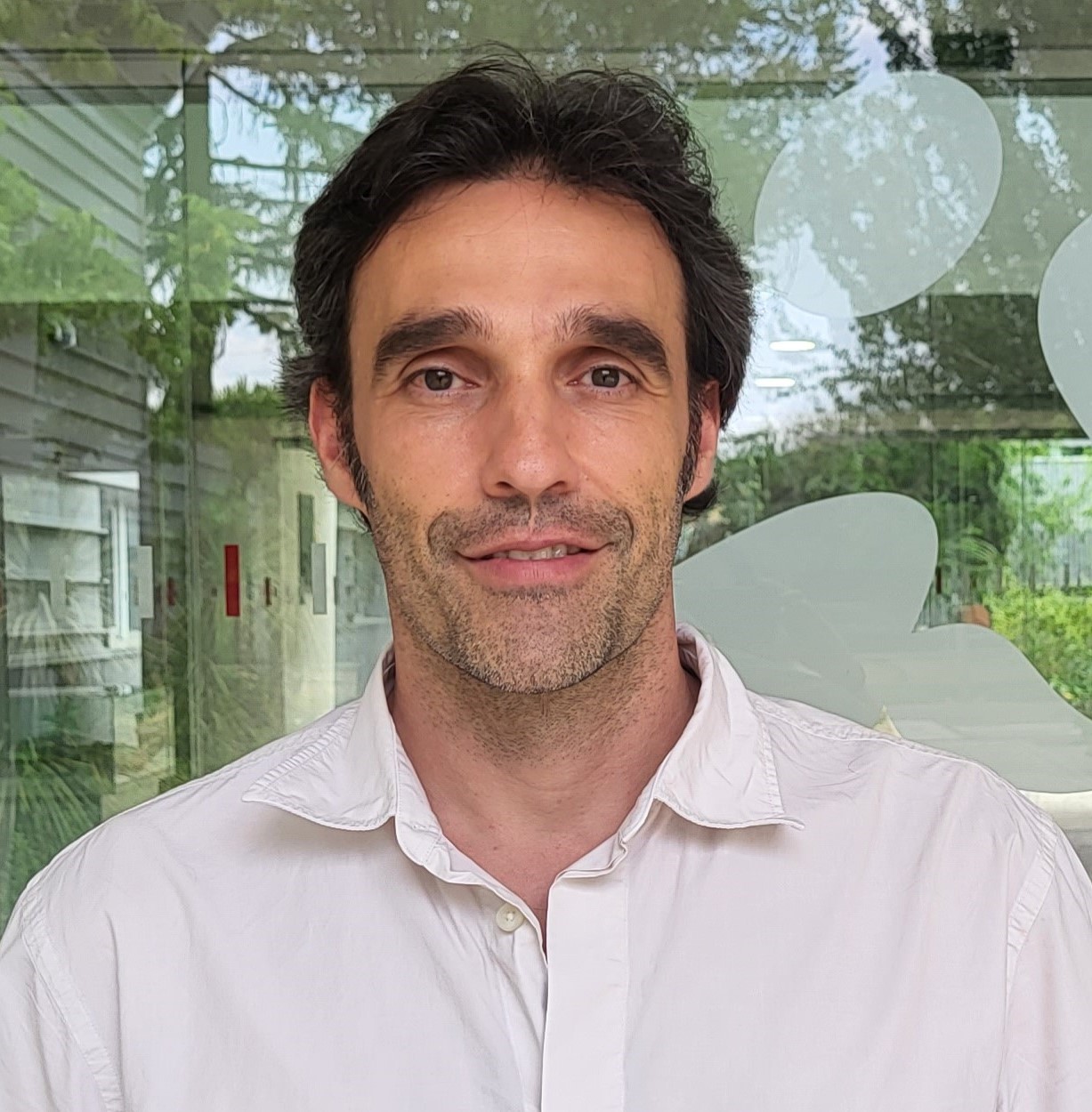
Javier García Pérez
Investigador Doctor
Código ORCID: 0000-0001-7551-7803
Licenciado en Bioquímica (1999) y Biología Molecular (2000) por la Universidad Autónoma de Madrid (UAM), consiguió una beca predoctoral “ISCIII” en el laboratorio de Inmunopatología del SIDA, donde desarrolló nuevas técnicas basadas en virus recombinantes. Su tesis doctoral se centró en la aplicación de este desarrollo tecnológico al estudio de la capacidad replicativa del VIH-1 y su resistencia a los fármacos antirretrovirales, obteniendo el grado de doctor en Ciencias por la UAM en 2007.
Gracias a un breve postdoc en 2008 y varias estancias entre 2009 y 2015 en la Unidad de Patogenia Viral del Instituto Pasteur de París amplió su formación en el estudio de la envoltura y el tropismo del VIH-1. Entre 2015 y 2019 se reincorpora a la unidad de Inmunopatología del SIDA del ISCIII, centrando su trabajo en el estudio de la capacidad funcional de virus fundadores, así como de variantes del virus con interés en Salud Pública por su reciente expansión en nuestro país. Actualmente lidera un proyecto sobre el estudio de una mutación en transportina 3 observada en pacientes con una distrofia muscular muy rara (LGMDD2) y que confiere protección frente a la infección por el VIH-1.
Durante los últimos 5 años compagina esta actividad en VIH-1 con la participación y liderazgo de diferentes estudios y ensayos clínicos que investigan la inmunidad generada en personas vacunadas contra la infección por SARS-CoV-2.
Desde 2024 es Investigador Doctor fuera de convenio en el Centro Nacional de Microbiología y actualmente coordina junto al Dr. Francisco Díez Fuertes la unidad de Inmunopatología del SIDA.
-
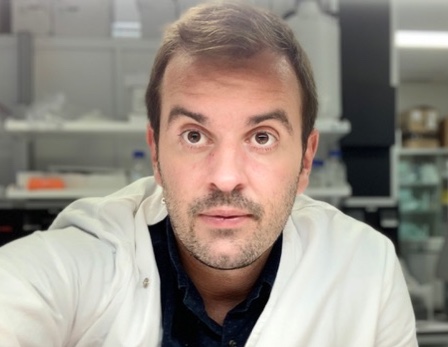
Francisco Díez Fuertes
Investigador Doctor Indefinido
Código ORCID: 0000-0003-2413-9229
Licenciado en Biología por la Universidad de León, Doctor especializado en virología molecular por la Universidad Complutense de Madrid en 2010 y magíster universitario en bioinformática y biología computacional por la misma universidad en 2012. Ha realizado estancias de investigación en University of Illinois at Urbana Champaign (EEUU) en 2010, Nebraska Center for Virology (EEUU) en 2011, Institut Pasteur (Francia) en 2013 y J. Craig Venter Institute (EEUU) en 2015-2016.
Se incorpora a la Unidad de Inmunopatología del SIDA en 2013 con un contrato del programa postdoctoral “Sara Borrell”. Tras una etapa en el Instituto de Investigaciones Biomédicas August Pi i Sunyer de Barcelona se reincorpora en la Unidad de Inmunopatología del SIDA en 2020 como investigador doctor.
Sus líneas de investigación se han centrado en la caracterización genómica y transcriptómica de fenotipos extremos en la infección de VIH-1, incluyendo pacientes no progresores a largo plazo y controladores de élite. Colabora con otros laboratorios del centro en el análisis de brotes causados por virus con interés en Salud Pública, así como en estudios evolutivos sobre epidemiología genómica. Desde el año 2020 ha liderado diferentes estudios clínicos sobre COVID-19. En la actualidad, combina las ciencias ómicas con diferentes herramientas bioinformáticas para dar respuesta a diferentes preguntas científicas en el ámbito de la virología, especialmente en la investigación en VIH-1 y SARS-CoV-2. Actualmente coordina junto con el Dr. Javier García Pérez la unidad de Inmunopatología del SIDA.
-

Nuria González Fernández
Investigadora Contratada indefinida
Código ORCID: 0000-0002-0087-5144
Completó su tesis doctoral en 2007 (Universidad Autónoma de Madrid), dedicada al desarrollo de un sistema de virus recombinantes en la envoltura para caracterizar el tropismo del VIH-1, así como al estudio del papel de la quimiocina CXCL12 en la propagación del virus en la sinapsis infecciosa. Parte de este trabajo lo realizó en el laboratorio del Dr. Quentin Sattentau en la Universidad de Oxford.
Durante su etapa postdoctoral, amplió su investigación sobre los mecanismos de entrada del VIH y se especializó en el estudio de la respuesta neutralizante. Desarrolló un sistema para medir la actividad neutralizante, que ha sido utilizado en ensayos clínicos de prototipos de vacunas frente al VIH. Durante una estancia en el Vaccine Research Center, NIH (EEUU), adquirió experiencia en diversas técnicas para la caracterización de anticuerpos neutralizantes de amplio espectro, lo que derivó en nuevas colaboraciones y proyectos de investigación, que continúa desarrollando en la actualidad en la Unidad de Inmunopatología del SIDA del Instituto de Salud Carlos III.
Ha participado en redes de investigación como EAVI2020 (co-IP), CIBERINFEC, RIS y EUROPRISE (UE). Desde 2014 es profesora del máster en Microbiología aplicada a la Salud Pública e Investigación en Enfermedades Infecciosas de la Universidad de la Universidad de Alcalá y, desde 2023, del máster sobre infección por el virus de la inmunodeficiencia humana de la Universidad Rey Juan Carlos.
-
Mercedes Bermejo Herrero
Investigadora post-doctoral contratada
Código ORCID: 0000-0001-9909-8578
Licenciada y doctora en ciencias Biológicas (Bioquímica y Biología Molecular) por la Universidad Autónoma de Madrid. Su tesis doctoral estudió la expresión de CXCR4 y SDF-1/CXCL12 en linfocitos y células dendríticas y sus implicaciones en la Infección por el VIH-1.
Ha realizado estancias en distintos laboratorios: Servicio de Inmunología del Hospital Universitario Gregorio Marañón de Madrid, Centro de investigación del Hospital Universitario 12 de octubre de Madrid (donde fue responsable del servicio de citometría de flujo) y en la actualidad en el CNM del instituto de Salud Carlos III.
Sus líneas de investigación se han centrado en el estudio de la biología del VIH y su interacción con el sistema inmune. Actualmente ha participado en ensayos clínicos, CombiVacs y ENE-Covid Senior, y la colaboración con Hipra.
-

Rubén Ayala Suárez
Técnico Superior Especializado OPI
Código ORCID: 0000-0002-1271-646.
Graduado en Biotecnología por la Universidad de Cádiz (2015), Máster en Microbiología de Enfermedades Infecciosas (2016) y Doctorado en Biología Funcional por la Universidad de Alcalá (2023). Realizó su Tesis Doctoral en el laboratorio de Inmunopatología del SIDA (CNM) sobre mecanismos epigenéticos postraduccionales del control natural de la infección por VIH. En el mismo período, realizó un Diploma de Bioinformática en la Universidad Pablo de Olavide (2021).
En 2023 se incorporó como investigador postdoctoral en el grupo de investigación en VIH y SIDA del Instituto de Investigaciones Biomédicas August Pi i Sunyer (Barcelona), donde trabajó sobre la relación de VIH y la senescencia hasta su incorporación como Técnico Superior Especializado en la unidad de Inmunopatología del SIDA del Centro Nacional de Microbiología (ISCIII) en 2025.
Los principales proyectos de investigación en los que participa se centran en la resistencia y el control natural a la infección por VIH, así como la evaluación de la respuesta inmunitaria en ensayos vacunales, utilizando principalmente técnicas bioinformáticas centradas en la secuenciación masiva (RNA-Seq, single-cell, genome sequencing), la aplicación de bioestadística y el machine learning en el manejo de los datos.
-
-

Almudena Cascajero Díaz
Técnico de laboratorio
Código ORCID: 0000-0002-9654-3100
Técnico Superior de Actividades Técnicas y Profesionales (Unidades de Inmunopatología del SIDA y Legionella, Centro Nacional de Microbiología).Técnico Superior de Laboratorio de Diagnóstico Clínico por IES Renacimiento de Madrid.
Experiencia en técnicas de clonaje y caracterización de anticuerpos neutralizantes y participación en diferentes proyectos sobre la patogénesis del VIH mediante el estudio de la envoltura del virus y de los mecanismos de resistencia a fármacos antirretrovirales. Esta experiencia me ha permitido participar posteriormente en 5 estudios clínicos multicéntricos estudiando la respuesta inmune frente a diferentes variantes de SARS-CoV-2.
Desde 2021, participo también como técnico de laboratorio en la Unidad de Legionella como apoyo al Sistema Nacional de Salud a través de la vigilancia microbiológica de la enfermedad para contribuir a la prevención y control de la legionelosis.
-

Manuela Beltrán Vicente
Técnico de Laboratorio Indefinido
Código ORCID: 0000-0001-6185-2280
Técnico Superior de Actividades Técnicas y Profesionales (Unidad de Inmunopatología del SIDA, Centro Nacional de Microbiología). Técnico Especialista de Laboratorio de Análisis Clínico por el IES Las Musas (Madrid, 1996).
Experiencia demostrada en el desarrollo de estrategias frente al VIH, enfocada en el cribado de compuestos tanto de origen natural como sintético con actividad antiviral e identificación y evaluación de potenciales agentes terapéuticos, así como el cribado de muestras serológicas para el estudio de la inmunidad para la identificación de posibles estrategias para el desarrollo de vacunas contra el VIH.
-

Silvia Jara Herrera
Técnico de Laboratorio Contratado CIBERINFEC
Código ORCID: 0009-0001-2842-2040
Técnico de Laboratorio de Diagnóstico Clínico y Biomédico.Actualmente se encuentra trabajando en la Unidad de Inmunopatología del SIDA del Centro Nacional de Microbiología (ISCIII) con contrato a través del Centro de Investigación Biomédica en Red de Enfermedades Infecciosas (CIBER-INFEC).
Trabajó desde marzo del 2020 hasta septiembre del 2024 en el departamento de Sanidad Animal (Facultad de Veterinaria) de la Universidad Complutense de Madrid.
Experiencia en técnicas serológicas (ELISA, Western Blot e IFI), cultivos celulares y biología molecular.
-
Paloma Jiménez Santana
Técnico de laboratorio contratado
-

Irene Díaz Marín
Técnico de laboratorio contratado
Técnico Superior de Laboratorio en Diagnóstico Clínico y Biomédico por CIFP Politécnico de Murcia-CESUR y graduada en Periodismo por la Universidad Complutense de Madrid.
Actualmente se encuentra dentro de la Unidad de Inmunopatología del SIDA del Centro Nacional de Microbiología (CNM) con un contrato de Garantía Juvenil de la Comunidad de Madrid, donde realiza tareas técnicas en diferentes proyectos de investigación sobre VIH-1 y COVID-19.
-
Laura Capa Muñoz
Investigadora post-doctoral contratada
Código ORCID: 0000-0002-0234-331X
Licenciada en Ciencias Biológicas por la Universidad Autónoma de Madrid y Doctora por la Universidad Complutense de Madrid, ha realizado un máster en sida (Universidad Complutense de Madrid) y un máster de actualización en la infección por el VIH (Universidad Rey Juan Carlos de Madrid).
Actividad profesional desarrollada fundamentalmente en el campo de las enfermedades infecciosas, tanto en el ámbito de la investigación básica en centros públicos de investigación y en la industria farmacéutica, como en el ámbito de la salud pública y la gestión científica. Ha trabajado en la respuesta internacional a la pandemia del VIH, representando al Ministerio de Sanidad en calidad de experta en reuniones de la Comisión Europea y colaborado con la OMS. En el Instituto de Salud Carlos III, ha llevado la gestión científica de proyectos nacionales y europeos en la Unidad de Inmunopatología del SIDA y ha formado parte del Grupo de Trabajo de Protección de Datos del Instituto. Actualmente, sigue coordinando la Cohorte de Pacientes No Progresores a Largo Plazo creada por la Red Española de Investigación en SIDA (RIS), forma parte del equipo de coordinación del Programa de Doctorado en Ciencias Biomédicas y Salud Pública IMIENS-UNED-ISCIII y del Grupo de Trabajo de Igualdad del Instituto.
-
José Alcamí Pertejo
Profesor de Investigación
Código ORCID: 0000-0003-0023-7377
Licenciado en Medicina por la Universidad Autónoma y Doctor en Medicina por la Universidad Complutense de Madrid. Especialista en Medicina Interna en el Hospital 12 de Octubre (1982-1986). Formación en inmunología mediante una beca de Personal Investigador (1986-1988). Investigador asociado en la Unidad de Inmunología Viral del Instituto Pasteur de París (1988-1992) donde obtuvo el Master en Inmunopatologia por dicho Instituto. Profesor de Investigación desde 2015, dirigió la Unidad de Inmunopatología del SIDA en el Centro Nacional de Microbiología desde el año 2000. Coordinador desde el año 2003 de la Red Española de Investigación en SIDA, participa como líder de grupo en redes europeas de excelencia cuyo objetivo es el desarrollo de nuevas vacunas, fármacos y microbicidas frente al VIH/SIDA: EUROPRISE, AIM-HIV, CHAARM y EAVI2020. Desde el año 2019 ejerce la Dirección Científica de la Unidad VIH en el Hospital Clinic de Barcelona. Ha sido profesor de inmunología y virología en la Universidad Europea de Madrid entre 2012 y 2014 y director del Master en Salud Pública e Investigación en Enfermedades Infecciosas de la Universidad de Alcalá de Henares desde 2014 a 2023.
>Autor de más de 200 artículos científicos en revistas de alto impacto como Nature, Nature Reviews in Microbiology, Nature Medicine, Lancet y Journal of Clinical Investigation y más de 80 capítulos en libros. Divulgador científico a través de su canal de YouTube y en la plataforma X. Ha sido investigador principal de más de 50 proyectos de investigación, incluyendo proyectos europeos y un proyecto del NIH americano.
Consultor del FIS y la ANEP desde 1992, miembro del consejo científico de la Agencia Francesa de Evaluación en SIDA entre 2008 y 2014, evaluador de los programas FP6, FP7 y H2020 de la UE, miembro del consejo científico externo del Instituto de Salud Global (Hospital Ramón y Cajal), colaborador científico de la EMA y la AEMPS en las que ha formado parte de los comités de biotecnología, antivirales y vacunas. Miembro científico del consorcio Vaccelerate de la UE y editor asociado de Journal of Virology, Frontiers in Cellular and Infection Microbiology y HIV medicine.


Listado de personal
Información adicional
La Unidad de Inmunopatología del SIDA ha sido coordinada desde el año 2000 por el Dr. José Alcamí, agrupando durante toda su historia a más de 20 investigadores independientes que estudiamos de manera colaborativa distintos aspectos de la infección por el VIH. Durante esta etapa, han pasado por la unidad más de 30 investigadores visitantes y más de 50 estudiantes nacionales e internacionales. Desde principios del año 2025, Javier García Pérez y Francisco Díez Fuertes asumen la coordinación de la unidad de Inmunopatología del SIDA, con el objetivo de proyectar su competitividad científica siguiendo aproximaciones multidisciplinares y mediante el mantenimiento de las estrechas colaboraciones actuales, así como el fomento de la participación en nuevas redes nacionales e internacionales de investigación.
Históricamente, los actuales integrantes de la unidad nos hemos centrado en diferentes líneas de investigación básica que incluyen el estudio de anticuerpos y el desarrollo de vacunas frente al VIH-1, el estudio de la entrada viral y el tropismo del virus o al estudio del huésped mediante la caracterización genómica de poblaciones con un fenotipo extremo. Actualmente, la actividad de nuestra unidad en el campo del VIH-1 se centra en tres líneas principales:
1. Mecanismos moleculares asociados a la protección de la infección por VIH-1 en pacientes con distrofia muscular de cinturas dominante D2 (LGMDD2).
2. Generación de anticuerpos neutralizantes de uso terapéutico basados en la respuesta neutralizante de amplio espectro frente a virus fundadores.
3. Cribado y caracterización de nuevos fármacos anti-latencia frente al VIH-1.
A partir del año 2020, nuestra unidad se vuelca con la investigación sobre COVID-19, participando y liderando diferentes proyectos de investigación aplicada y clínica. Fruto de esta fuerte implicación en el campo, en la actualidad se mantienen diferentes estudios sobre la caracterización de la respuesta inmune frente a SARS-CoV-2, integrando diferentes técnicas de virología molecular, estrategias de inteligencia epidemiológica y tecnologías de célula única.
Asimismo, participamos en diferentes consorcios y redes rnacionales de investigación, como el Centro de Investigación Biomédica en Red de Enfermedades Infecciosas (CIBER-INFEC), en el que participamos como investigadores en diferentes líneas de trabajo y paquetes de trabajo dentro de los programas de investigación “Salud Global, infecciones emergentes y reemergentes” así como en “VIH/SIDA e infecciones de transmisión sexual”.
Tesis doctorales dirigidas
1. ANÁLISIS GENÓMICO Y FUNCIONAL DE PARÁMETROS DE PROTECCIÓN FRENTE AL VIH-1 EN PACIENTES CON PROGRESIÓN LENTA DE LA INFECCIÓN
Estudiante: Erick de la Torre Tarazona.
Directores: José Alcamí y Francisco Díez Fuertes.
Entidad académica: Universidad Autónoma de Madrid.
Fecha de defensa: 14 de julio de 2020.
2. ANÁLISIS DE LOS PERFILES DE EXPRESIÓN DE MIARN Y CARACTERIZACIÓN FUNCIONAL EN INDIVIDUOS VIH-POSITIVOS CON DISTINTA PROGRESIÓN A SIDA Estudiante: Rubén Ayala Suárez.
Directores: José Alcamí y Francisco Díez Fuertes.
Entidad Académica: Universidad de Alcalá.
Fecha de defensa: 12 de junio de 2023.
La Unidad de Inmunopatología del SIDA ha sido coordinada desde el año 2000 por el Dr. José Alcamí, agrupando durante toda su historia a más de 20 investigadores independientes que estudiamos de manera colaborativa distintos aspectos de la infección por el VIH. Durante esta etapa, han pasado por la unidad más de 30 investigadores visitantes y más de 50 estudiantes nacionales e internacionales. Desde principios del año 2025, Javier García Pérez y Francisco Díez Fuertes asumen la coordinación de la unidad de Inmunopatología del SIDA, con el objetivo de proyectar su competitividad científica siguiendo aproximaciones multidisciplinares y mediante el mantenimiento de las estrechas colaboraciones actuales, así como el fomento de la participación en nuevas redes nacionales e internacionales de investigación.
Históricamente, los actuales integrantes de la unidad nos hemos centrado en diferentes líneas de investigación básica que incluyen el estudio de anticuerpos y el desarrollo de vacunas frente al VIH-1, el estudio de la entrada viral y el tropismo del virus o al estudio del huésped mediante la caracterización genómica de poblaciones con un fenotipo extremo. Actualmente, la actividad de nuestra unidad en el campo del VIH-1 se centra en tres líneas principales:
1. Mecanismos moleculares asociados a la protección de la infección por VIH-1 en pacientes con distrofia muscular de cinturas dominante D2 (LGMDD2).
2. Generación de anticuerpos neutralizantes de uso terapéutico basados en la respuesta neutralizante de amplio espectro frente a virus fundadores.
3. Cribado y caracterización de nuevos fármacos anti-latencia frente al VIH-1.
A partir del año 2020, nuestra unidad se vuelca con la investigación sobre COVID-19, participando y liderando diferentes proyectos de investigación aplicada y clínica. Fruto de esta fuerte implicación en el campo, en la actualidad se mantienen diferentes estudios sobre la caracterización de la respuesta inmune frente a SARS-CoV-2, integrando diferentes técnicas de virología molecular, estrategias de inteligencia epidemiológica y tecnologías de célula única.
Asimismo, participamos en diferentes consorcios y redes rnacionales de investigación, como el Centro de Investigación Biomédica en Red de Enfermedades Infecciosas (CIBER-INFEC), en el que participamos como investigadores en diferentes líneas de trabajo y paquetes de trabajo dentro de los programas de investigación “Salud Global, infecciones emergentes y reemergentes” así como en “VIH/SIDA e infecciones de transmisión sexual”.
Tesis doctorales dirigidas
1. ANÁLISIS GENÓMICO Y FUNCIONAL DE PARÁMETROS DE PROTECCIÓN FRENTE AL VIH-1 EN PACIENTES CON PROGRESIÓN LENTA DE LA INFECCIÓN
Estudiante: Erick de la Torre Tarazona.
Directores: José Alcamí y Francisco Díez Fuertes.
Entidad académica: Universidad Autónoma de Madrid.
Fecha de defensa: 14 de julio de 2020.
2. ANÁLISIS DE LOS PERFILES DE EXPRESIÓN DE MIARN Y CARACTERIZACIÓN FUNCIONAL EN INDIVIDUOS VIH-POSITIVOS CON DISTINTA PROGRESIÓN A SIDA Estudiante: Rubén Ayala Suárez.
Directores: José Alcamí y Francisco Díez Fuertes.
Entidad Académica: Universidad de Alcalá.
Fecha de defensa: 12 de junio de 2023.